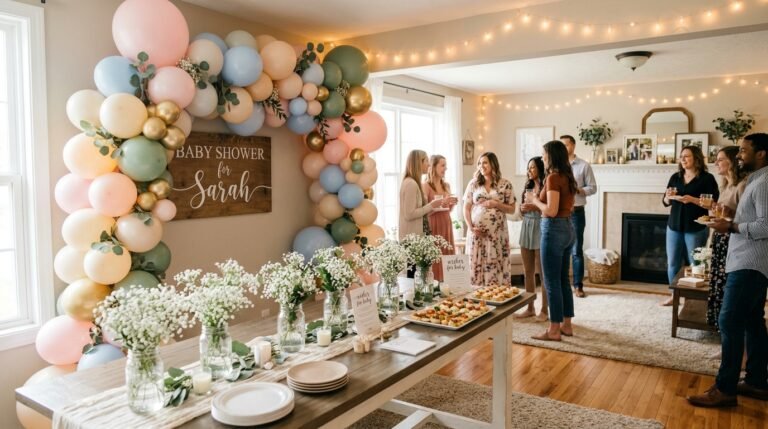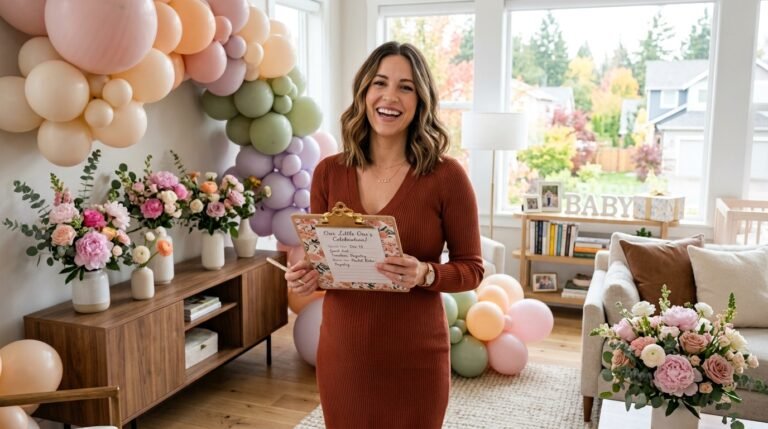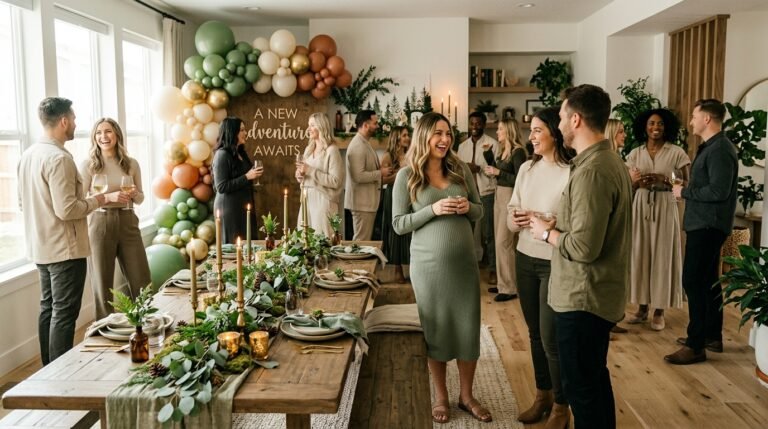
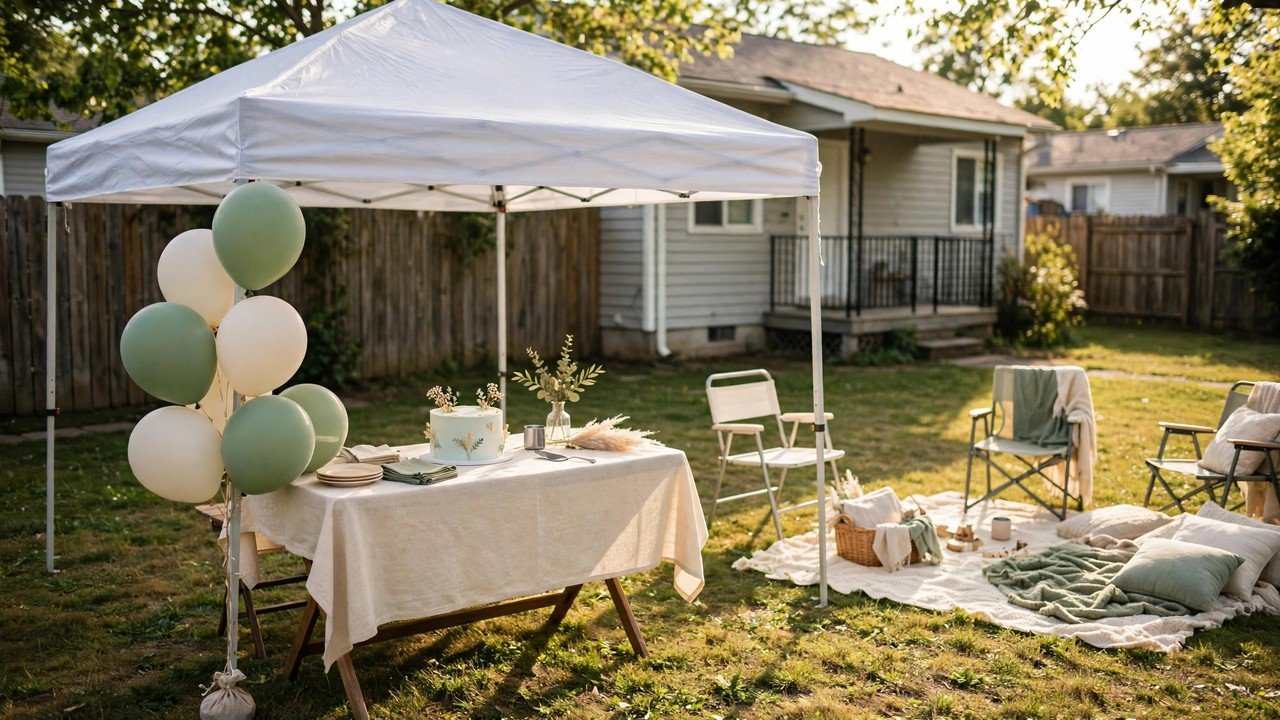
I've helped dozens of renters turn a patch of grass the size of a parking space into a baby shower guests still talk about months later. A small backyard is not a limitation. It is a shortcut. When the yard is small, every decoration works harder, every guest feels closer, and the whole party feels warm instead of spread thin across a big rented hall. The catch, of course, is that it is not your yard. You cannot dig post holes, you cannot hang things from the siding with screws, and you definitely do not want a conversation with your landlord about a stained lawn or a fence panel that came down in the wind.
That is exactly why this guide exists. Every idea below passes what I call the renter test: it is removable, reversible, and packable, or I flag it clearly when it needs a quick landlord check first. You will find shade that does not require stakes, decorations that stand on their own feet, food stations built on tables you already own or can borrow, and a weather backup plan that saves the day without saving a mess. Whether you share a yard with upstairs neighbors or work with a narrow strip beside a rental house, these twelve ideas are built for real rental life: small budgets, borrowed furniture, and a Sunday morning when the whole thing has to disappear like it never happened.
Executive Summary
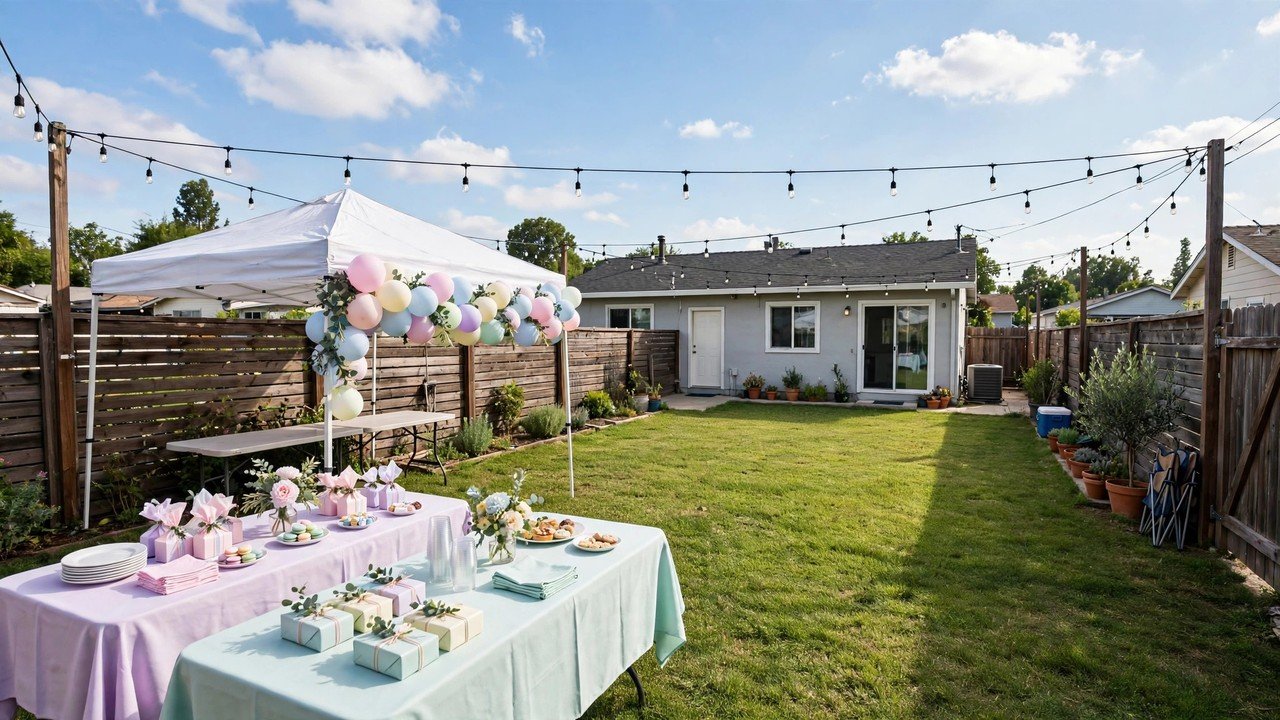
- A small rental yard works best with freestanding, weighted, and borrowed pieces — nothing drilled, staked into a landlord's lawn without permission, or glued to siding.
- Zone the yard into a shade area, a food and gift station, a lounge corner, and a games or activity spot so twenty guests never feel crowded.
- Choose decorations guests can take home — potted plants, decorated onesies, and favors — so pack-down is half the work.
- Build a rain plan before you send invitations: a pop-up canopy with side walls plus a ready indoor pivot room.
- Keep every idea deposit-safe by checking three things: does it touch the house, does it touch the lawn, and can one person carry it away?
- Tell your landlord and your neighbors early, keep music and parking reasonable, and leave the yard cleaner than you found it.
1. Set Up a Weighted Pop-Up Canopy Shade Zone
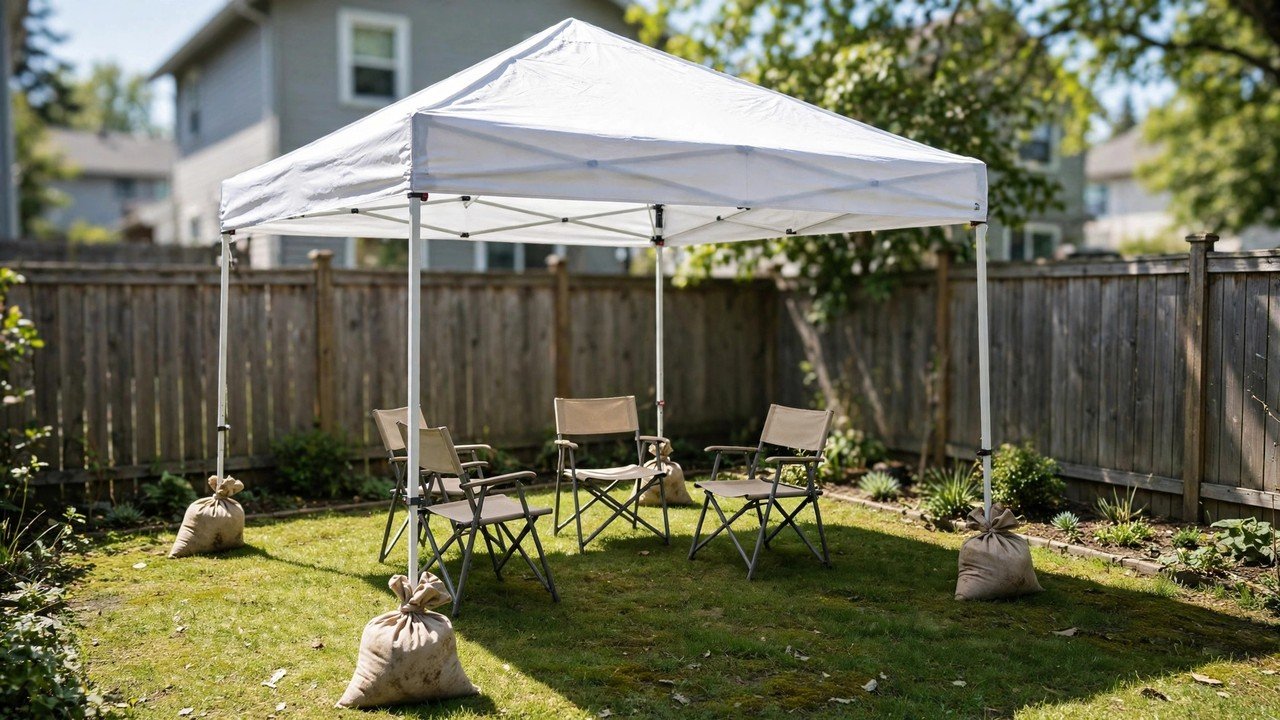
A pop-up canopy is the single most useful thing you can bring to a backyard baby shower, because shade decides whether guests stay. I have watched guests drift away from a beautiful party simply because there was nowhere to sit out of the sun, and I have watched a ten-by-ten canopy turn a hot concrete patio into the most popular spot in the yard. For renters, the trick is the weight, not the canopy itself. Most canopies come with stakes, but staking into a landlord's lawn is exactly the kind of small damage that causes big arguments, especially if there are sprinkler lines or a freshly seeded patch underneath.
This works for renters because a weighted canopy touches nothing permanent. Sandbags, water weights, or leg weights hold it down, and when the party ends, you fold it up and the yard looks untouched. It also creates an instant room: put the chairs under it, and guests understand where to gather without you directing traffic all afternoon.
Here is how I set one up. First, measure your flattest patch of ground and confirm a ten-by-ten canopy actually fits with room to walk around it; in a very small yard, a smaller eight-by-eight canopy or two shade umbrellas in heavy bases may fit better. Second, borrow or rent the canopy and buy or borrow four leg weights, which are usually sandbags that wrap around the legs. Third, set the canopy up the day before if your lease and your neighbors allow it, so you are not wrestling with it on party morning. Fourth, place your seating and your food table partly under it, leaving a clear path to the back door. Fifth, check the forecast and the wind: if gusts are expected, lower the canopy a notch or take it down, because a canopy that lifts is dangerous and can damage a fence.
Approximate cost: $0 to $60 if borrowed, or approximately $80 to $150 to buy a basic canopy, plus approximately $20 to $40 for leg weights.
2. Build a Blanket-and-Cushion Picnic Lounge
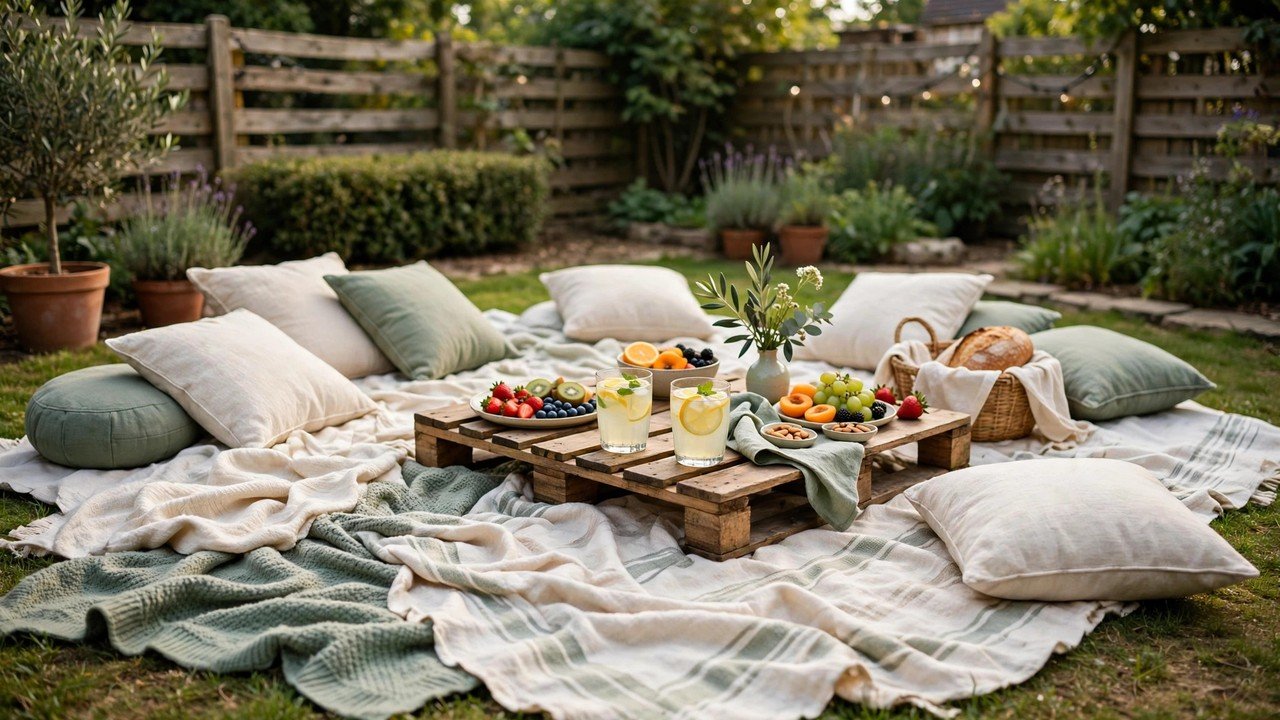
If your yard is too small for rows of rented chairs, stop fighting it and build a lounge on the ground instead. A picnic lounge is my favorite fix for a tiny yard because it uses the lawn itself as the furniture, and it makes the party feel relaxed in a way that folding chairs never do. I have seen guests who barely knew each other end up chatting for an hour on a pile of cushions, while the same guests would have sat stiffly in a chair circle and left early.
For renters, this idea is beautifully deposit-safe. Blankets protect the grass from food spills better than bare feet and plates do, cushions come from your own sofa and beds, and nothing is attached to anything. When the party is over, you shake out the blankets, carry the cushions inside, and the lawn is exactly as it was.
Here is the setup I recommend. First, lay a waterproof picnic blanket or an old shower curtain liner flat on the driest part of the lawn, then layer two or three pretty blankets or quilts on top so it looks intentional rather than improvised. Second, gather every floor cushion, throw pillow, and folded blanket you own, and borrow a few more from a friend if you need them; aim for one cushion per two guests, since people will share and shift around. Third, set a low table in the middle — a coffee table carried outside, a board over two storage bins, or a couple of large trays — for drinks and finger food. Fourth, keep a basket of extra blankets nearby for guests who get chilly or want to sit on the grass edge. Fifth, put a small rug or towel by the back door so guests are not tracking grass and dirt straight through your rental.
Approximate cost: $0 to $30 if you use what you own, or approximately $30 to $80 for a couple of pretty blankets and floor cushions.
3. Hang a Balloon Garland on a Freestanding Frame
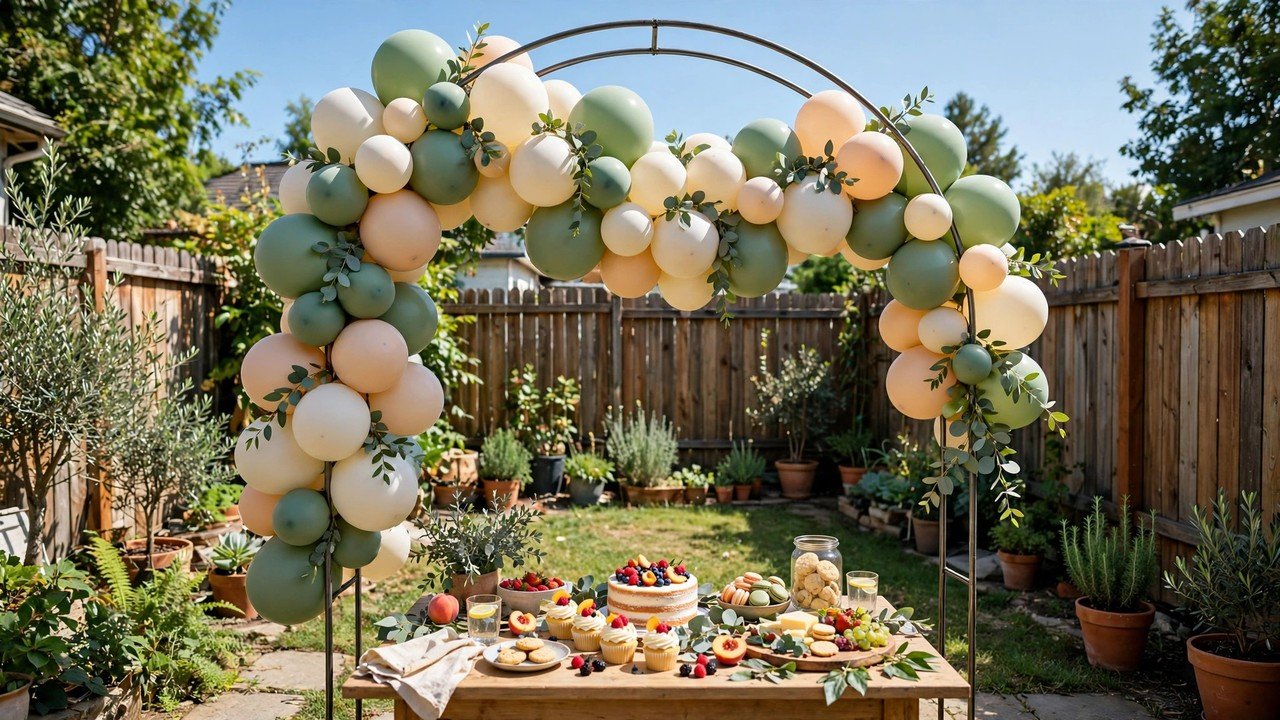
A balloon garland is the decoration guests photograph first, and it is also the decoration that causes the most rental damage when people tape or staple it to siding, gutters, or a fence. I have personally seen tape pull paint off a rental porch rail, and that is a repair bill nobody needs after a baby shower. The renter-friendly answer is a freestanding frame: a simple metal arch or a backdrop stand that holds the garland up on its own two feet.
This works because the garland becomes a piece of furniture rather than a wall treatment. You can move it, angle it for photos, and carry it inside if it rains.
Here is how to do it. First, buy or borrow a freestanding arch or backdrop stand and a balloon garland kit in two or three soft colors, and inflate the balloons the morning of the party so they look fresh. Second, assemble the garland by threading the balloons onto the decorating strip that comes in the kit, clustering small and large balloons together for a full look. Third, drape the garland over the frame and secure it with the clips or ties in the kit, never with tape on the house. Fourth, stand the frame behind the dessert table or the photo area, and weigh the feet down with sandbags if the day is breezy. Fifth, keep a few spare balloons and a small pump on hand, because one or two will always pop at the worst moment.
Approximate cost: approximately $25 to $70 for a garland kit, or approximately $60 to $120 if you also need to buy the stand.
4. String Fabric Bunting Between Portable Poles
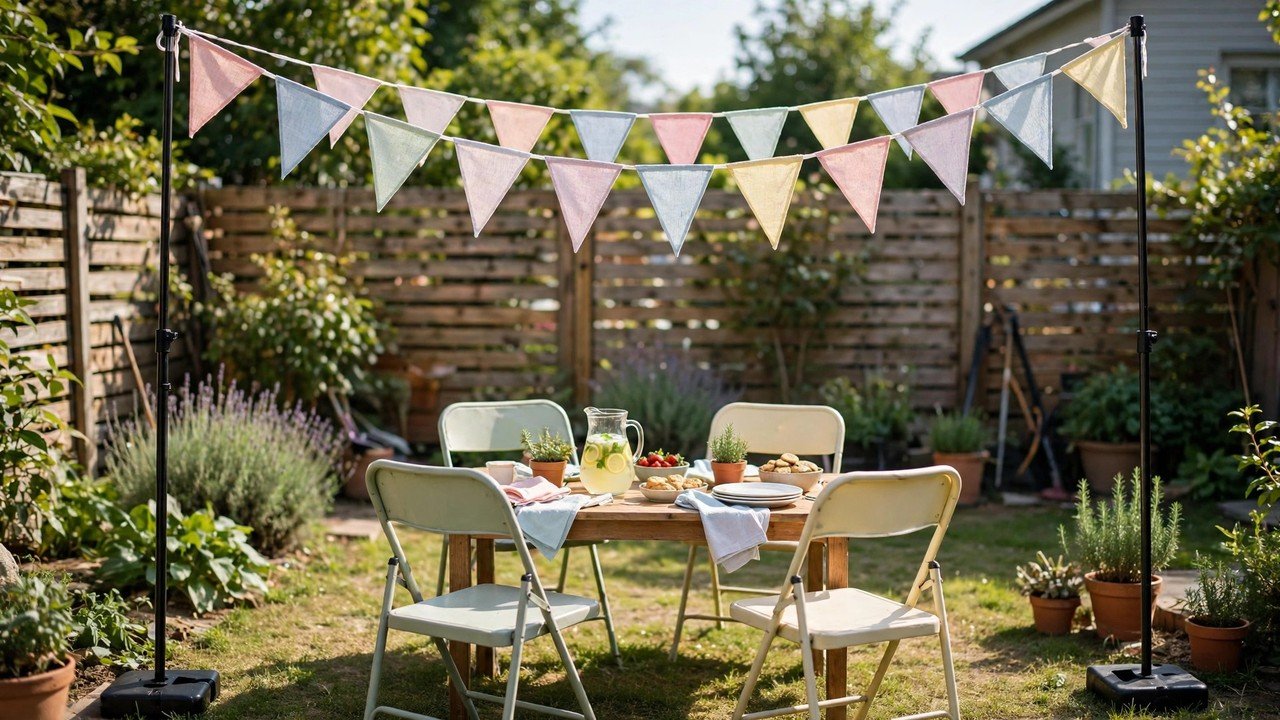
Bunting is the fastest way to make a plain yard look like a party, but the usual advice — nail it to the fence or staple it to the porch — is terrible advice for a renter. My solution is portable poles: two tall shepherd's hooks, umbrella stands, or freestanding flagpole bases that you push into large planters or weight down, and then you string the bunting between them. The bunting hangs in the air, the house stays untouched, and the whole thing packs into a bag afterward.
This is a renter win for three reasons. It needs no permission, it works in a shared yard where you cannot touch the fence, and it photographs beautifully from every angle because it frames the sky instead of a wall. I have used this trick in yards where the fence belonged to a neighbor who did not want anything attached to it, and the party still looked completely decorated.
Here is the method. First, choose two sturdy portable supports and test them in your yard a week early, making sure they stand firm and do not wobble when someone brushes past. Second, pick fabric bunting over paper if there is any chance of wind or damp, since fabric can be washed and reused and will not tear into litter across the lawn. Third, string the bunting with a gentle sag rather than pulling it tight, which looks softer and puts less strain on the poles. Fourth, hang one or two strands across the main gathering area rather than crisscrossing the whole yard, which can feel cluttered in a small space. Fifth, take the bunting down before dark or before any rain, and fold it straight into a storage bag so it is ready for the next celebration.
Approximate cost: approximately $15 to $40 for fabric bunting, plus approximately $20 to $50 for portable poles or stands if you do not already own them.
5. Use Potted Plants as Centerpieces Guests Take Home
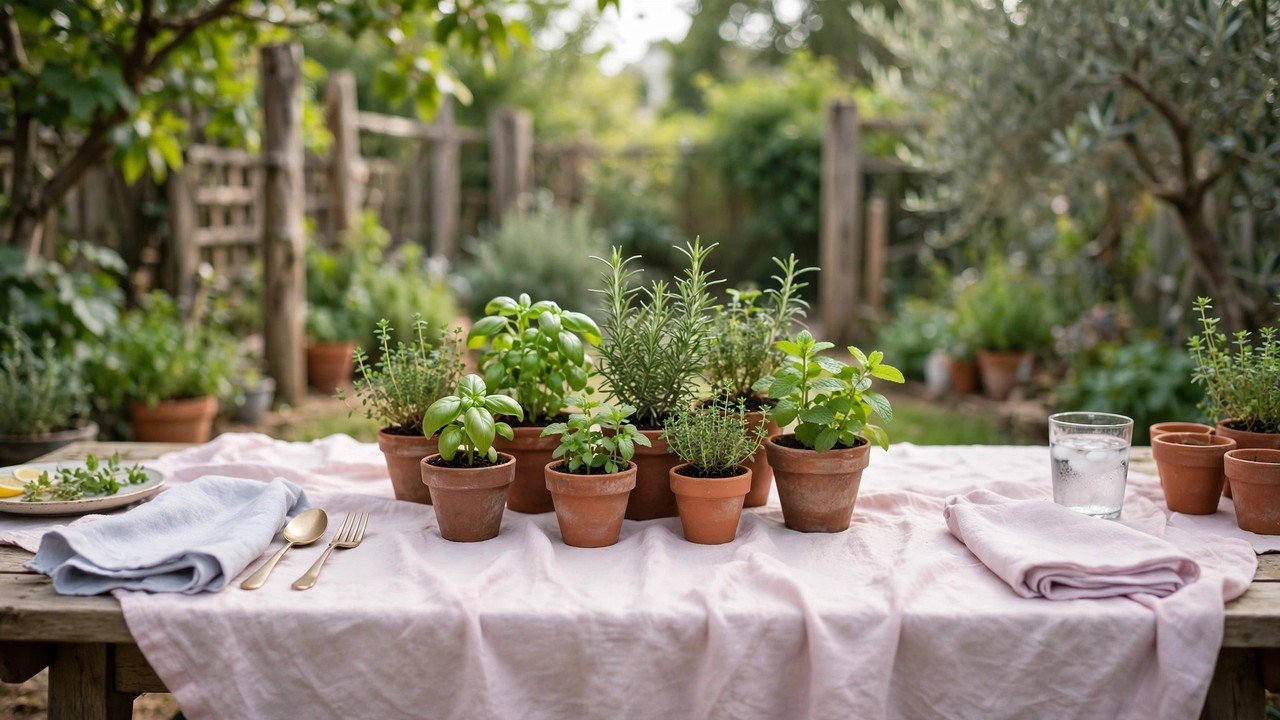
Centerpieces are where small-yard parties waste the most money, because cut flowers wilt in the sun, and anything big crowds a folding table that is already holding food. Potted plants solve both problems at once, and they are my favorite renter-friendly centerpiece because they leave with your guests instead of going in your trash. I have watched guests carry home a little potted herb or succulent like it was a prize, and the table looked better for it, not emptier.
For renters, potted plants are doubly smart. You are not cutting anything from a landlord's garden, you are not leaving flower stems and water rings on a borrowed table, and the plants do not become waste you have to haul away. If a few are left over, they become your own windowsill plants, which is a much better ending than a bag of wilted stems.
Here is how I do it. First, buy small potted plants in groups of three per table — herbs, succulents, or small flowering plants that can survive a few hours outdoors and a car ride home. Second, set them in simple baskets, tin buckets, or plain pots you already own, and tuck a small handwritten tag under each one with the guest's name or a short thank-you note. Third, vary the heights by standing one pot on a stack of books or an upside-down basket so the table looks arranged rather than flat. Fourth, water the plants lightly the night before and keep them out of harsh midday sun during the party so they still look fresh at the end. Fifth, announce near the end of the party that the plants are favors, so guests take them home on purpose instead of leaving them behind politely.
Approximate cost: approximately $3 to $8 per plant, or approximately $30 to $80 for a whole party's worth of centerpieces.
6. Build a Folding-Table Dessert and Gift Station

Every small-yard shower needs one hardworking station where the cake, the gifts, and the camera all land, and a folding table is the renter's best friend for that job. One clear station tells guests exactly where to go, and it keeps the rest of the yard free for sitting and talking.
This works for renters because folding tables are borrowed, rented, or already in the closet, and they leave no trace. You are not buying furniture you have to store in a small apartment afterward, and you are not dragging heavy furniture across a lawn and leaving dents. Put a tablecloth over it, and nobody can tell it is a folding table at all.
Here is the layout I use. First, choose the flattest, most visible spot near the back door, so guests naturally pass the station when they arrive and the host can carry food in and out easily. Second, cover two folding tables pushed together, or one long table if that is what you have, with a washable tablecloth that reaches close to the ground, which hides storage bins underneath. Third, put the cake on a raised stand at the back, cupcakes or cookies in front of it, and a small stack of plates and napkins at one end so guests serve themselves in one direction. Fourth, set a separate small table or a sturdy bin beside it for gifts, with a card box or basket on top, so gifts never pile onto the food. Fifth, keep a trash bag and a damp cloth tucked under the tablecloth, because a quick wipe between the cake cutting and the gift opening keeps the station photo-ready all afternoon.
Approximate cost: $0 to $40 if you borrow tables, or approximately $50 to $120 to buy a folding table and tablecloths you will reuse.
7. Set Up a Lemonade and Mocktail Cooler Station

Drinks decide how long guests linger, and a drink station is one of the easiest wins in a small yard because it keeps people out of your kitchen. I have seen a host spend her whole shower refilling glasses indoors while her guests sat outside wondering where she went, and I have seen a simple cooler station turn into the social hub of the party. For a baby shower, a lemonade and mocktail station is especially kind to the guest of honor, who gets a pretty drink in her hand without anyone making a fuss about it.
For renters, this idea is almost entirely deposit-safe. Coolers sit on the ground, dispensers sit on a table, and the only risk is a spill, which a tablecloth and a towel handle easily. There is nothing to attach, nothing to plug in if you use ice, and nothing that needs landlord permission.
Here is the setup. First, pick two signature drinks and keep them simple: a lemonade with mint and berries, and a sparkling mocktail made with juice and soda water, both of which can be mixed in big dispensers ahead of time. Second, set the dispensers on a sturdy folding table with a stack of cups, a small ice bucket, and garnishes in little bowls. Third, put bottled water and a few canned drinks in a cooler or a metal tub of ice beside the table, so guests who want something plain can help themselves. Fourth, label each drink with a small freestanding card tent, not a sign taped to anything, so guests with allergies or preferences can choose safely. Fifth, keep a towel and a small trash bin right beside the station, and refill the ice once halfway through the party so the last drinks are as cold as the first.
Approximate cost: approximately $25 to $60 for drinks, cups, and ice, or approximately $60 to $100 if you also buy a beverage dispenser.
8. Create a Lawn Games Corner That Protects the Grass
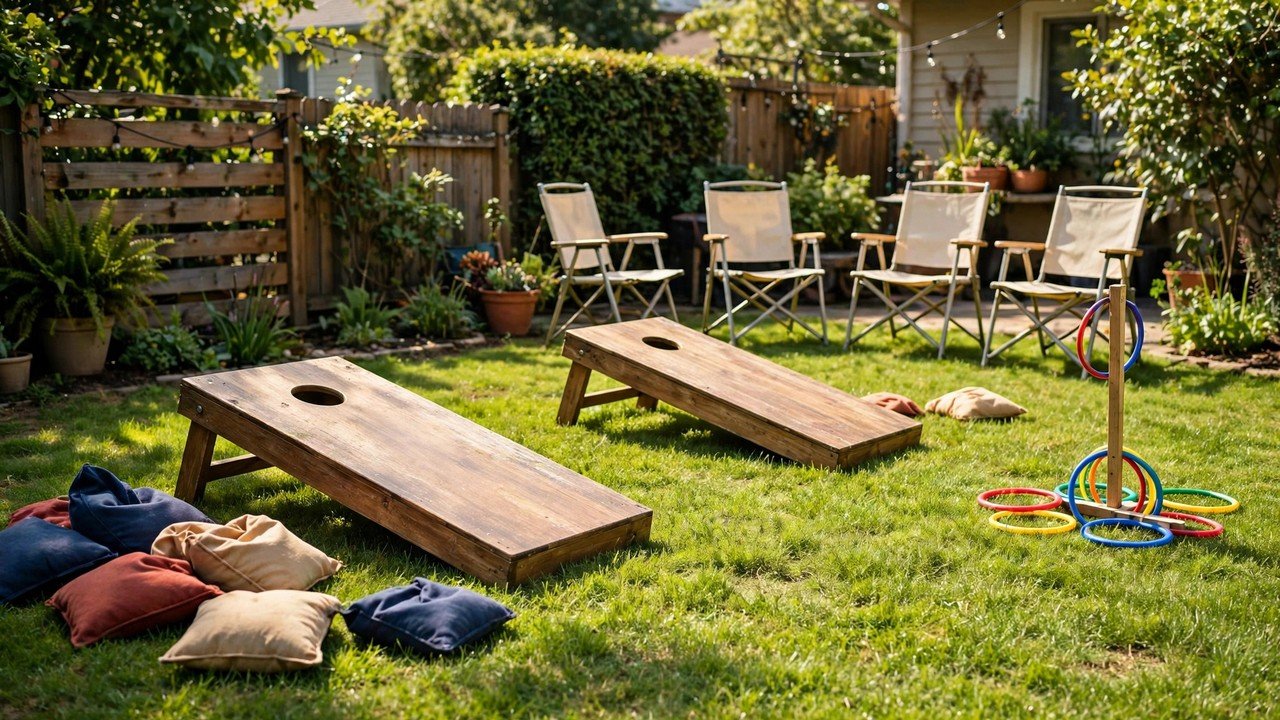
A small yard party can go quiet fast once the cake is cut, and that is when a games corner earns its keep. I am not talking about a full tournament setup. I mean two or three simple lawn games in one corner that give guests something to do with their hands while they talk. Cornhole, ring toss, and a simple bean bag toss are my go-to choices because they are easy to learn, they work for all ages, and they do not need a big field.
For renters, the key is choosing games that protect the lawn. Borrowed wooden games that sit on top of the grass are fine; games that require digging, hammering stakes, or dragging heavy equipment across wet grass are not. I always remind hosts to check the lawn rules in their lease, because some landlords are particular about lawn wear, and a games corner that stays in one dry corner is much kinder to the grass than games spread across the whole yard.
Here is how to set it up. First, pick two or three games you can borrow from friends, since buying new games for one afternoon rarely makes sense in a small apartment. Second, place them in the sunniest, driest corner of the yard, away from the food table and the seating, so a stray bean bag never lands in the cake. Third, lay a flat sheet or an old blanket under any game with pieces that could dent soft ground, and keep the games off freshly watered or muddy patches. Fourth, set a small basket for game pieces and a simple scorecard on a clipboard, so nothing gets lost in the grass. Fifth, pack the games up as soon as the light fades, and do a quick walk of the lawn for stray pieces before guests leave, because a bean bag left in the grass becomes a mower problem later.
Approximate cost: $0 to $30 if borrowed, or approximately $40 to $100 to buy a simple cornhole or ring toss set.
9. Run a Onesie Decorating Station Guests Actually Enjoy
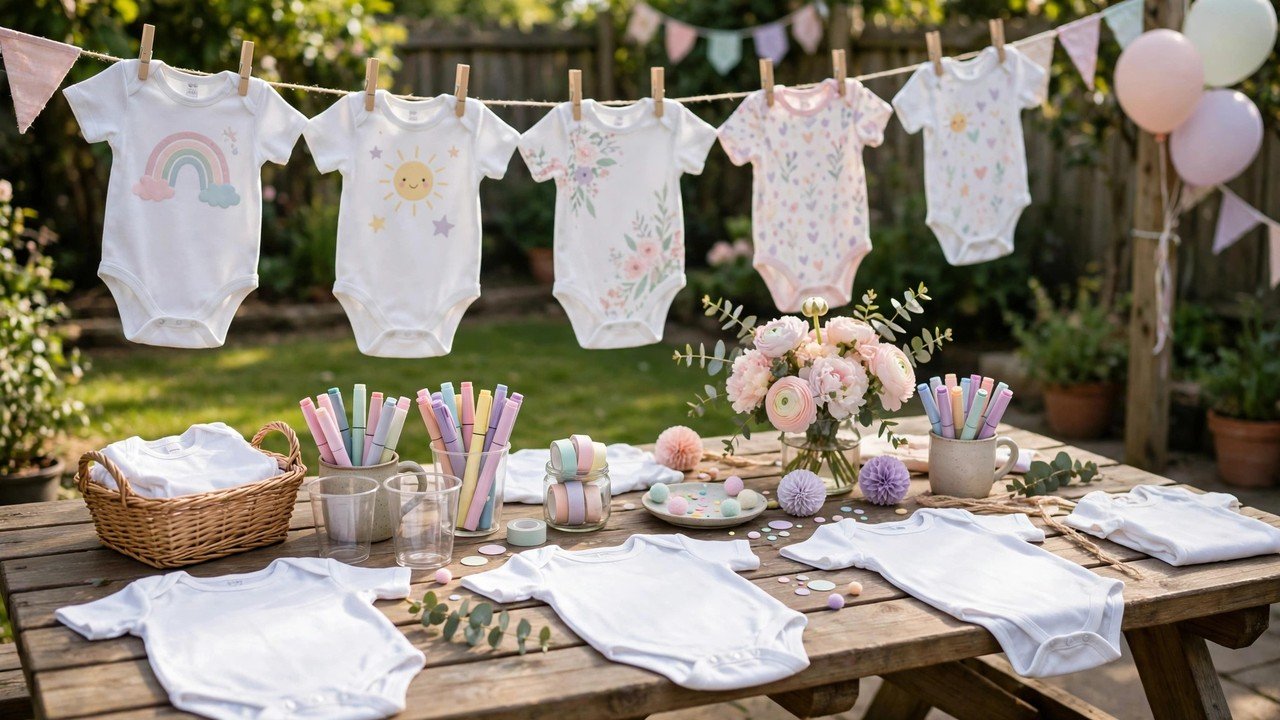
Party activities fail when they feel like homework, and they succeed when guests can chat while they do them. A onesie decorating station is the rare baby shower activity that does both, because it is creative without being competitive, and it produces something the parents genuinely use.
For renters, this station is a perfect fit. It lives on one folding table, it uses supplies that pack into a single bin, and it creates no mess that threatens a deposit as long as you protect the table. Fabric markers are far kinder to a rental than fabric paint, which is exactly the kind of detail that matters when you are working on a borrowed table in a yard you do not own.
Here is how to run it. First, buy plain white or cream onesies in newborn and three-month sizes, and wash them once without fabric softener so the markers grip the fabric properly. Second, set out fabric markers, a few stencils, and some iron-on patches, and skip glitter glue and loose sequins, which end up in the grass and in your rental's drains. Third, put a piece of cardboard inside each onesie while guests decorate, so the marker does not bleed through to the back. Fourth, hang finished onesies on a freestanding clothesline or a portable drying rack, which doubles as decoration and lets the designs dry before they are folded into a gift bag. Fifth, keep a small bag for scraps and marker caps, and fold the finished onesies into a basket for the parents before the party ends, so nothing precious gets left behind in the yard.
Approximate cost: approximately $25 to $60 for onesies and fabric markers for a party of about twenty guests.
10. Build a Freestanding Photo Backdrop Guests Will Use
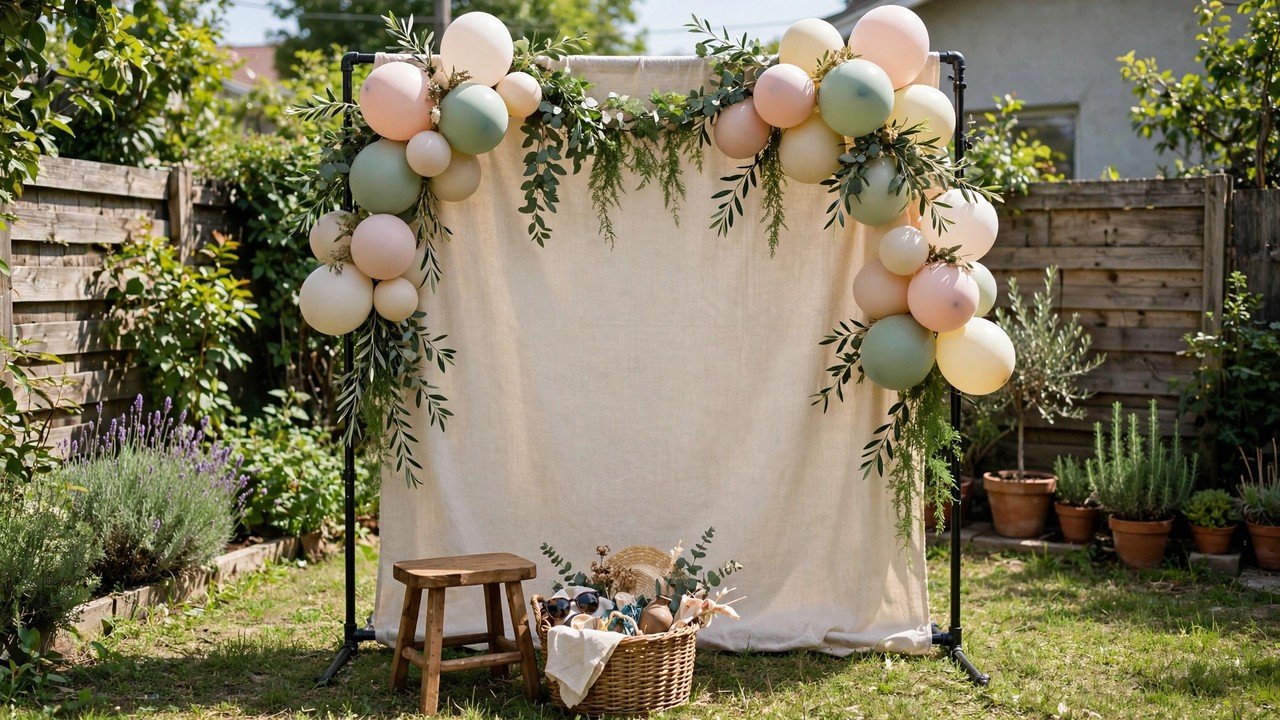
Guests take photos at every baby shower, but they only take good ones when you give them a reason and a place. A freestanding photo backdrop does that job without touching your rental at all. I have seen hosts tape streamers to a fence and spend the party reattaching them, and I have seen a simple backdrop frame with balloons become the spot where every group photo happened naturally. The difference is that the frame stands on its own, so wind, guests leaning on it, and the end-of-party pack-down are all easy to handle.
This is a strong renter idea because the backdrop is furniture, not a fixture. A backdrop stand, a tension-rod frame, or even a large freestanding clothing rack can hold fabric, and when the party ends, you fold it up and carry it inside. It also solves the small-yard photo problem: instead of guests photographing a cluttered yard, they photograph a clean, pretty frame, and the party looks polished in every picture.
Here is the build. First, borrow or buy a freestanding backdrop stand and a plain fabric panel in a soft color that flatters skin tones, like cream, sage, or dusty blue, and steam or iron it the night before so it does not photograph wrinkled. Second, hang the fabric on the stand with clips, and add a balloon cluster or a fabric garland to one corner only, keeping the middle clear for faces. Third, place the backdrop where the light is soft — facing away from harsh midday sun, or in open shade — and put a small stool or a basket of simple props in front of it. Fourth, weigh the feet down if the day is breezy, and keep the backdrop a step away from the fence or house so guests do not lean back into anything. Fifth, take a few photos yourself early in the party, because guests copy what they see, and a backdrop with a few early photos in it gets used all afternoon.
Approximate cost: approximately $30 to $80 for a stand and fabric if you buy them, or approximately $10 to $30 for fabric and clips if you borrow the stand.
11. Light the Golden Hour with Solar Lights on Shepherd's Hooks
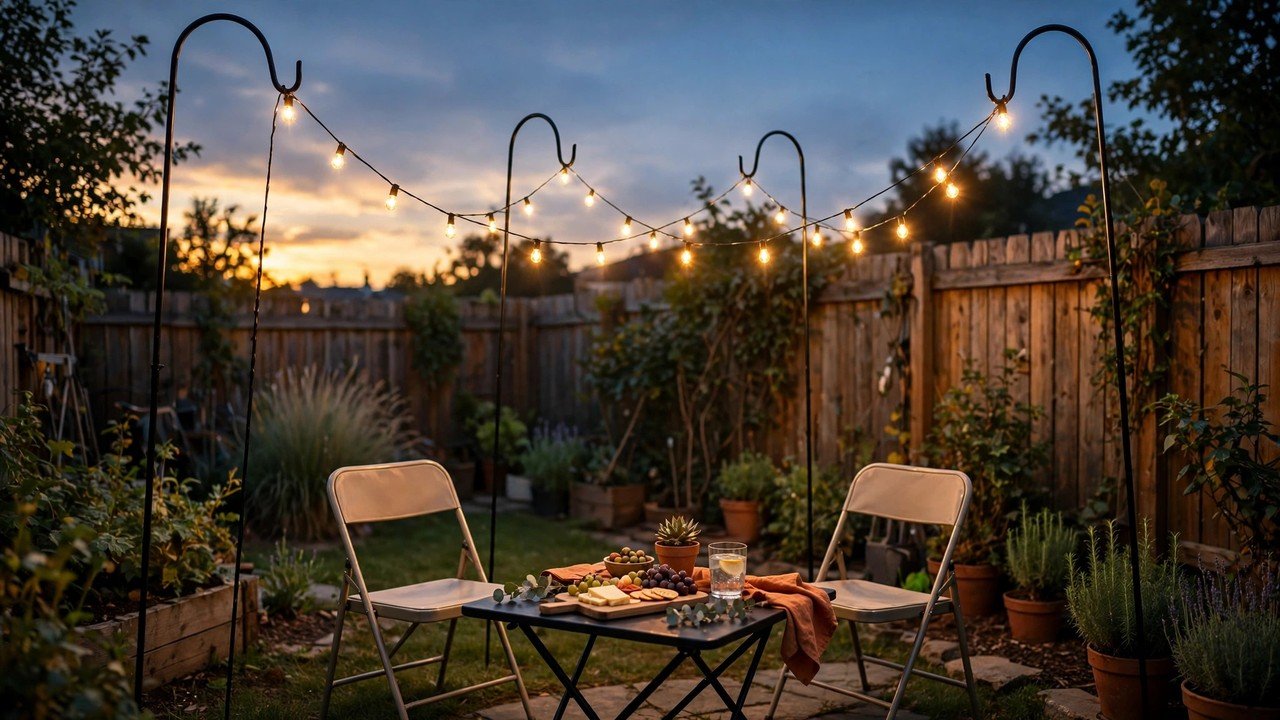
The last hour of a backyard shower is the prettiest and the easiest to get wrong, because the sun drops, the yard goes dark, and guests start leaving even though nobody wants the party to end. Solar string lights on shepherd's hooks fix that without a single extension cord, nail, or landlord conversation. I have watched a plain yard turn magical at dusk with nothing more than a few hooks and warm lights, and guests who were packing up suddenly sat back down for one more drink.
For renters, this is one of the safest lighting ideas there is. Shepherd's hooks push into large planters or stand in weighted bases, solar lights charge themselves during the day, and there are no cords to trip over and no fixtures to install. If your lease forbids pushing anything into the lawn, use planters or heavy umbrella bases instead, and the effect is exactly the same.
Here is how to do it. First, buy two or three packs of warm-white solar string lights and four to six shepherd's hooks, and charge the lights in full sun for a full day before the party. Second, place the hooks around the seating area rather than across walkways, spacing them evenly so the light falls on faces and tables instead of creating dark pockets. Third, drape the lights in gentle swags between the hooks, keeping them high enough that tall guests do not walk into them. Fourth, test the lights the night before the party so you know exactly when they switch on and whether any strand needs new batteries or a better sun position. Fifth, leave the lights up for the evening if your lease allows it, or collect them the next morning, and store the hooks and lights together so the set is ready for the next gathering.
Approximate cost: approximately $30 to $80 for solar lights and shepherd's hooks.
12. Pack a Rain Plan and a Leave-No-Trace Pack-Down Kit

This is the least glamorous idea on the list, and it is the one that saves more parties than any decoration. I have helped hosts watch a forecast all week, hope for the best, and then scramble when rain arrived an hour before guests did. The hosts who enjoy their showers are the ones who packed a rain plan before they sent the invitations, because a backup plan turns bad weather from a crisis into a simple change of rooms.
For renters, a rain plan is also a deposit plan. A party that moves indoors in a panic tracks mud through a rental and leaves a mess, while a party with a kit moves calmly and leaves the yard and house clean.
Here is the kit I recommend. First, decide your trigger in advance — for example, if rain is forecast at over fifty percent for party time, you move indoors — and tell one helper, so you are not making the call alone while guests arrive. Second, prepare the indoor pivot room the day before: push furniture to the walls, lay washable rugs or old sheets on the floor path, and set the folding tables up inside so the food, gifts, and decorations move in one trip. Third, keep a pop-up canopy with side walls ready for a light shower, so a brief rain does not force everyone inside at all. Fourth, pack a teardown bin before the party starts with trash bags, a broom, paper towels, a damp cloth, and a bag for recycling, and put it by the back door where helpers can find it. Fifth, when the party ends, walk the yard once with a bag for litter, check the lawn for spills and game pieces, and send a quick thank-you message to your landlord or neighbors if they were affected, because that goodwill is worth more than any decoration.
Approximate cost: $0 to $30 if you use supplies you already own, or approximately $30 to $70 for a canopy side wall set and teardown supplies.
Conclusion
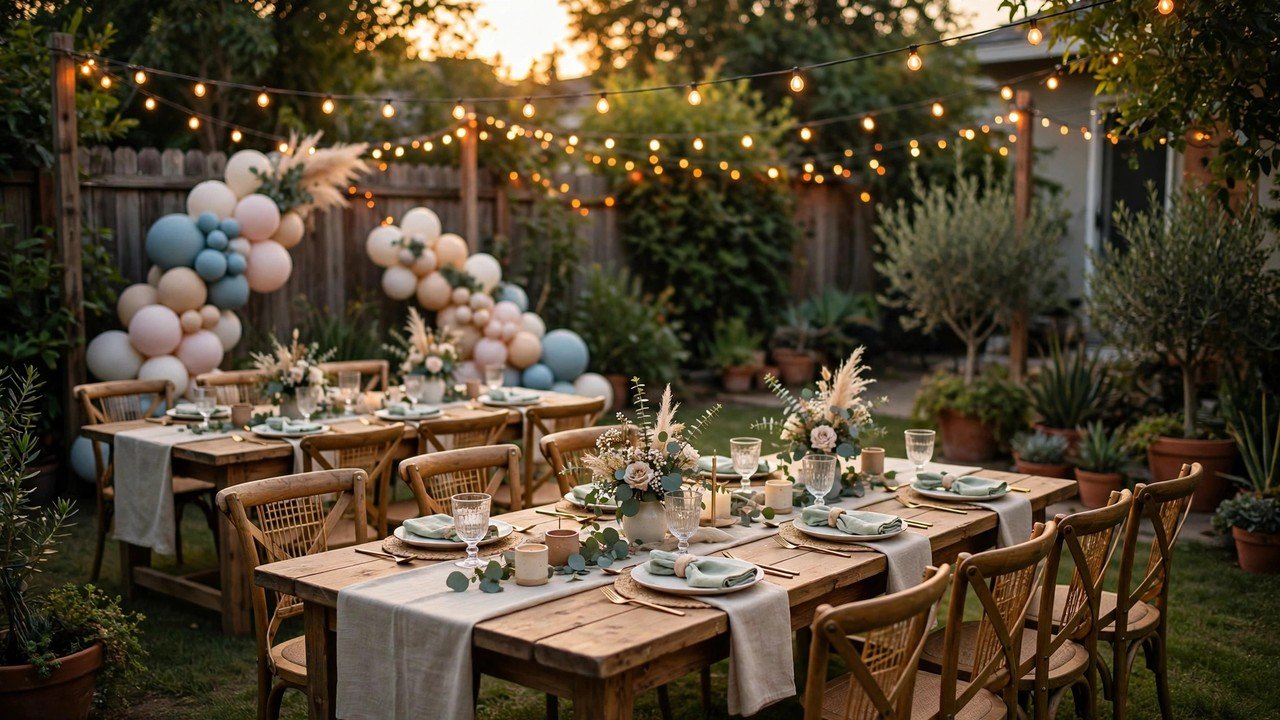
A small backyard baby shower works when you stop trying to make the yard bigger and start making it smarter. A weighted canopy gives you shade without stakes, a blanket lounge gives you seats without rented chairs, freestanding frames give you decorations without holes in anything, and a rain plan gives you confidence no forecast can take away. I have seen renters pull off beautiful showers in yards I would have sworn were too small, and the common thread was never money. It was planning: every piece could be carried in, every decoration could be carried out, and the yard looked better on Sunday than it did on Saturday.
If you take one thing from this guide, let it be that your rental status is not a problem to apologize for. It is a design rule that forces better choices — lighter, simpler, kinder to the space and to the people sharing it. Pick the ideas that fit your yard, borrow what you can, and give yourself permission to keep the guest list small and the afternoon slow. The parents will remember who showed up and how welcome they felt, not how big the yard was. Please save this visual guide on Pinterest and share it with a renter friend who is planning a backyard baby shower of their own.

Amelia leads HavenlyStyle’s editorial vision with a passion for elegant interiors and practical home living. With years of experience in home décor and lifestyle content, she ensures every article is accurate, inspiring, and easy to follow. From timeless decorating ideas to the latest interior design trends, Amelia is committed to helping readers create beautiful, functional spaces while maintaining HavenlyStyle’s trusted and welcoming voice.