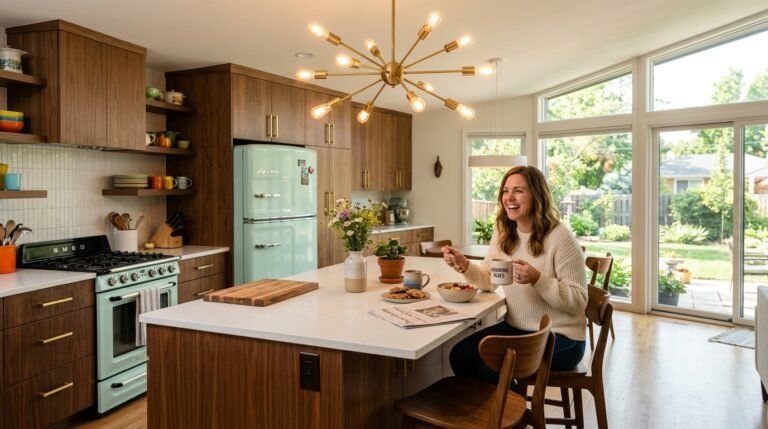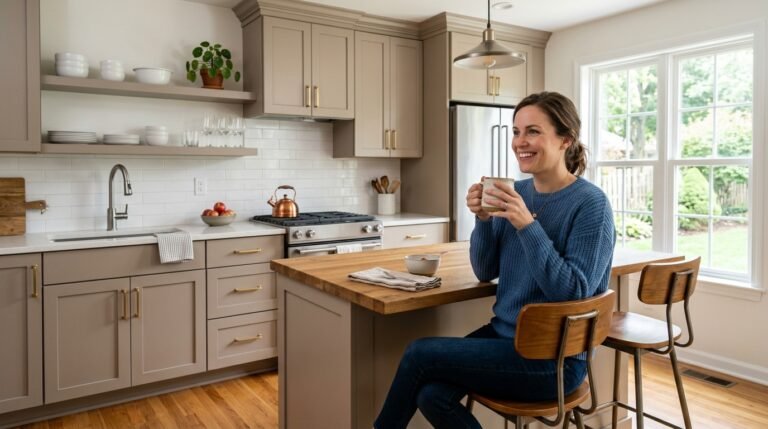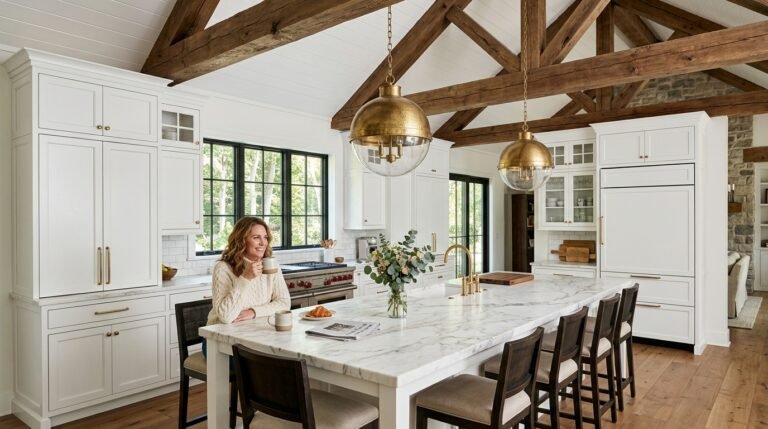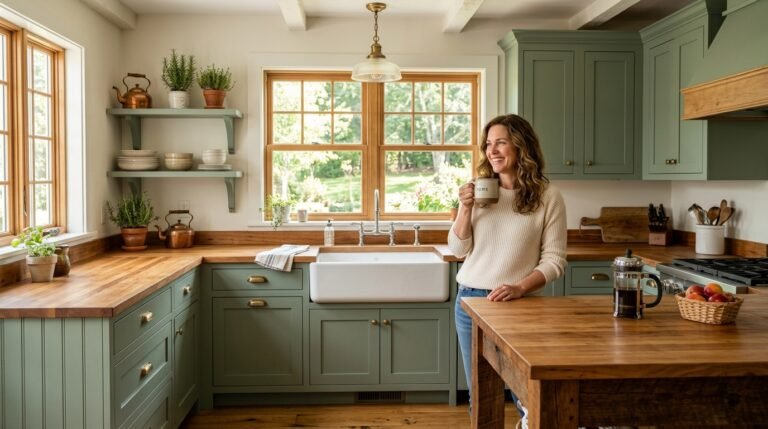
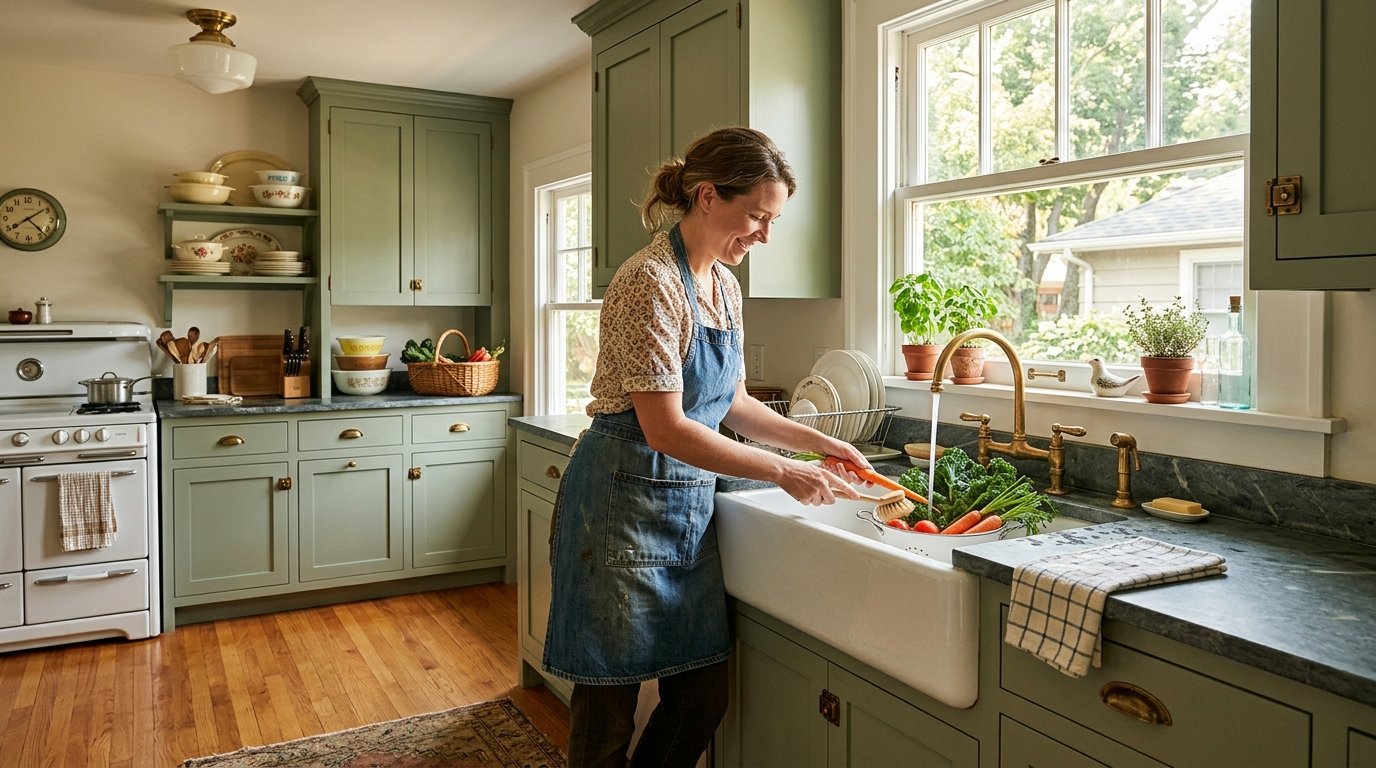
Walking into a historic home should feel like stepping back in time without sacrificing modern convenience. Finding the right remodeling ideas for 1940s bungalow kitchen spaces often feels like walking a tightrope. You want that charming vintage aesthetic but need functionality for daily life. Many homeowners accidentally strip away the very soul of their house during renovations. I have noticed this heartbreak happen far too often in real estate. We will explore how to protect your home’s historical integrity while upgrading its core features. Your cooking space deserves a thoughtful revival that honors its original craftsmanship.
This guide bridges the gap between historical preservation and modern living standards seamlessly. We will uncover vintage farmhouse kitchen remodeling tips that actually work in real scenarios. I have tried several of these methods during my own [home restoration projects]. The transformation always leaves guests speechless when they see the authentic details shine. You will discover exactly which materials capture that postwar era perfectly while fitting your budget. These carefully curated design choices will increase your property value instantly. Let us dive into the ultimate blueprint for bringing your classic architectural gem back to vibrant life.
Executive Summary
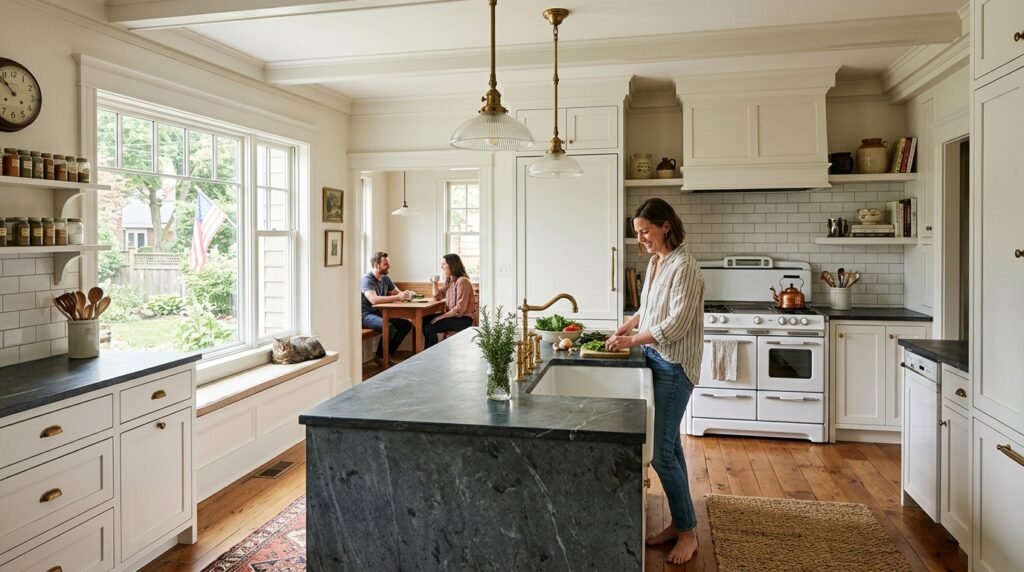
Restoring an older home requires strategic planning and a deep respect for historical architecture. You will discover specific layout strategies that maximize tight spaces common in older properties. Homeowners usually expect a full renovation to take three to six months minimum. Navigating unexpected structural issues behind plaster walls often delays these [historic timelines] significantly. I have seen many people benefit from this realistic preparation approach before demolition begins. This guide outlines exact material choices and period accurate finishes needed for authentic results. Expect to walk away with actionable steps for preserving those beautiful quirky architectural details.
We cover everything from foundational flooring choices to the final cabinet hardware selections here. The upcoming sections highlight cost effective methods for sourcing authentic materials locally and online. Many contractors push for standard modern upgrades because they are easier to install quickly. That is why many designers recommend finding specialists who understand [historic preservation techniques] intimately. You will learn how to hide contemporary appliances within classic cabinetry layouts beautifully. Following these specific guidelines ensures your finished space feels warm and intentionally designed. Prepare to create a gathering space that honors the past while serving your future.
1. Original Hardwood Floor Restoration
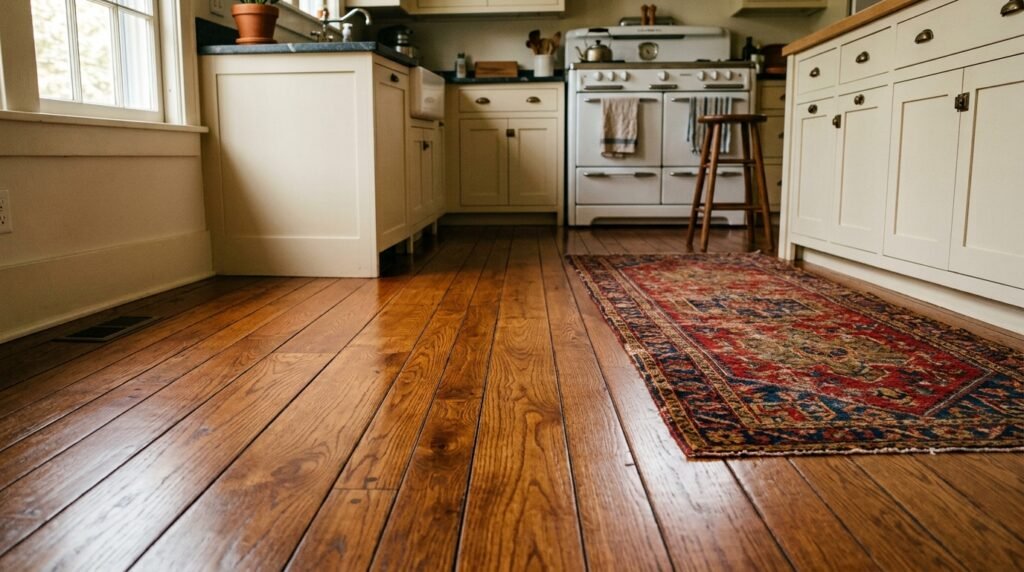
Pulling up layers of outdated vinyl often reveals gorgeous original oak or maple flooring underneath. These old growth wood floors possess a tight grain pattern impossible to find today. Sanding them down carefully brings back a warmth that completely anchors the entire room. In my experience, preserving original floors provides the highest return on investment possible. You must hire specialists who know how to patch damaged sections with [reclaimed wood]. They feather in the new boards so the repair becomes completely invisible. This foundational element sets the authentic tone for your entire historic renovation project instantly.
Choosing the right stain color dictates the whole mood of your newly restored space. Dark walnut stains look beautiful but show every speck of dust and crumb daily. I recommend sticking to lighter natural finishes sealed with a durable matte polyurethane layer. This protects the wood from water damage while hiding minor scratches from heavy foot traffic. Many homeowners skip the proper sealing process and regret it within six months. Taking time to cure the finish properly guarantees your floors will survive decades. Your classic layout will immediately feel grounded in its authentic postwar era roots.
2. Farmhouse Apron Sink Installation
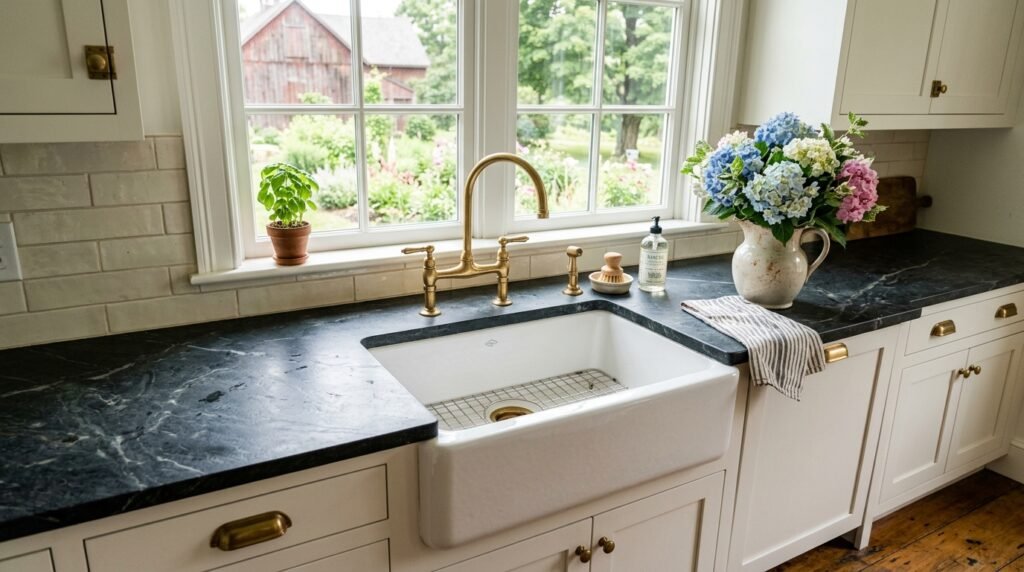
Nothing screams historic charm quite like a massive cast iron basin dominating the countertops. These deep fixtures handle large pots easily while serving as a stunning visual focal point. Installing one requires reinforcing the base cabinets to handle the extreme weight properly. I have seen this work well in many historic properties when planned out carefully. You cannot simply drop these heavy basins into standard modern cabinetry without [structural support]. The classic white enamel finish reflects light beautifully and cleans up effortlessly after dinner. This single design choice immediately establishes your desired vintage farmhouse aesthetic perfectly.
Pairing your new basin with the right counter material makes a massive visual difference. Soapstone or butcher block counters complement the stark white enamel better than polished granite. The slightly worn look of natural materials adds incredible texture to the overall design. When I restored my own property, choosing unlacquered brass hardware elevated the entire focal area. The metal develops a natural patina over time that matches the historical vibe flawlessly. Avoiding modern stainless steel here keeps the design grounded in the correct historical period. This setup becomes the absolute heart of your daily cooking routine.
Selecting Sink Materials
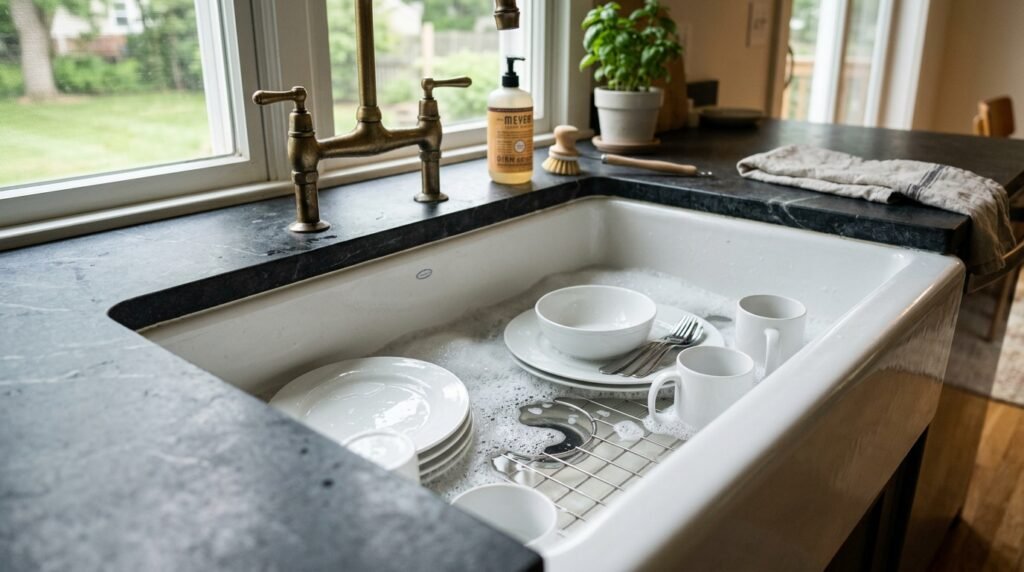
Choosing between fireclay and cast iron changes the longevity of your main washing station. Fireclay resists chipping slightly better but costs significantly more upfront during the purchasing phase. Cast iron holds heat wonderfully for washing dishes but requires a protective grid inside. I have noticed homeowners love the authentic feel of iron despite the heavy maintenance. You must weigh these practical factors before committing a large portion of your budget. Both options deliver that iconic deep basin look essential for historic home designs. Always prioritize durability since this fixture receives constant daily use by your family.
3. Custom Inset Shaker Cabinets
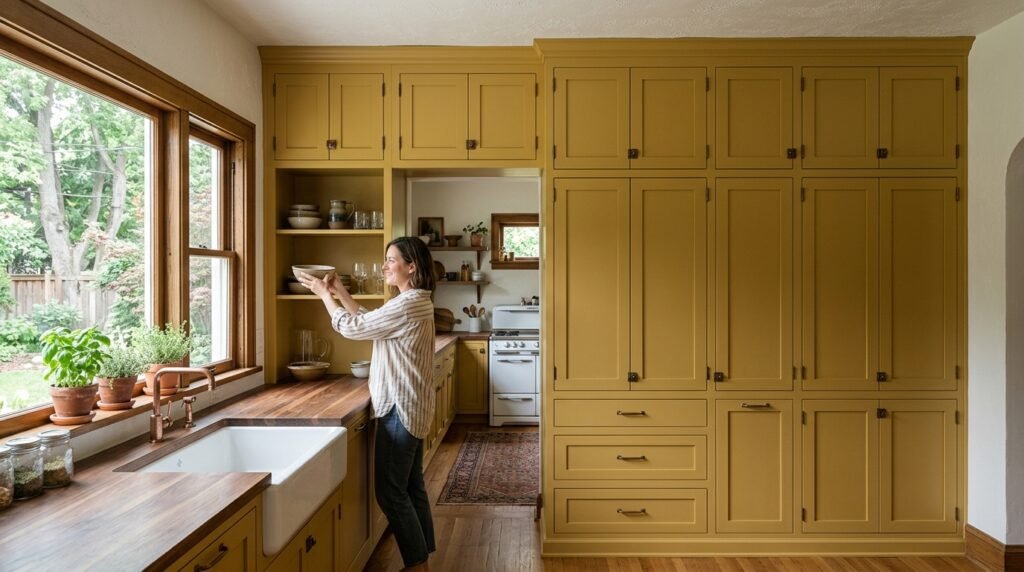
Modern overlay doors look entirely out of place inside a classic postwar residential property. Inset cabinetry features doors that sit perfectly flush within the face frame itself. This specific construction method requires masterful carpentry skills to execute without seasonal sticking issues. I strongly advise against cutting corners on your budget when ordering these specific units. The flat panel design offers clean lines that never go out of style aesthetically. Painting them in historical colors like sage green or muted mustard elevates the charm. You capture the exact feeling of [handmade furniture] built decades ago with this choice.
Maximizing storage inside these traditional frames requires incorporating clever modern organizational pullouts discreetly. You can hide trash bins and spice racks behind these historically accurate flush panels. Exposed hinges in antique brass or oil rubbed bronze add necessary mechanical visual interest. I have tried using hidden hinges, but they strip away the authentic vintage character completely. Building the units all the way to the ceiling eliminates awkward dust catching gaps. This vertical visual extension makes standard eight foot ceilings feel significantly taller and grander. Your storage solutions will finally match the architectural beauty of your historic home.
4. Vintage Glass Cabinet Hardware
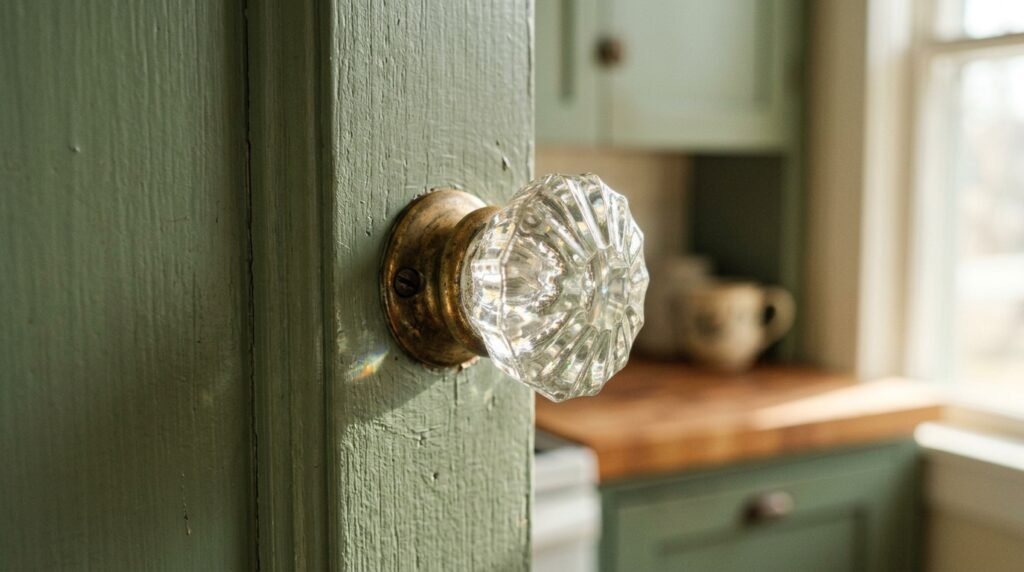
Swapping out generic metal pulls for fluted glass knobs creates instant historical authenticity quickly. These small details act like jewelry for your freshly painted inset flush cabinetry doors. Finding original antique hardware takes time but delivers unmatched character to the final design. Many reproduction companies now manufacture excellent replicas that feel heavy and substantial like originals. In my experience, mixing crystal knobs on upper doors with bin pulls below works best. This subtle variation breaks up the visual monotony across a large bank of drawers. Visitors will naturally reach out to touch these beautiful tactile design elements.
Installing these delicate pieces requires careful measuring and specialized drill bits to prevent splintering. You must use templates to ensure every single knob aligns perfectly across the room. I recommend buying extra pieces because dropping one on a tile floor guarantees shattering. The way natural sunlight catches the faceted glass edges brings subtle sparkle indoors daily. This affordable upgrade provides the most dramatic visual shift for the smallest financial investment. It is the perfect finishing touch that ties your entire [historical renovation narrative] together. Your space will finally feel like a curated collection of beautiful artifacts.
5. Classic Subway Tile Backsplash
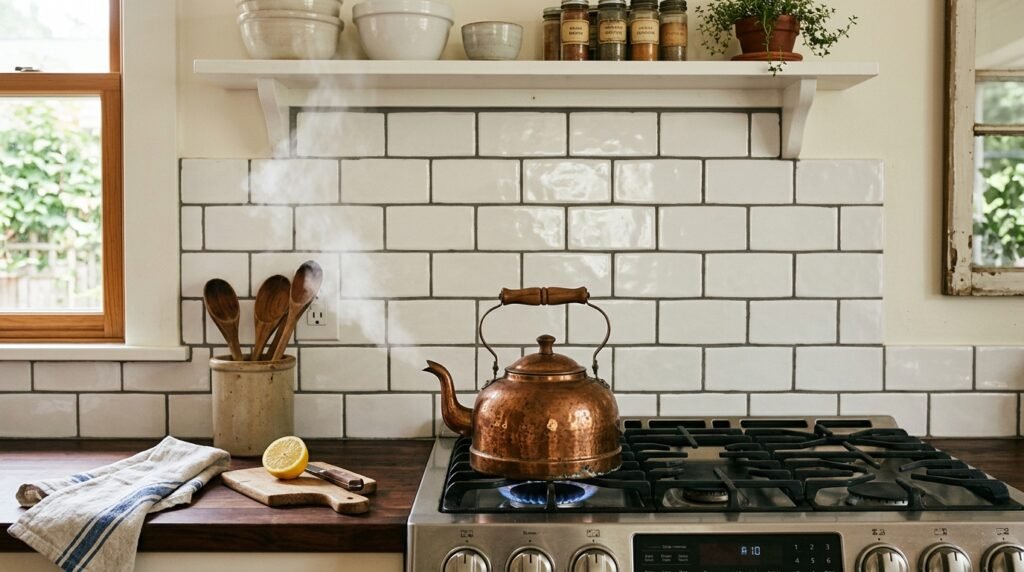
Nothing defines early twentieth century sanitary design better than simple white rectangular ceramic tiles. Running them in a traditional half offset brick pattern creates a timeless structural backdrop. You should select tiles with slightly irregular edges to mimic handmade craftsmanship from decades past. I have seen many people benefit from choosing a warm white over a sterile hospital white. The warmer tones blend much better with aged wood floors and creamy cabinet paint colors. Wrapping the tile completely around windows creates a highly custom architectural focal point beautifully. This surface remains incredibly easy to wipe clean daily.
Grout color selection changes the entire personality of your new ceramic wall installation instantly. Bright white grout blends the joints away, creating a subtle textural pattern across the wall. Medium gray grout highlights the brick layout while hiding inevitable cooking splatters near the stove. That is why many designers recommend a darker charcoal grout for authentic historical applications. You must seal the lines properly to prevent permanent staining from tomato sauce or grease. Capping the installation with a specialized bullnose trim piece provides a professional finished edge. This wall treatment withstands every passing design trend without aging.
6. Period Correct Lighting Fixtures
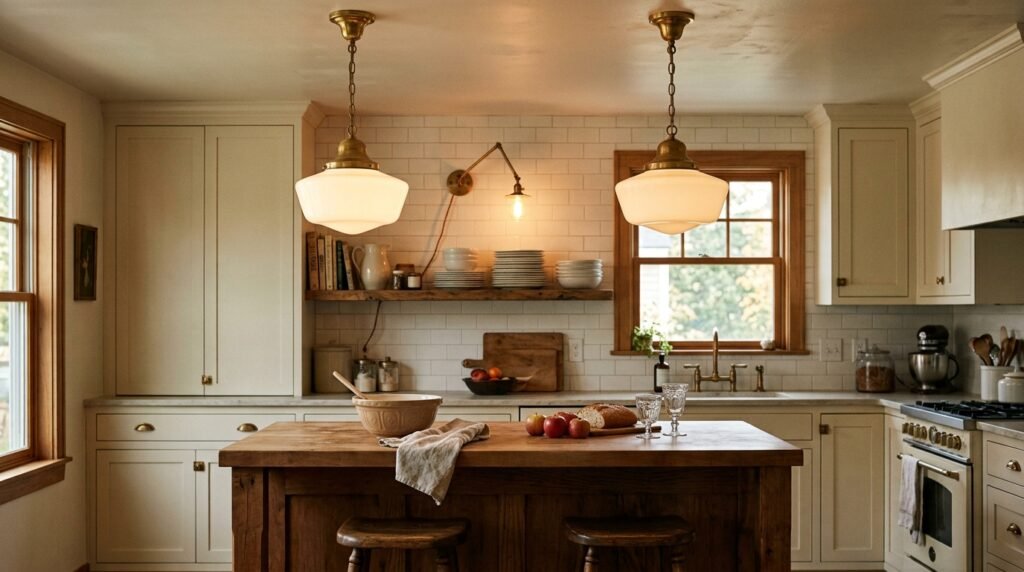
Tearing out modern recessed cans and installing schoolhouse pendants restores architectural dignity immediately. These opaque glass globes diffuse light softly without creating harsh shadows across your workspace. Finding original fixtures at [architectural salvage yards] adds an incredible story to your home. You must have an electrician rewire these antique finds safely before installation to prevent fires. I have noticed how much a solid brass canopy elevates a simple glass shade instantly. Hanging two pendants symmetrically over the main sink establishes a strong visual balance beautifully. Proper illumination makes the entire room feel welcoming and warm every evening.
Layering your lighting sources ensures the room remains functional for complicated recipe preparation tasks. Adding small articulated brass sconces above open shelving highlights your displayed dishware perfectly. Hidden under cabinet strips provide necessary task lighting without disrupting the historical visual aesthetic. In my experience, putting everything on dimmer switches gives you total control over the mood. You can transition from bright working conditions to a soft evening glow with one slide. Avoiding ultra modern LED temperatures keeps the atmosphere feeling authentic and cozy always. The right bulbs cast a nostalgic warmth that modern homes rarely capture effectively.
7. Built In Breakfast Nook
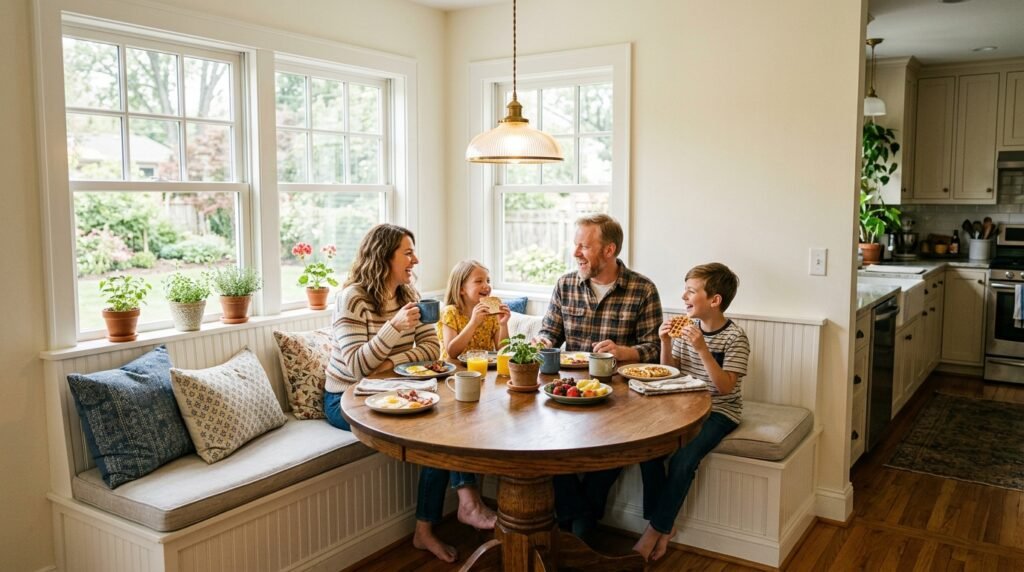
Carving out a cozy seating area in a sunny corner maximizes tight floor plans beautifully. Custom built benches offer massive storage opportunities for bulky appliances hidden under lift up seats. This layout encourages family members to gather closely while the main meals are being prepared. I have tried this setup and it completely changed how we utilize our morning routine. Creating a custom cushion covered in durable stain resistant fabric makes the space highly comfortable. Adding a sturdy pedestal table allows people to slide in without banging their knees awkwardly. It becomes the most popular spot instantly.
Styling this intimate dining zone requires thoughtful attention to scale and historic architectural proportions. Beadboard paneling applied to the bench backs protects the drywall while adding subtle texture. A dedicated pendant light hung low over the table anchors the specific seating area visually. That is why many designers recommend treating the nook as a distinct room within the room. You can introduce bold [wallpaper patterns] here without overwhelming the main cooking space completely. It provides a perfect transition zone between the bustling workspace and the formal dining area. Your guests will naturally gravitate toward this charming seating.
Maximizing Nook Storage
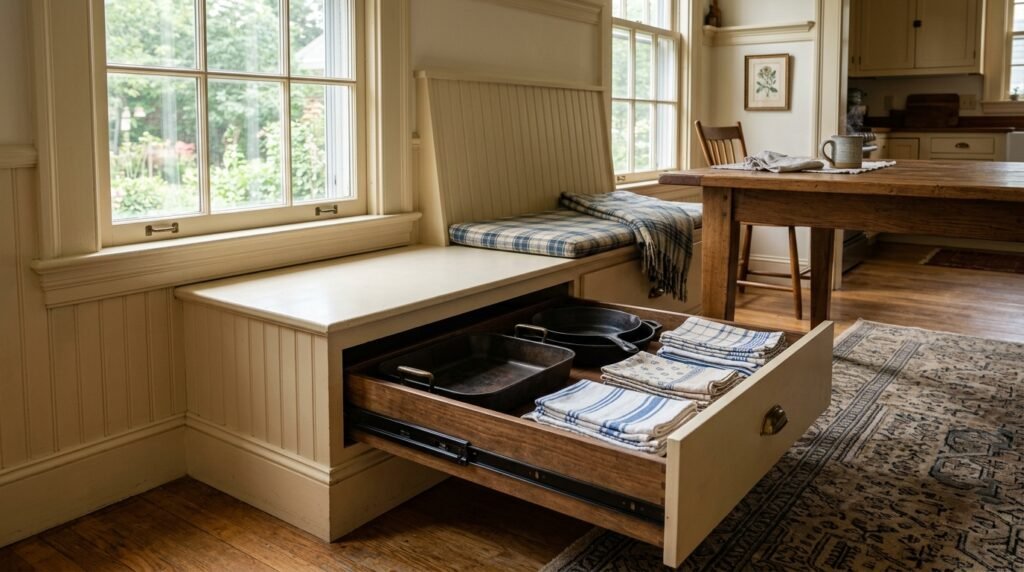
Designing deep drawers into the base of the bench ends offers better ergonomic access. Pulling a heavy drawer outwards beats lifting a heavy bench lid while people are sitting. You can store seasonal decorations, large roasting pans, or bulk pantry items out of sight. I have seen this work well in many compact homes lacking dedicated utility closet space. Using heavy duty drawer glides ensures smooth operation even when packed with heavy cast iron. This hidden capacity frees up premium cabinet space within the main working triangle easily. Smart design turns wasted corners into highly functional hubs.
8. Retro Checkered Linoleum Flooring

When original hardwood cannot be salvaged, true linoleum provides an incredibly authentic historical alternative. Modern marmoleum products use natural materials like linseed oil and pine rosin for durable surfaces. Laying out a classic black and white diagonal checkerboard pattern enlarges the room visually immediately. I have noticed this bold geometric choice brings immense joy and energy to the environment. Unlike cheap vinyl, real linoleum heals itself from minor scratches and feels soft underfoot. The matte finish hides footprints well and requires very little maintenance to look stunning. It captures the essence of mid century charm without feeling kitschy.
Planning the tile layout requires mapping the grid from the true center of the room. You want the borders to look symmetrical where the pattern meets the baseboards and cabinets. Hiring a professional installer prevents wavy lines that ruin the strict geometric optical illusion completely. In my experience, using subtle off white and soft charcoal gray softens the stark contrast beautifully. This muted approach feels more sophisticated and elegant than harsh bright white and jet black. The resilient surface provides amazing acoustic benefits by dampening loud echoes from clanking dishes. Your space instantly gains major personality and character.
9. Antique Brass Plumbing Fixtures
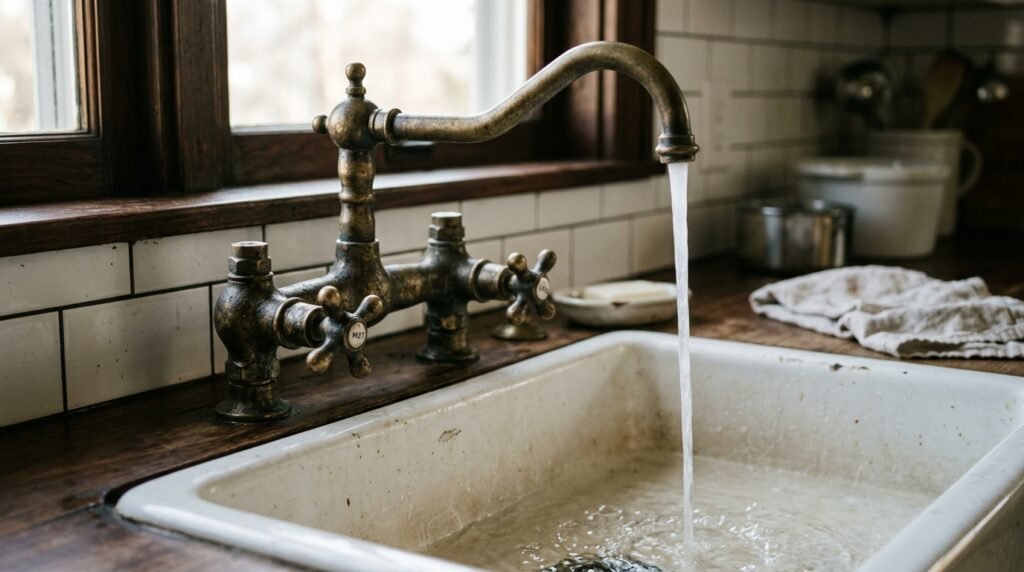
Upgrading your main water source with an unlacquered bridge faucet makes a monumental visual impact. The exposed pipes and cross handles replicate the exact mechanical look of early twentieth century plumbing. This living finish will tarnish and darken naturally wherever wet hands touch the metal daily. I have tried keeping them polished, but the natural dark patina looks far more sophisticated. You must embrace this changing aesthetic if you choose raw brass for your historic renovation. The heavy solid construction feels incredibly satisfying and substantial every single time you turn it. It serves as functional art beautifully.
Maintaining these living finishes requires educating your family members about proper daily care and cleaning. Harsh chemical sprays will strip the beautiful dark oxidation right off the metal instantly. I recommend using gentle dish soap and warm water with a soft microfiber cloth for cleaning. When the brass gets too dark, you can use specialized metal polish to bring back golden highlights. That is why many designers recommend this living metal for clients who appreciate organic aging processes. It adds an authentic tactile layer that mass produced modern shiny fixtures simply cannot replicate. Your sink area becomes uniquely yours.
10. Salvaged Wood Open Shelving
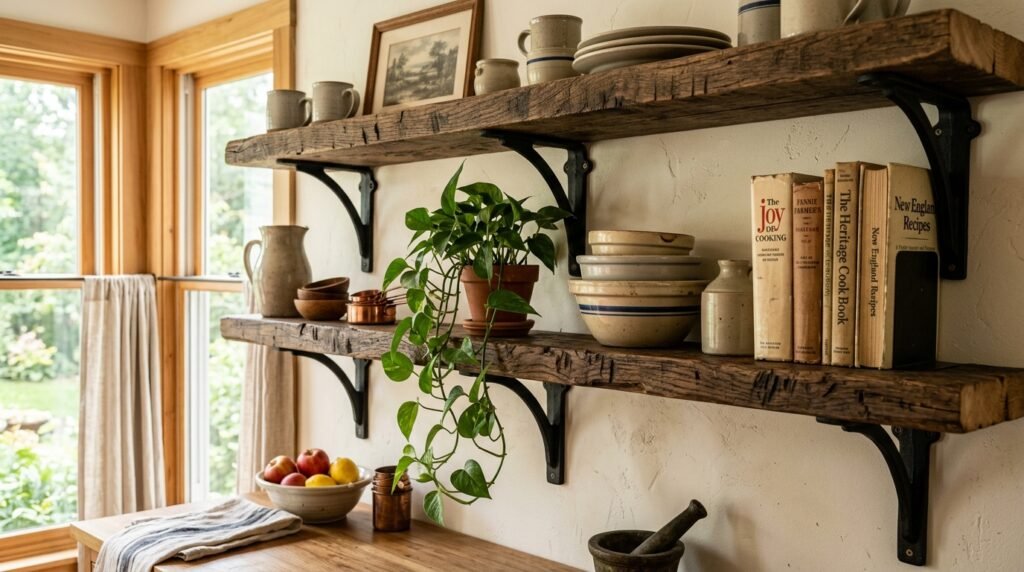
Replacing a few heavy upper cabinets with chunky reclaimed wood shelves opens the room completely. Sourcing old barn beams or factory floor joists brings genuine history directly into your home. The deep gouges, nail holes, and saw marks tell a story impossible to fake synthetically. I have seen this work well in many dark corners that need breathing room to feel larger. Supporting these thick planks with heavy cast iron brackets adds necessary structural integrity and industrial charm. You can display your favorite vintage stoneware, cookbooks, and trailing plants beautifully. It forces you to stay organized daily.
Maintaining open displays requires commitment to keeping your stacks of dishes neat and visually appealing. Dust mixed with cooking grease can create a sticky film if items sit unused for months. That is why many designers recommend only displaying items you actively use every single week. Washing them regularly keeps the entire display looking fresh, purposeful, and intentionally curated over time. Mixing in small framed vintage oil paintings adds a layer of unexpected sophistication to the shelves. This technique breaks up the solid lines of cabinetry, adding tremendous personality to the layout. It feels highly personal and unique.
11. Hidden Modern Appliance Integration
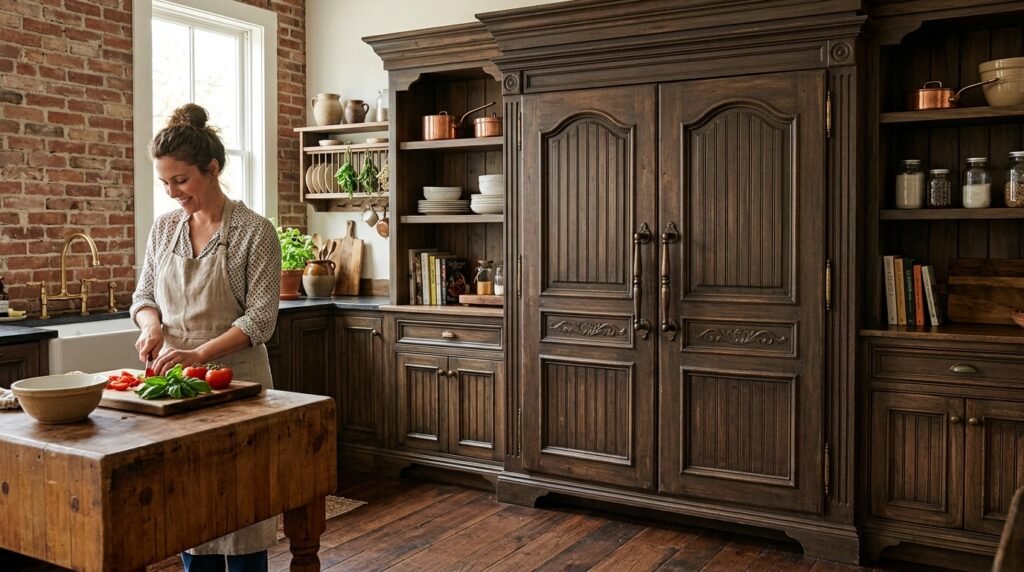
Nothing ruins a historic illusion faster than a massive stainless steel refrigerator looming awkwardly nearby. Using custom wood panels to conceal your modern cooling unit maintains the vintage aesthetic flawlessly. The refrigerator simply looks like a large antique armoire built seamlessly into the surrounding cabinetry. I have noticed how this single strategy elevates a moderate renovation into a luxury tier project. You must specify panel ready appliances during the initial planning phase before framing walls out. The dishwasher also disappears behind a matching false drawer front right next to the sink. The technology vanishes, leaving only classic beauty.
Selecting the right pulls for these heavy paneled doors ensures smooth operation without damaging wood. You need appliance grade hardware that can withstand the intense vacuum seal of modern refrigerators. Standard cabinet knobs will snap off in your hand under that extreme pulling pressure quickly. In my experience, utilizing long sturdy brass bars provides the necessary leverage while looking historically appropriate. Disguising the microwave inside a dedicated [pantry cabinet] completely removes the last trace of modernity. Your guests will legitimately wonder where you keep your food stored in the space. The seamless integration preserves the historic magic perfectly.
Selecting Panel Ready Brands
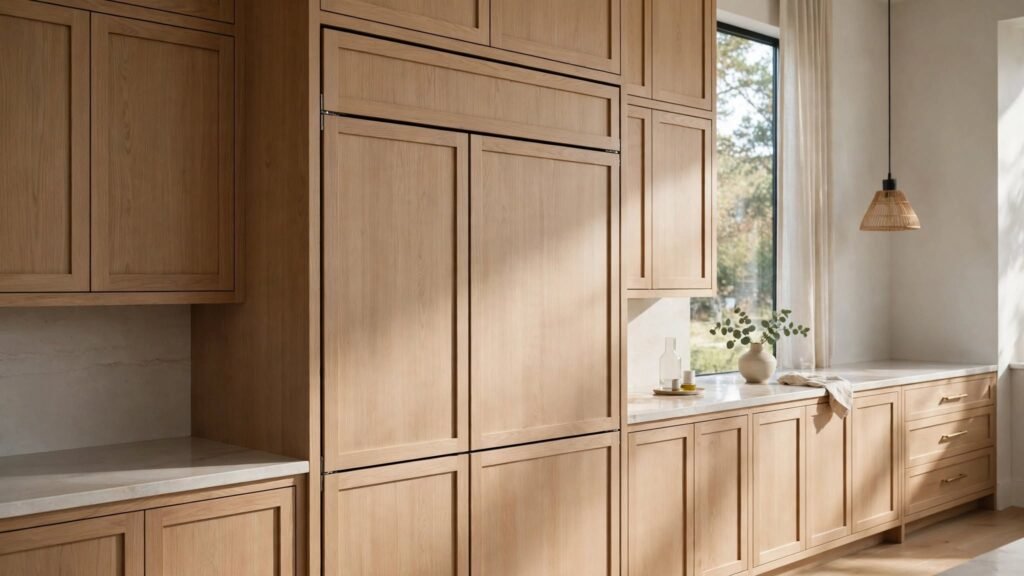
Navigating the luxury appliance market requires understanding which brands offer the best hinge clearance mechanisms. Some manufacturers require wide gaps between panels that ruin the flush inset aesthetic we desire. High end models utilize articulating hinges that allow doors to sit incredibly tight against adjacent frames. I have tried cheaper options and the uneven gaps always betray the hidden appliance secret immediately. Investing in premium cooling units guarantees reliable performance alongside flawless visual integration into your cabinetry. Ensure your cabinet maker possesses the exact appliance specifications before building the custom fronts. Precision here prevents very costly mistakes later.
12. Walk In Pantry Revival
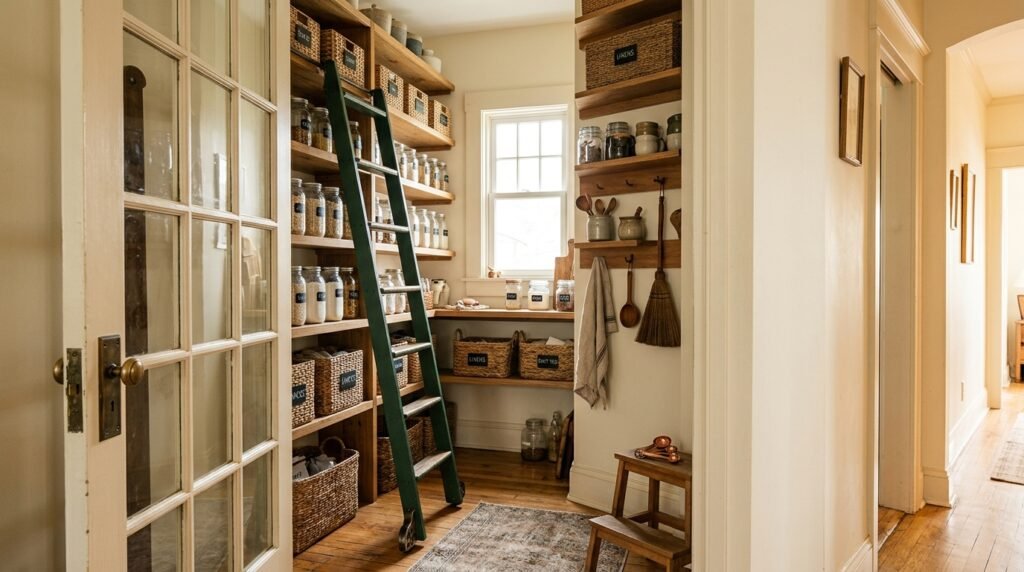
Older homes often feature awkward utility closets that serve as disorganized dumping grounds for junk. Transforming these dark spaces into highly functional butler pantries maximizes your overall storage capacity brilliantly. Adding a charming vintage glass door allows natural light to filter into the small space. I have seen many people benefit from running simple wooden shelves all the way to the ceiling. Storing bulky mixers, blenders, and large roasting pans here keeps the main countertops totally clear. You can paint the interior a moody dark color to create a surprising jewel box effect. It adds immense practical luxury.
Organizing this dedicated zone requires investing in matching glass jars and woven storage baskets consistently. Emptying dry goods out of ugly cardboard packaging elevates the visual appeal of the shelves. A small rolling library ladder allows easy access to the highest storage tiers near the ceiling. That is why many designers recommend putting a small prep sink here if plumbing allows it. This creates a hidden mess zone for making coffee or hiding dirty dishes during dinner parties. The pantry becomes the secret workhorse that keeps your main cooking area pristine. It represents ultimate historic home functionality.
Frequently Asked Questions
How much does a full restoration usually cost?
Undertaking a comprehensive restoration heavily depends on the current state of your hidden structural elements. If plumbing and electrical systems require total replacement, budgets escalate into the fifty thousand range quickly. Using authentic materials like soapstone and custom inset cabinetry drives material costs significantly higher than standard renovations. I have noticed homeowners saving money by retaining the original footprint and avoiding moving structural walls. Doing your own demolition and painting the final cabinetry saves thousands in expensive labor costs easily. Always pad your budget by twenty percent for inevitable hidden surprises found behind plaster walls.
Can I mix modern metals with vintage finishes?
Mixing different metal finishes creates a beautifully curated look that feels collected over many decades. You should pick one dominant metal, like unlacquered brass, for your primary fixtures and hardware. Then introduce a secondary metal like oil rubbed bronze for your lighting fixtures or exposed hinges. I have seen this work well in many projects when the finishes share a similar muted undertone. Avoiding shiny polished chrome prevents the design from feeling too cold and strictly contemporary in nature. The contrast adds necessary visual depth, making the space feel authentically historic and wonderfully lived in today.
What is the best way to handle lead paint?
Discovering lead based paint remains a very common hurdle when renovating any mid century property. You must never sand dry plaster or old woodwork without proper testing and abatement protocols. Hiring certified professionals ensures the hazardous dust never contaminates your central air conditioning ductwork system. In my experience, encapsulating the old paint under new specialized primers often proves safer than removal. If you must demolish walls, hanging heavy plastic barriers and using negative air pressure machines is mandatory. Protecting your family during the demolition phase requires strict adherence to all local environmental safety building codes.
How do I maximize natural light without changing windows?
Older homes often feature smaller window openings that restrict sunlight from entering the space deeply. Painting your ceiling a high gloss bright white reflects ambient light downward into the room beautifully. Using reflective surfaces like glazed ceramic subway tile and polished nickel hardware bounces light around effectively. That is why many designers recommend removing heavy window treatments and utilizing simple hidden roller shades. Adding mirrored backsplashes inside glass front upper cabinets creates an illusion of depth and added brightness instantly. Layering adequate artificial lighting on dimmer switches compensates perfectly during dark gloomy winter afternoons.
Are soapstone countertops difficult to maintain daily?
Soapstone provides incredible historical accuracy but requires a very specific maintenance mindset from the homeowner. This dense natural stone resists dangerous bacteria and will never stain from wine or citrus juice. However, it scratches easily if you drag heavy cast iron pans across the raw matte surface. I have tried applying food grade mineral oil monthly to keep the charcoal color rich and dark. The oiling process masks minor scratches, allowing the stone to develop a beautiful organic patina over time. You must embrace these minor imperfections as part of the authentic vintage farmhouse charm.
Should I keep my original cast iron radiators?
Preserving original cast iron radiators maintains the true architectural integrity of your historic living space. These heavy units provide incredibly comfortable radiant heat that modern forced air systems cannot replicate. You can have them sandblasted and powder coated to match your new wall colors perfectly. In my experience, building custom wooden covers creates extra functional shelf space while hiding chipped units. If you must remove them to gain cabinet space, sell them to architectural salvage yards for repurposing. They represent an era of solid craftsmanship that deserves to be respected and preserved for future generations.
How do I blend the kitchen with the dining room?
Creating a cohesive flow between rooms requires carrying specific design elements across the transitional thresholds. Continuing the exact same hardwood flooring seamlessly into the dining area connects the spaces visually. You can match the dining room wainscoting to the inset cabinet door profiles for architectural harmony. I have noticed how using a unified color palette prevents the renovation from feeling disconnected and jarring. Installing a widened cased opening instead of completely removing the wall preserves the historical segmented floor plan. This strikes the perfect balance between open concept living and traditional historic residential architectural layouts.
Is it worth repairing original plaster walls?
Repairing original plaster walls rather than tearing them down for drywall preserves incredible acoustic benefits. Plaster provides a rock solid density that dampens sound transmission between rooms significantly better than drywall. The slight surface imperfections give the walls a warm, handmade texture that modern materials lack. That is why many designers recommend finding skilled tradesmen who specialize in historic plaster restoration techniques. They use metal lath and specialized bonding agents to fix cracks without creating massive dust storms. The resulting smooth finish absorbs paint beautifully, creating a depth of color that feels rich and authentically aged.
What are the best colors for a 1940s vibe?
Selecting a period appropriate color palette roots your entire renovation in the correct historical decade. Muted pastel tones like seafoam green, buttery yellow, and soft robin egg blue dominated the postwar era. Pairing these soft colors with crisp white trim creates a cheerful and sanitary aesthetic historically. I have seen many people benefit from using darker moody tones like navy or forest green for lower cabinets. This anchors the room visually while keeping the upper sections feeling light and airy near the ceiling. Testing large paint swatches on different walls helps you observe changing shadow patterns.
How can I add modern outlets discreetly?
Meeting modern electrical codes requires installing numerous outlets along your beautiful new ceramic tile backsplash. Placing the receptacles sideways and close to the counter hides them behind coffee makers and toasters. You can also install plug mold strips directly underneath the upper cabinets completely out of sight. In my experience, color matching the outlet covers to the tile prevents them from becoming visual eyesores. Avoid bright white plastic covers if your backsplash utilizes a warmer cream or gray tile tone. Thoughtful electrical planning ensures you have necessary power without compromising the vintage aesthetic you worked hard to build.
Do floating shelves work in historic homes?
Floating shelves can look appropriate in historic homes if you select the right mounting hardware. Utilizing thick reclaimed wood supported by substantial metal brackets feels more authentic than hidden internal mounts. The visible brackets add industrial texture that aligns perfectly with early twentieth century utilitarian design principles. I have noticed homeowners love the convenience of grabbing plates quickly without opening heavy cabinet doors. You must ensure the wall studs can handle the extreme weight of solid wood and stacked ceramic dishes. Styling the shelves carefully prevents the area from looking cluttered, messy, and disorganized on a daily basis.
Can I use modern luxury vinyl plank flooring?
Installing luxury vinyl plank flooring offers incredible durability and water resistance for busy modern families. However, it rarely captures the authentic soul and tactile warmth of genuine old growth hardwood floors. If budget constraints prevent real wood, look for premium vinyl that features realistic varied grain patterns. That is why many designers recommend true linoleum as a historically accurate alternative to cheap plastic flooring. Real wood or tile will always provide a better return on investment when selling a historic property later. Buyers specifically seek out those original details that give older homes their unique irreplaceable character.
The Historic Transformation Journey
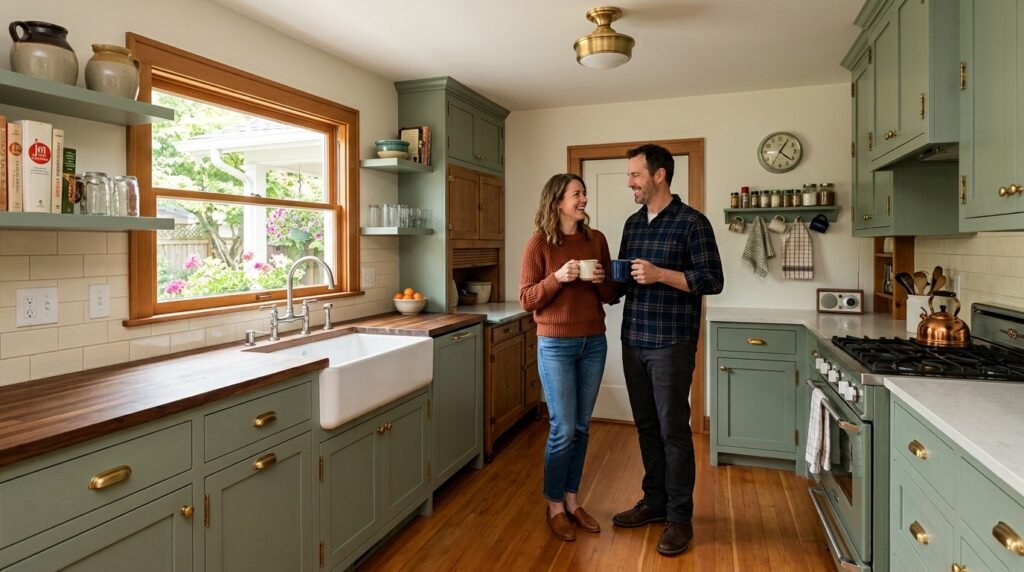
Navigating the complexities of older homes requires patience, vision, and a deep respect for craftsmanship. Implementing these remodeling ideas for 1940s bungalow kitchen spaces ensures your property retains its magical soul. You have discovered how carefully chosen materials and period accurate fixtures create an unshakeable authentic foundation. I have seen how small changes like these can completely transform a space into a masterpiece. Pin this guide to your favorite Pinterest inspiration board before starting your upcoming demolition and construction phases. Share these insights with your contractor to guarantee they understand your strict vision for preserving historical integrity.

Amelia leads HavenlyStyle’s editorial vision with a passion for elegant interiors and practical home living. With years of experience in home décor and lifestyle content, she ensures every article is accurate, inspiring, and easy to follow. From timeless decorating ideas to the latest interior design trends, Amelia is committed to helping readers create beautiful, functional spaces while maintaining HavenlyStyle’s trusted and welcoming voice.