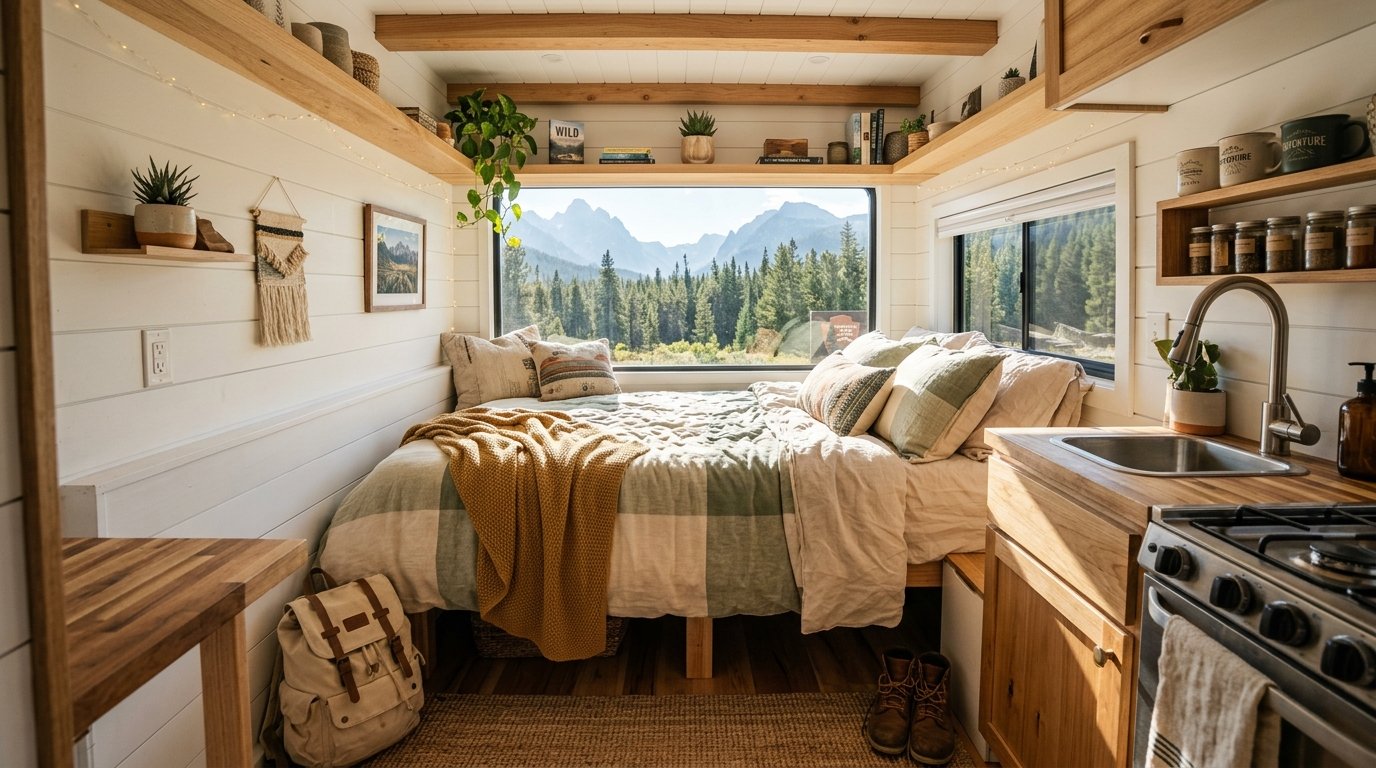
Taking on tiny home and RV decor means embracing a unique set of design challenges while unlocking incredible freedom. When you are working with under 300 square feet, every single inch holds massive potential. I have noticed that people often assume living small means sacrificing comfort or beauty, but that is entirely false. In my experience, thoughtful camper interior design ideas can transform a cramped metal box into a stunning sanctuary on wheels. You simply need a strategic approach to spatial planning and a willingness to rethink traditional household layouts to make your compact living space feel grand.
Creating a functional and stylish mobile haven requires careful curation of both form and function. Whether you are tackling a vintage Airstream renovation or exploring house bus interior concepts, the goal remains identical. You want an environment that breathes easily and supports your daily routines without feeling cluttered. I have seen countless travelers make the mistake of overstuffing their rigs with bulky items that destroy the flow. Instead, we will explore highly intentional decor choices that maximize utility while keeping the aesthetic light, airy, and deeply inviting for your upcoming adventures on the open road.
Executive Summary
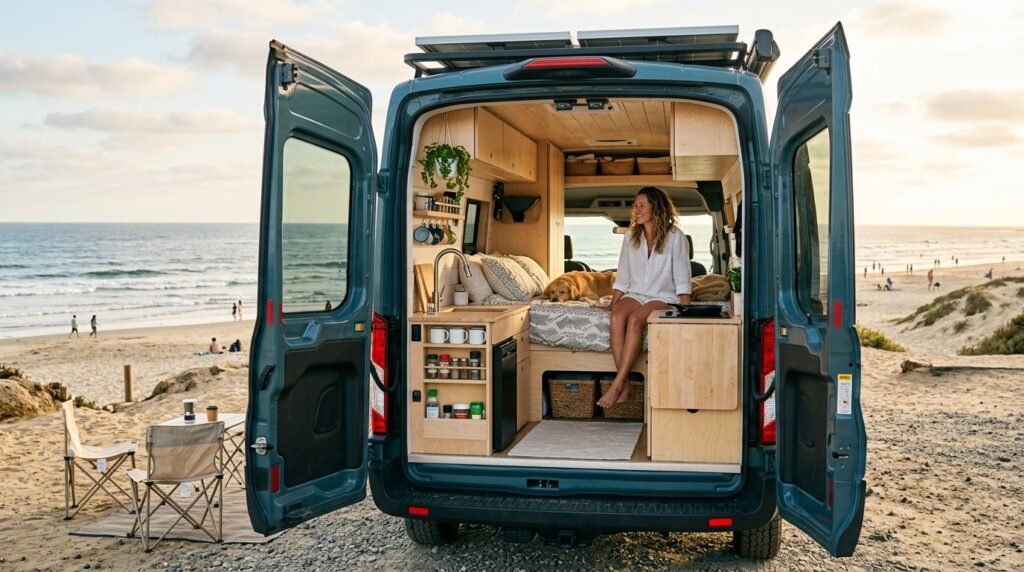
This comprehensive guide breaks down exactly how to elevate your mobile living experience without compromising on essential daily functions. You will discover advanced spatial strategies that top designers use to create luxury camper environments within strictly limited footprints. I have spent years analyzing what makes a small space camper design actually work in practice versus what merely looks good in photographs. We will cover specific storage integrations, lighting techniques, and furniture adaptations that solve the most frustrating aspects of nomadic living. These proven concepts will save you both time and costly renovation mistakes along your journey.
Implementing these architectural principles will completely shift how you interact with your compact environment daily. You can expect to learn actionable methods for blending aesthetic appeal with hardcore utility across every zone of your vehicle. I often recommend starting with a clear vision of your travel style before buying a single piece of hardware. We will also touch on exact material choices that withstand highway vibrations while maintaining a premium feel. By the end of this resource, you will possess a concrete blueprint for executing a flawless interior camper ideas makeover that feels like home.
1. Vertical Space Optimization
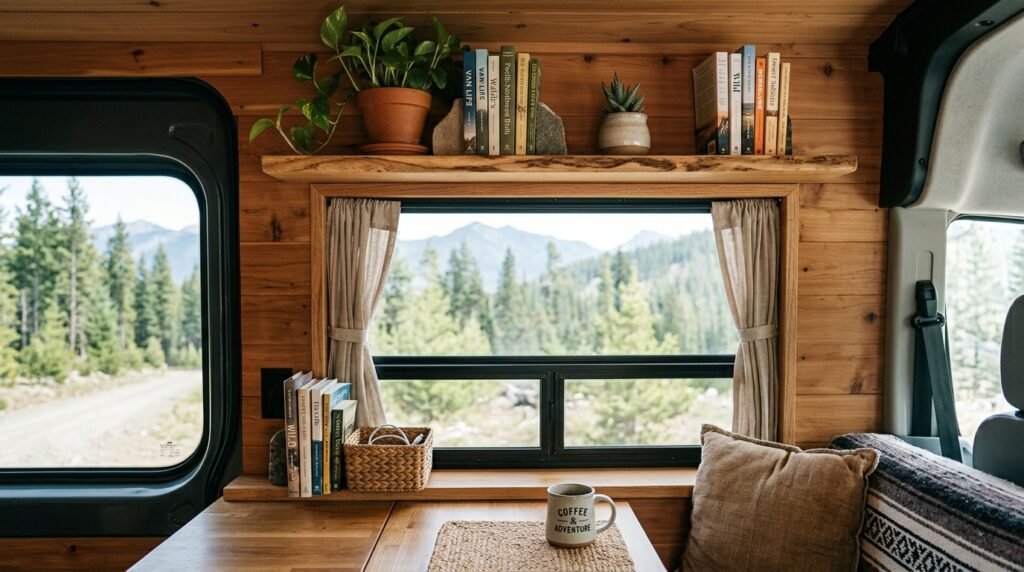
Utilizing your wall height represents the single most effective strategy for expanding a cramped interior footprint. Most beginners completely ignore the upper third of their vehicle, leaving valuable volume totally empty. I have seen this work beautifully when travelers install custom floating shelves directly above their window lines. Taking advantage of this dead zone instantly provides homes for books, plants, and essential daily gear without eating into precious floor real estate. Proper vertical integration pulls the eye upward naturally, creating an optical illusion that makes your ceiling appear much higher than its actual physical measurement.
Securing these elevated storage solutions requires specific hardware designed to handle constant road vibrations and sudden stops. You must anchor everything directly into the structural ribs of your vehicle rather than just the thin wall paneling. That is why many designers recommend using heavy duty toggle bolts or direct metal screws for any overhead cabinetry. Incorporating soft catch latches on all elevated doors ensures your belongings stay exactly where you put them during transit. Exploring various caravan design ideas reveals that keeping heavier items low and lighter items high prevents dangerous weight distribution issues while driving.
2. Multipurpose Furniture Solutions
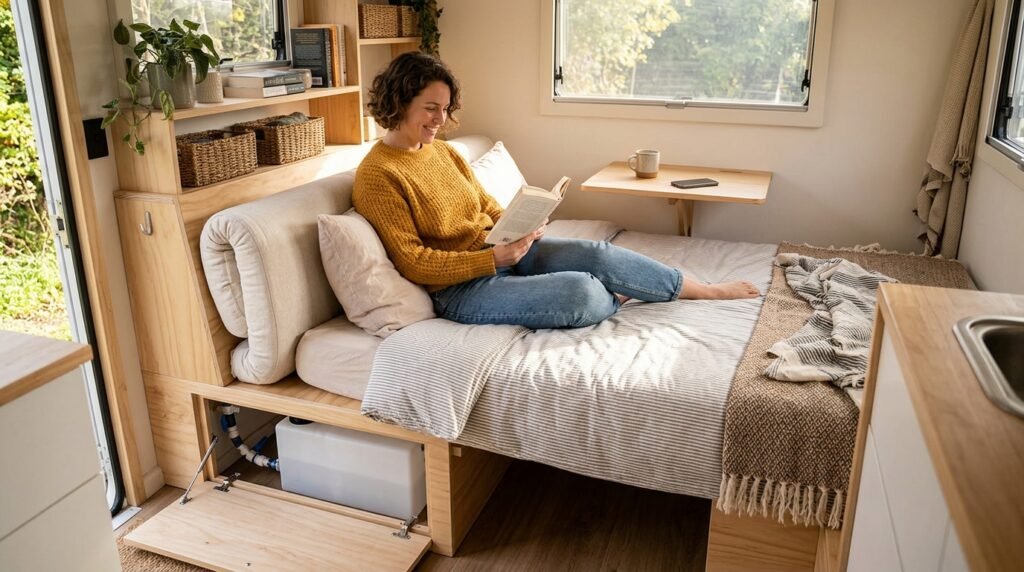
Investing in furniture that serves at least two distinct purposes remains nonnegotiable for anyone living in tiny proportions. A standard couch taking up twenty percent of your floor plan simply wastes too much potential utility. I have tried building custom benches that effortlessly transform into guest beds while hiding massive water tanks underneath the cushions. Finding flexible furniture pieces completely changes how your layout functions throughout different phases of the day. Embracing small camper ideas interior design principles means demanding maximum versatility from every bulky item you allow into your carefully curated mobile living environment.
Quality custom fabrication often outperforms standard retail furniture when outfitting a highly specialized travel rig. Designing modular pieces allows you to tailor dimensions exactly to your specific wheel wells and structural curves. I have noticed that prioritizing ergonomic comfort while maintaining hidden utility creates the most satisfying long term living arrangements. You can integrate heavy duty sliding rails into bench seats to reveal massive storage bays for outdoor recreational gear. Crafting a seamless rv campervan layout relies heavily on your ability to hide necessary chaos behind beautifully finished wooden facades that look like standard household cabinetry.
Hidden Bed Compartments
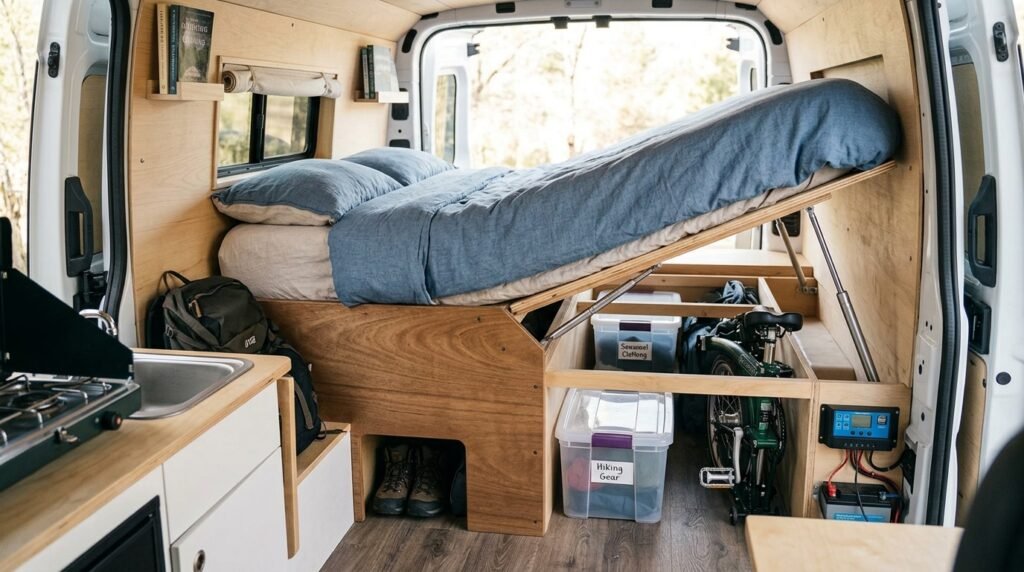
Elevating your sleeping platform introduces a massive garage space underneath for storing bicycles, seasonal clothing, and solar equipment. Designing a permanent bed structure eliminates the frustrating daily chore of breaking down your dining table just to sleep. I have seen many people benefit from this fixed layout because it creates distinct zones within the tiny footprint. Utilizing heavy duty hydraulic struts allows you to lift the entire mattress effortlessly to access the storage below. Implementing these smart structural choices forms the foundation of any highly functional mini camper interior ideas project aimed at full time living.
Convertible Dining Tables
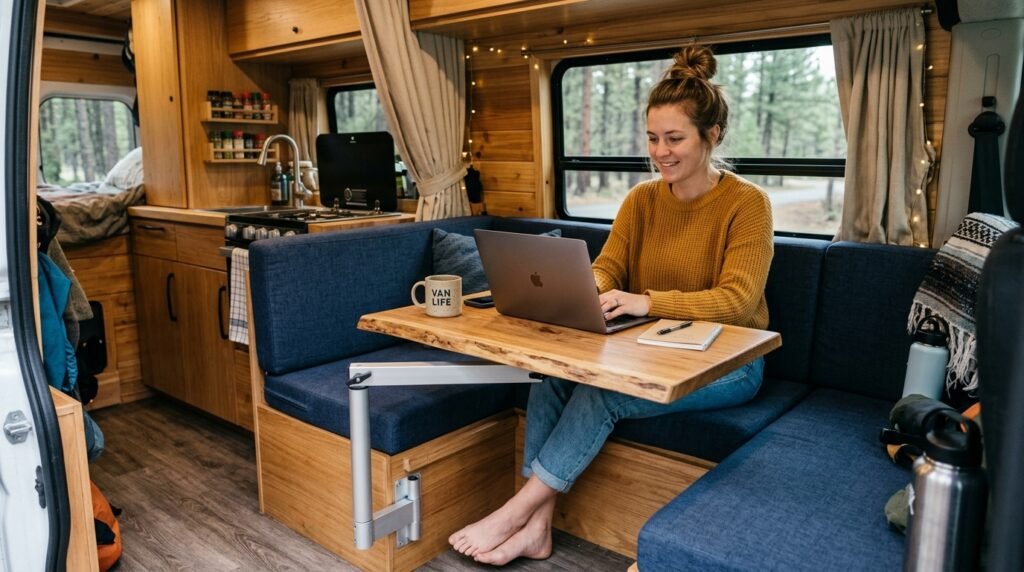
Installing a marine grade pedestal table mount provides an incredibly sturdy dining surface that vanishes when you need floor space. You can easily unclip the tabletop and store it flat behind the driver seat during long transit days. In my experience, choosing a lagun style swiveling mount offers the best flexibility because it pivots perfectly out of the way. This clever hardware allows you to shift the table closer for working or push it aside for cooking prep. Creating dynamic gathering areas requires adopting these fluid mechanisms that adapt instantly to your changing daily requirements.
Step Storage Drawers
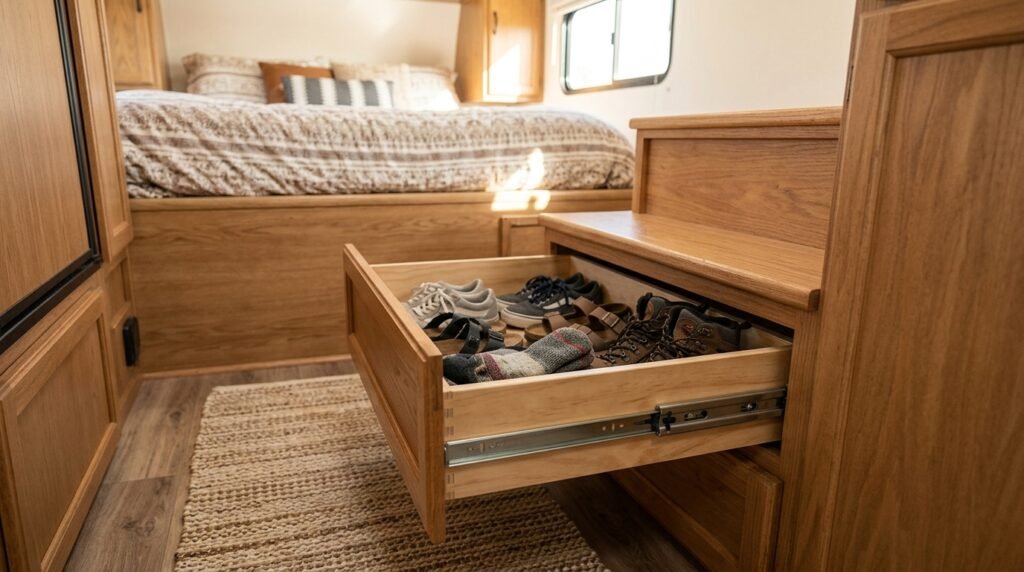
Converting the mandatory steps leading up to your raised bed into functional sliding drawers reclaims incredibly valuable cubic inches. Most standard builds leave these transitional areas completely hollow, which wastes prime real estate for shoe storage. I have built deep drawer boxes into these risers using heavy duty locking slides that hold closed during travel. Stashing your daily footwear inside the stairs keeps the main floor entirely free from tripping hazards. These thoughtful micro adjustments perfectly demonstrate how clever rv restoration ideas can modernize an older layout without requiring a complete structural demolition of the original framing.
3. Light Color Palettes
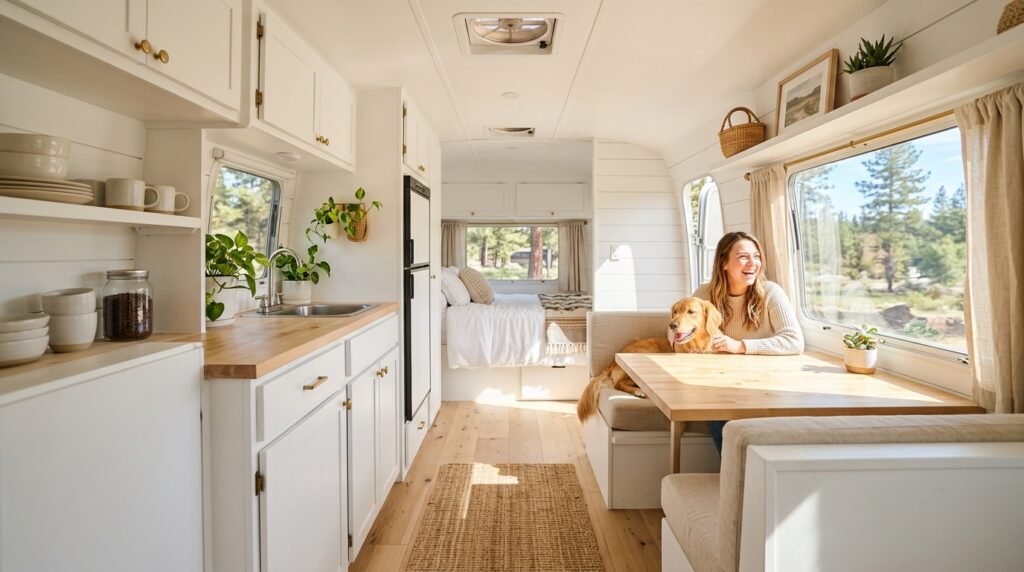
Painting your interior walls in bright shades immediately counteracts the claustrophobic feeling commonly associated with compact mobile living. Dark heavy wood finishes historically dominate the manufacturing industry, making factory rigs feel like dark dreary caves. I have seen how small changes like rolling a coat of crisp white paint over outdated paneling can completely transform a space. Light reflects effortlessly off pale surfaces, bouncing natural sunlight deep into the darkest corners of your floor plan. Establishing a bright foundational canvas allows you to introduce warmth and character through smaller colorful textile accents and natural wood finishes.
Selecting the appropriate paint finish determines how easily you can maintain that fresh aesthetic while exploring muddy environments. Opting for a premium satin or semi gloss enamel ensures you can wipe away inevitable scuffs with a damp cloth. In my experience, flat paints absorb dirty fingerprints and trap road dust rapidly in tight living quarters. Creating a cohesive minimalist rv decor ideas theme requires extreme discipline in your foundational color selections to avoid visual chaos. Keeping the main envelope bright and uniform tricks the human eye into perceiving boundaries as being much further away than they are.
4. Natural Textures Integration
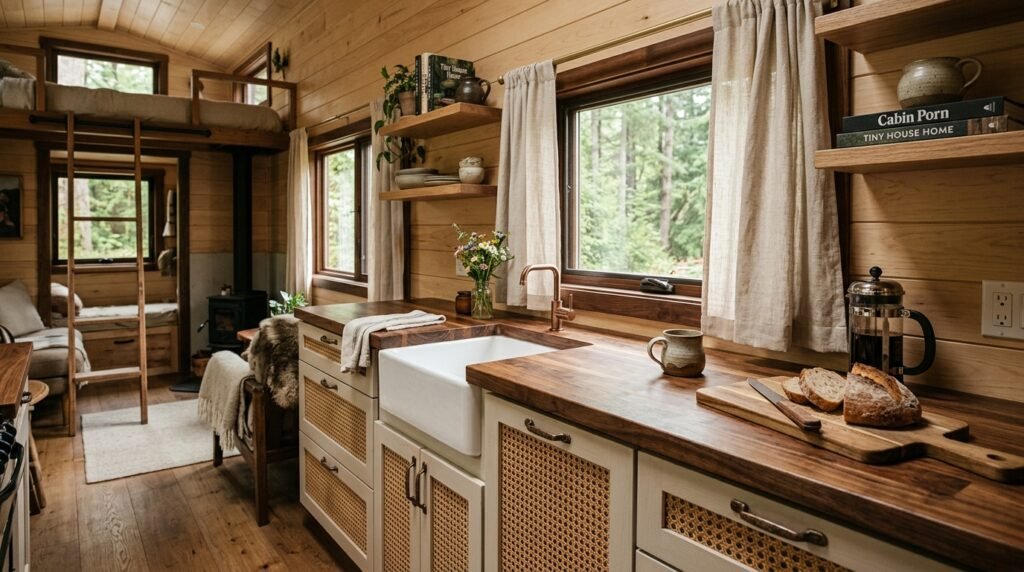
Bringing organic materials inside your vehicle creates a psychological connection to the nature you are traveling to see. Sterile plastic surfaces often dominate factory builds, resulting in an environment that feels more like a hospital than a home. I have tried incorporating rich walnut countertops and woven rattan cabinet inserts to instantly warm up a stark white interior. Balancing hard metallic structures with soft natural fibers generates a deeply comforting tactile experience within the cabin. Thoughtful application of leather drawer pulls and linen curtains elevates the entire sensory experience of your carefully designed mobile dwelling.
Maintaining these natural materials in a heavily fluctuating climate requires specific sealing treatments and ongoing protective care. Solid wood surfaces expand and contract drastically as you drive from humid coastlines into dry desert environments. That is why many designers recommend treating butcher block counters with food safe mineral oil rather than rigid polyurethane finishes. Allowing the wood to breathe prevents cracking while developing a beautiful authentic patina over years of travel. Achieving an inspiring stylish camper interior inspiration aesthetic heavily depends on layering these authentic organic textures thoughtfully throughout your highly optimized residential floor plan.
5. Strategic Lighting Placement
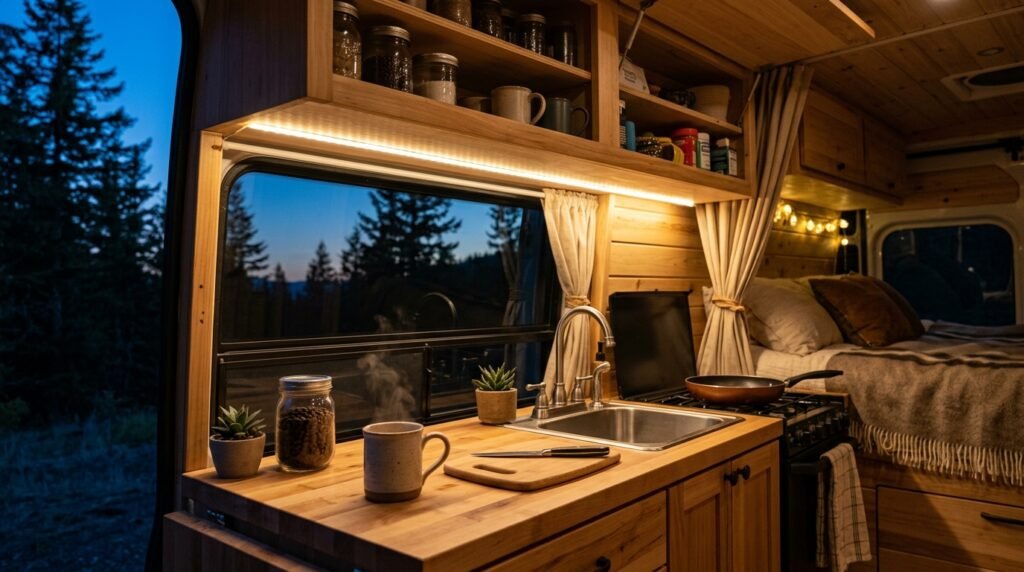
Illuminating a compact space correctly requires layering multiple distinct light sources rather than relying on one harsh overhead fixture. Glaring factory ceiling lights often create terrible shadows and ruin the cozy ambiance during peaceful evening hours. I have noticed that installing warm temperature LED strips under the upper cabinets completely revolutionizes the evening atmosphere. This targeted task lighting brightens your kitchen prep areas perfectly without blinding anyone lounging on the nearby sofa. Designing a thoughtful electrical plan ensures you have exact control over the mood and functionality of your environment at any given moment.
Connecting all your custom lighting zones to highly sensitive dimmer switches gives you absolute authority over power consumption. Conserving battery life remains a critical priority when you are parked in remote locations without shore power connections. I always wire individual reading sconces with integrated usb charging ports right beside the main sleeping platform. This localized approach prevents you from needing to illuminate the entire rig just to read a book late at night. Creating a truly welcoming mini van for travel environment hinges directly on your ability to manipulate artificial light softly and efficiently.
6. Flexible Kitchen Setup
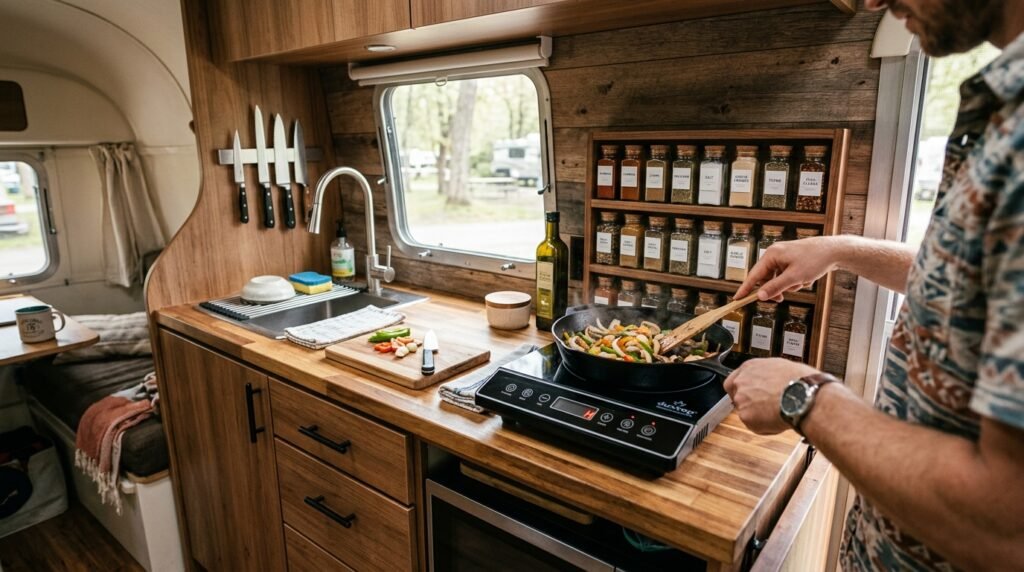
Designing a kitchen for a mobile footprint demands ruthless prioritization of culinary tools and cooking appliances. A massive residential stove simply eats up too much counter space that you desperately need for daily meal preparation. I have cooked extravagant meals on a portable induction cooktop that easily stows away inside a drawer when not in use. Utilizing flexible appliances keeps your main surfaces clear for working on laptops or sorting hiking gear during the day. Establishing this high level of adaptability forms the core philosophy behind any truly successful small camper design ideas implementation.
Organizing your remaining culinary essentials requires securing every single item so nothing becomes a dangerous projectile on rough roads. Stacking nesting pots and utilizing collapsible silicone measuring cups drastically reduces the required cabinet volume for your kitchen gear. In my experience, lining every single drawer with premium non slip rubber matting completely eliminates annoying rattling noises while driving. Containing your pantry staples inside uniform square glass jars maximizes shelf space better than randomly sized cardboard packaging. Protecting your fragile items with custom foam inserts ensures you never arrive at camp to find broken dishes scattered everywhere.
Magnetic Spice Racks
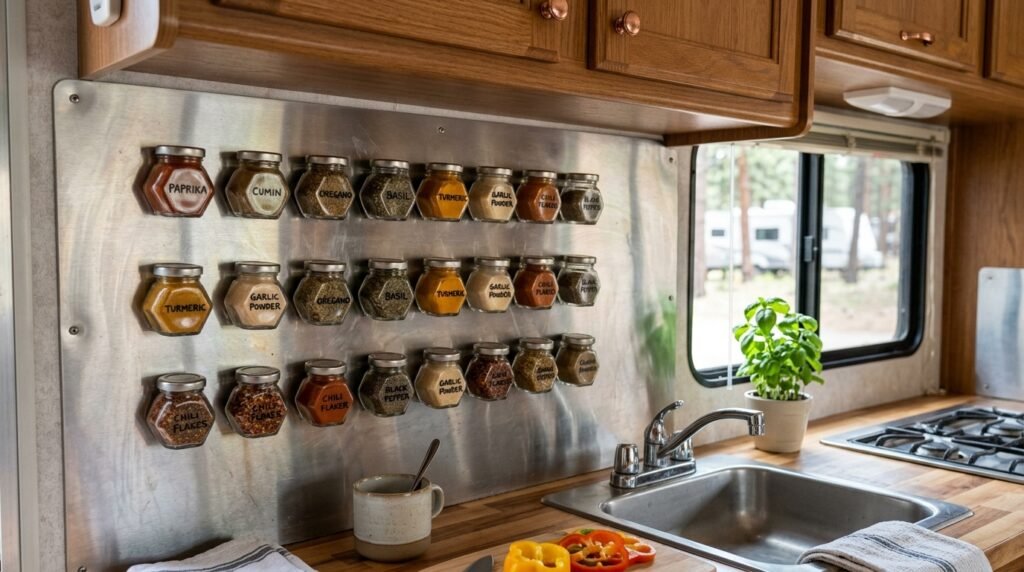
Mounting a heavy duty stainless steel plate against your kitchen backsplash creates an ingenious home for your daily seasonings. You can attach strong neodymium magnets directly to the lids of small hexagonal glass jars to hold them firmly against the wall. I have seen this setup survive miles of heavily corrugated dirt roads without dropping a single container of basil. Displaying your colorful spices visually adds a beautiful culinary aesthetic while keeping critical cooking ingredients instantly accessible. Freeing up valuable drawer space for bulkier utensils makes this simple upgrade incredibly valuable for tiny galley kitchens.
Foldable Counter Extensions
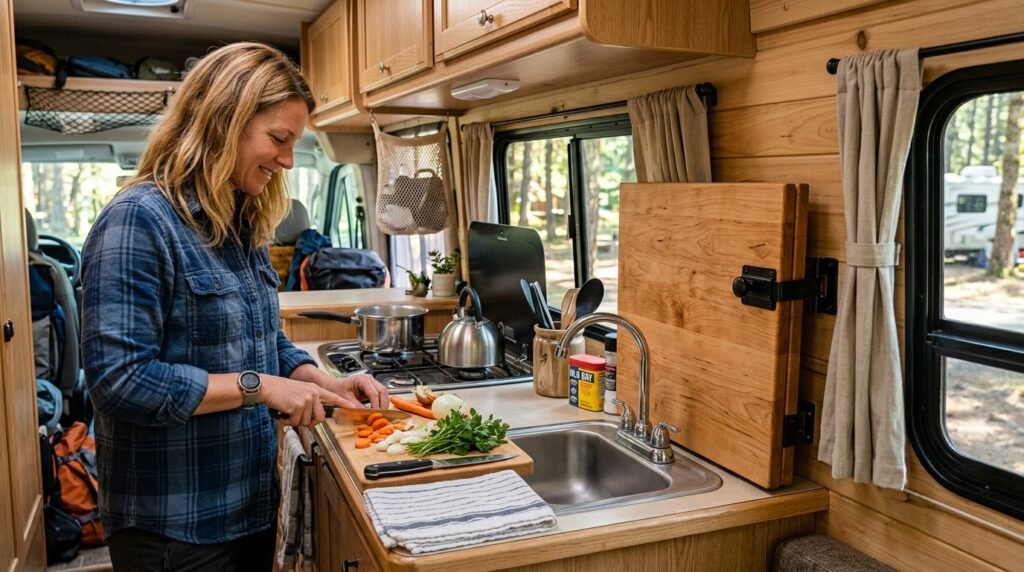
Attaching a solid wood drop leaf mechanism to the end of your main kitchen cabinet provides crucial emergency prep space. This sturdy hinged platform locks upward when you are chopping vegetables and folds completely flat against the cabinet when finished. That is why many designers recommend positioning these extensions directly next to the primary doorway for easy outdoor serving access. Utilizing robust locking brackets guarantees the extended surface remains perfectly level while supporting heavy cutting boards. Expanding your functional workspace temporarily proves essential when preparing complex meals inside severely restricted mobile cooking environments.
Sink Cover Cutting Boards
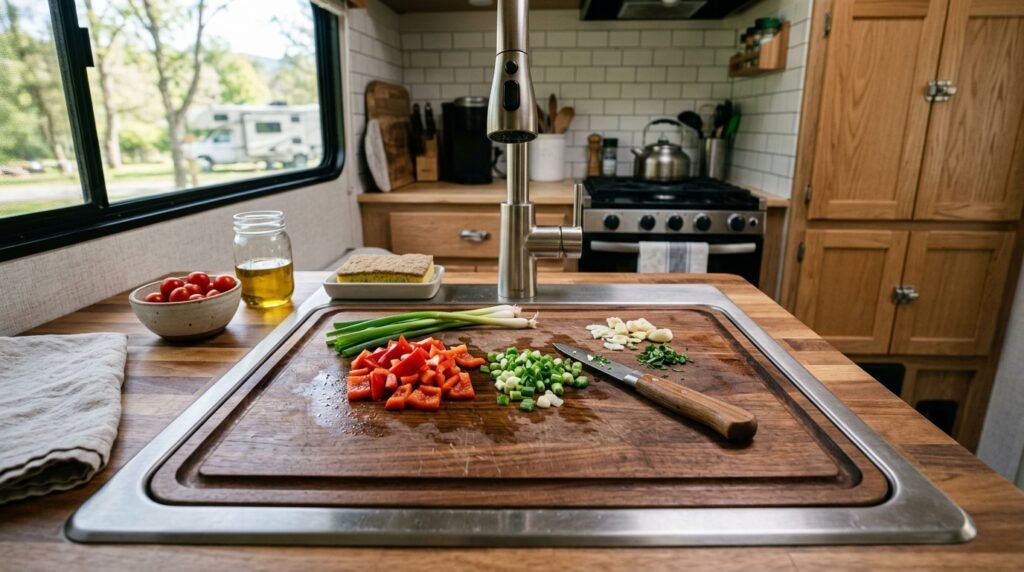
Fabricating a custom wooden cover that sits perfectly flush inside your sink basin instantly reclaims massive amounts of countertop area. You can utilize this sturdy insert as your primary cutting board while neatly hiding dirty dishes underneath during dinner parties. I have routed deep juice grooves into my sink covers to prevent messy liquid spills from running onto the surrounding surfaces. Designing the cover with a subtle finger hole allows for rapid removal when you suddenly need access to the faucet. Maximizing utility through these clever overlapping functions defines top tier mobile interior execution.
7. Luxury Bathroom Upgrades
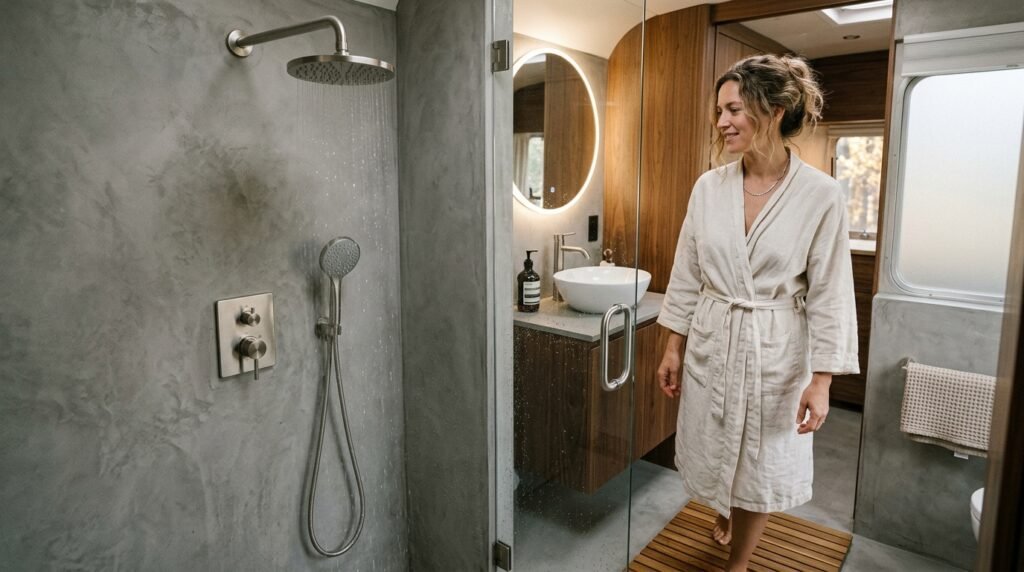
Transforming a cramped plastic wet bath into a spa like oasis requires upgrading fundamental materials and ventilation systems. The standard fiberglass enclosures provided by manufacturers often feel notoriously cheap and incredibly difficult to keep completely clean. I have completely transformed wet baths by installing lightweight waterproof micro cement over the existing curved plastic walls. This seamless architectural finish mimics the look of a high end modern hotel while adding virtually zero weight to the vehicle. Incorporating a premium low flow shower head ensures a luxurious washing experience without rapidly depleting your precious fresh water tank.
Managing moisture effectively prevents catastrophic mold growth from destroying your beautiful internal framing and insulation layers. Upgrading to a powerful bi directional ceiling exhaust fan pulls humid air out of the shower stall almost instantly. I have noticed that adding a retractable self cleaning shower door eliminates the need for disgusting plastic curtains that constantly cling to your legs. Integrating a premium composting toilet system removes the horrific chore of dealing with traditional black water holding tanks entirely. Executing these premium upgrades solidifies your rig as a genuine luxury camper capable of extended off grid living.
8. Outdoor Living Extensions
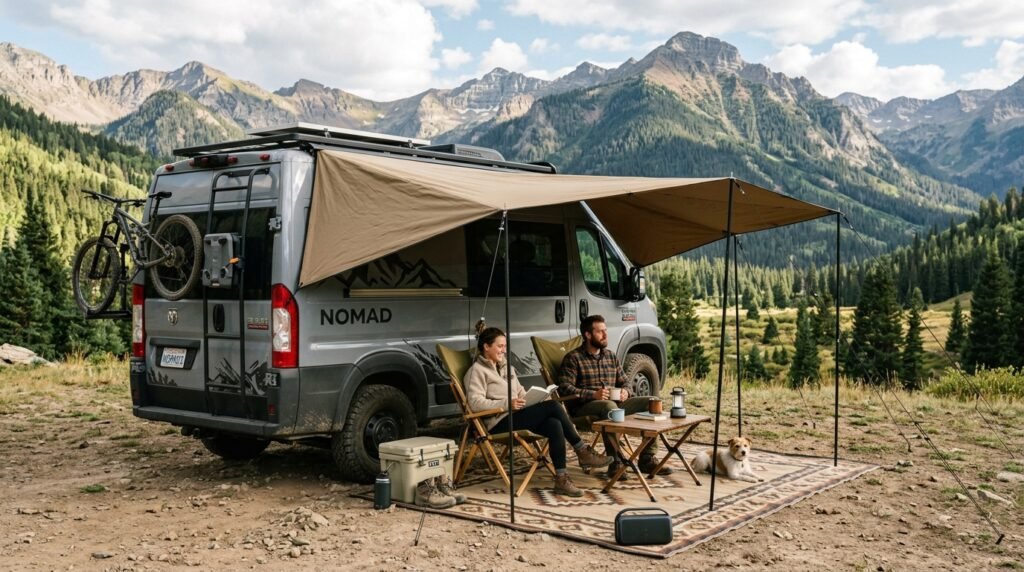
Expanding your functional footprint past the metal walls of your vehicle drastically improves long term mental health on the road. Deploying a heavy duty side awning creates an instant shaded patio that doubles your usable living space during beautiful weather. I have spent countless afternoons working comfortably outside because I properly integrated exterior led porch lights and waterproof electrical outlets. Setting up a durable outdoor rug defines the patio perimeter while drastically reducing the dirt tracked inside the cabin. Blending your interior comforts with the surrounding natural environment remains the ultimate goal of nomadic living.
Establishing a permanent exterior cooking station prevents bacon grease and strong fish odors from permanently permeating your sleeping quarters. Mounting a quick connect propane port onto the exterior frame allows you to plug a portable grill directly into the main fuel supply. That is why many designers recommend installing drop down exterior tables perfectly sized for holding cooking utensils and cold beverages. Storing your outdoor camping chairs inside an easily accessible rear garage prevents you from hauling dirty gear through the clean house. Executing clever sprinter van storage solutions seamlessly connects your indoor and outdoor lifestyles.
9. Minimalist Wall Art
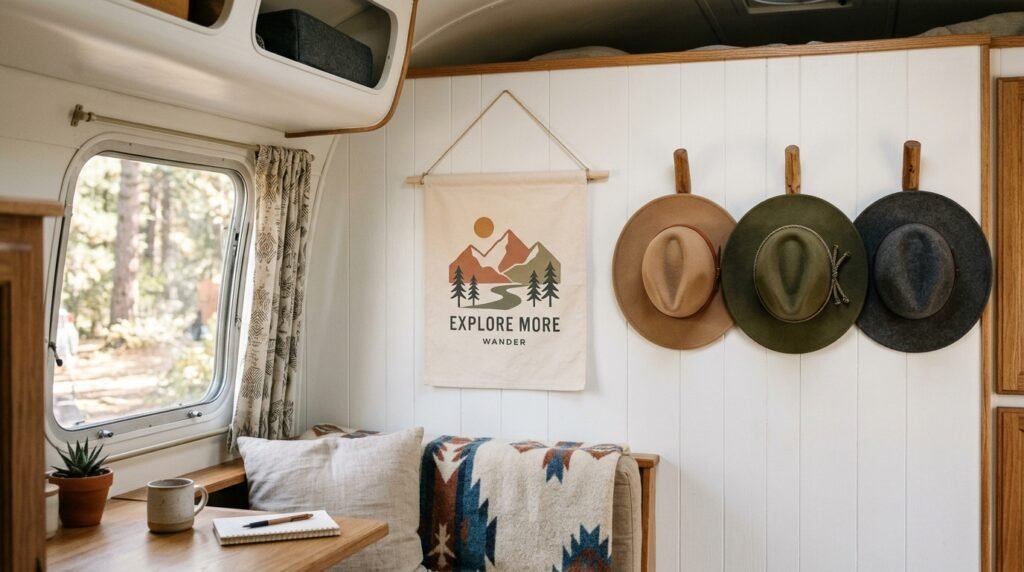
Decorating your limited wall space requires an incredibly restrained approach to avoid making the cabin feel visually overwhelming. Hanging heavily framed traditional art simply adds unnecessary weight and creates dangerous projectiles during a sudden highway braking situation. I have tried using lightweight canvas tapestries that introduce beautiful textures and colors without posing any physical danger while driving. Utilizing strong command strips instead of metal screws prevents permanent damage to your delicate wooden wall paneling. Curating a few highly meaningful pieces creates a distinct personality without cluttering the pristine visual flow of your tiny sanctuary.
Sourcing functional items that double as artistic displays provides the most efficient way to decorate a compact mobile footprint. Displaying a beautiful collection of wide brimmed felt hats on simple wooden pegs adds incredible character while solving a frustrating storage problem. In my experience, mounting a beautiful topographic map of your favorite national park serves as both inspiration and stunning visual art. Incorporating small structural ledges allows you to swap out lightweight photographs constantly without dealing with permanent frames. Maintaining intentional visual breathing room ensures your carefully curated aesthetic remains peaceful rather than totally chaotic.
10. Hidden Floor Storage
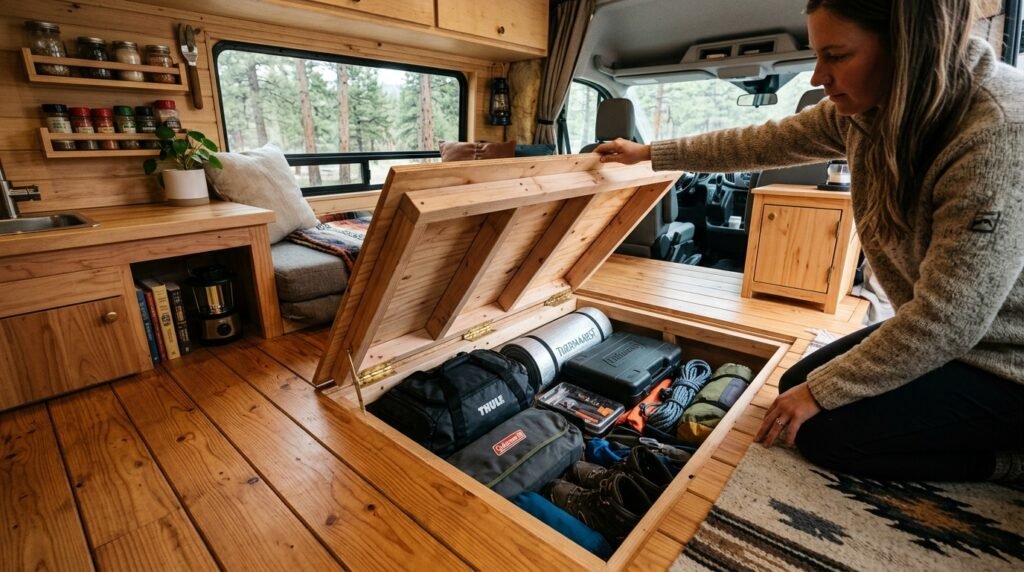
Building a slightly raised subfloor introduces incredibly valuable hidden compartments for items you only need to access occasionally. Elevating your main walking surface by just four inches creates enough volume to store expensive tools and seasonal winter coats out of sight. I have seen this technique utilized perfectly in small builds where every single cubic inch of traditional cabinetry was already occupied. Installing heavy duty locking hinges directly into the flooring planks ensures these trap doors remain completely invisible and entirely secure. Reclaiming this dead space represents a masterclass in aggressive tiny footprint optimization.
Insulating these lower compartments properly prevents freezing temperatures from creeping up through the floorboards into your main living area. Sizing your floor hatches precisely to fit specific waterproof cargo boxes ensures your gear stays perfectly organized and protected from potential plumbing leaks. That is why many designers recommend dedicating these lower bays to heavy mechanical equipment like lithium batteries and heavy copper wiring. Keeping massive weight resting directly on the vehicle chassis drastically improves your highway driving stability and cornering performance. Mastering these invisible storage concepts elevates your build far beyond a basic weekend camper.
Frequently Asked Questions
How do you keep a tiny camper from feeling cluttered? Maintaining a pristine environment inside a highly restricted footprint requires adopting a strict one in one out purchasing philosophy. You absolutely must assign a dedicated physical home for every single object you bring into your mobile dwelling. I have noticed that visual clutter causes immediate psychological stress when you cannot escape to another room. Utilizing opaque storage containers hides necessary chaos while keeping countertops completely bare during travel days. Establishing a rigorous daily cleaning routine ensures small messes never snowball into overwhelming disasters that destroy the peaceful aesthetic of your carefully designed tiny home.
What is the best way to secure decor during transit? Securing your aesthetic elements requires a combination of heavy duty industrial adhesives and strategic mechanical fasteners designed for mobile environments. Standard picture frames will shatter instantly if they vibrate off a wall while driving over a nasty pothole. In my experience, utilizing museum putty underneath lightweight decorative items keeps them firmly attached to shelves during moderate turbulence. Swapping heavy glass jars for premium clear acrylic alternatives prevents catastrophic breakage if a cabinet door accidentally pops open. You must physically test every latch and mounting point aggressively before embarking on your first major cross country adventure.
How much does a luxury camper interior renovation cost? Calculating an accurate renovation budget heavily depends on your specific vehicle platform and whether you outsource the complex fabrication work. Basic aesthetic upgrades like paint and new textiles might only cost a few thousand dollars if you provide the labor. However, I have seen full custom professional builds easily exceed sixty thousand dollars when incorporating high end marine grade electrical systems. It is crucial to prioritize your spending toward structural integrity and reliable climate control before blowing your budget on expensive cosmetic finishes. Taking the DIY route drastically reduces costs but requires immense patience and learning.
Can you use standard residential furniture in an RV? Attempting to use traditional household furniture inside a moving vehicle typically results in disastrous failure and wasted square footage. Standard couches lack the specialized anchoring points necessary to survive emergency braking maneuvers safely on the highway. That is why many designers recommend fabricating custom seating that perfectly hugs the unique curves of your specific van walls. Residential pieces simply weigh too much and consume precious cargo capacity that you need for vital water reserves. Investing the time to build bespoke modular units guarantees maximum utility and total safety for your mobile lifestyle journey.
Wrap Up
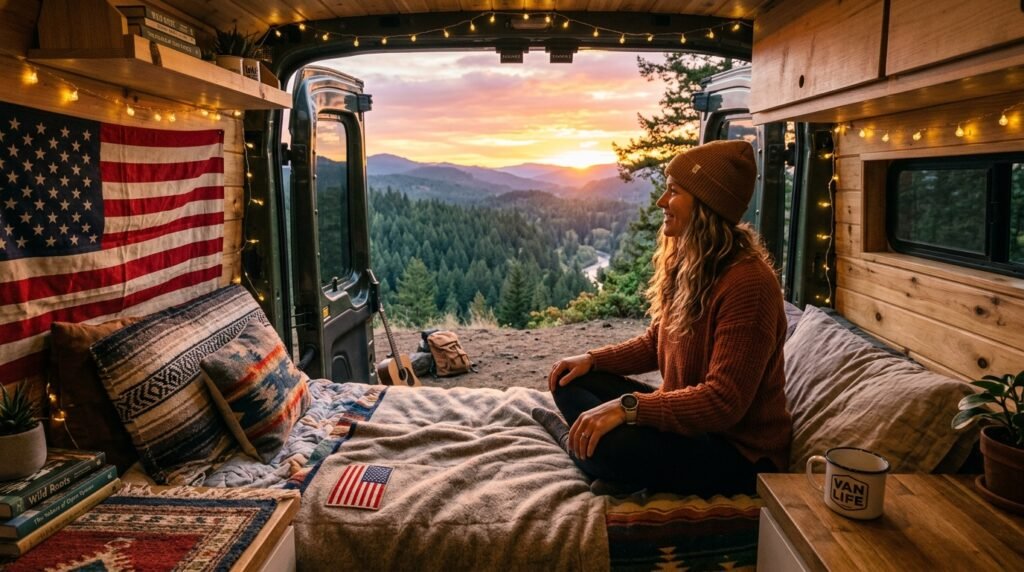
Taking the leap into nomadic living provides an incredible opportunity to redefine exactly what constitutes a happy and fulfilling home. Implementing these strategic tiny home and rv decor concepts allows you to travel the country without abandoning the daily comforts you truly love. I have seen how small changes like these can completely transform a space from a basic metal box into an absolute sanctuary. Please save this post to your Pinterest boards for ongoing inspiration as you tackle your upcoming renovation project. I encourage you to embrace this challenging design process fully and share your stunning transformations

Amelia leads HavenlyStyle’s editorial vision with a passion for elegant interiors and practical home living. With years of experience in home décor and lifestyle content, she ensures every article is accurate, inspiring, and easy to follow. From timeless decorating ideas to the latest interior design trends, Amelia is committed to helping readers create beautiful, functional spaces while maintaining HavenlyStyle’s trusted and welcoming voice.