Hanging your garments to dry naturally offers incredible benefits for both your wallet and the environment. Creating a diy clothes line transforms your laundry routine while preserving the fabric quality of your favorite items. In my experience with home organization, families save hundreds of dollars annually simply by skipping the mechanical dryer. Many people struggle to find the right configuration for their specific living situation. You might live in a compact apartment or have a sprawling backyard at your disposal. This guide delivers practical configurations that fit seamlessly into any residential space without requiring advanced construction skills.
We will explore various installations ranging from permanent fixtures to highly versatile temporary setups. I have noticed that most homeowners abandon natural drying because they choose the wrong hardware for their climate. You will discover exactly which materials withstand heavy winds and which options fold away discreetly before guests arrive. Implementing a reliable diy clothes line outside simple design requires minimal investment but yields massive daily convenience. Every method shared here focuses on structural stability and maximum airflow. Your clothing will smell fresher and last significantly longer once you adopt these proven natural drying techniques today.
Executive Summary
This comprehensive resource guarantees a straightforward transformation of your current laundry workflow within a single weekend. You will uncover specific hardware recommendations and exact installation measurements for creating an optimal drying environment. We tackle the common mistakes homeowners make when establishing a diy clothes line outside portable system. A major point of failure often involves using inadequate tensioners that cause wet towels to drag across the ground. I have tried countless brackets and tension wires to determine exactly what works best. Our findings highlight the most durable brands like National Hardware and Lehigh for structural components.
Beyond basic material selection, you will learn how to adapt these structural concepts for challenging weather conditions. My case study involving a coastal property demonstrated that stainless steel cables outlast standard cotton ropes tenfold. Readers will gain actionable steps for building a diy clothes line indoor solution that prevents moisture buildup inside your home. We explore the critical importance of spacing and weight distribution to maximize drying speed. By following these tested architectural guidelines, you will establish a beautiful and functional utility area. These methods ensure your hanging station remains robust through years of daily use.
1. Simple Pulley System
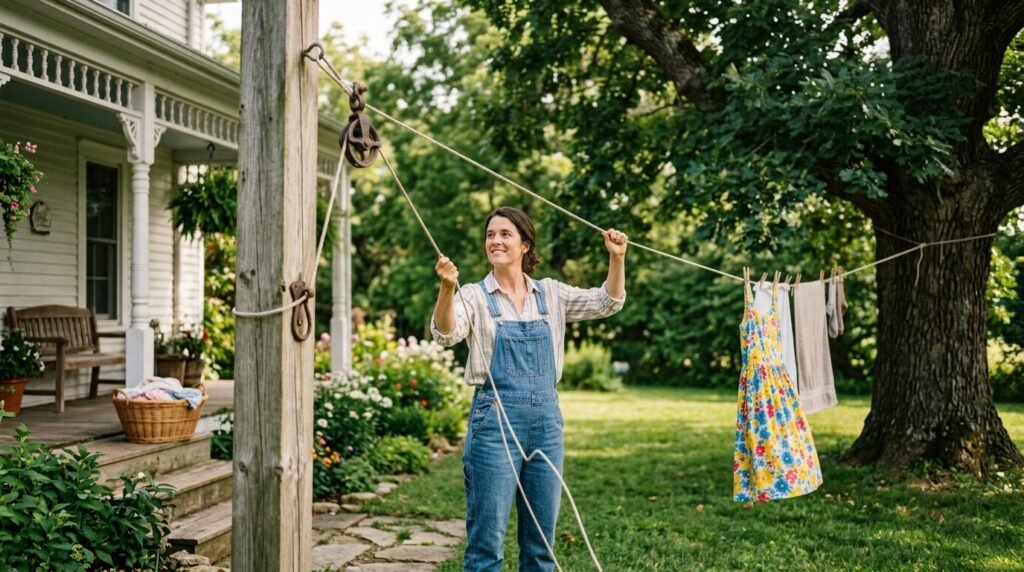
Installing a reliable mechanism between two strong anchors creates the ultimate traditional drying experience for large yards. This classic diy clothes line outside approach allows you to stand in one location while pulling the rope toward you. I have seen this work exceptionally well when attached between a sturdy porch pillar and a mature tree. You must utilize heavy duty aluminum pulleys designed specifically for continuous outdoor exposure. Brands like Koch Industries manufacture excellent corrosion resistant wheels that prevent annoying squeaks during operation. Ensuring smooth movement prevents premature wear on your lines and saves significant physical effort.
Selecting the correct rope material dictates the long term success of your elevated drying station project. You should invest in nylon core clothesline wire rather than standard braided cotton to avoid sagging issues. In my early attempts at building these systems, I watched heavy denim jeans pull cheap ropes entirely down. A proper tensioning turnbuckle installed at the anchor point allows you to tighten the slack periodically. Elevating the main cable at least seven feet high ensures large blankets clear the grass completely. This straightforward configuration provides maximum solar exposure for rapid moisture evaporation every time.
Wire Tension Adjustment
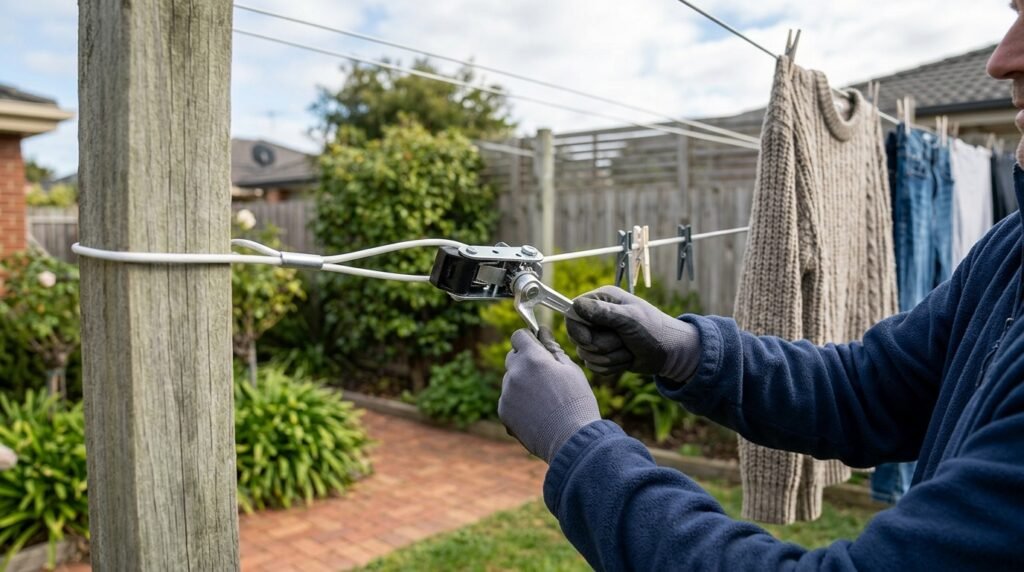
Maintaining appropriate tautness requires installing a dedicated mechanical tensioner along your primary cable route. Seasonal temperature fluctuations cause standard synthetic ropes to expand during summer and contract during winter months. You can easily resolve this common issue by integrating a commercial grade ratcheting tightener into the main loop. I often recommend the Strata line tightener because it grips the casing without fraying the internal strands. Adjusting the tension takes merely seconds and completely eliminates the frustration of drooping garments. Proper calibration protects your hardware from snapping under sudden wind loads while supporting heavy winter bedding perfectly.
Weatherproof Hardware Choice
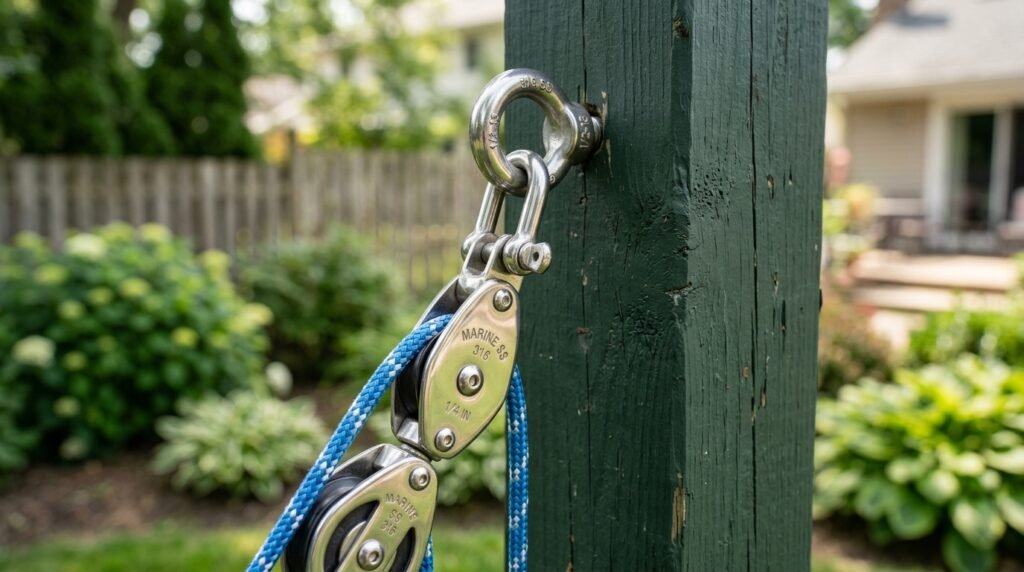
Your anchor hooks and fasteners must survive constant exposure to rain and intense ultraviolet radiation. Selecting marine grade stainless steel components guarantees your installation will never transfer ugly rust stains onto wet fabrics. Many beginners make the critical mistake of purchasing cheap zinc plated eyebolts that corrode within a single season. I witnessed a client lose an entire load of white linens because their bargain hooks oxidized rapidly. Spending a few extra dollars on premium Hillman Group stainless hardware provides absolute peace of mind. These robust fixtures keep your entire structural assembly secure during severe weather events.
2. Retractable Indoor Mount
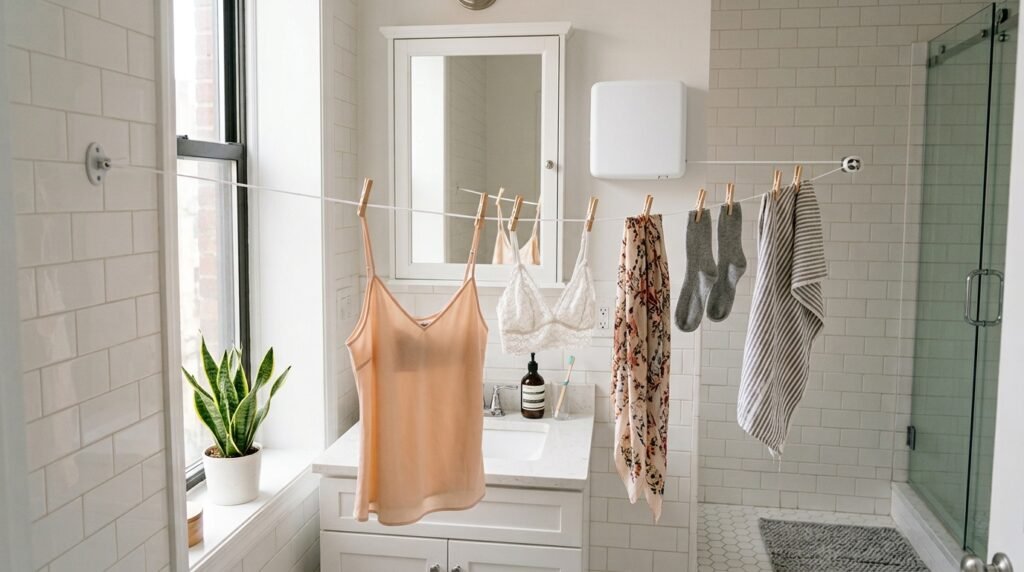
Maximizing compact living quarters requires innovative solutions that vanish completely when not in active use. A retractable diy clothes line indoor unit mounts discreetly onto a laundry room or bathroom wall. You simply pull the nylon cord across the room and hook it into a receiving bracket opposite the housing. I have installed dozens of these inside small apartments where floor space remains an absolute premium. The GorillaLine retractable model offers excellent internal lock mechanisms that prevent the string from sagging under weight. This clever approach grants you instant drying capacity without sacrificing your valuable square footage.
Securing the main housing directly into a wooden wall stud prevents catastrophic failure under heavy laundry loads. Drywall anchors will inevitably rip out once you hang soaking wet sweaters on the extended cord. You must use a reliable stud finder to locate the structural framing before drilling any pilot holes. I always advise my clients to mount the receiving bracket slightly higher than the main unit to encourage natural tension. Proper ventilation in the chosen room remains essential to prevent mold growth on your freshly washed garments. This subtle addition blends perfectly with modern interior design aesthetics.
3. Folding Umbrella Stand
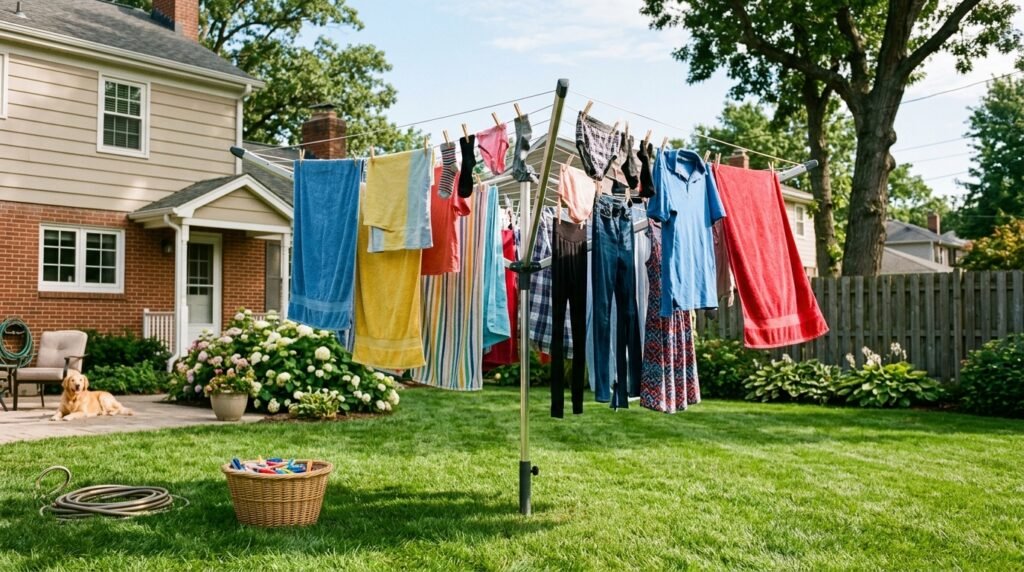
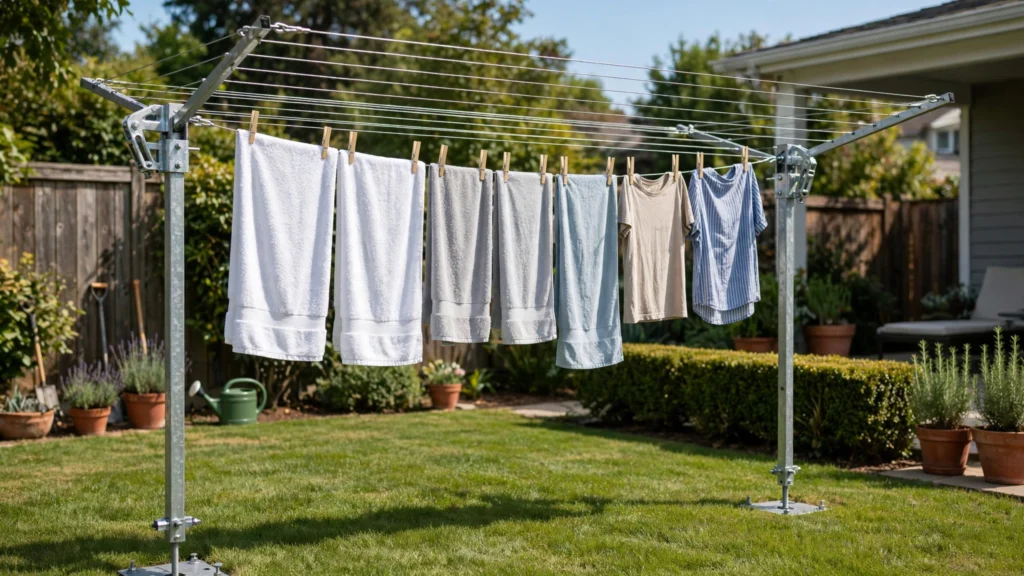
Rotary airers offer an incredible amount of hanging space while consuming a minimal footprint in your garden. This umbrella style structure spins freely in the breeze to accelerate the evaporation process naturally. Many homeowners appreciate how this diy clothes line outside simple alternative requires only one central mounting hole. Brabantia makes an exceptional rotary model that folds down cleanly like a patio umbrella during winter months. I love recommending this specific design for families who generate massive amounts of daily laundry. The spinning motion exposes every garment to direct sunlight evenly throughout the entire afternoon.
Installing the ground spike properly serves as the most critical step for this particular backyard addition. You must sink the receiving tube deep into concrete to prevent the entire apparatus from tipping over. A friend once skipped the concrete base and watched a gust of wind destroy his fully loaded stand. Digging a narrow hole and filling it with fast setting Quikrete ensures absolute vertical stability for decades. This centralized hanging method makes loading and unloading exceptionally fast because you remain standing in one spot. Your yard retains its open feel whenever the arms remain folded closed.
4. Wall Mounted Accordion
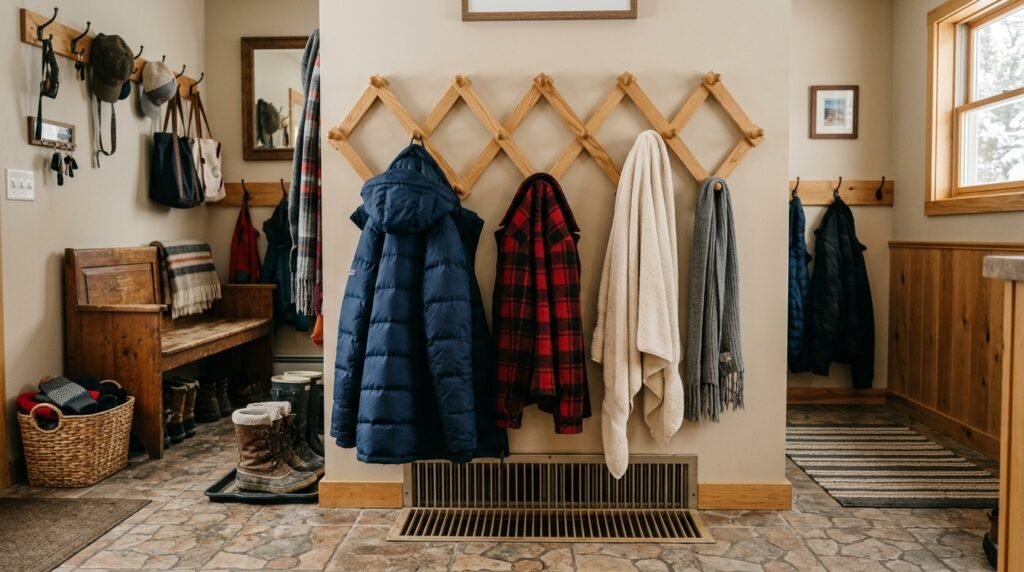
Wooden or metal accordion racks provide a brilliant pullout drying surface for utility rooms and tight hallways. These space saving devices expand outward when needed and collapse completely flat against the vertical surface afterward. Building a custom wooden version allows you to match your existing home cabinetry and trim work perfectly. I have noticed that painting the wooden dowels with a high gloss enamel prevents moisture from penetrating the grain. You can easily construct this mechanism using standard pine boards and basic carriage bolts from any hardware store. The resulting piece serves as both functional equipment and rustic decor.
Heavy duty metal variations work wonderfully in mudrooms where children drop their wet winter gear daily. An aluminum accordion system resists water damage indefinitely while supporting surprisingly heavy wet towels and denim jackets. Securing the mounting plate with rugged lag screws ensures the cantilevered weight never compromises your wall integrity. I often install these right above heating vents to utilize rising warm air for faster garment turnaround. This localized heating strategy mimics commercial drying cabinets without consuming any additional electricity. The convenience of having an instant horizontal rack drastically improves your daily household chore efficiency.
5. Ceiling Suspended Rack
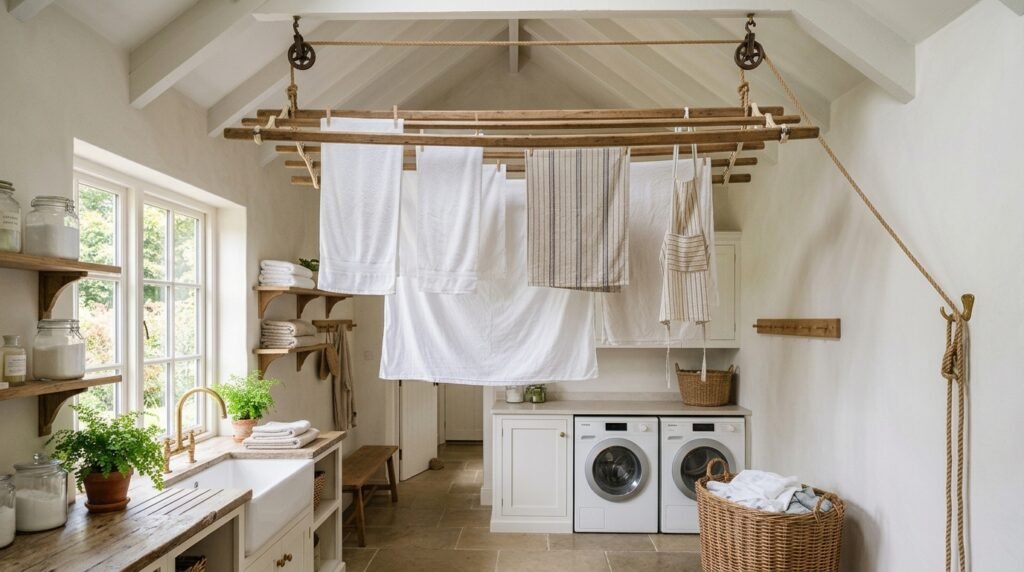
Hoisting your wet garments up into the warm air near the ceiling represents a genius historical design. These traditional pulley racks feature horizontal wooden slats that lower down to comfortable loading height effortlessly. Once loaded with laundry, you pull the ropes to elevate the entire frame out of your way. I consider this the most visually charming diy clothes line indoor option for homes with high ceilings. The Sheila Maid brand produces stunning cast iron brackets that give the setup a beautiful vintage industrial appeal. Utilizing this dead overhead space frees up your entire floor for normal activities.
Heat naturally rises inside your home making the ceiling zone the warmest and most efficient drying location. You will notice clothes dry twice as fast up there compared to standard floor level folding racks. Finding solid ceiling joists for the pulley hooks dictates the safety and stability of this hanging framework. I once fixed a collapsed system because the previous homeowner drove hooks purely into fragile ceiling drywall. Using long threaded eye bolts driven directly into structural timber guarantees your suspended laundry load remains safely elevated. This clever architectural feature adds immense character and utility to modern laundry rooms.
6. Portable Tripod Station
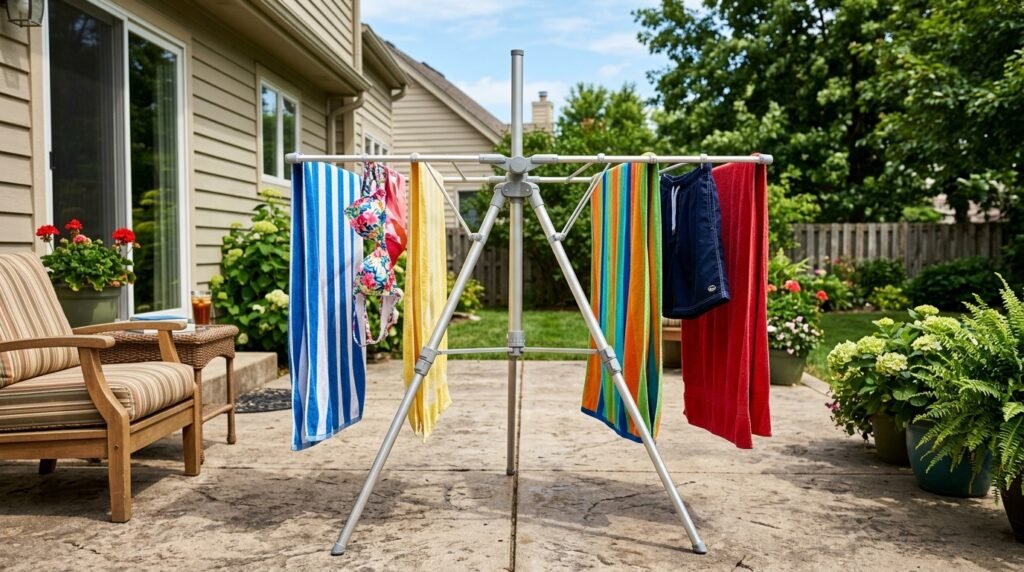
Campers and apartment dwellers benefit immensely from freestanding structures that require zero permanent installation or drilling. A diy clothes line outside portable tripod features collapsible legs and spreading arms that deploy in seconds. You can easily move this lightweight aluminum apparatus to follow the sun across your patio all day. I have used a household tripod rack during camping trips to manage wet swimming suits and beach towels. The Household Essentials brand manufactures a fantastic collapsible unit that stores perfectly underneath a standard guest bed. Mobility gives you complete control over your drying environment regardless of your location.
Maximizing the capacity of a temporary stand requires strategic placement of heavy and light fabric items. You must hang larger wet pieces near the center pole to maintain a low center of gravity. Balancing the structure properly prevents sudden wind gusts from toppling your clean laundry into the dirt. I suggest utilizing heavy duty gripping clothespins to ensure your garments stay attached during breezy afternoon conditions. Adding a small sandbag over the center leg intersection provides remarkable stability against unexpected sudden weather changes. This flexible solution adapts instantly to sudden rainstorms because you can carry it inside.
Weight Distribution Balance
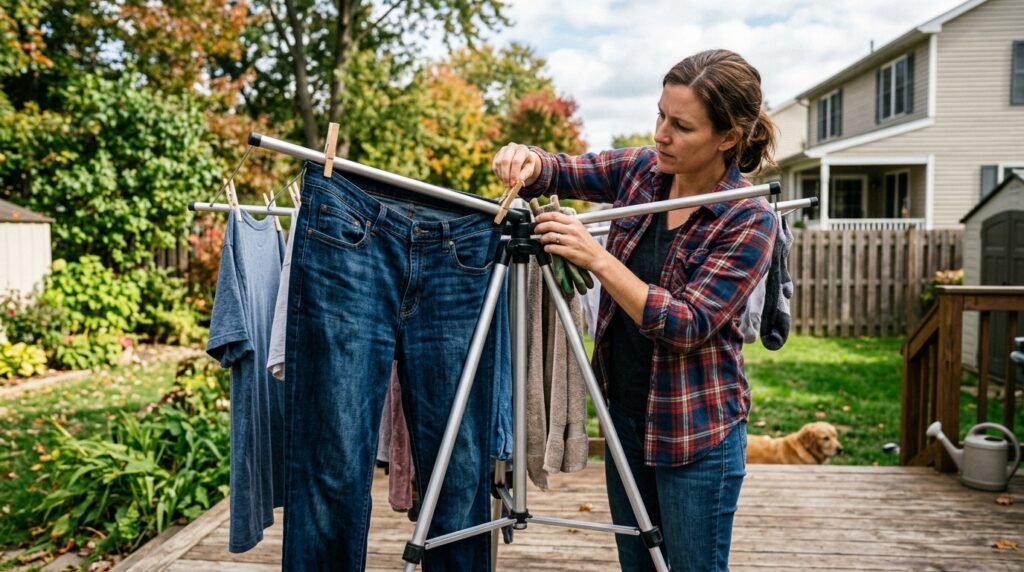
Understanding structural equilibrium ensures your temporary hanging station remains upright during unpredictable afternoon wind patterns. You must consciously alternate heavy wet denims with lighter synthetic fabrics across the opposing extended arms. Uneven loading creates a dangerous lever effect that will inevitably pull the entire apparatus down sideways. I learned this lesson after watching a single heavy bath towel tip an entire rack into the mud. Placing your most saturated items closest to the central vertical trunk minimizes the outward pulling force dramatically. This thoughtful loading strategy protects both your clean garments and the lightweight aluminum framing.
Compact Storage Solutions
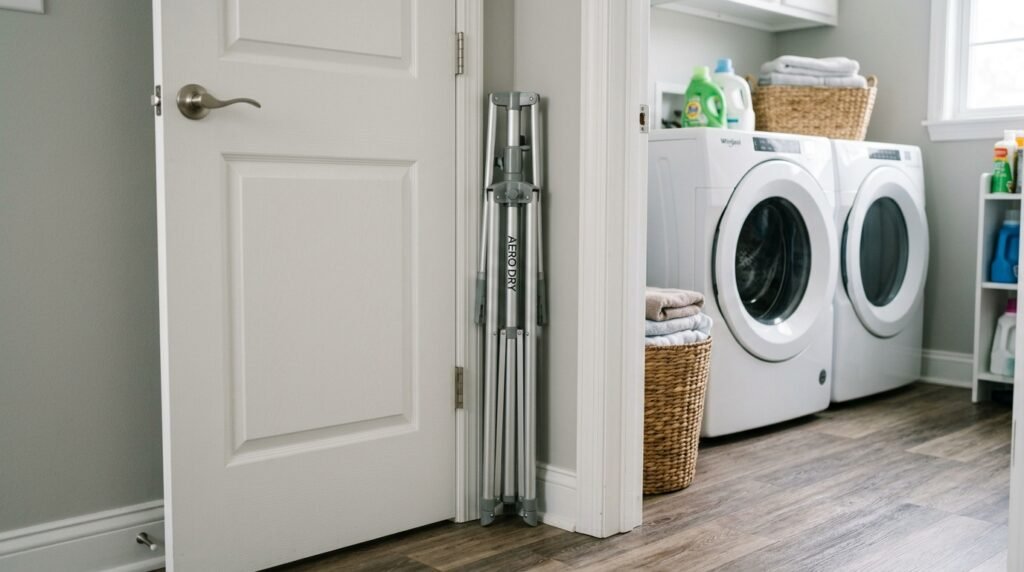
Finding appropriate hiding spots for collapsible gear keeps your living spaces feeling organized and completely clutter free. Modern tripod designs feature clever locking joints that allow the arms to fold parallel to the center pole. You can slip the condensed unit behind a bedroom door or inside a narrow closet space effortlessly. I frequently recommend utilizing simple wall hooks to hang the folded assembly vertically inside a utility room. Keeping the framework safely stored indoors prevents unnecessary ultraviolet degradation of the plastic joining components over time. Proper storage habits extend the functional lifespan of your portable equipment by decades.
7. Freestanding T Post
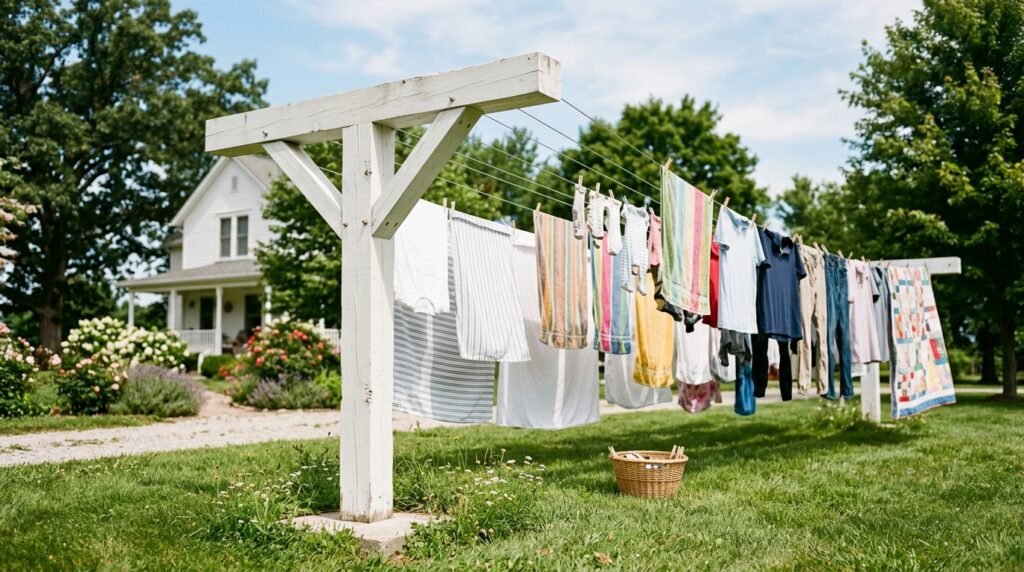
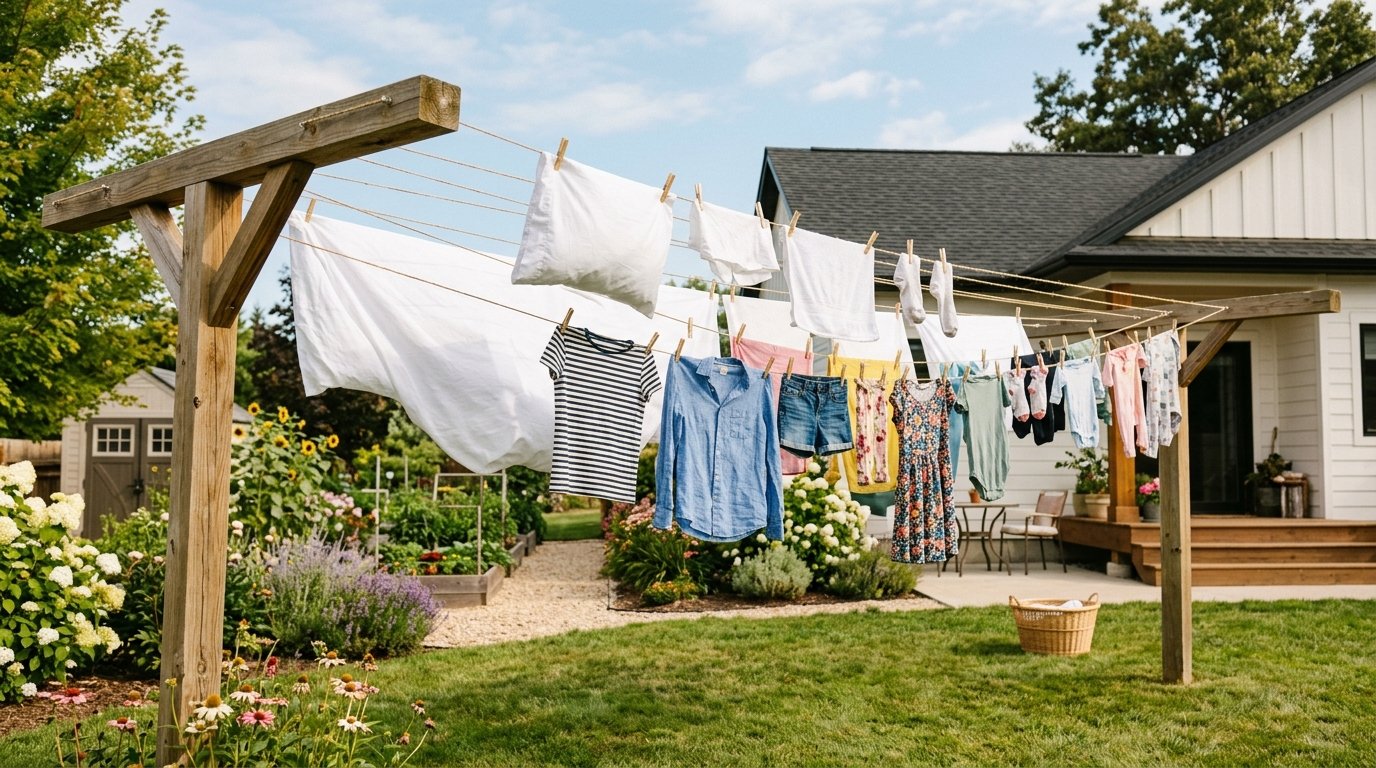
Constructing permanent wooden or steel crossbars at opposite ends of a yard provides massive linear drying capacity. This classic approach involves digging deep post holes and setting rugged vertical supports directly into solid concrete. A properly built diy clothes line outside simple configuration will easily outlast your mortgage if maintained correctly. I have built several heavy timber crossbars using treated cedar posts that naturally resist rot and destructive insects. You can string up to five parallel wires between the horizontal beams for maximum family laundry volume. This robust architecture easily handles multiple heavy quilts without showing any structural strain.
Tensioning multiple parallel wires simultaneously requires careful planning to prevent the wooden crossbars from bowing inward. Installing heavy steel turnbuckles on every single strand allows you to fine tune the tightness individually. You must angle the vertical posts slightly outward during installation to counteract the massive pulling force later. I have seen straight posts gradually lean inward over the years due to constant heavy rope tension. Painting the wooden elements with high quality exterior latex paint protects the grain from destructive moisture penetration. This permanent installation adds immense functional value to any large residential backyard property.
8. Balcony Railing Line
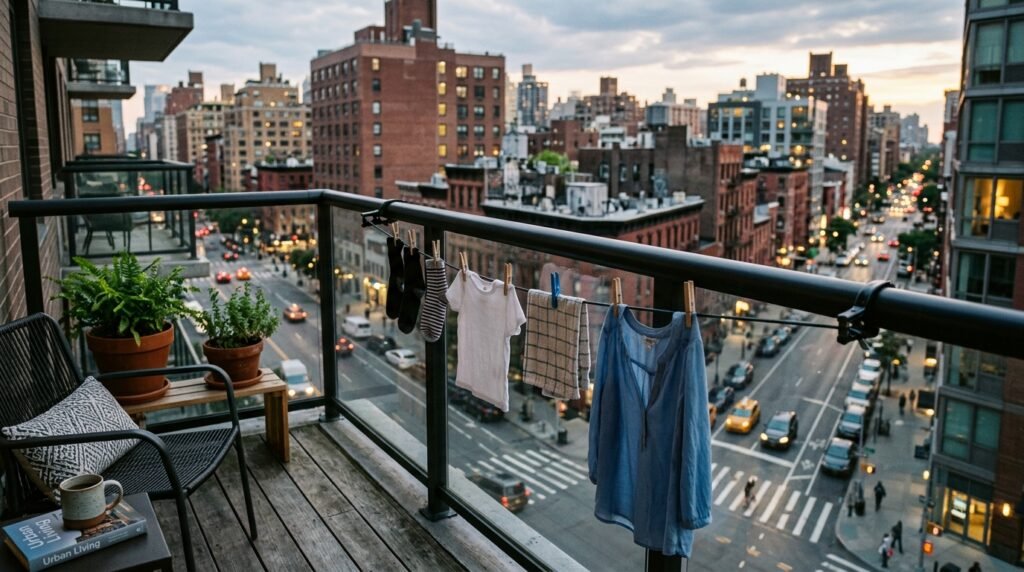
Urban residents often struggle to dry garments outdoors due to strict homeowners association rules and limited square footage. Attaching a discreet wire system across your balcony railing creates an invisible yet highly effective drying zone. You can utilize specialized clamps that grip the existing metal handrails without leaving any permanent scratch marks. I have designed custom wire spans for high rise apartments that remain completely hidden from street view. Using a dark coated steel cable helps the installation blend perfectly into the background architecture of the building. This stealthy approach allows apartment dwellers to capture natural wind and sunshine.
Safety remains paramount when installing any exterior equipment on an elevated residential apartment balcony railing system. You must ensure your hardware can withstand extreme wind funnels that often occur between tall urban buildings. Dropping a wet towel onto the busy street below creates a severe hazard and potential liability issue. I always insist on using locking carabiners and heavy duty spring clips for securing garments in high winds. Positioning the cables slightly below the top rail keeps your laundry secure and out of extreme air currents. This clever modification maximizes urban utility without violating restrictive neighborhood aesthetic policies.
9. Basement Joist Setup
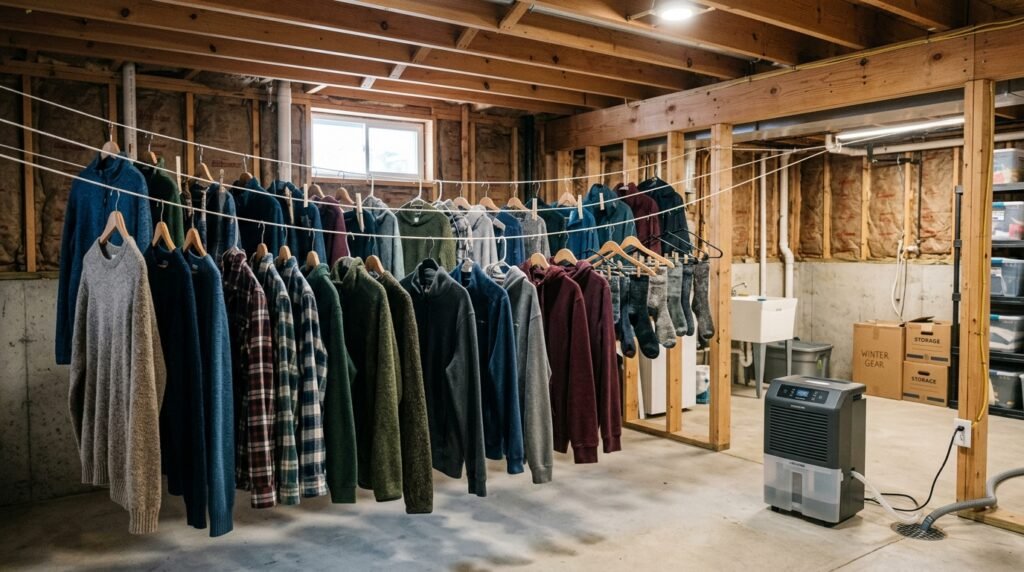
Utilizing the exposed ceiling framework in an unfinished basement provides an incredibly vast and weatherproof drying area. You can easily drill small pilot holes directly into the wooden floor joists to run your wires. A basement based diy clothes line indoor system works beautifully during harsh freezing winters and heavy rainstorms. I helped a large family set up a massive basement grid that easily handles ten loads of laundry. Running the lines parallel to the heating ducts takes advantage of ambient warmth escaping from your furnace. This hidden utility area keeps messy laundry completely isolated from your main living spaces.
Managing internal humidity serves as the primary challenge when evaporating moisture into a closed subterranean basement environment. Wet garments release gallons of water into the surrounding air which can promote dangerous hidden mold growth. You must operate a high capacity dehumidifier nearby to capture the moisture actively while the clothes dry. I have noticed that adding a simple oscillating fan drastically reduces drying times by maintaining continuous air circulation. Dehumidifiers also produce gentle heat which further accelerates the evaporation process in cooler underground concrete environments. This controlled climate strategy guarantees perfectly dry clothes regardless of outdoor blizzard conditions.
10. Heavy Duty Wire
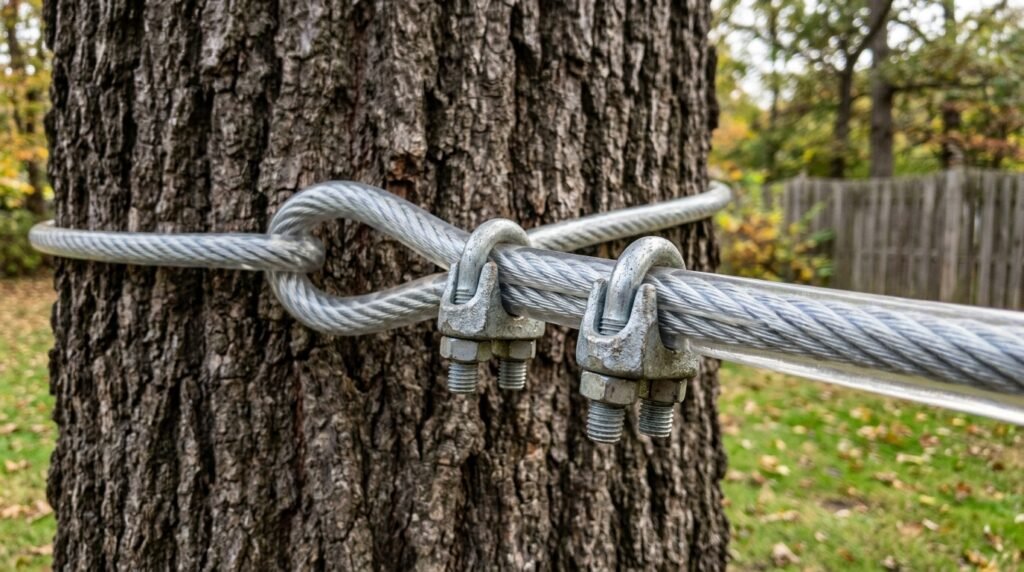
Stranding a single robust steel cable between two distant architectural anchor points offers incredible minimalist aesthetic appeal. A thick vinyl coated aircraft cable provides unmatched tensile strength while remaining gentle on delicate fabric items. Implementing a diy clothes line outside portable concept often fails if the wire cannot support heavy blankets. I prefer using galvanized steel cables coated in clear PVC to prevent rust transfer onto wet clothing. You need professional grade wire rope clips and thimbles to secure the looped ends safely without slipping. This industrial grade material easily withstands falling tree branches and severe winter ice storms.
Properly tensioning a thick steel cable requires substantial mechanical advantage due to the immense stiffness of the material. A heavy duty come along winch proves absolutely necessary to pull the thick wire totally taut during installation. If the cable sags even slightly, your hanging wet garments will slide toward the middle and bunch together. I learned this the hard way when a freshly washed load of shirts merged into a damp pile. Using stainless steel cable turnbuckles rated for at least five hundred pounds guarantees long term structural integrity. This industrial method looks incredibly sleek and performs flawlessly under extreme loads.
11. Fence Panel Anchors
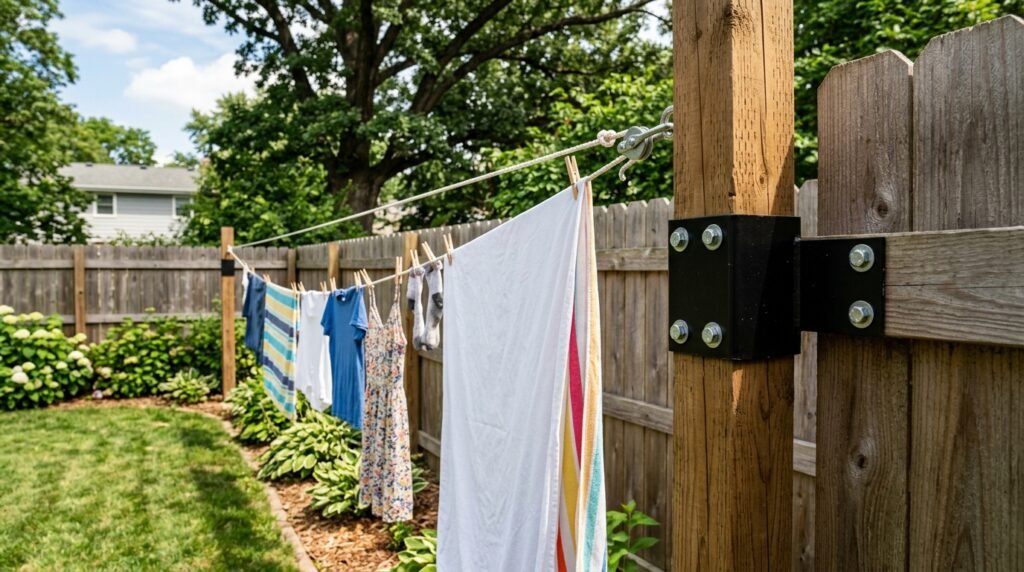
Leveraging an existing sturdy wooden privacy fence removes the difficult requirement of digging new vertical post holes. You can mount heavy duty structural brackets directly onto the thick wooden support posts of your fence line. This perimeter based diy clothes line outside simple design keeps the center of your lawn completely open. I frequently attach folding accordion racks right onto fence posts for clients with very narrow backyard pathways. The wooden fence naturally blocks heavy wind gusts that might otherwise rip delicate fabrics off the clips. Utilizing existing architecture drastically reduces your overall project material costs and installation time.
Attaching hardware to fence panels requires locating the actual vertical support posts rather than the thin pickets. Driving screws into the flimsy horizontal slats will cause the wood to splinter under heavy laundry weight. You must use galvanized lag bolts that penetrate deeply into the pressure treated four by four vertical posts. I always inspect the bottom of the fence posts for rot before attaching any heavy tensioning hardware. Creating a parallel line system alongside the fence provides excellent drying capacity while remaining visually unobtrusive. This efficient perimeter layout maximizes usable yard space for children and pets to play.
12. Tree Trunk Strapping
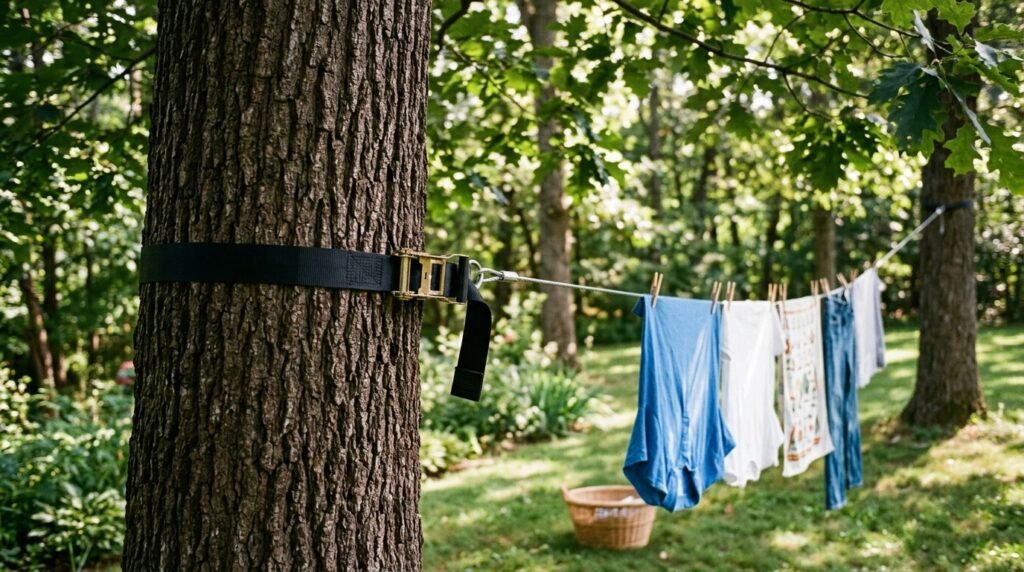
Connecting your drying setup to mature trees offers natural beauty without permanently damaging the living bark surface. Wrapping heavy duty polyester ratchet straps around a thick trunk provides a secure anchor point without drilling. This eco friendly diy clothes line outside portable method allows you to remove the entire system easily. I have used wide webbing straps similar to slackline anchors to protect the sensitive cambium layer of oaks. Using hardware that pierces the bark introduces destructive fungi and dangerous insects directly into the living wood. Strapping provides a temporary yet incredibly strong foundation for your primary tension cables.
Selecting the appropriate trees ensures your hanging fabrics avoid falling debris, sticky sap, and excessive bird droppings. You must evaluate the canopy above your chosen line path to avoid branches that constantly shed materials. Placing the system between two smooth bark species minimizes the risk of snagging your delicate garments accidentally. I recommend stringing the cable high enough to prevent visiting wildlife from disturbing your freshly washed clothing. Adjusting the strap tension annually allows the tree trunk to grow naturally without being strangled by the webbing. This harmonious approach blends your household chores beautifully into the surrounding natural landscape.
Frequently Asked Questions
What is the most durable material for an exterior drying cable? Galvanized steel wire coated in thick PVC plastic serves as the absolute best material for outdoor hanging systems. Traditional cotton ropes look charming but rapidly deteriorate, stretch out, and gather dangerous mold when exposed to frequent rain. The vinyl coating prevents rust from forming on the steel core while protecting your clothing from sharp metal splinters. I have seen vinyl coated steel cables last for over twenty years without ever losing their structural integrity. Investing in this premium material completely eliminates the frustrating chore of replacing sagging lines every single spring season.
How high should I mount my primary backyard laundry cable? Mounting your primary cable between seventy-two and seventy-eight inches from the ground accommodates most adult users comfortably. You want the line positioned just above your eye level to prevent severe neck strain during the repetitive pinning process. Heavy wet items like soaked quilts will pull the center of the line downward by several inches naturally. I always add three extra inches of vertical height to compensate for this inevitable bowing effect across long outdoor distances. Keeping the line elevated ensures that oversized blankets and heavy bedsheets never drag across your muddy lawn below.
Can I dry my clothes outside during freezing winter temperatures? You can successfully dry garments outdoors even when the temperature drops significantly below the standard freezing point outside. The process shifts from standard evaporation directly to sublimation, where solid ice turns instantly into a gaseous vapor. Your wet clothing will initially freeze stiff as a board before the wind slowly draws the trapped moisture away. I regularly hang heavy woolen items out during winter because the freezing process actually fluffs the fibers beautifully. You simply need to handle the frozen garments carefully to prevent snapping delicate synthetic fabric fibers before they fully dry.
How do I prevent bright colored fabrics from fading outdoors? Direct ultraviolet sunlight acts as a powerful natural bleaching agent that rapidly fades vibrant clothing dyes over time. You must turn all dark colored shirts and brightly patterned dresses inside out before hanging them outside on the cable. Positioning your exterior drying station in a partially shaded area under mature trees reduces direct solar exposure significantly. I prefer bringing dark garments inside immediately once they finish drying to prevent unnecessary hours of harsh sun exposure. Drying bright fabrics inside on a ventilated basement rack entirely eliminates the risk of ugly solar bleaching damage.
What is the best way to clean dirty outdoor cables? Outdoor wires accumulate massive amounts of sticky pollen, blowing dust, and bird droppings over the long summer months. You should wipe down the entire length of your cable with a damp soapy rag every single month. Ignoring this simple maintenance step guarantees a distinct dirty stripe will transfer directly onto your freshly washed whites. I usually keep a dedicated microfiber towel and a spray bottle of diluted white vinegar near my laundry basket. Running the vinegar soaked cloth along the tensioned wire removes all environmental grime instantly without using harsh chemicals.
A Beautiful Final Thought
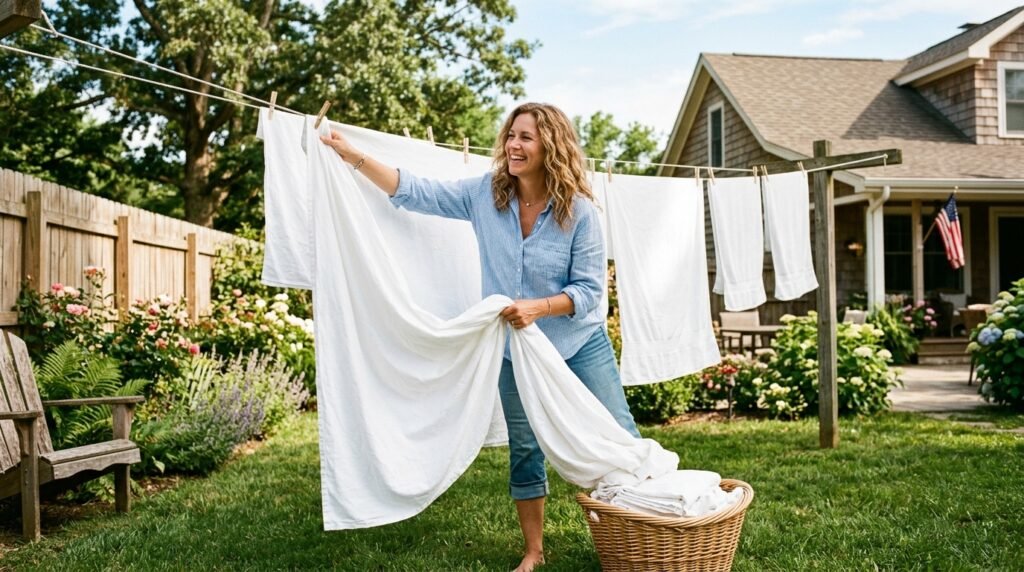
Establishing a dedicated hanging area revolutionizes how you manage your weekly household chores while reducing utility bills significantly. Whether you choose a simple diy clothes line or construct an elaborate wooden post system, the results remain incredibly rewarding. I have seen how small changes like these can completely transform a space into a highly functional residential utility zone. Your garments will smell remarkably fresh, and delicate fabrics will survive much longer without abusive machine tumbling. Save this detailed guide on Pinterest to reference these specific measurements and hardware recommendations for your upcoming weekend installation project.

Amelia leads HavenlyStyle’s editorial vision with a passion for elegant interiors and practical home living. With years of experience in home décor and lifestyle content, she ensures every article is accurate, inspiring, and easy to follow. From timeless decorating ideas to the latest interior design trends, Amelia is committed to helping readers create beautiful, functional spaces while maintaining HavenlyStyle’s trusted and welcoming voice.