If you are expecting a baby in a rental, you have probably already done the math on your living room: how many people can actually stand in it, where the gifts would go, and whether your landlord would notice a balloon arch taped to the wall. I have helped dozens of renters plan celebrations in studios, one-bedrooms, and shared houses, and the same question comes up again and again: should we throw a traditional baby shower before the baby arrives, or wait and host a sip and see once the baby is here?
Here is the short version. A baby shower happens before the birth, celebrates the parents-to-be, and usually centers on gifts and games. A sip and see happens after the birth, usually in the first few weeks or months, and centers on meeting the baby — guests sip a drink, see the baby, and keep it short. Both can be wonderful. But in a small rental, they are not interchangeable, and picking the wrong format for your space is how you end up with thirty people, a pile of boxes, and a deposit at risk.
In this guide, I am comparing the two formats honestly, side by side, through a renter's lens: your square footage, your landlord's rules, your budget, and your energy. You will get twelve decision-and-setup ideas, each one with concrete steps and an approximate cost range, and a final chooser section to help you decide. Every idea passes the renter test — removable, reversible, and deposit-safe — because a celebration should never cost you your security deposit.
Executive Summary
- A baby shower happens before the birth and centers on gifts and games; a sip and see happens after the birth and centers on meeting the baby in short, relaxed visits.
- In a small rental, guest count is the deciding factor: a shower usually means more people for longer, while a sip and see can be split into shorter waves or an open-house window.
- Budget follows the format: showers tend to cost more on food, decor, and games, while a sip and see can run on drinks, one signature snack, and simple decor for roughly $40–$100.
- Decor for both formats can be fully deposit-safe: tension rods, freestanding displays, removable hooks, and tabletop pieces — no nails, no tape on painted walls.
- Gifts need a plan before anyone arrives: showers generate boxes that need a staging spot, while a sip and see lets you ask for no gifts or for small, specific items.
- If your space is tight, your energy is limited, or your guest list is large, a sip and see — or a hybrid open-house shower — usually fits a rental better.
1. Count Heads Before You Pick a Format

The single most useful thing I have personally seen renters do is count standing room before choosing anything else. A baby shower traditionally runs two to three hours with most guests present at once, seated, playing games, and watching gifts being opened. A sip and see is usually an open-house window of one to two hours, with guests drifting in and out. In a 500-square-foot apartment, that difference is everything.
Start with your real capacity, not your hopeful capacity. A living room that seats six comfortably holds maybe twelve people standing if you move the coffee table out, and far fewer once you add a gift table, a food table, and a stroller. A shower guest list of twenty-five in that room will feel crowded and loud, and crowded rooms are where walls get bumped, drinks get spilled, and landlords get complaints.
Here is how to work it out:
- Measure your main room and count the seats you actually own, then add folding chairs or floor cushions you can borrow — that is your seated capacity.
- Double that number for a standing, drop-in format, and use it as your sip and see ceiling.
- Write your must-invite list first, then your nice-to-have list, and compare both totals to those two numbers before you commit.
- If the shower list busts your seated capacity but the sip and see list fits your standing capacity, you have your answer — or consider splitting the shower into two smaller gatherings.
Approximate cost: $0–$40 for borrowed or rented folding chairs if you need extra seating. The counting itself is free, and it is the step that saves you from every other problem on this list.
2. Timing: Celebrate Before the Baby or After?
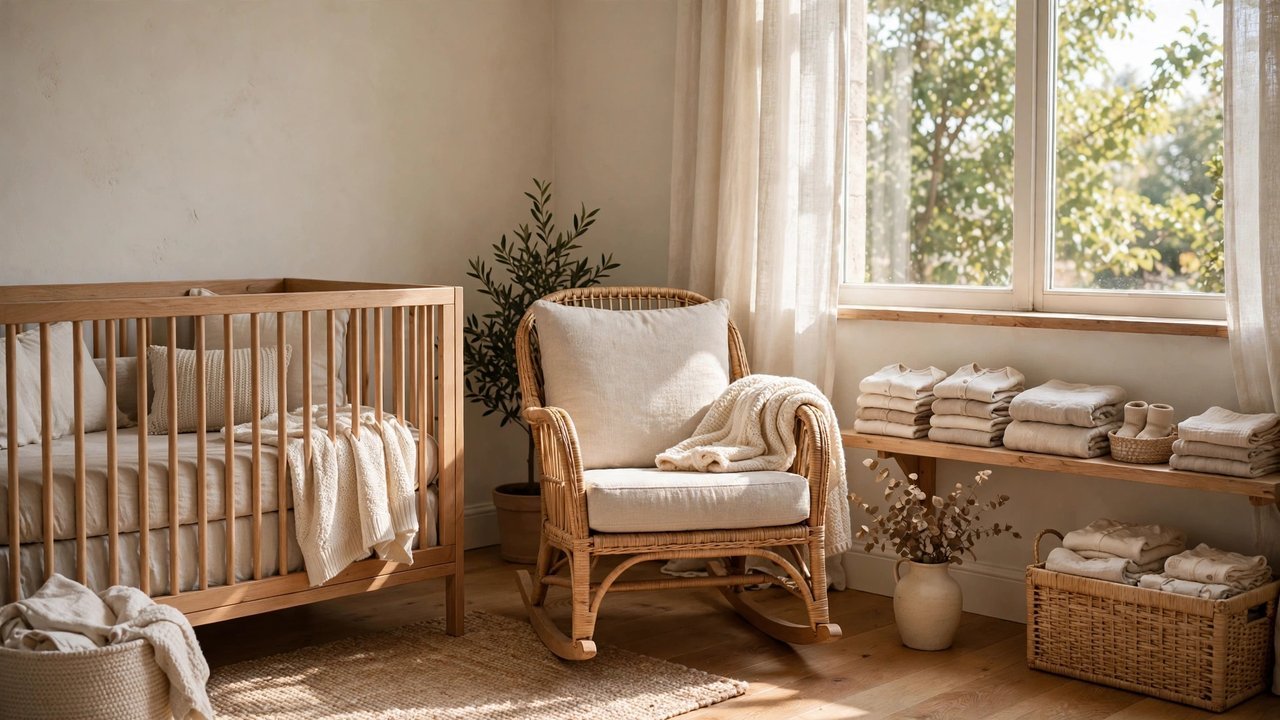
Timing is the heart of this decision, and it is about more than preference. A baby shower happens in the last trimester, when you have energy to plan but also a growing belly, a nursery to finish, and a long to-do list. A sip and see happens after the birth, when the baby is the star but you are running on very little sleep and recovering.
For renters, timing has a practical edge. A shower before the birth lets you set up the nursery with the gifts you receive, which matters when storage is tight — you can unbox, assemble, and put things away before the baby arrives. A sip and see avoids the awkward problem of receiving a mountain of boxes weeks before you have anywhere to put them, and it lets guests see the finished nursery instead of imagining it.
Here is how to choose your window:
- If you are hosting yourself, pick a shower date at least four weeks before your due date, so a surprise early arrival does not cancel the party.
- For a sip and see, plan for four to eight weeks after the birth, once feeding routines have settled and you can handle visitors.
- Check your lease and building rules for either date: some buildings restrict weekend gatherings, parking, or elevator use, and a quick note to your landlord now prevents a problem later.
- Build in a rain-or-shine backup plan — a small rental has no yard to fall back on, so decide in advance whether guests move to a hallway, a friend's larger place, or a video call.
Approximate cost: $0 for the timing decision itself, though a backup venue like a community room may run $25–$75 if you reserve one. Timing well costs nothing and protects everything else.
3. Budget: What Each Format Really Costs in a Rental

I have noticed that renters consistently underestimate shower costs and overestimate sip and see costs. A traditional shower in a small space still needs food for everyone at once, decorations, games and prizes, favors, and often rented chairs or tables. A sip and see, by contrast, is built around drinks and light bites, and guests expect less production — the baby is the entertainment.
A realistic renter budget for a shower of fifteen to twenty guests runs roughly $150–$350, with food as the biggest line. A sip and see for the same number of guests, served as drinks plus one or two snacks over a drop-in window, usually runs roughly $40–$120. The gap comes from the meal: a shower often means a full lunch spread, while a sip and see means sips and nibbles, and guests do not arrive expecting a sit-down meal.
Here is how to budget honestly:
- List every line before you buy anything: food, drinks, decor, paper goods, prizes or favors, and any rentals.
- Price the food per head for each format — a full lunch at roughly $8–$12 per person versus drinks and snacks at roughly $3–$6 per person — and multiply by your real guest count.
- Choose one splurge and cut the rest: a beautiful cake for a shower, or a signature drink and a simple floral bunch for a sip and see.
- Keep a $25 cushion for last-minute needs like extra cups, ice, or a spill cleanup kit, and track spending in one note so you can see the total before it surprises you.
Approximate cost: $150–$350 for a shower, $40–$120 for a sip and see, both for fifteen to twenty guests. The format you choose is the biggest budget decision you will make.
4. Food and Drink Setup for a Kitchen With No Counter Space
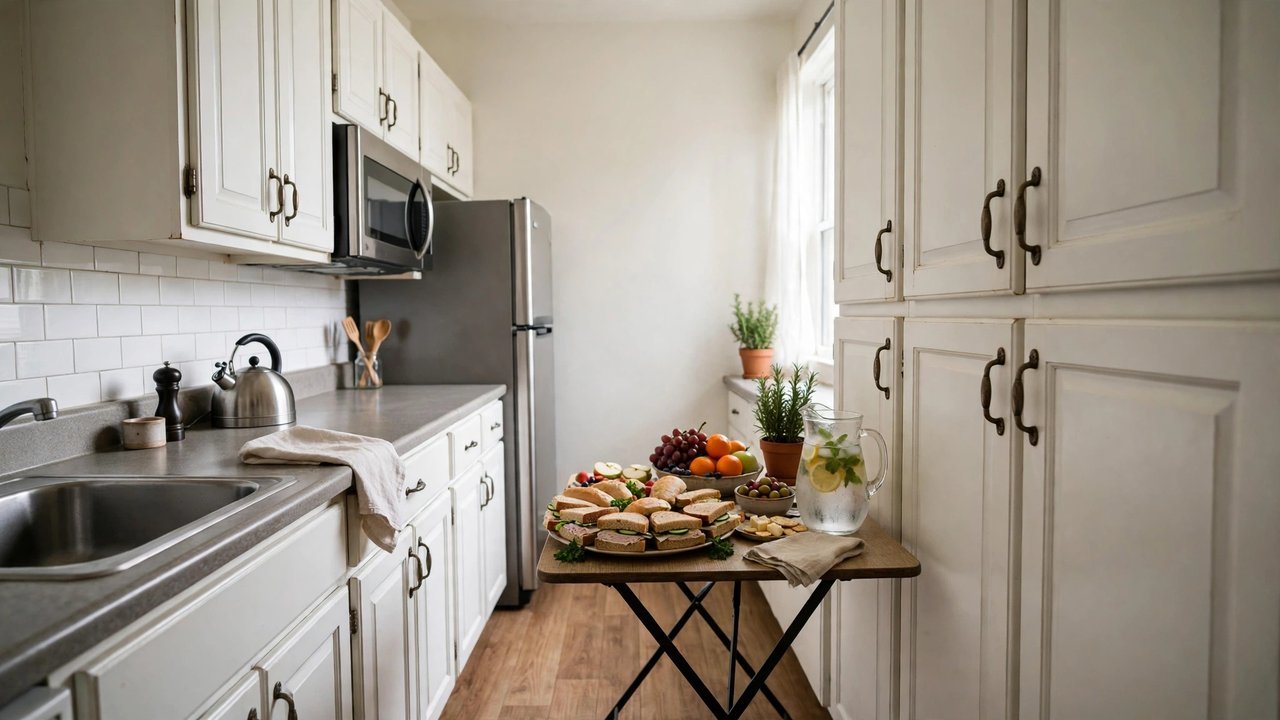
Rental kitchens are the hidden villain of every party plan. A shower menu — a hot dish, a salad, a dessert table — needs counter space, serving dishes, and a place for guests to set plates down. A sip and see menu — a signature drink, a sparkling option, and two or three finger foods — needs a single table and a cooler.
I have personally seen a one-bedroom shower work beautifully with a single folding table, and I have seen a sip and see collapse into chaos because the host tried to serve a full brunch from a galley kitchen. The lesson is the same either way: match the menu to the kitchen you have, not the kitchen you wish you had.
Here is how to set it up:
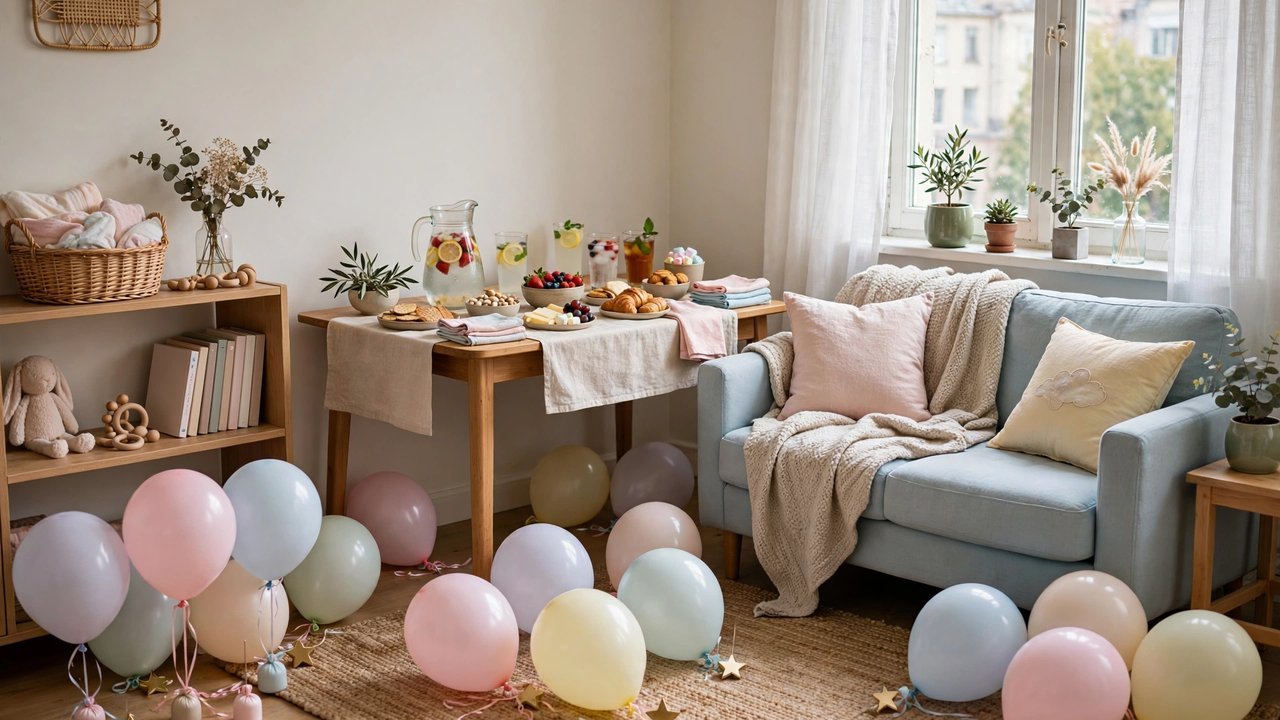
- For a shower, choose foods that hold at room temperature and need no reheating: a sandwich platter, a pasta salad, fruit, and a cake — and serve them buffet-style on one table so the kitchen stays a prep zone, not a traffic jam.
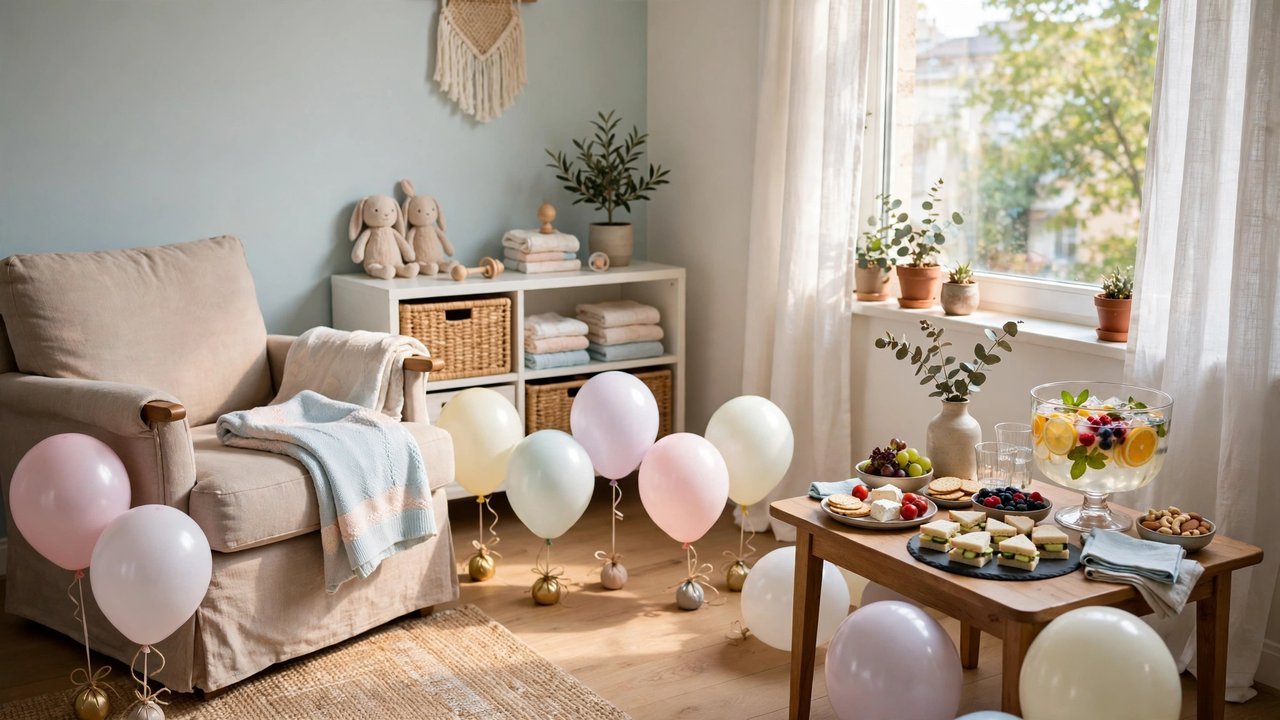
- For a sip and see, pick one signature sip — lemonade, sparkling cider, or a simple punch — plus water, and two snacks that need no plates, like mini sandwiches and cookies.
- Use your kitchen table as the food station and your coffee table, cleared and covered with a washable cloth, as the drink station, so guests do not all crowd the kitchen doorway.
- Label anything with allergens on a small card, and keep a trash bag and a roll of paper towels right by the food table for quick cleanup between waves of guests.
Approximate cost: $80–$180 for shower food for fifteen to twenty guests; $30–$70 for sip and see drinks and snacks. Borrowed platters and a borrowed cooler keep both numbers down.
5. Decor That Works for Each Format — Without Touching the Walls

Decor is where renters get into deposit trouble, because the classic shower look — a balloon arch, a banner, a photo wall — usually involves tape, tacks, or command strips on painted walls. The good news is that both formats look wonderful with freestanding and tabletop decor, and guests genuinely notice a pretty table more than they notice a wall.
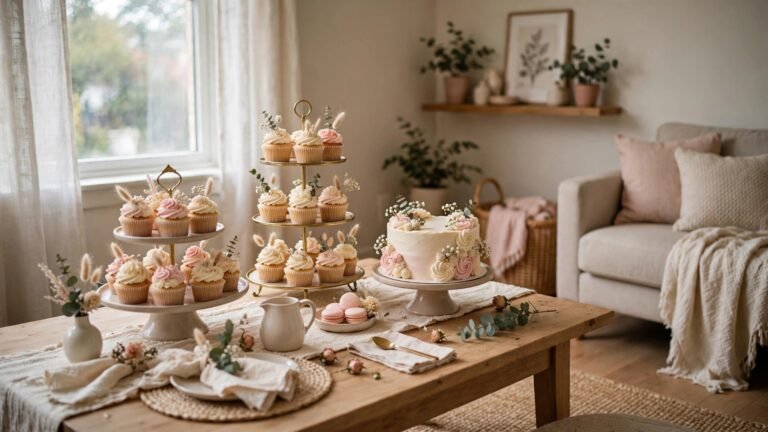
For a shower, the decor moment is usually the gift table and the dessert table: a tablecloth, a small floral bunch, and a framed sign do most of the work. For a sip and see, the decor moment is the baby's corner: a clean, cozy spot with a soft blanket, a few photos, and a simple garland draped over a tension rod or a bookshelf, where guests can meet the baby without crowding the whole room.
Here is how to decorate deposit-safe:
- Use a tension rod across a window or doorway for garlands and banners, and lean a framed sign or a small chalkboard against the wall instead of hanging it.
- Build a tabletop centerpiece for each format: a floral bunch and candles in glass holders for a shower, or a small plant and a framed photo for a sip and see.
- Choose balloons only if you can weight them down on the floor or a table — never tape them to walls or ceilings, where tape pulls paint.
- Keep decor to two focal spots — the food table and the baby or gift area — so the room still feels open and guests can move.
Approximate cost: $25–$60 for shower decor, $15–$40 for sip and see decor, using reusable pieces you can keep for the nursery later. Every piece here comes down without a trace.
6. Seating in a Small Room: Perches, Not Place Settings

A shower needs seating because guests stay for games and gift-opening; a sip and see needs far less, because guests stand, chat, and drift. In a rental living room, that difference decides whether you need to rent chairs or just rearrange what you own.
I have helped renters seat eighteen shower guests in a room built for eight, and the trick was never more chairs — it was perches. A perch is any spot where a guest can sit comfortably for twenty minutes: a dining chair, a pouf, a sturdy ottoman, a floor cushion, or the arm of a sofa. For a sip and see, perches are plenty, because nobody sits for two hours straight.
Here is how to plan seating:
- Count your real seats — sofa spots, dining chairs, and any poufs or ottomans — and write the number down.
- For a shower, borrow or rent enough folding chairs to reach your guest count, and arrange them in a loose circle or rows facing the gift area so everyone can see.
- For a sip and see, skip the rows entirely: scatter perches around the room, keep the center open for standing and mingling, and let guests rotate.
- Keep one comfortable chair reserved for the parent and baby at all times, near the door of the room but not blocking it, so guests can greet them without forming a line through the middle of the party.
Approximate cost: $0–$50 for borrowed chairs and cushions, or $40–$80 to rent a set of folding chairs for a shower. For a sip and see, seating usually costs nothing at all.
7. Gift Handling: Boxes, Bags, and the Closet Problem
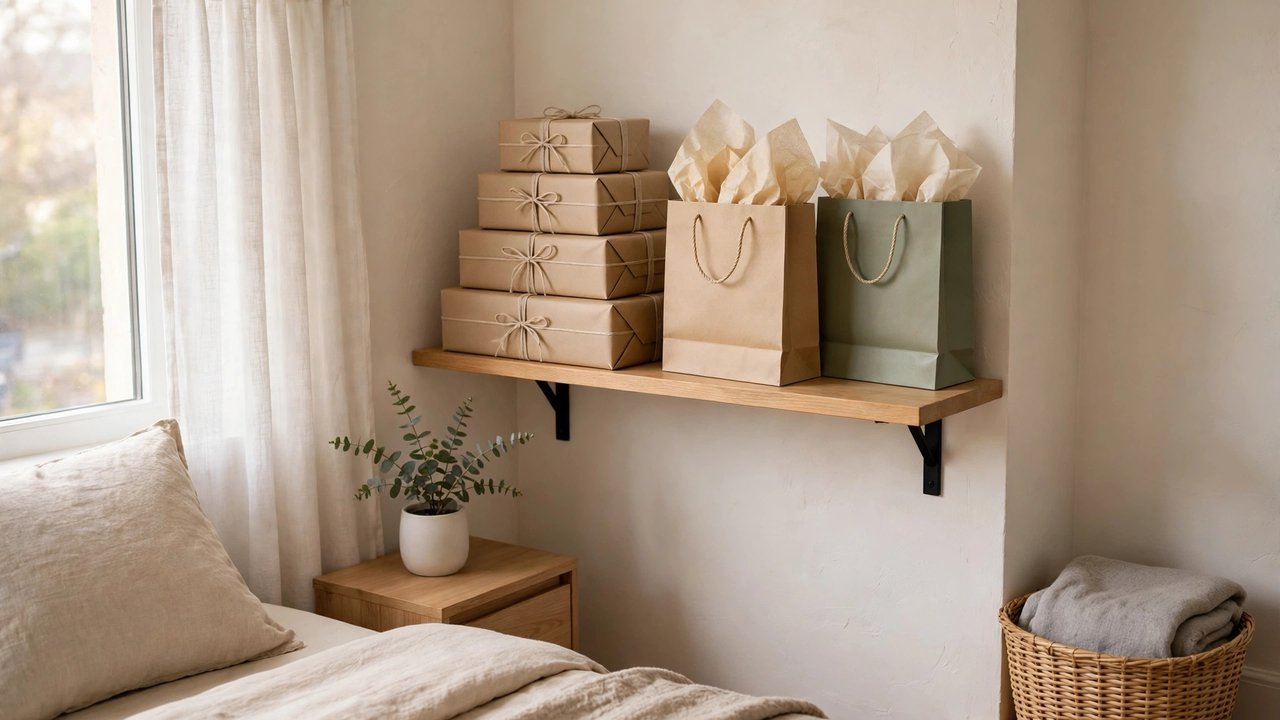
Here is the renter reality nobody puts on the invitation: a shower generates boxes, and boxes need a home. I have personally seen a new parent's living room buried under a week of unopened shower gifts, with the nursery still unfinished and the hallway blocked. A sip and see sidesteps this almost entirely, because guests are meeting the baby, not stocking the nursery — and many hosts simply say no gifts, or ask for small items like books or diapers.
If you choose a shower, plan the gift flow before the first guest arrives. If you choose a sip and see, decide your gift message early and put it on the invitation, so guests are not guessing.
Here is how to handle gifts for each format:
- For a shower, set up one gift staging zone — a corner of the bedroom or a cleared closet shelf — and move gifts there as they arrive, so the party room stays clear.
- Open gifts at the party only if your space allows a seated circle; otherwise, thank guests warmly and open gifts later, which many modern hosts now do.
- For a sip and see, write a clear line on the invitation — "Your presence is the present" or "Books and diapers gratefully welcomed" — so guests arrive confident, not confused.
- Keep a thank-you note list on your phone as gifts arrive, with the giver's name and the gift, so the notes are easy even in the newborn haze.
Approximate cost: $0–$15 for wrapping supplies, bags, and a small thank-you card set. The real cost of poor gift planning is not money — it is a living room you cannot use for a week.
8. Hosting Help: Who Actually Does the Work
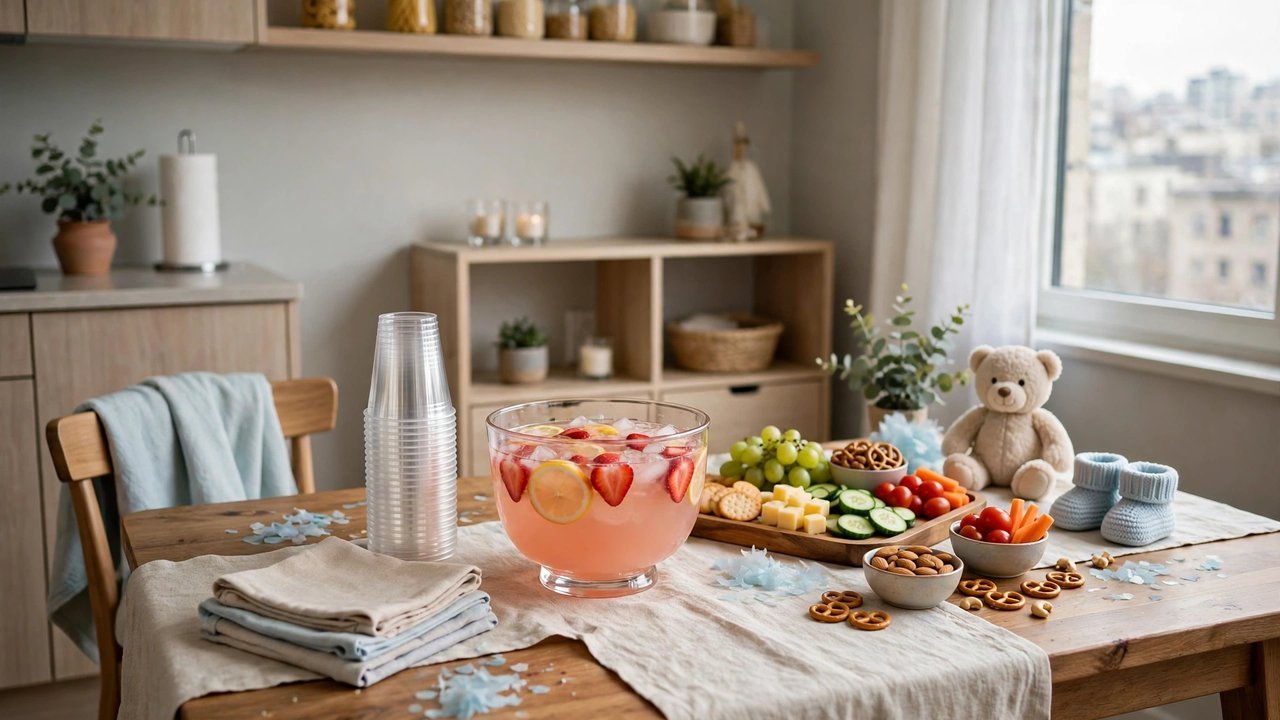
A shower is traditionally hosted by someone other than the parents — a friend, a sister, a coworker — which is a gift in itself, because the parents just show up. A sip and see is usually hosted by the parents, in their own home, which means they also do the setup, the hosting, and the cleanup while caring for a newborn.
For renters, this matters more than it sounds. If a friend offers to host your shower, say yes — and if your friend's place is bigger, a shower there solves your space problem entirely. If you are hosting a sip and see yourself, recruit help deliberately, because a newborn household has no spare hands.
Here is how to divide the work:
- For a shower, let the host own the venue, food, and decor, and let the parents own only the guest list and the registry — that division is the whole point of the tradition.
- For a sip and see, ask one friend to be the door-and-drinks person and another to be the cleanup person, so you are never both holding the baby and refilling cups.
- Put the plan in writing in a short group message: who brings what, who arrives early to set up, and who stays late to take out trash.
- Accept the help that is offered, including the unglamorous kind — someone taking your recycling out after the party is worth more than another balloon bunch.
Approximate cost: $0 if friends help, or $20–$50 for a thank-you treat for your helpers. Hosting help is free in money and priceless in energy.
9. Invitations and Guest Lists: Who Gets Asked to What
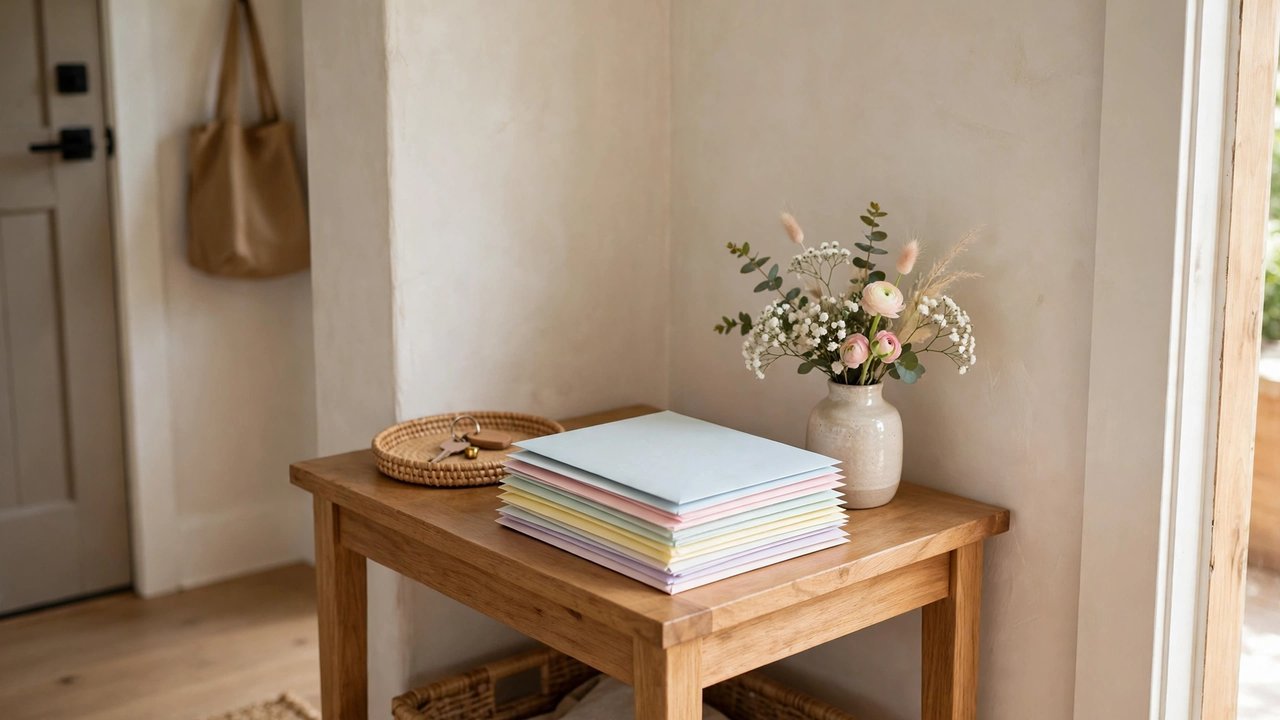
The guest list is where showers and sip and sees quietly differ. A shower guest list is usually close friends and family who will give gifts, and it is built by the host with the parents' input. A sip and see list can be wider — coworkers, neighbors, and friends who want to meet the baby but were not part of the shower — because the ask is smaller: come by, sip something, meet the baby, leave.
In a rental, the invitation also does practical work. It sets expectations about time, space, and gifts, and it keeps your party from outgrowing your apartment. A sip and see invitation that says "drop in between 2 and 4" controls flow in a way a shower invitation that says "party at 2" cannot.
Here is how to handle invitations:
- For a shower, finalize the list with your host first, then send paper or digital invitations three to four weeks ahead, with the registry and any theme noted.
- For a sip and see, send invitations two to three weeks after the birth announcement, with a clear drop-in window and a note about short visits and hand-washing for the baby's health.
- Include parking and building-entry details for both formats — apartment guests need to know about gate codes, street parking, and elevator access, or they will arrive flustered.
- If your list exceeds your space, split it honestly: a shower for close family now and a sip and see for the wider circle later is a gracious solution, not a snub.
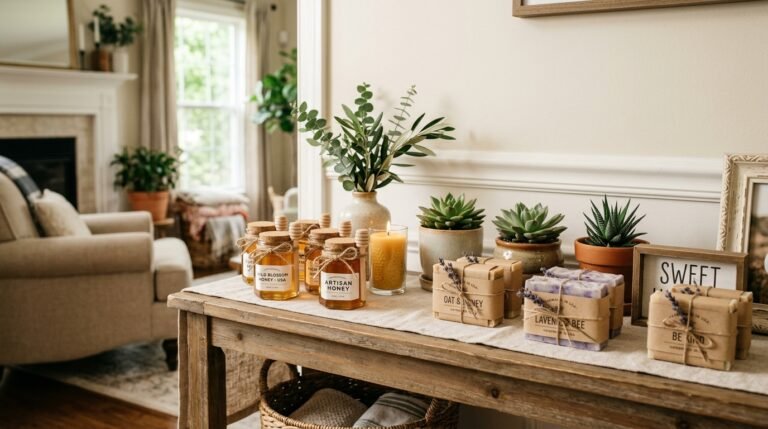
Approximate cost: $0–$30 for digital invitations, or $25–$60 for printed ones. Clear invitations prevent the most common rental party problem: too many people arriving at once.
10. Activities and Games That Fit a Small Space

Shower games are a tradition — bingo, guessing games, advice cards — but they need seated guests, a host to run them, and time. A sip and see needs almost no activities, because the baby is the activity, and guests are happy to chat, hold the baby briefly, and leave. In a small rental, activities that need floor space or movement will fail; activities that happen at a table or in a guest's hands will succeed.
I have noticed that the best small-space shower activities are the quiet ones: advice cards guests fill in at their seats, a onesie-decorating station at one end of the table, or a simple guessing game read aloud. Loud, movement-based games in a 500-square-foot room just create a traffic jam.
Here is how to plan activities for each format:
- For a shower, pick two games maximum — one seated game like bingo and one table activity like advice cards — and keep each under fifteen minutes.
- Set up a small activity corner rather than a whole-room game: a table with cards, pens, and a jar for guesses keeps guests busy without rearranging furniture.
- For a sip and see, skip formal games entirely and offer one gentle activity instead: a guest book, a photo spot with a simple freestanding frame, or a card-writing station.
- Keep prizes small and useful — a candle, a snack, or a small plant — so winners are not carrying home bulky items through your hallway.
Approximate cost: $10–$30 for game supplies and small prizes for a shower; $5–$15 for a guest book or cards for a sip and see. Two good activities beat five chaotic ones every time.
11. Cleanup: The Part Nobody Plans (and Renters Can't Skip)
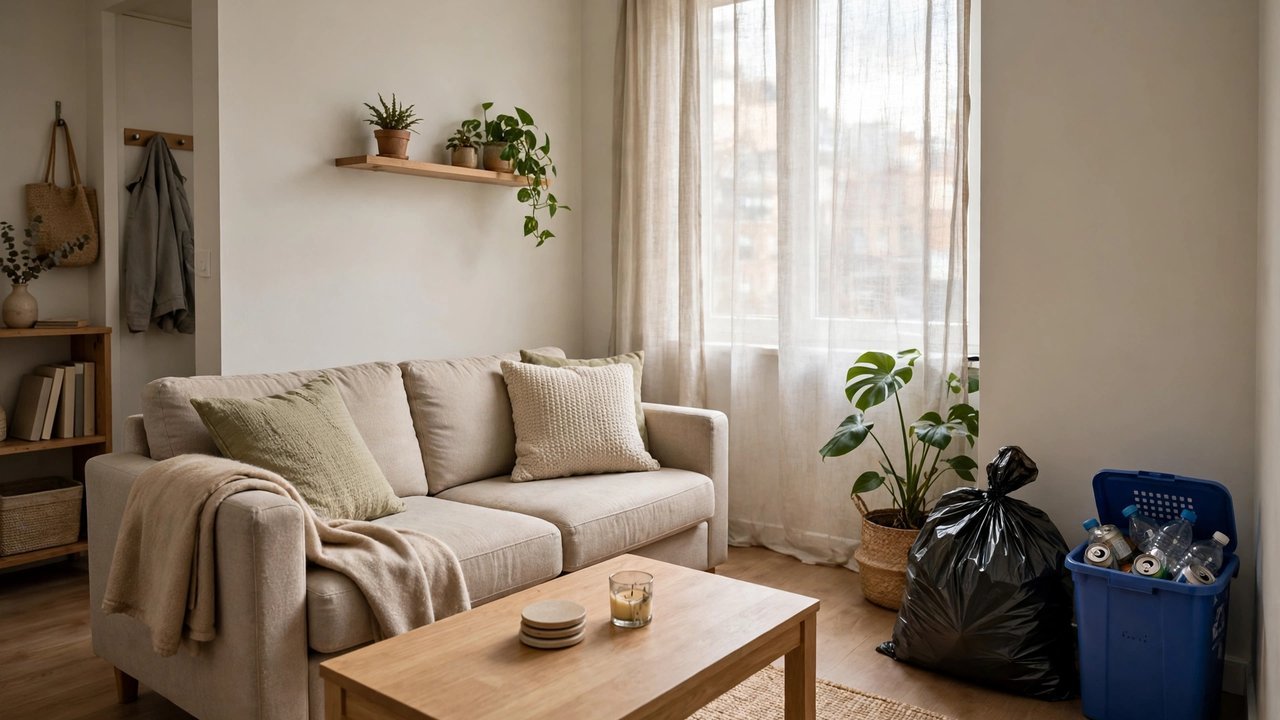
Cleanup is where the renter test gets real. A shower leaves wrapping paper, plates, cups, and decor across your whole apartment, and you have to restore it the same day or live in the mess. A sip and see leaves far less — cups, a few snack plates, and maybe a balloon or two — and because guests come and go, you can tidy between waves.
I have personally seen a shower cleanup take three hours in a small apartment because nothing had a plan, and I have seen a sip and see cleaned up in thirty minutes because the host had bags, bins, and a helper. The difference was never the size of the party. It was the plan.
Here is how to plan cleanup for each format:
- Before the party, place a large trash bag and a recycling bag in an out-of-the-way corner, and put a small bin near the food table for plates and cups.
- For a shower, schedule gift-opening last, then start cleanup while guests are still chatting — clear food first, then decor, then gifts to their staging zone.
- For a sip and see, tidy between guest waves: a five-minute reset of cups and snacks keeps the room presentable all afternoon without a big final push.
- Do a deposit check after everyone leaves: walk the room for scuffs, spills, and anything stuck to a wall, and wipe up spills immediately — a stain found tonight is easy, and a stain found at move-out is expensive.
Approximate cost: $5–$15 for trash bags, cleaning supplies, and paper towels. A good cleanup plan is the cheapest deposit insurance you will ever buy.
12. The Chooser: Which Celebration Fits Your Space?
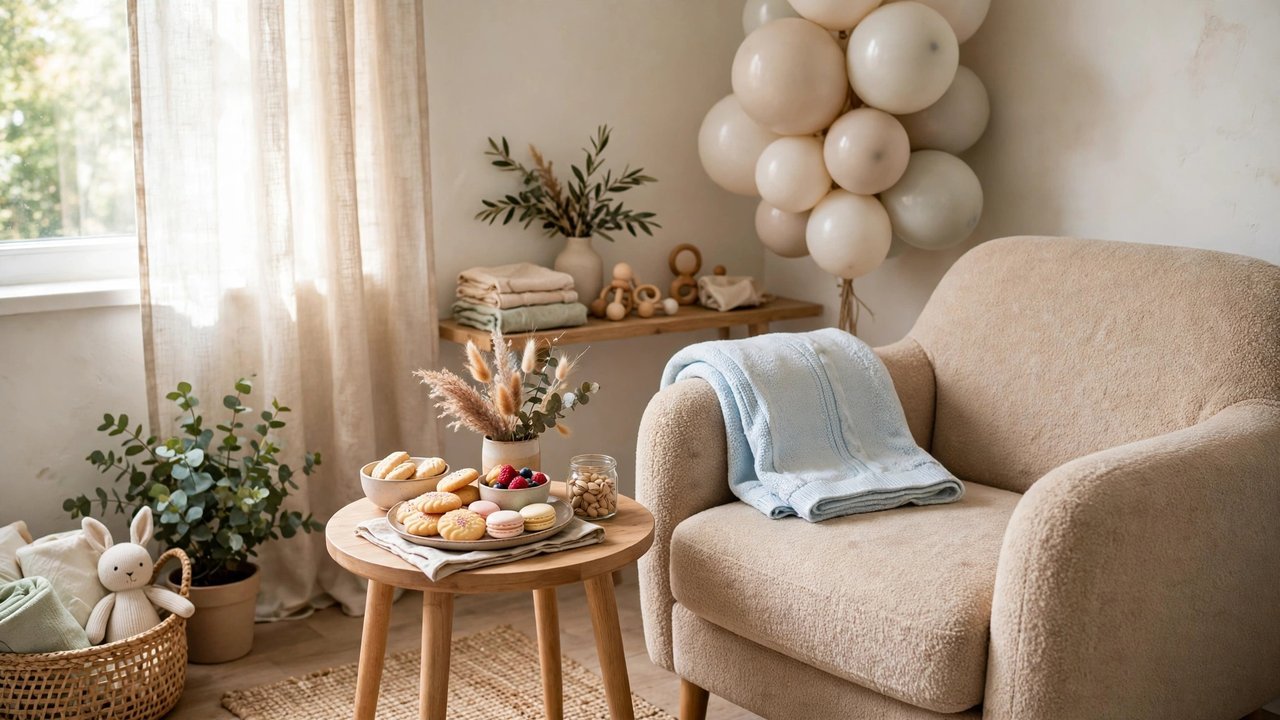
By now you have the full picture, so here is the decision in plain terms. Choose a baby shower if your guest list fits your seated capacity, if someone else is hosting, if you want gifts before the baby arrives to set up the nursery, and if you have the energy in your last trimester to enjoy a longer party. Choose a sip and see if your guest list is large, your space is small, you are hosting yourself, you would rather meet the baby than open boxes, or you simply want a shorter, calmer celebration.
And here is the option I recommend most often to renters: the hybrid. Host a small shower for your closest circle before the birth — the people who most want to give gifts and help set up the nursery — and then host a relaxed sip and see after the birth for everyone else. You get both celebrations, neither one overflows your apartment, and nobody feels left out.
Here is how to make the final call:
- Write down your guest count, your seated capacity, and your standing capacity from idea 1, and circle the format whose numbers fit.
- Ask yourself honestly who is hosting and how much energy you will have — a shower hosted by a friend and a sip and see hosted by you are very different asks.
- Check your gift situation: if the nursery still needs big items, a shower helps; if the nursery is done, a sip and see with a no-gifts note is kinder to your space.
- Pick your date, send your invitations, and stop second-guessing — either format, done well in a small space, will be remembered for the warmth, not the square footage.
Approximate cost: $150–$350 for a shower, $40–$120 for a sip and see, or roughly $190–$470 for both as a hybrid with a small shower and a simple sip and see. The right celebration is the one your space, your budget, and your energy can actually hold — and now you know which one that is.
Conclusion
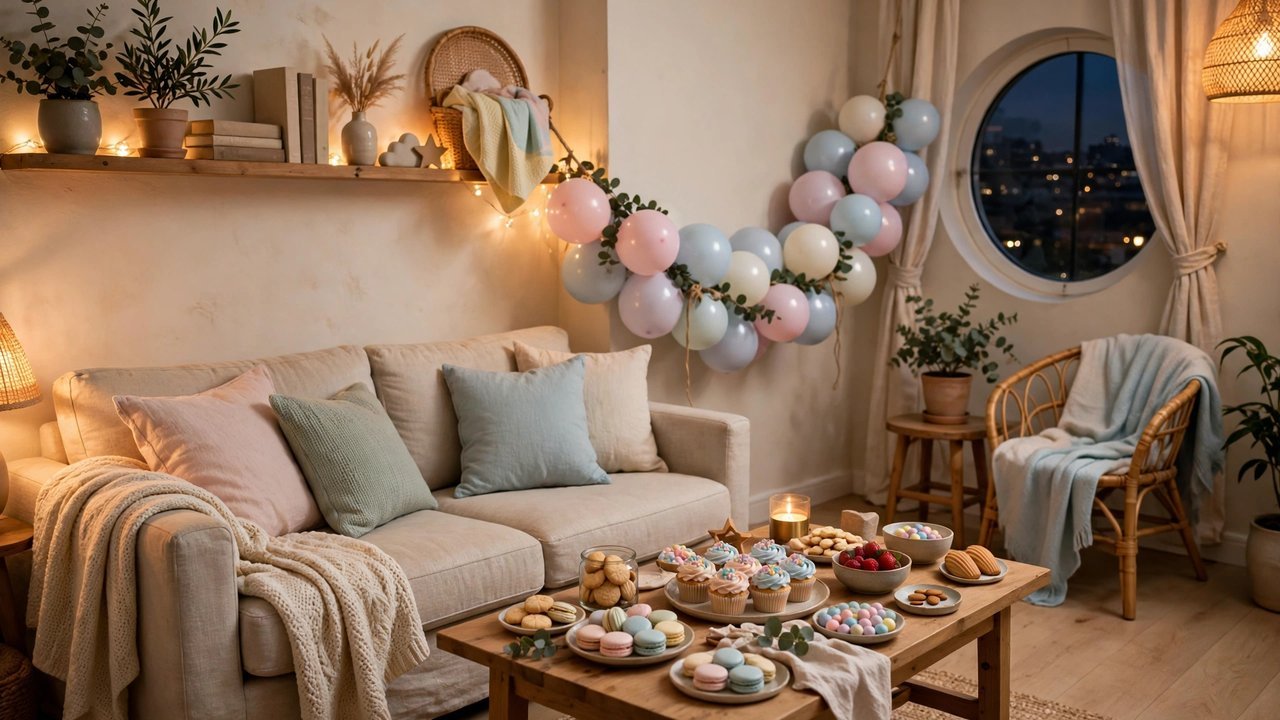
Choosing between a sip and see and a baby shower is not really about which tradition is better. It is about which celebration fits the home you actually live in — the apartment with one bathroom, the living room that seats six, the landlord who expects the walls back exactly as they were. A shower gives you gifts, games, and a long afternoon with your closest people before the baby arrives. A sip and see gives you short, sweet visits, a room that never gets overcrowded, and the joy of introducing your baby in the home you have already made ready.
I have helped dozens of renters celebrate in small spaces, and the parties people remember best were never the biggest ones. They were the ones where the host was relaxed, the room felt comfortable, and nobody worried about the deposit. Pick the format that lets you be that host, set it up with removable, renter-friendly pieces, and enjoy every minute of it — you have earned this celebration.
Please save this visual guide on Pinterest and share it with a friend who is expecting in a rental, so the next celebration in a small space is just as joyful and just as deposit-safe.

Amelia leads HavenlyStyle’s editorial vision with a passion for elegant interiors and practical home living. With years of experience in home décor and lifestyle content, she ensures every article is accurate, inspiring, and easy to follow. From timeless decorating ideas to the latest interior design trends, Amelia is committed to helping readers create beautiful, functional spaces while maintaining HavenlyStyle’s trusted and welcoming voice.