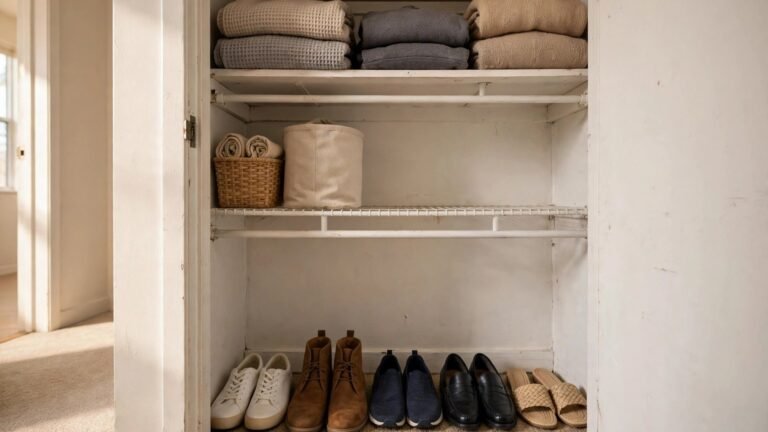
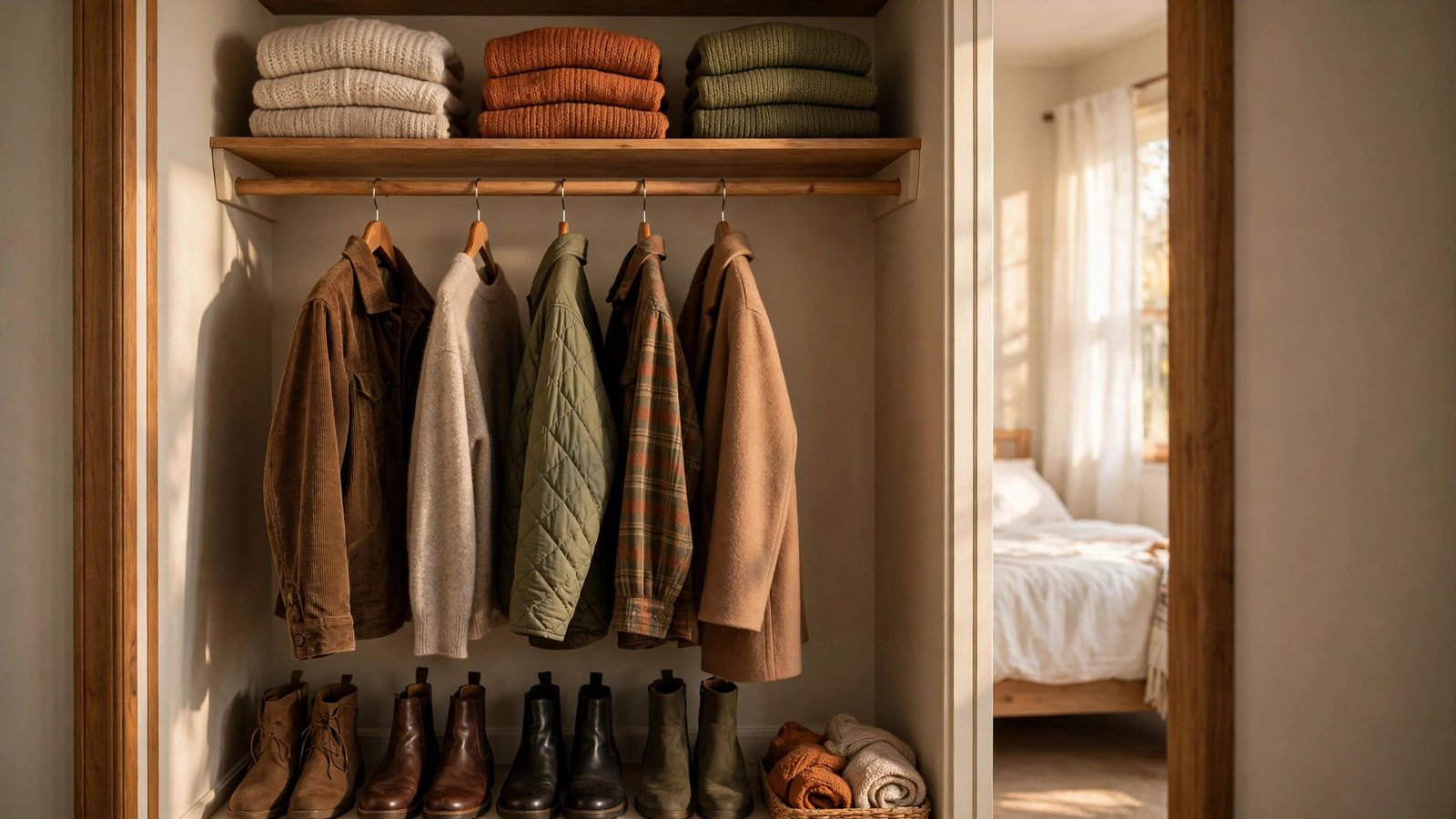
There’s a special kind of closet chaos that only renters know: the moment in mid-October when your reach-in closet still holds July’s tank tops, your fall boots are buried under a beach bag, and your landlord would have words if you so much as suggested installing a second rod. I’ve helped dozens of renters through this exact moment, and here’s what I’ve noticed — the problem is almost never the size of the closet. It’s that two seasons of clothes are competing for one season of space.
I learned this in my own first rental, a one-bedroom where the entire closet was three feet wide and one season deep. I spent a frantic Saturday yanking things off hangers at random, made a bigger mess than I started with, and gave up by lunch. A few years later, after helping friends and clients rotate closets in everything from walk-ins to dorm armoires, I developed a system that actually works in rental realities: one weekend, eight moves, zero drilling, zero paint, zero landlord conversations. You pull everything out, you make honest decisions, you store the off-season where renters actually can store things, and you rebuild the closet around fall.
This guide is that system, broken into eight ideas you can follow in order like a Saturday-through-Sunday plan. Every idea is deposit-safe and removable. By Sunday evening, your fall wardrobe is out, your summer clothes are put away, and your closet finally fits the life you’re living right now.
Executive Summary
- One weekend is enough. Follow the ideas in order — Saturday for pull-out, sort, storage, and reset; Sunday for lighting, re-entry, and rhythm — and a renter’s closet can fully switch seasons in about six to eight focused hours.
- Pull everything out first. A partial sort never works; the full pull-out is the only way to see what you actually own and stop paying closet rent for clothes you never wear.
- The 3-pile sort beats decision fatigue. Keep, store, let go — three piles, one round of decisions, and a rule that anything “maybe” goes to store.
- Off-season storage is a renter superpower. Under-bed boxes, vacuum bags on closet shelves, and over-the-door hooks hold a full summer wardrobe without a single drilled hole.
- Rebuild around fall, not around everything. Rehang a small capsule of fall outfits first, then fill in — your mornings get faster and your closet stays uncluttered.
- A ten-minute weekly rhythm replaces the seasonal panic. Hang things back immediately and do one monthly five-minute reset, and you’ll never need another rescue weekend.
1. The Saturday Morning Pull-Out: Empty the Whole Closet at Once
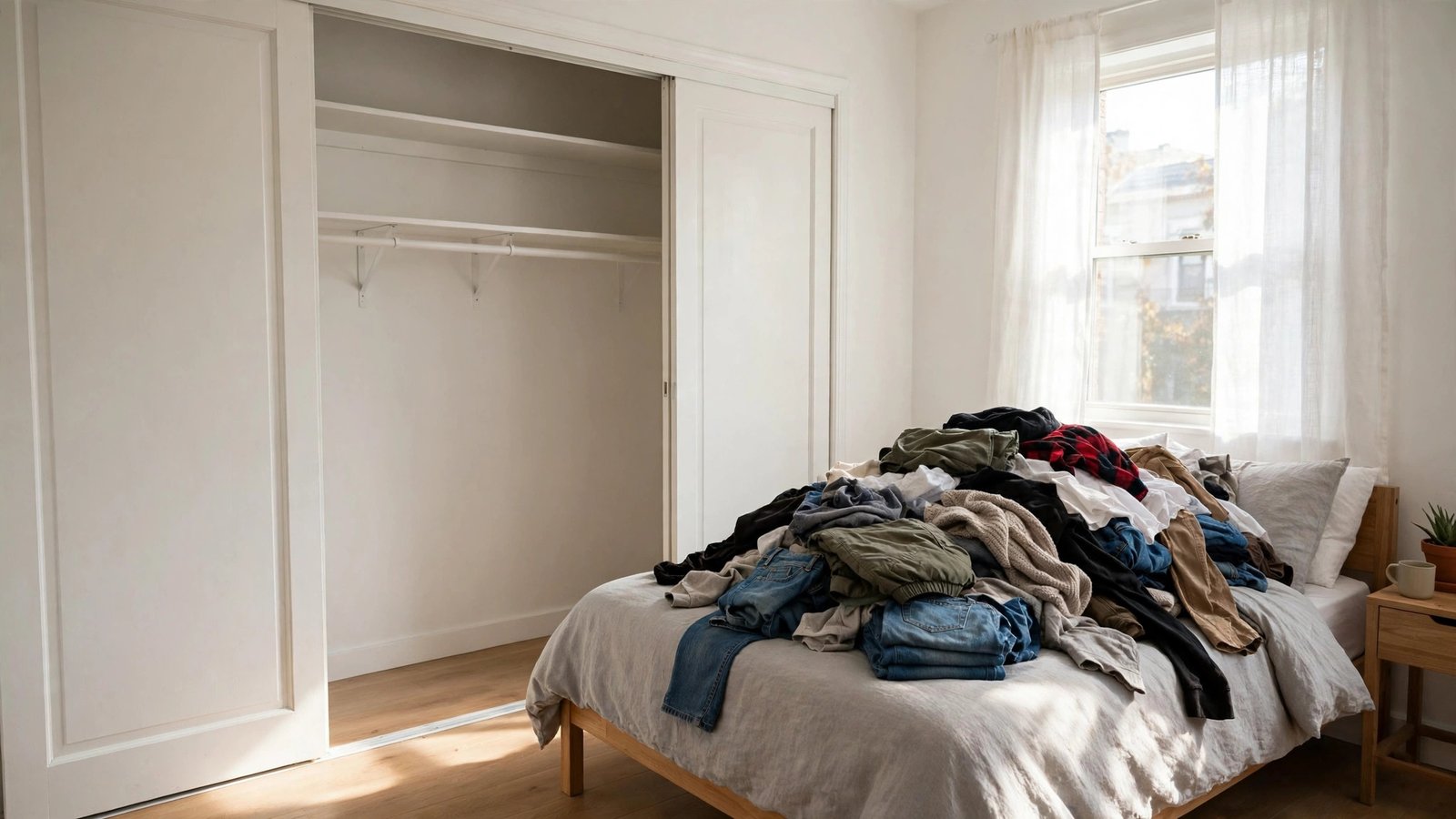
What it is: A complete extraction — every hanger, every bin, every shoe, every scarf stuffed in the corner — comes out of the closet and onto your bed, a clean sheet on the floor, or a rolling rack if you have one. Nothing stays. The closet goes from full to bare walls in under an hour, and that empty space is the whole point: it’s the first time all season you can actually see what you’re working with.
Why it works for renters: Rental closets are small by design — standard reach-ins, tiny apartment walk-ins, dorm armoires. In a small space, a partial declutter just shuffles the problem around; things you “kept” behind other things stay hidden and unworn for months. I’ve noticed that renters who pull everything out make 20 to 30 percent more honest “let go” decisions, simply because they’re looking at each item once instead of twice. And because the closet is empty, you can also do the deep clean in step 4 in minutes instead of fighting around hangers. Nothing in this step touches the walls or the landlord’s fixtures — you’re just moving your own belongings.
How to do it:
- Stage your landing zones first. Before you touch a hanger, lay a clean sheet on the floor and clear your bed. Label three spots — KEEP, STORE, LET GO — with sticky notes so your arms know where to go. This takes ten minutes and prevents the “I’ll decide later” piles that stall the whole weekend.
- Work rod to floor, top to bottom. Start with the top shelf, then the rod, then the floor and corners. This order keeps dust from the upper shelf from raining onto items you’ve already handled, and it guarantees nothing gets skipped.
- Pull in categories, not at random. Take all the dresses, then all the shirts, then pants, then accessories. Pulling in categories means the 3-pile sort goes twice as fast because similar decisions group together.
- Leave the empty closet open and walk away for coffee. Seriously. Seeing bare shelves for ten minutes recalibrates your sense of how little you actually need. Renters who skip this break almost always overfill the closet on rebuild.
Approximate cost: $0–$8. You likely own a sheet and sticky notes already; if not, a pack of sticky notes runs about $5–$8.
2. The 3-Pile Sort: Keep, Store, Let Go

What it is: Every single item from the pull-out gets one of three verdicts, decided once and never revisited. KEEP means it fits fall — sweaters, jackets, boots, fall workwear. STORE means it’s summer-only or cold-weather-deep and you’ll want it later — swimsuits, shorts, heavy parkas, formalwear. LET GO means it’s damaged, hasn’t been worn in a year, or you simply don’t love it — and it leaves the house via donation bag or trash this weekend.
Why it works for renters: Closet space in a rental is rented square footage, and every summer tank top left on the rod is charging you closet rent for months while you wear sweaters. The three-pile system is ruthless about that math. I’ve personally seen renters reclaim a third of their rod space just by moving the STORE pile out of the closet — no organizers, no organizers’ worth of money, just honesty. It’s also deposit-safe in a quiet way: fewer crammed clothes means less strain on the rod and shelving your landlord installed, and less moisture trapped in an overstuffed closet, which matters in older buildings.
How to do it:
- Touch everything once and decide immediately. Hold it up, ask three questions: does it fit fall, did I wear it last fall, do I love it? Yes to fall means KEEP. Seasonal-only means STORE. Anything else means LET GO. Set a two-minute timer per category batch to keep momentum.
- Make “maybe” mean STORE, never KEEP. Hesitation items get boxed and stored, not left on the rod to clutter fall. If you don’t miss them by spring, they graduate to LET GO without a second decision.
- Bag the LET GO pile the moment it forms. Tie off donation bags and set them by the front door immediately. Items that linger in a “donate later” pile have a way of migrating back into the closet by Sunday.
- Count the KEEP pile before you celebrate. If it’s still more than your rod can hold comfortably with two inches between hangers, do one more honest pass. A fall closet that breathes is the whole goal of the weekend.
Approximate cost: $0–$12. Donation bags are free from your own supply; a pack of heavy-duty bags runs about $8–$12 if you need them.
3. Off-Season Storage Prep: Summer Clothes Into No-Drill Hiding Spots

What it is: Your STORE pile — the swimsuits, shorts, tank tops, and sandals — gets packed away in storage that lives outside the closet, using only renter-safe options: under-bed boxes, vacuum storage bags tucked on closet shelving, zippered garment bags on over-the-door hooks, and canvas bins slid into the unused corners of your room. The off-season doesn’t disappear; it just stops competing with fall.
Why it works for renters: This is where renters actually beat homeowners. Because you can’t drill in extra shelving or bolt in a wardrobe extension, you get creative with the dead space landlords ignore — and that dead space is everywhere: 7 inches under most beds, the top 12 inches of closet shelving, the back of the bedroom door. I’ve helped dozens of renters store a complete summer wardrobe in under-bed space alone, and the summer clothes emerge in May smelling fine because they were packed clean and dry. Every option here is freestanding, adhesive, or over-the-door — nothing screwed in, nothing to patch at move-out, nothing your lease can object to.
How to do it:
- Wash and fully dry everything before packing. Stored clothes with even slight dampness develop mildew over winter, and a musty swimsuit in May is nobody’s plan. Launder, dry completely, and fold the day you pack.
- Fill under-bed boxes first — they’re your biggest free real estate. Slide low-profile storage boxes under the bed, heaviest items (denim, sandals) toward the foot. Label each box with painter’s tape and a marker: “SUMMER 2026 — shorts & tanks.” Painter’s tape peels clean off anything.
- Use vacuum bags for bulky summer items. Beach towels, puffer vests, and bulky linen pieces shrink to a third of their size in a vacuum bag, which then slides flat on top of your closet shelf or under the bed. Squeeze the air out by rolling the bag toward the valve — no vacuum cleaner needed.
- Hang only what wrinkles. Slip dresses, blazers, and anything linen go into one zippered garment bag on an over-the-door hook in your room or inside the closet. One hook, one bag, zero wall damage.
- Photograph the packed boxes. One quick photo of each labeled box means you can find the white sundress in April without unstacking everything. Save the photos in a phone album called “Closet.”
Approximate cost: $15–$40. Under-bed boxes run about $8–$15 each (you’ll likely need two), vacuum bags about $10–$15 for a multipack, and a garment bag around $8–$12. Start with what you own and buy only the gap.
4. The Closet Reset & Deep Clean: Bare Walls, Fresh Start
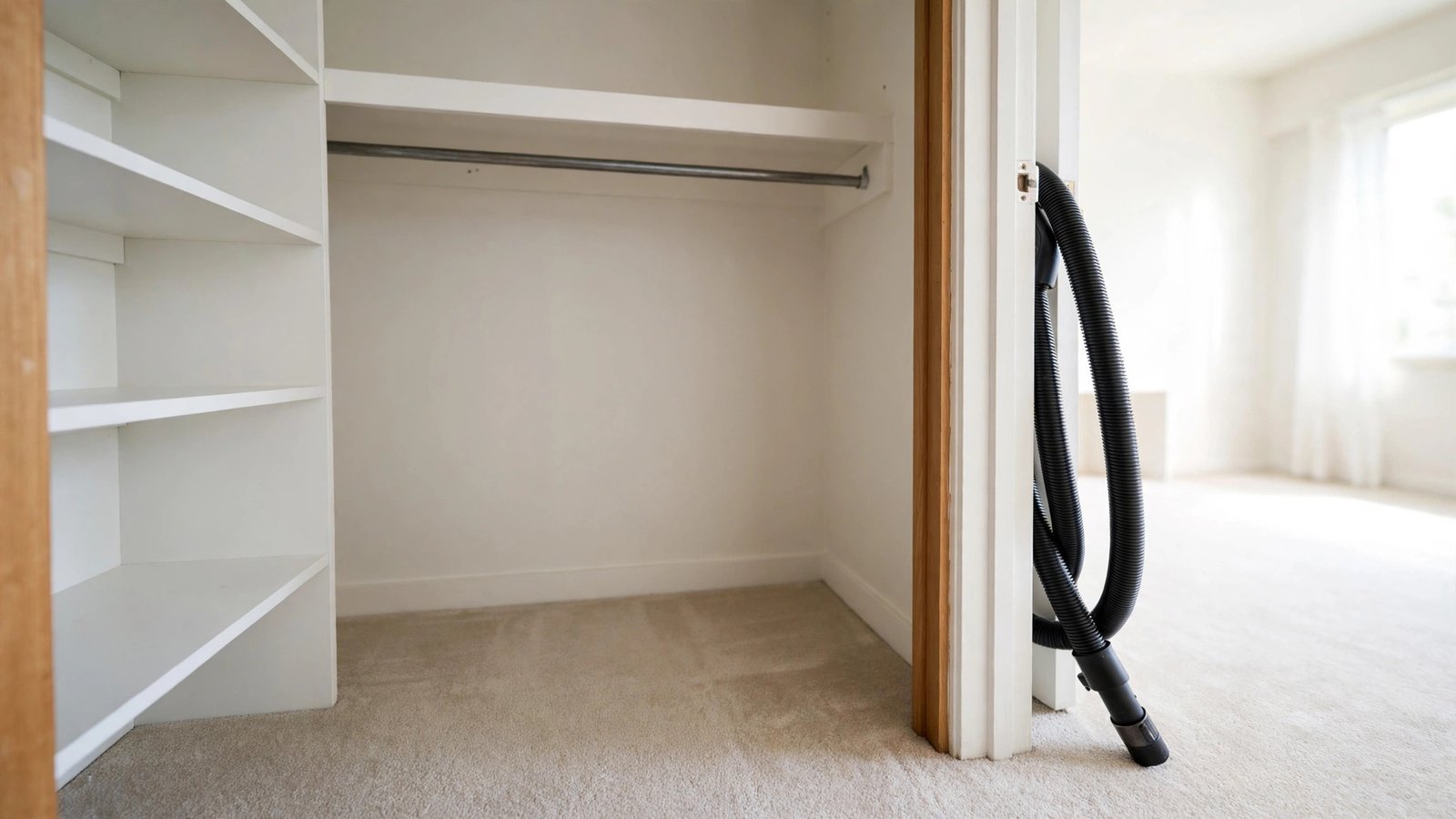
What it is: With the closet fully empty — remember, step 1 got everything out — you clean it like a room that matters: wipe every shelf, vacuum the floor and corners, check for moisture or musty spots, and give the empty space a quick refresh before a single fall item goes back in. Fifteen to thirty minutes, while the closet is at its emptiest all year.
Why it works for renters: An empty closet is a rare thing in a rental, and it’s your one annual window to spot what the landlord’s maintenance schedule misses: damp corners behind the back wall, shelf edges where dust has been collecting for a year, carpet edges that need attention. I’ve noticed that renters who do this reset catch small problems — a musty corner, a warped shelf — before they become deposit disputes. And on the style side, a clean, bright closet makes fall clothes look better on re-entry; sweaters on dusty shelves pick up lint and look tired within a week. All cleaning products are your choice and removable by nature — nothing here modifies the unit.
How to do it:
- Vacuum first, wipe second. Vacuum the floor, corners, and along shelf edges with the brush attachment. Then wipe shelves and rods with a damp microfiber cloth and a mild all-purpose spray. Let everything air-dry for ten minutes.
- Check the back wall and floor corners for moisture. Touch, don’t just look — dampness hides in dark corners. If you find anything genuinely damp or moldy, photograph it and email your landlord; that’s a maintenance issue, not a cleaning project, and the photo trail protects your deposit.
- Line shelves with removable shelf liner. Peel-and-stick liner, cut to fit, gives your folded fall sweaters a clean surface and peels off without residue at move-out. Measure the shelf, cut slightly oversize, trim in place with scissors.
- Drop in one small moisture absorber or sachet. A hanging moisture absorber or a couple of cedar rings on the shelf keep a closed rental closet from smelling stale through winter. Replace every few months — set a phone reminder.
Approximate cost: $8–$20. Shelf liner runs about $8–$12 a roll, moisture absorbers about $6–$10 for a multipack. Microfiber cloths are reusable year to year.
5. Saturday Evening: Fall Re-Entry & the Placement Map
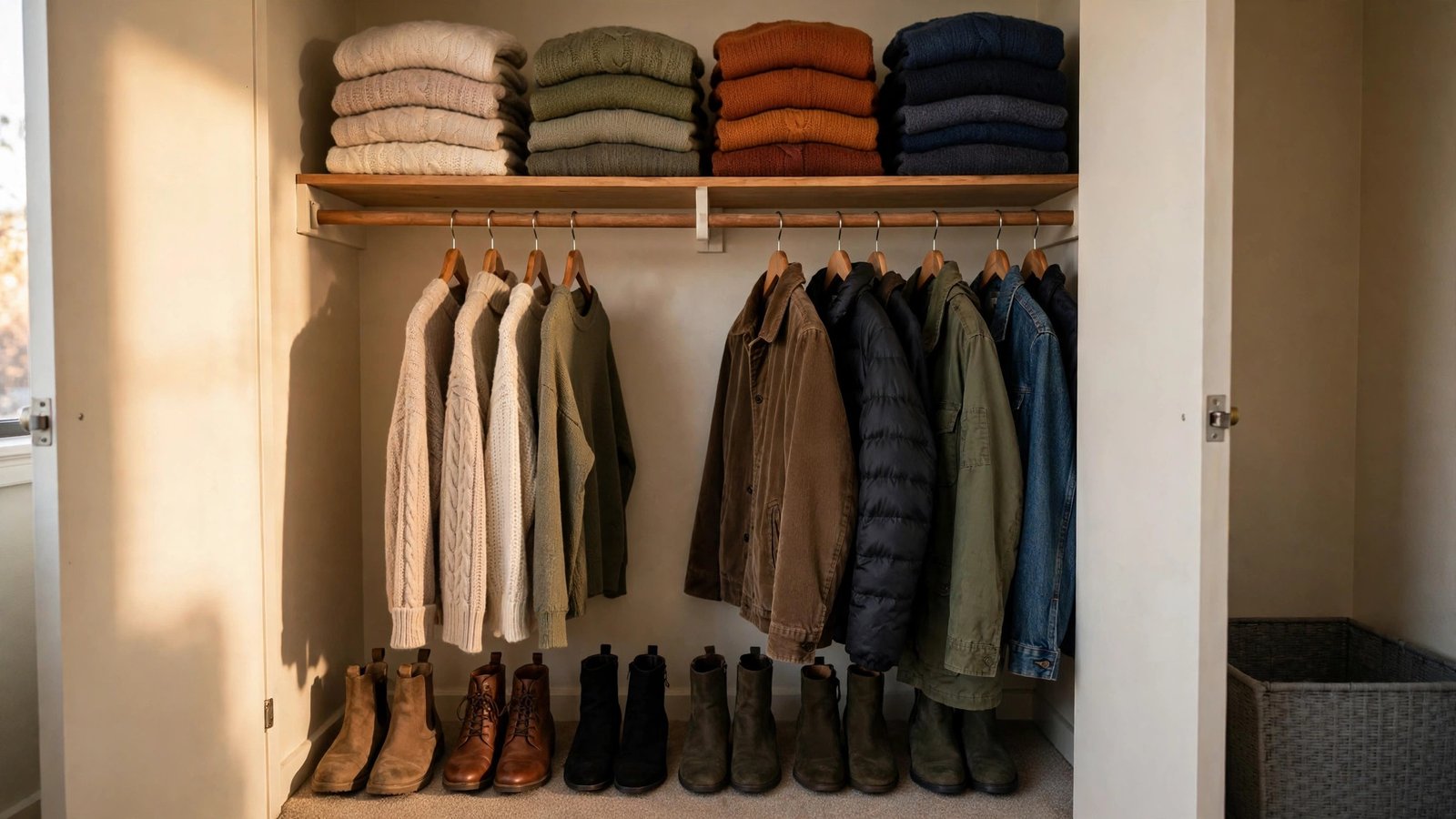
What it is: The satisfying part. Your KEEP pile — clean, honest fall clothes — goes back into the freshly reset closet, but not randomly. You place each category in its zone using a simple placement map: daily wear at eye and hand level, occasional pieces up high, shoes and bags on the floor, accessories near the door. Saturday evening ends with a closet where the fall wardrobe has an address and every address makes morning sense.
Why it works for renters: Rental closets are small, so placement is everything — there’s no spare corner for the “overflow rod” a homeowner would add. A placement map means your best, most-worn fall pieces sit exactly where your hand lands at 7 a.m., and the bridesmaid dress you wear twice a year lives up high where it doesn’t block anything. I’ve personally seen this cut morning decision time in half for clients, because the map does the deciding before the morning does. And because nothing is drilled or mounted, the map is pure arrangement — rearrange it freely next month if your routine changes, with zero consequences.
How to do it:
- Sketch the map on paper first. Draw your closet as a rectangle, mark the rod, shelf, and floor, and assign zones: center rod for daily fall tops, one side for pants and skirts, top shelf for occasional and bags, floor for shoes. Five minutes of planning beats twenty minutes of reshuffling.
- Hang daily wear at prime height. The rod section at eye and hand level gets your workweek fall rotation — sweaters, button-downs, the blazer you actually wear. Everything you reach for five days a week should be grabbable without a step stool or a dig.
- Fold heavy knits on shelves, never on hangers. Sweaters stretch on hangers; folded on the shelf with liner they keep their shape all season. Fold in thirds, stack by color, two stacks per shelf section.
- Zone the floor by frequency. Everyday fall boots and sneakers get the front of the floor space; occasion shoes go to the back or a low under-shelf rack. Bags you use weekly hang on the over-the-door hooks; occasion bags go up top.
- Step back and do the two-inch test. Every hanger should have roughly two inches of breathing room. If the rod is jammed, revisit step 2 — something in the KEEP pile is a STORE in disguise.
Approximate cost: $0–$15. This step is mostly arrangement; if you add an over-the-door hook set or a low shoe rack, budget about $10–$15.
6. Sunday: Lighting & Small Touch-Ups That Make It Feel Done
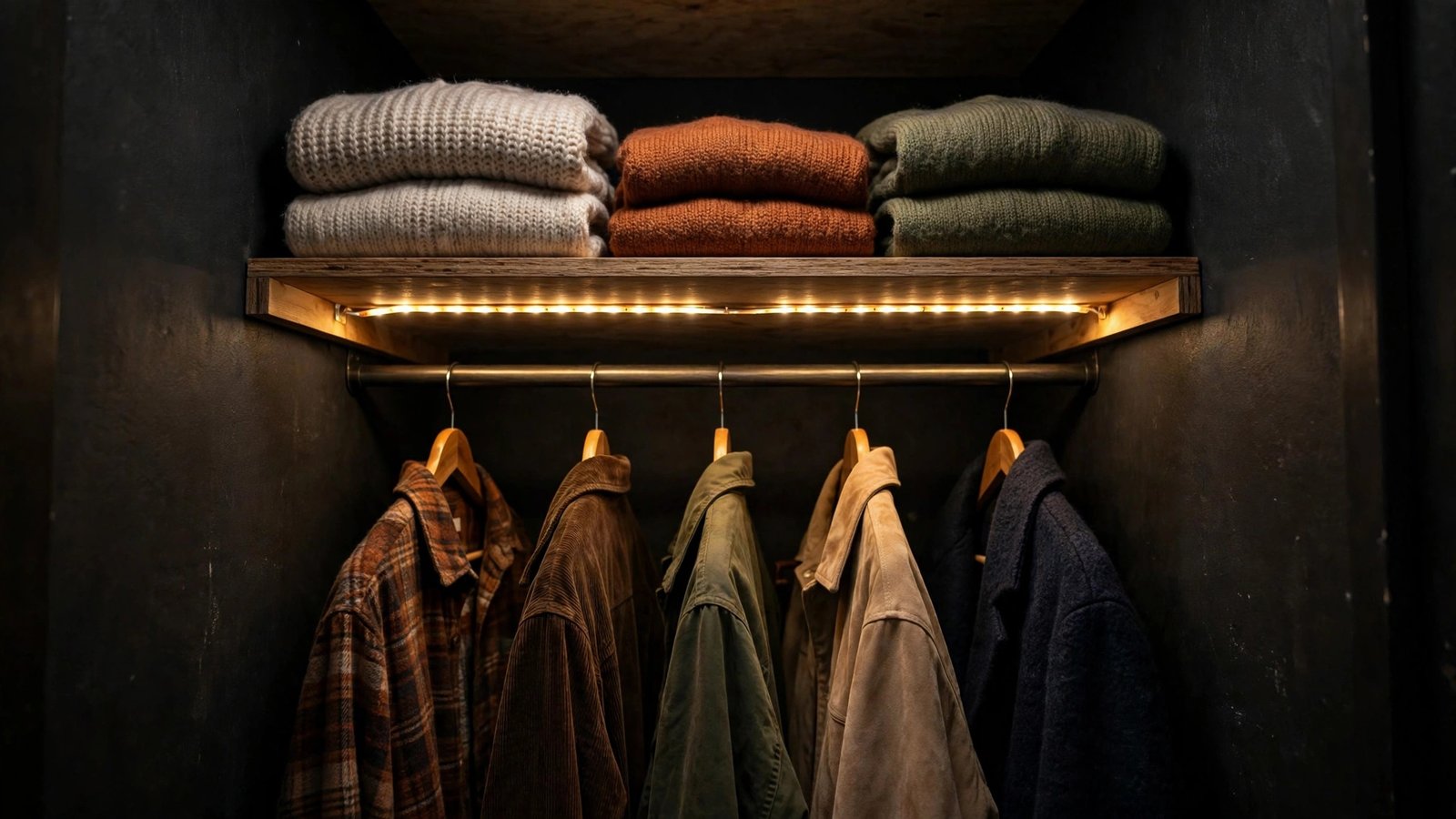
What it is: The finishing pass that separates a “cleaned closet” from a “done closet.” You add battery or rechargeable LED lighting with adhesive mounts, straighten every hanger to face the same direction, add one small mirror or scent detail if you like, and handle the tiny frictions — the sticky drawer, the tilted shelf — that make a closet feel worn even when it’s organized.
Why it works for renters: Rental closets are famously dark — one bare bulb if you’re lucky, a pull chain if you’re not, and landlords rarely upgrade them. Good lighting changes how a closet feels more than any organizer does: you can actually see colors at 6 a.m., you stop wearing the navy sweater you thought was black, and the whole space reads as intentional. Adhesive LED strips and puck lights are the renter’s answer — they mount with peel-and-stick pads, run on batteries or USB charging, and come off clean at move-out. I’ve helped renters do this in twenty minutes and heard “it feels like a boutique” more than once. No electrician, no landlord permission needed, no deposit risk.
How to do it:
- Mount adhesive LED lighting where it matters. Stick a battery LED strip or two puck lights along the top shelf underside or the closet’s upper side wall, aimed at the rod. Peel-and-stick pads hold well on painted walls and shelves and remove without damage. Test the angle before you press firmly — light should fall on the clothes, not your eyes.
- Turn every hanger the same direction. It’s a tiny thing with a big visual payoff: uniform hangers facing one way make a small closet look twice as tidy. While you’re at it, retire any wire hangers — slim hangers save rod space and keep fall knits from sliding.
- Add one sensory detail. A cedar ring on the rod, a small sachet on the shelf, or a stick-on mirror inside the door. One detail, not five — this is a closet, not a gift shop.
- Fix the small frictions. Tighten any loose shelf pin by hand, wipe the light switch plate, replace the dead bulb in the closet fixture if there is one. Ten minutes of touch-ups makes the space feel maintained rather than merely organized.
Approximate cost: $10–$25. Adhesive LED puck lights or strips run about $10–$20; a pack of slim hangers is about $8–$12 if you’re upgrading.
7. The Capsule-First Rehang: Build Fall Around 12–15 Pieces
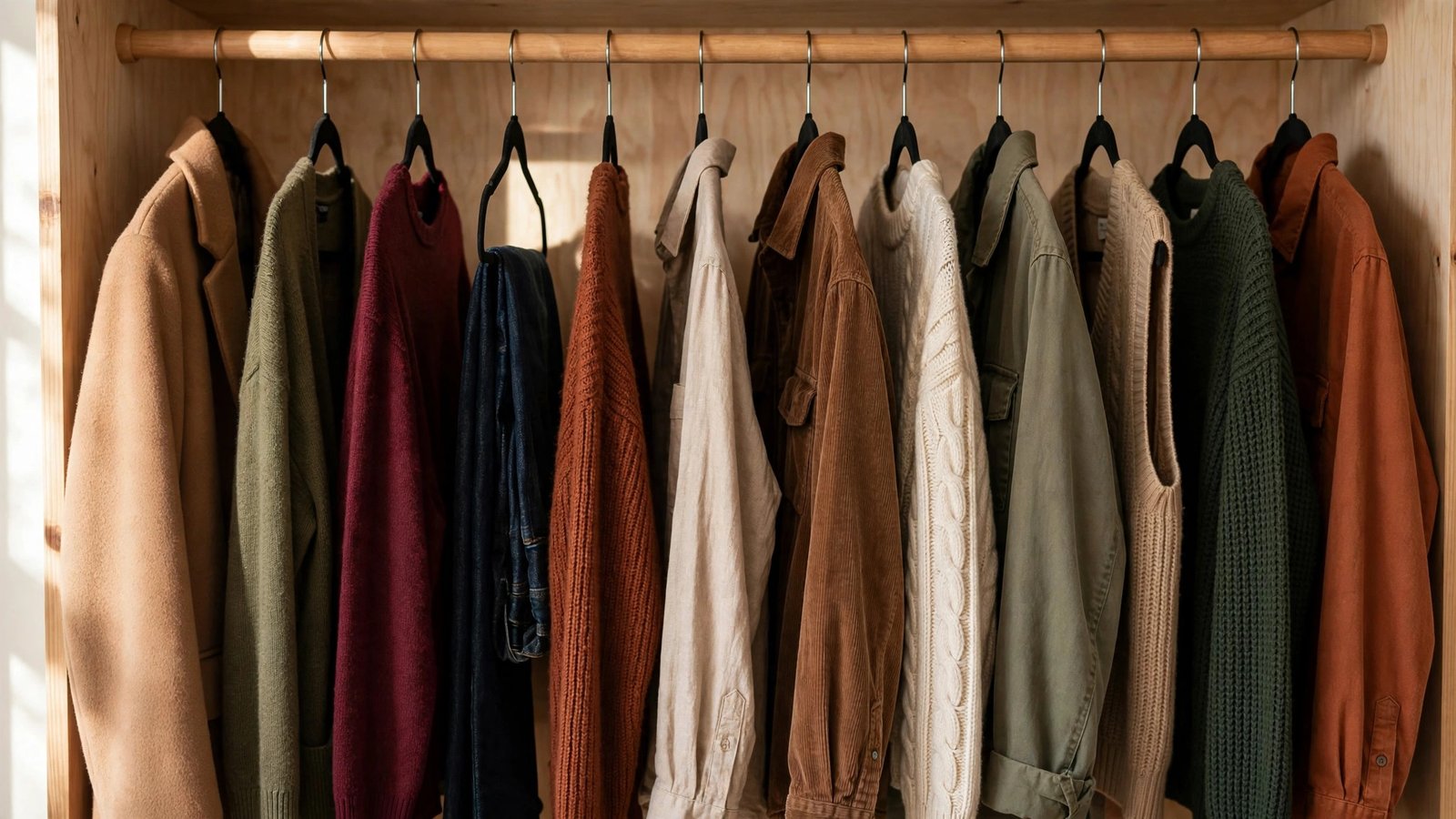
What it is: Instead of rehanging everything at once, you pull out 12 to 15 pieces that form your fall capsule — the outfits you actually live in — and hang those first, front and center. The rest of the KEEP pile fills in around them. Your closet’s heart is a small, intentional wardrobe; everything else is supporting cast.
Why it works for renters: Small rental closets punish maximalism and reward curation. When every piece is visible, you wear more of what you own and stop buying duplicates of the black sweater you already have. I’ve noticed that renters who build a capsule first report fewer “I have nothing to wear” mornings than renters who rehang everything and hope for the best — because the capsule was chosen, not inherited. And it’s fully reversible: if your style or your job changes mid-season, the capsule changes with it in one evening, no hardware involved, no money spent.
How to do it:
- Lay out your 12–15 capsule candidates on the bed. Pick pieces that mix and match: 4–5 tops, 3–4 bottoms, 2–3 layers (cardigan, blazer, jacket), 1–2 dresses or jumpsuits if you wear them, and shoes you already own. Everything should work with everything else.
- Check the mix for real life. Hold each piece up against your actual week: work, weekends, weather. If an item only works for a life you don’t live — the cocktail dress for the parties you never attend — it moves to STORE or LET GO, not the capsule.
- Hang the capsule on the prime rod section first. These pieces get the eye-level, center-rod real estate from your placement map. Everything else in the KEEP pile goes to the sides and up high, visibly secondary.
- Photograph three to five go-to outfits. Lay each outfit on the bed, snap a photo, and save them in a phone album called “Fall Outfits.” On rushed mornings you scroll instead of staring — I’ve seen this single habit save renters fifteen minutes a day.
- Set a mid-season capsule check. Put a phone reminder for six weeks out to swap one or two capsule pieces. Fall is long; a tiny refresh in November keeps the system feeling new without a second overhaul.
Approximate cost: $0. This is pure curation of what you already own — the cheapest idea in the whole weekend.
8. The Maintenance Rhythm: Ten Minutes a Week, Never Another Rescue Weekend

What it is: The system that keeps the system. A weekly ten-minute reset — hang back what drifted, refold the sweater stack, return shoes to their zones — plus a monthly five-minute check and a standing rule that new purchases earn their rod space by replacing something. This is the idea that makes the first seven permanent instead of a one-weekend miracle.
Why it works for renters: Here’s the honest truth I’ve learned after years of helping renters: the seasonal switch isn’t the hard part, staying switched is. Rental closets are small enough that two weeks of “I’ll hang it later” recreates the chaos you just spent a weekend fixing. A ten-minute weekly rhythm is short enough to actually happen — set it to Sunday evening with music on — and it protects the placement map, the capsule, and the breathing room you built. Nothing to buy, nothing to install, nothing the landlord will ever know about. It’s just a habit, and habits are the most deposit-safe upgrade there is.
How to do it:
- Schedule a Sunday ten-minute reset. Same time every week. Hang everything that’s drifted onto chairs or the floor, refold the top sweater stack, return shoes to their floor zones, and wipe nothing — this is maintenance, not cleaning.
- Do the one-in, one-out rule for new purchases. Every new fall item that enters the closet means one item leaves — to STORE if it’s seasonal, to LET GO if it’s a replacement. This is the rule that keeps the two-inch breathing room alive all season.
- Run a monthly five-minute zone check. Once a month, stand in front of the closet and ask: is anything in the wrong zone? Has the capsule drifted? Move strays back. Five minutes, no drama.
- Keep the donation bag by the door. A small bag in the closet corner or by the front door catches the “actually, no” items the moment you feel it. When it’s full, it goes — no second-guessing pile on the bed.
- Mark your spring switch date now. While fall is fresh, put a calendar reminder for late March or April: “Spring closet switch.” You’ll repeat this same weekend in reverse, and because the system exists, the spring version takes half the time.
Approximate cost: $0. The rhythm costs nothing — it’s the highest-return idea in this guide precisely because it’s free.
The Weekend Is Done — Enjoy the Season
By Sunday evening, the transformation is real: the summer clothes are stored clean and labeled, the closet is wiped and reset, the fall capsule hangs front and center with breathing room, and there’s a small strip of light making the whole thing glow at 6 a.m. I’ve watched renters stand in front of a finished closet switch and laugh at how different the same three feet of rod can feel — not bigger, just finally theirs. You didn’t drill a hole, paint a wall, or spend a fortune. You just gave one weekend to the space that starts every one of your mornings.
The best part is that this system compounds. The spring switch will take half the time because the bins, the labels, the placement map, and the rhythm all exist now. And every weekly ten-minute reset is a small vote for the renter you want to be — the one whose home feels intentional even inside someone else’s walls. So enjoy that first Monday morning: grab the outfit from your “Fall Outfits” album, step into the light of your reset closet, and start the season feeling put together.
Please save this visual guide on Pinterest and pin it to your fall organization board — you’ll want it handy when the spring switch rolls around, and a friend with a chaotic rental closet will thank you for sharing it.

Amelia leads HavenlyStyle’s editorial vision with a passion for elegant interiors and practical home living. With years of experience in home décor and lifestyle content, she ensures every article is accurate, inspiring, and easy to follow. From timeless decorating ideas to the latest interior design trends, Amelia is committed to helping readers create beautiful, functional spaces while maintaining HavenlyStyle’s trusted and welcoming voice.