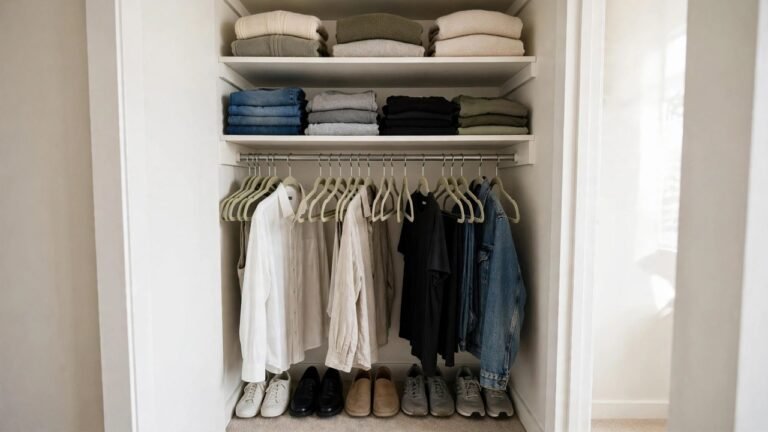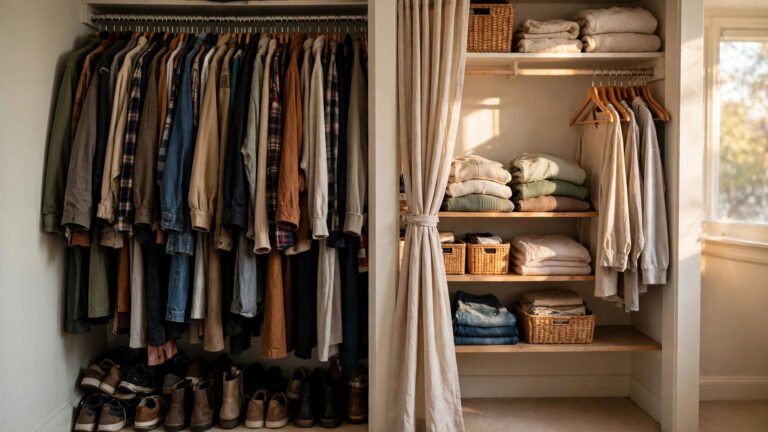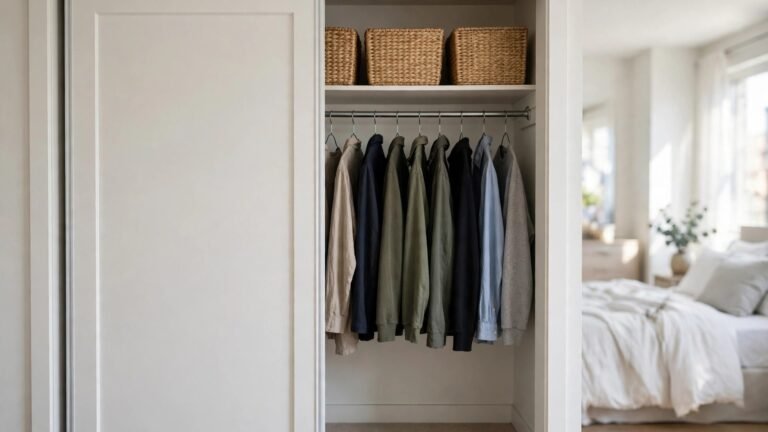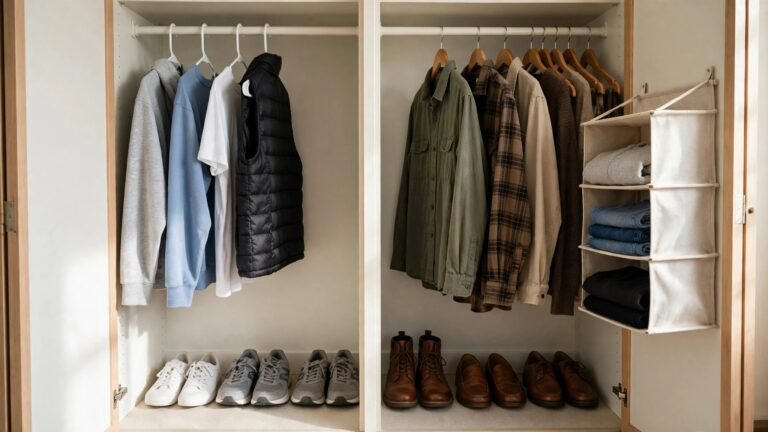

If you wear scrubs or a uniform to work, your closet has a job that most closets do not have. It is not just storage. It is the place where your shift starts, usually at an hour when you are half awake and in a hurry. I have helped dozens of renters set up closets in small apartments, and the pattern is always the same: five nearly identical sets of scrubs or uniforms, everyday clothes fighting for the same rod, one clean set buried under yesterday’s worn one, and a frantic morning search for the badge, the shoes, and the right top. That is not a discipline problem. It is a system problem, and it is fixable without drilling a single hole or asking your landlord for anything.
The trick is to treat your work clothes like a separate, small wardrobe with its own rules. Uniforms are repetitive by design, which is actually good news. When every set looks alike, a simple system — one hanger per set, clean on one side, worn on the other, tomorrow’s outfit staged tonight — does more than any fancy organizer. You do not need a bigger closet. You need your closet to know which clothes are for work, which are clean, and which one you are wearing tomorrow. The twelve ideas below are all renter-safe, which means removable, reversible, and deposit-friendly. Where an idea needs a screw or a landlord’s okay, I say so plainly. Start with the first three and you will feel the difference on your very next shift.
Executive Summary
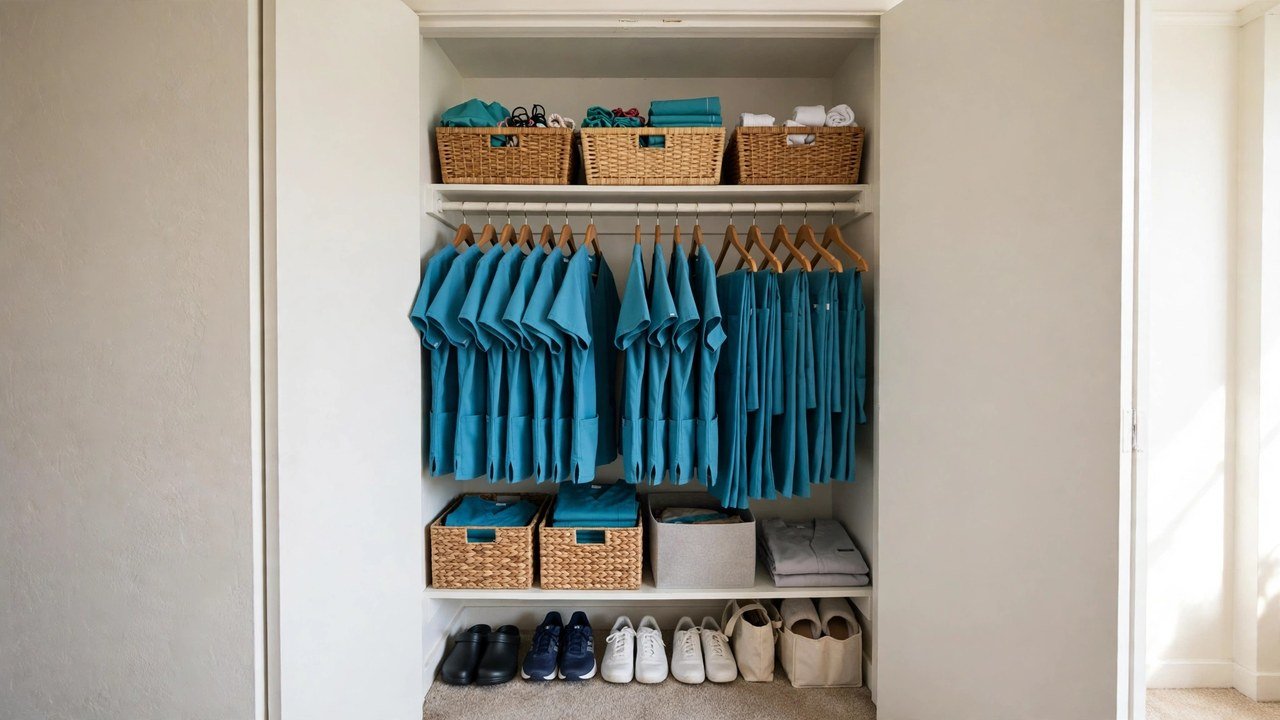
- Hang each complete scrub or uniform set together on one hanger, so getting dressed is one grab, not a matching game.
- Split your closet into a clean side and a worn side, with a separate hamper for work clothes, so you never pull on a yesterday set by mistake.
- Give uniforms the prime real estate at eye level and move off-duty clothes to the top shelf or a second rod.
- Stage tomorrow’s set the night before on an over-door hook or a valet hook, including badge, shoes, and accessories.
- Use mesh laundry bags, one per set, so sets go into the wash together and come out together, ready to hang.
- Build a five-minute Sunday reset into your week: wash, hang, stage, and restock, so Monday never starts with a scramble.
1. Hang One Complete Set Per Hanger
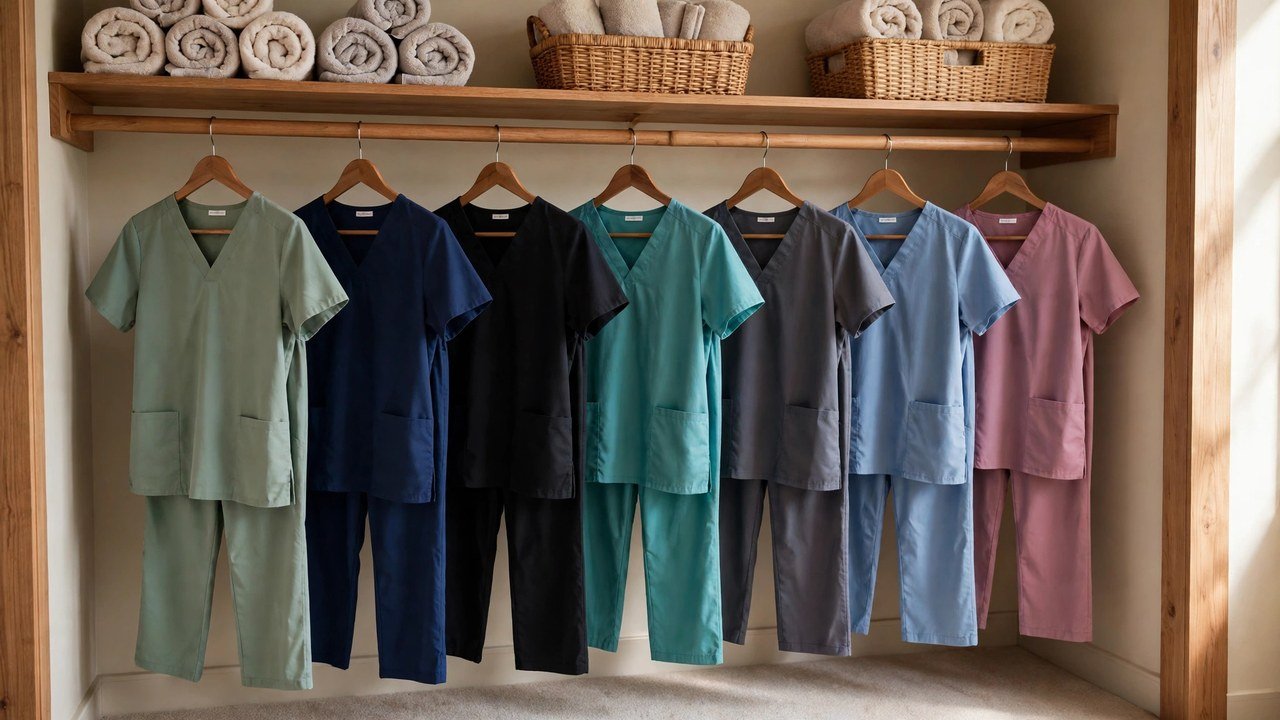
This is the single highest-impact change you can make, and it costs almost nothing. Instead of hanging all your scrub tops together and all your pants together, put one top and its matching bottom on a single hanger, clipped or looped together. Your shift outfit becomes one object you grab, not a puzzle you solve at 5 a.m.
It works for renters because it uses the rod you already have and changes nothing about the apartment. No drilling, no new furniture, no landlord conversation. It also instantly shows you how many clean sets you actually own, which stops the awful surprise of discovering you are down to your last set on a Thursday night.
- Take every clean scrub or uniform set and pair its top with its bottom before it goes back in the closet.
- Use one sturdy hanger per set, and loop the pant waistband over the hanger hook or use a clip hanger so the two pieces cannot separate.
- Hang the sets in the order you plan to wear them, left to right, so you always take from the same end.
- When a set comes out of the laundry, pair it immediately and return it to the back of the line, so rotation stays automatic.
- Keep a small count in your head or on a sticky note inside the door: five sets hanging means five shifts covered.
Approximate cost: $0-$15 for a pack of matching sturdy hangers if your current ones are flimsy or mismatched.
2. Give Uniforms the Eye-Level Rod and Move Everyday Clothes Up
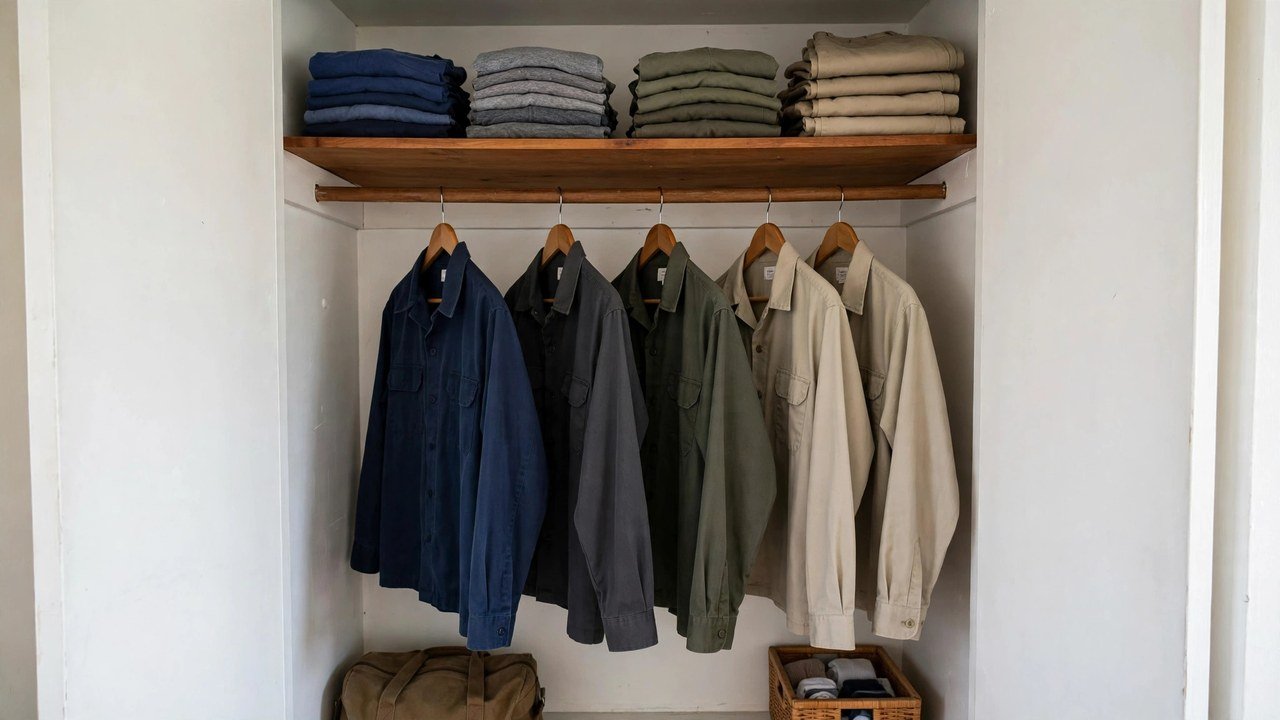
Most renters hang everything at the same height and let work clothes compete with jeans, dresses, and jackets for the best spot. Flip that. Uniforms are what you reach for most often, often in the dark, so they deserve eye level. Everyday clothes can live higher, lower, or on a second tier without hurting anyone.
This is renter-safe because it is pure rearrangement. You are not installing anything, just deciding what earns the easiest reach. It also makes the closet feel bigger, because the clothes you wear five days a week are no longer tangled up with the clothes you wear twice a month.
- Clear the main rod completely and sort clothes into two piles: work sets and everything else.
- Hang all complete work sets on the main rod at eye level, grouped together on one side or in the center.
- Move everyday clothes to the upper shelf in folded stacks, a second rod if you have one, or the far end of the same rod.
- Put the shoes you wear to work at the bottom of the closet directly below the uniforms, not mixed in with street shoes.
- Leave a little breathing room at the end of the uniform section so clean sets coming back from laundry have a place to land.
Approximate cost: $0, or $10-$25 for shelf dividers or a freestanding garment rack if your closet is truly overflowing.
3. Add a No-Drill Second Rod to Double Your Hanging Space
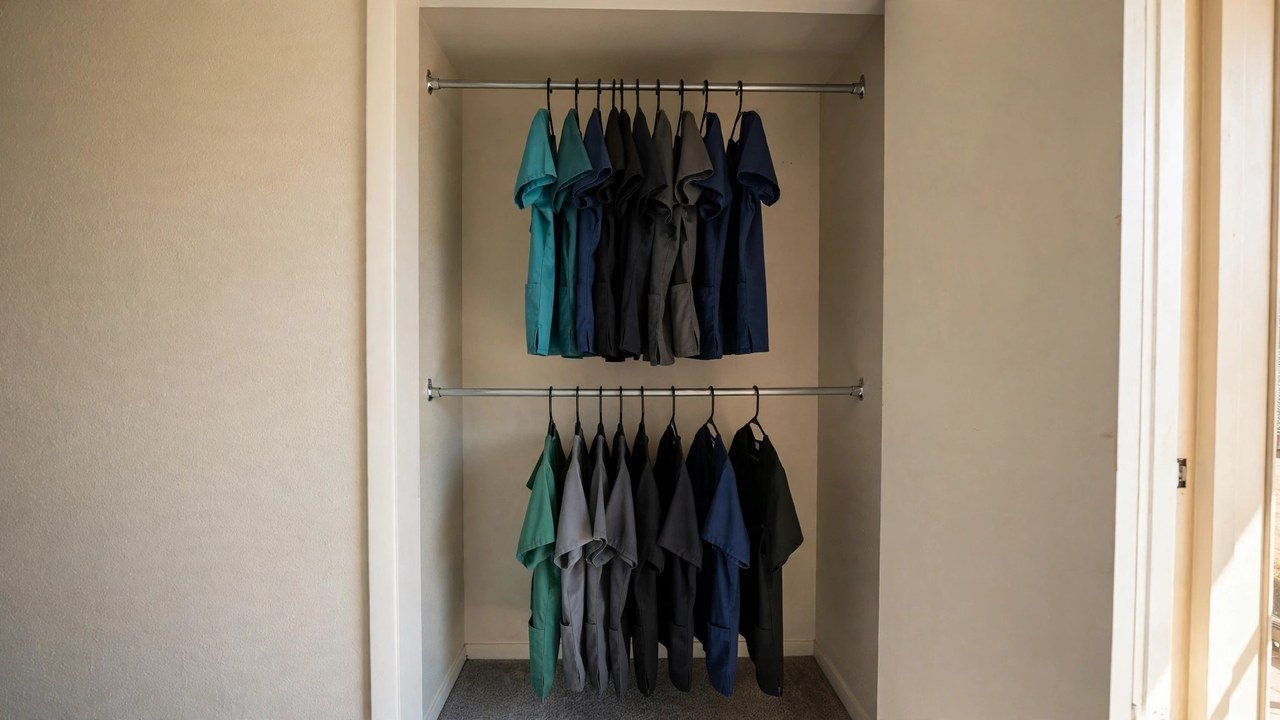
A tension rod or a hanging double rod is the renter’s secret weapon for a small closet. It hangs below your existing rod and instantly creates a second tier, which is exactly what a uniform wardrobe needs: short scrub tops on the upper tier, pants or shorter sets below, or clean sets up top and tomorrow’s set staged below.
This passes the renter test easily. A tension rod wedges between the closet walls and comes out without a mark, and a hang-from-the-rod doubler simply hooks over the existing rod. Neither needs a drill, a screw, or permission. Just measure your closet width first, and check that the tension rod is rated for the weight of several sets.
- Measure the inside width of your closet at the height where the second rod will sit.
- Install a tension rod or hook-on doubler rod about halfway between your main rod and the closet floor.
- Hang shorter items, like scrub tops or folded-over pants, on the lower tier so nothing drags on the floor.
- Keep your complete sets on the upper tier where you can see them, and use the lower tier for overflow, tomorrow’s set, or a second person’s sets.
- Test the rod with a few hangers and a gentle tug before loading it fully, and retighten a tension rod once a week.
Approximate cost: $10-$30 for a sturdy tension rod or hanging rod doubler.
4. Split the Closet Into a Clean Side and a Worn Side
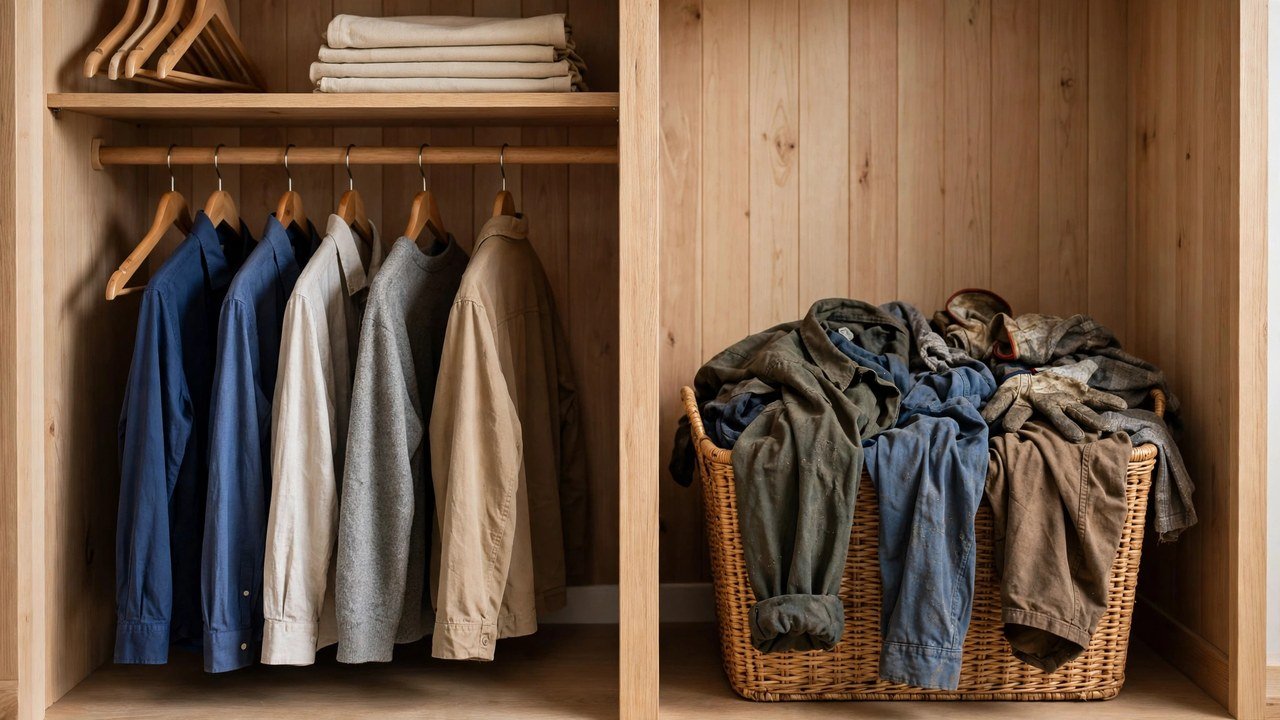
Here is the mistake that causes the most morning regret: clean and worn work clothes sharing the same space. A set you wore yesterday and meant to wash ends up back on the rod, and you only realize it when you are already dressed. A hard split fixes that. One side of the closet, or one section of the rod, is clean only. Worn sets never go back there.
For renters this is free and fully reversible, because it is a rule, not a renovation. You can mark the boundary with a different colored hanger, a small divider, or simply by always keeping clean sets on the left and worn items in a hamper on the right. The physical split matters less than the habit, but a visible boundary makes the habit stick.
- Decide which side of the rod is clean and which area holds worn clothes, and tell anyone who shares the closet.
- Put a hamper or a hanging laundry bag right next to the closet for worn work clothes, so they never land on a chair or back on the rod.
- When you come home, change out of your set and put it straight into the work hamper, not on a hook to deal with later.
- Only return a set to the clean side after it has been washed, dried, and paired back together.
- If a set is lightly worn and you plan to rewear it, give it one designated hook outside the clean zone, clearly separate from fresh sets.
Approximate cost: $0-$20 for a small hamper, hanging laundry bag, or rod divider.
5. Stage Tomorrow’s Set the Night Before

Nurses and service workers rarely have a slow morning, so the best time to choose tomorrow’s outfit is tonight. An over-door hook, a valet hook that clamps onto the closet rod, or a single spare hanger at the end of the rod becomes your staging spot. Tonight you hang tomorrow’s complete set there, with everything it needs. In the morning you grab it and go.
This is ideal rental territory. Over-door hooks hang over the door and leave no marks, and a rod valet hook clips on and off in seconds. Nothing is screwed in, nothing is permanent, and your landlord will never know. The real payoff is mental: you stop making decisions when you are tired, and you stop discovering a missing badge or a stained top when you are already late.
- Each evening, pick tomorrow’s set and hang it on the staging hook, complete top and bottom together.
- Add the extras to the same spot: badge, undershirt, socks, and any small accessories, in a little pouch or clipped to the hanger.
- Place tomorrow’s work shoes directly below the staged set so the whole outfit is in one column.
- Check the set for stains or loose threads while you stage it, when you still have time to swap it.
- If you work rotating shifts, stage the set for your next shift, not for tomorrow morning, so the system follows your schedule.
Approximate cost: $5-$20 for an over-door hook rack or a rod valet hook.
6. Use Mesh Laundry Bags, One Per Set
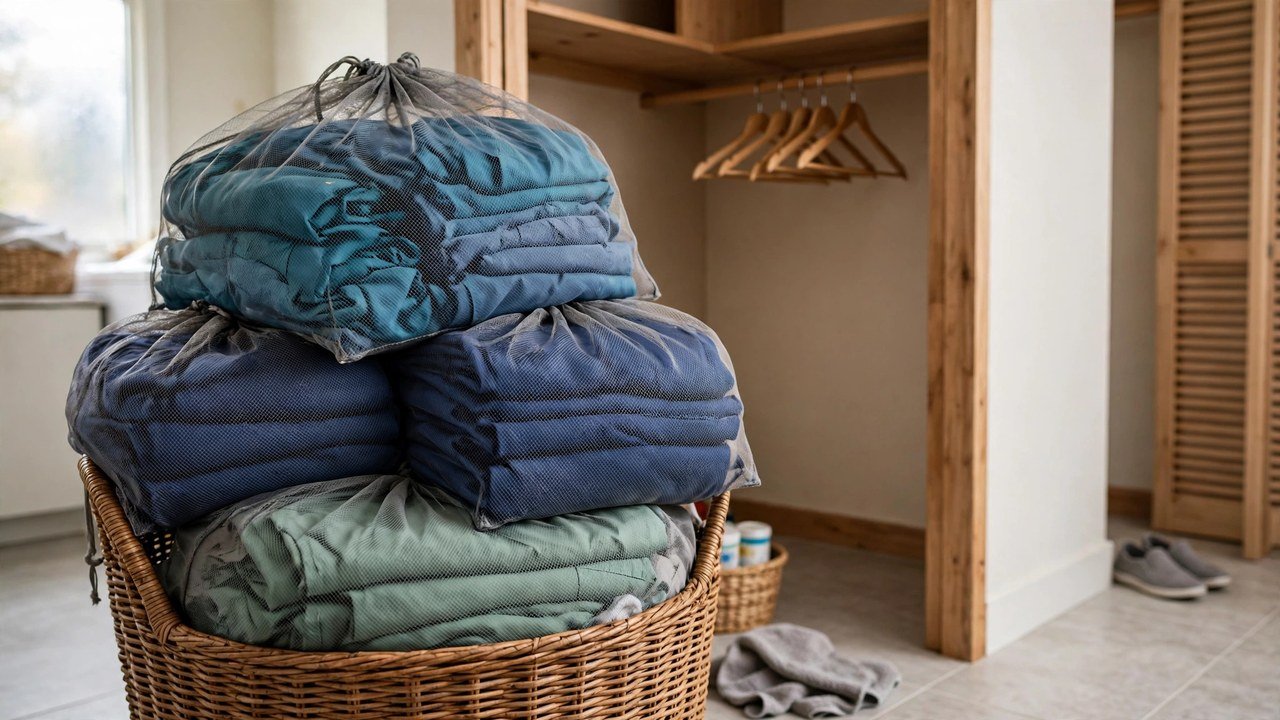
A mesh laundry bag for each scrub or uniform set sounds fussy until you try it, and then you wonder why you waited. Each set goes into its own bag when it comes off, the bag goes into the wash, and the set comes out together, ready to pair and hang. No more hunting for the matching bottom in a pile of laundry, and no more sets split across two loads.
Renters love this because it needs no installation at all, and it protects your clothes in shared laundry rooms too, where a bag keeps your sets from wandering into someone else’s load. It also keeps work clothes separate from everyday laundry, which matters when your job leaves odors or lint on your sets. Label the bags if you share a closet, or use different colors per person.
- Buy one mesh bag per set, or one per two sets if your collection is large.
- When you change out of a set, put the whole set into its bag and drop the bag in the work hamper.
- Wash the bags closed on your normal cycle, and hang or dry the sets straight from the bag.
- Pair each set as soon as it comes out of the dryer, while it is still together, and return it to the clean side.
- Replace a bag when its zipper sticks or the mesh tears, since a broken bag defeats the purpose.
Approximate cost: $10-$20 for a set of mesh laundry bags.
7. Build a Small Door Station for Badge, Keys, and Accessories
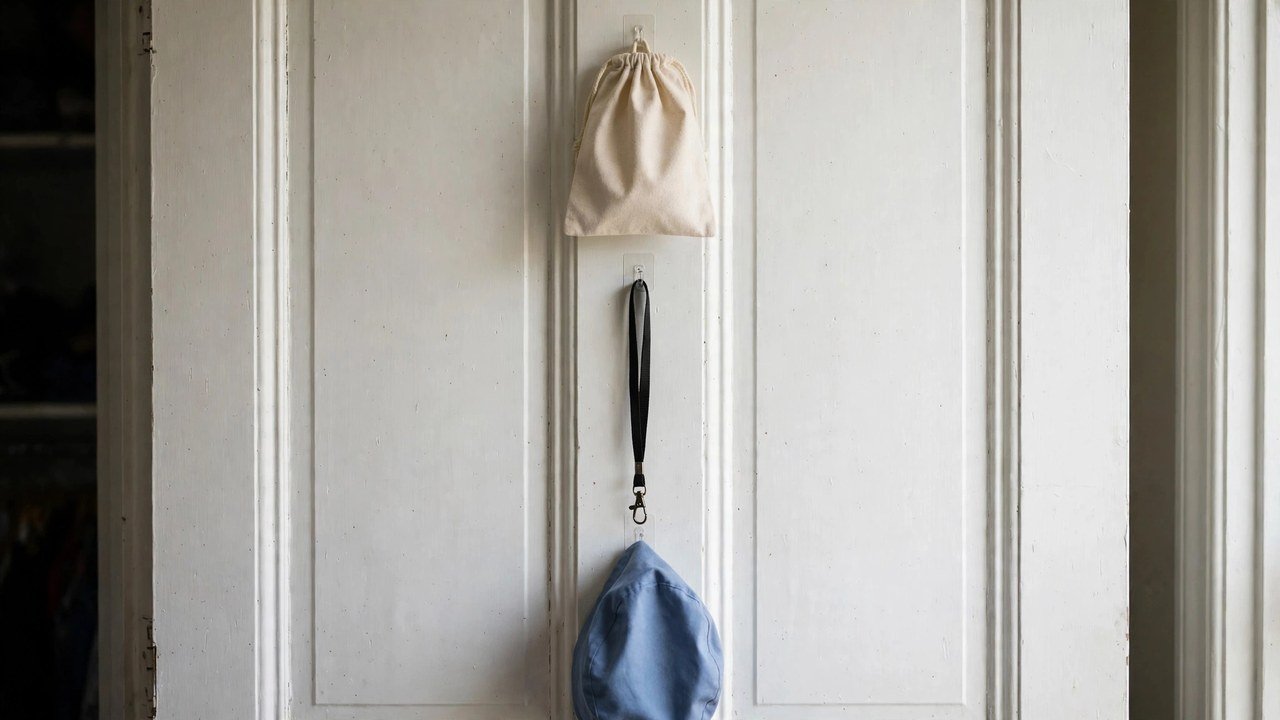
Uniforms come with small things that are easy to lose: a badge, a pen, a watch, a scrub cap, a name tag, a set of keys. Those things do not belong loose on a dresser. A small station inside the closet door, made from adhesive hooks and a little pouch or tray, keeps them with the outfit they belong to.
This is fully deposit-safe when you use adhesive hooks and organizers that stick on and peel off cleanly. Avoid anything that screws into the door, and test one adhesive hook first if you are worried about paint. The station also protects your morning: you stop patting your pockets for a badge you left in yesterday’s scrubs, because the badge lives in the same place every single day.
- Stick two or three small adhesive hooks on the inside of the closet door at hand height.
- Hang a small zip pouch or a clear pocket organizer on the hooks for badge, pens, and small accessories.
- Add one hook for a scrub cap, lanyard, or apron, so nothing ends up draped over a chair.
- Empty the pouch once a week and return stray items to their home, so the station does not become a junk drawer.
- If you share the closet, give each person their own labeled pouch so accessories never get mixed up.
Approximate cost: $5-$20 for adhesive hooks and a small pouch or pocket organizer. Flag: if your lease forbids adhesive products on doors, use an over-door organizer instead, which needs no adhesive at all.
8. Quarantine Work Shoes at the Closet Floor
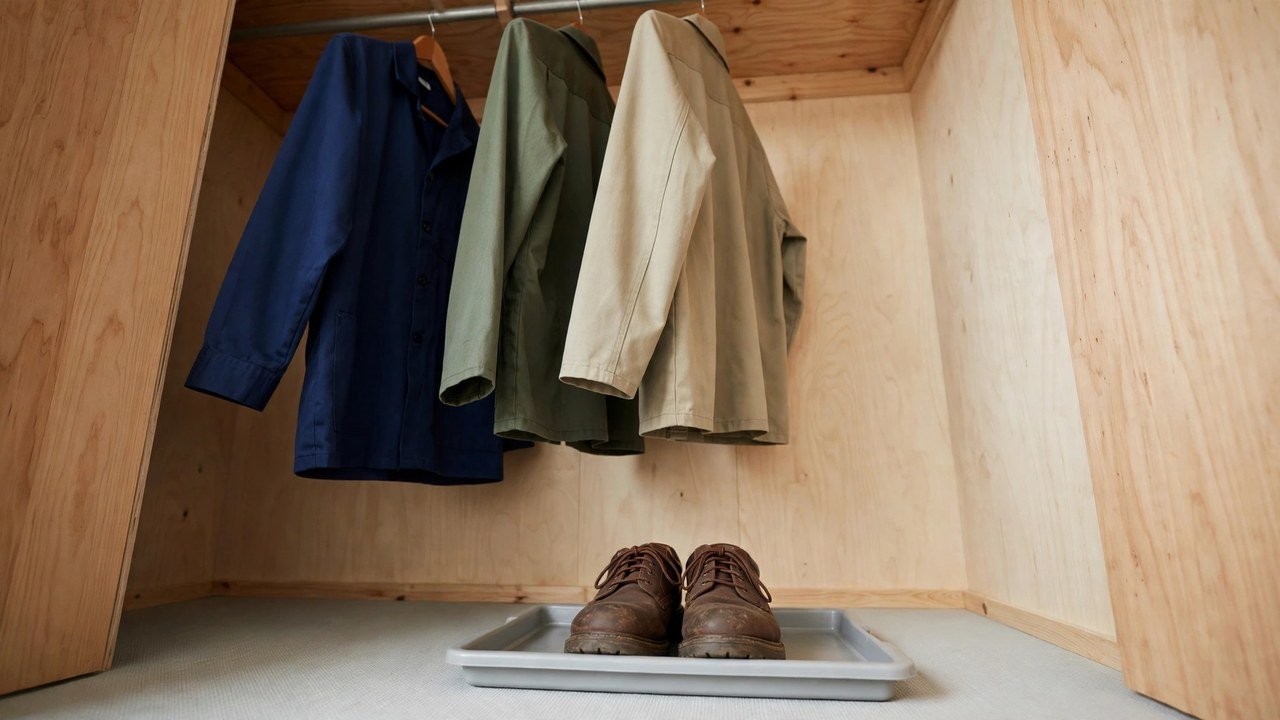
Work shoes live a harder life than street shoes. They pick up odors, spills, and whatever your shift walked through, and they should not share a jumble with the shoes you wear everywhere else. Give them their own zone at the bottom of the closet: a small tray, a boot tray, or a low bin placed directly under your uniforms.
For a renter this is the simplest kind of fix, because a tray sits on the floor and moves with you when you move out. It also protects the carpet or flooring your landlord cares about, which is a genuine deposit point in your favor. A tray with a lip contains dirt and moisture, and it makes the boundary visible: work shoes go here, everything else goes elsewhere.
- Place a low tray or boot tray on the closet floor beneath your uniform section.
- Keep only your work shoes in the tray, one or two pairs at most, so the zone stays obvious.
- Wipe or rinse the tray once a week, and let shoes air out before putting them away after a long shift.
- If odor is an issue, add a small open container of baking soda inside the tray, out of the way of the shoes.
- When you buy new work shoes, break them in at home first and then assign them to the tray, so the old pair can retire cleanly.
Approximate cost: $8-$20 for a boot tray or low shoe bin.
9. Roll and File Folded Sets in Shelf Cubbies
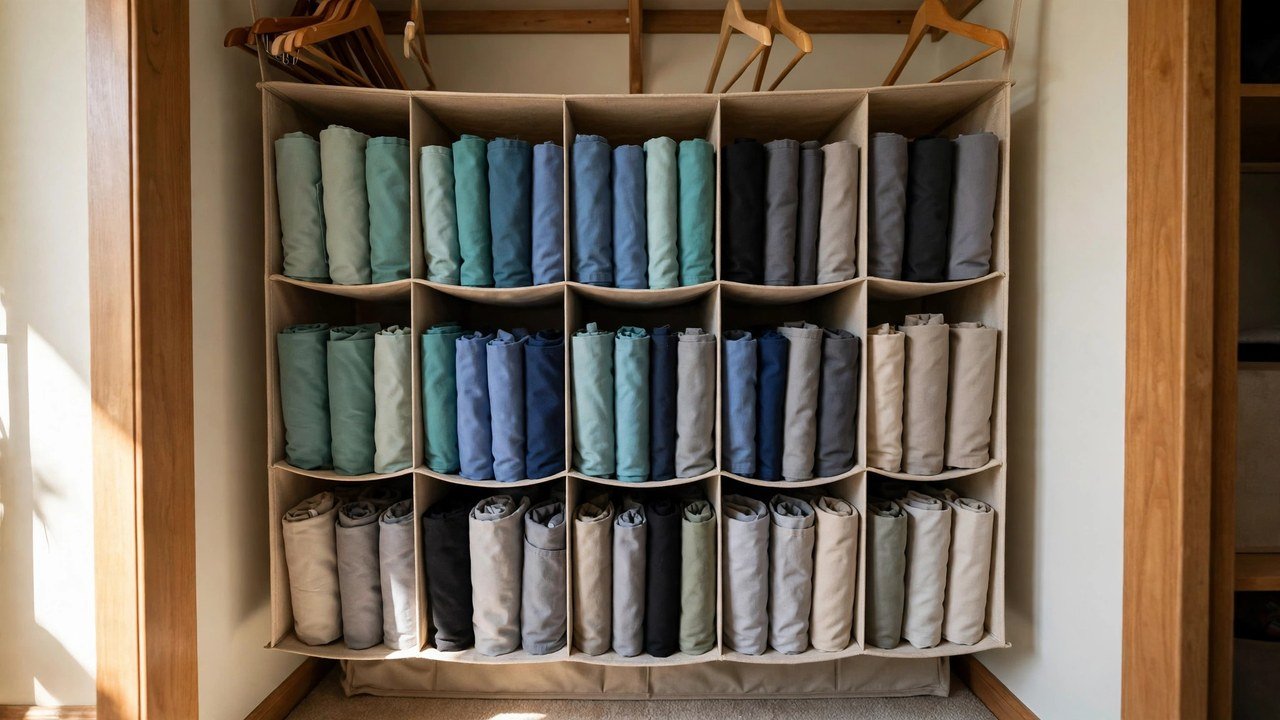
Not every renter has enough rod space for every set, and some uniforms fold better than they hang. Rolling each folded set into a neat bundle and filing it upright in a shelf cubby, like books on a shelf, solves both problems. You can see every set at a glance, pull one out without disturbing the rest, and fit more sets into the same shelf.
This works in rentals because shelf cubbies can be freestanding fabric boxes or a small stackable shelf unit that sits on an existing closet shelf. Nothing is attached to the wall. Rolling also fights wrinkles better than flat stacking, which matters when your sets go from shelf to shift without an ironing session in between.
- Fold each set together, top and bottom, and roll it into a compact bundle with the top visible on the outside.
- Stand the rolled bundles upright in a fabric cubby or on a closet shelf, in wearing order from front to back.
- Label each cubby by shift, day, or person if you share the closet, so anyone can find a set without unrolling three others.
- Keep one empty cubby or a gap at the end for sets coming back from laundry.
- Re-roll a set when it comes out of the dryer, before it goes back on the shelf, so the system resets itself.
Approximate cost: $10-$25 for fabric cubbies or a small stackable shelf unit.
10. Add a Slim Rolling Cart as a Shift-Change Station
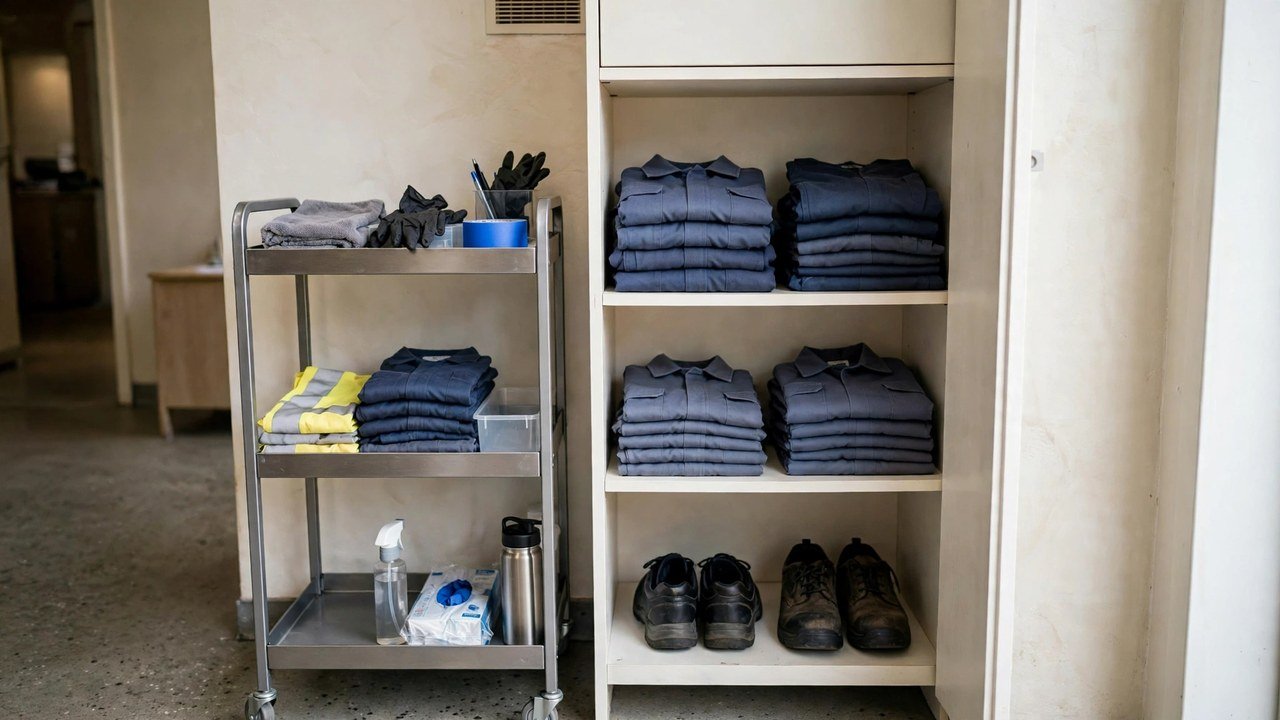
If your closet is truly tiny, or you share it with someone whose clothes have completely different needs, a slim rolling cart can act as a portable extension of your closet. Park it beside the closet or in a corner, and load it with tomorrow’s set, work shoes, and accessories. It is a shift-change station you can wheel to where you get dressed and tuck away afterward.
Renters should love this, because a cart is furniture, not a fixture. It moves with you, it needs no installation, and it gives a small space a second closet without a single landlord conversation. Choose a narrow cart that fits your gap, and keep it strictly for work gear, or it will slowly become general storage and lose its purpose.
- Measure the gap beside your closet or dresser and pick a cart narrow enough to slide into it.
- Load the top tier with tomorrow’s staged set or folded sets, the middle with accessories, and the bottom with work shoes.
- Wheel the cart to your dressing spot in the morning and return it to its parking spot after your shift.
- Once a week, empty the cart completely, wipe it down, and reload it with clean sets only.
- If floor space is tight, skip the cart and use the over-door staging idea instead; the point is one dedicated work zone, not the cart itself.
Approximate cost: $20-$45 for a slim rolling cart.
11. Move Off-Duty Clothes Out of Prime Space Each Season
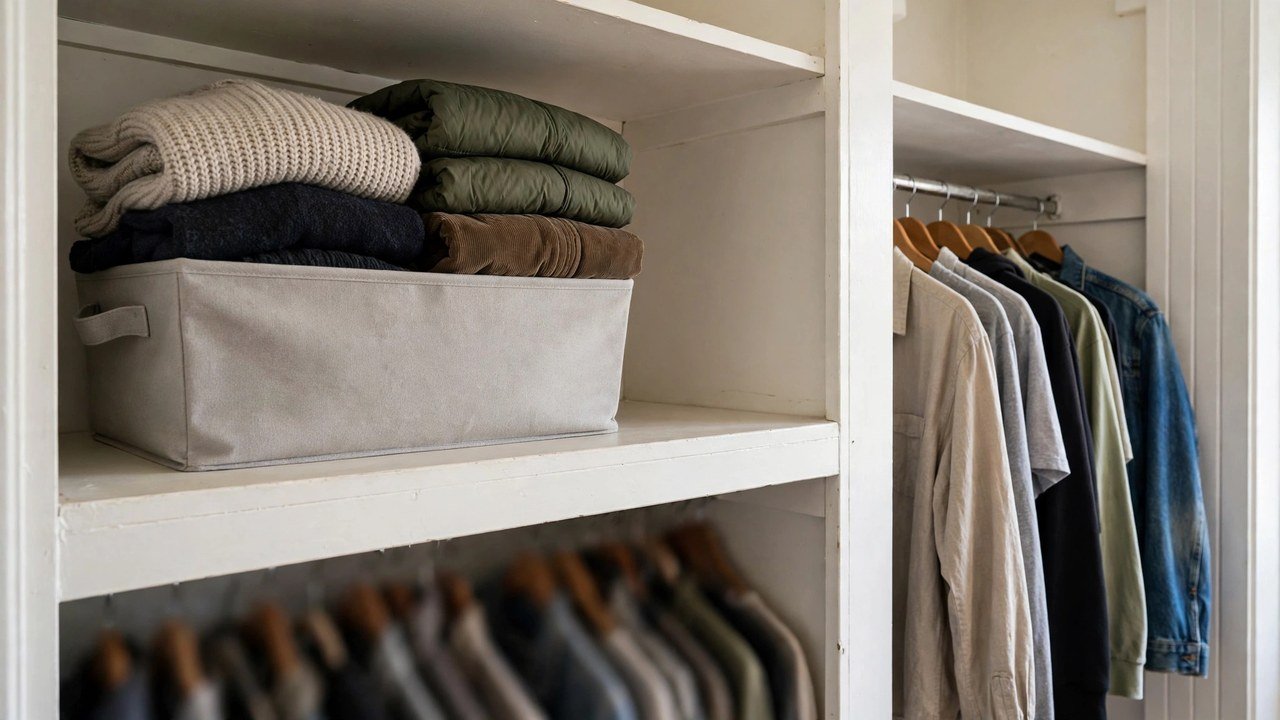
Uniform wearers have a second wardrobe problem: the clothes they wear on days off take up the space their work clothes need every day. A seasonal swap fixes that without buying anything. Off-season and rarely worn everyday clothes move to the top shelf, a storage bin, or under the bed, and only current, frequently worn off-duty clothes stay in the closet.
This is renter-friendly because it uses storage you already have, like a top shelf or a bin that slides under the bed, and everything reverses when the season changes. It also makes your uniform section feel generous, because you have stopped asking one small closet to hold two full wardrobes at the same time. Do the swap when the weather genuinely turns, not every week, so it stays a small ritual instead of a chore.
- Pull everything out of the closet once and sort it into work sets, current everyday clothes, and off-season clothes.
- Pack off-season clothes into a labeled bin on the top shelf or under the bed, with a note of what is inside.
- Keep only the everyday clothes you actually wear each week in the closet, folded or hung at the far end.
- When the season changes, swap the bin contents back in and pack away the outgoing season in the same bin.
- Donate or set aside anything you have not worn in a year, so the swap does not just shuffle clutter around.
Approximate cost: $0-$20 for a storage bin if you do not already own one.
12. Run a Five-Minute Sunday Reset So Monday Starts Clean
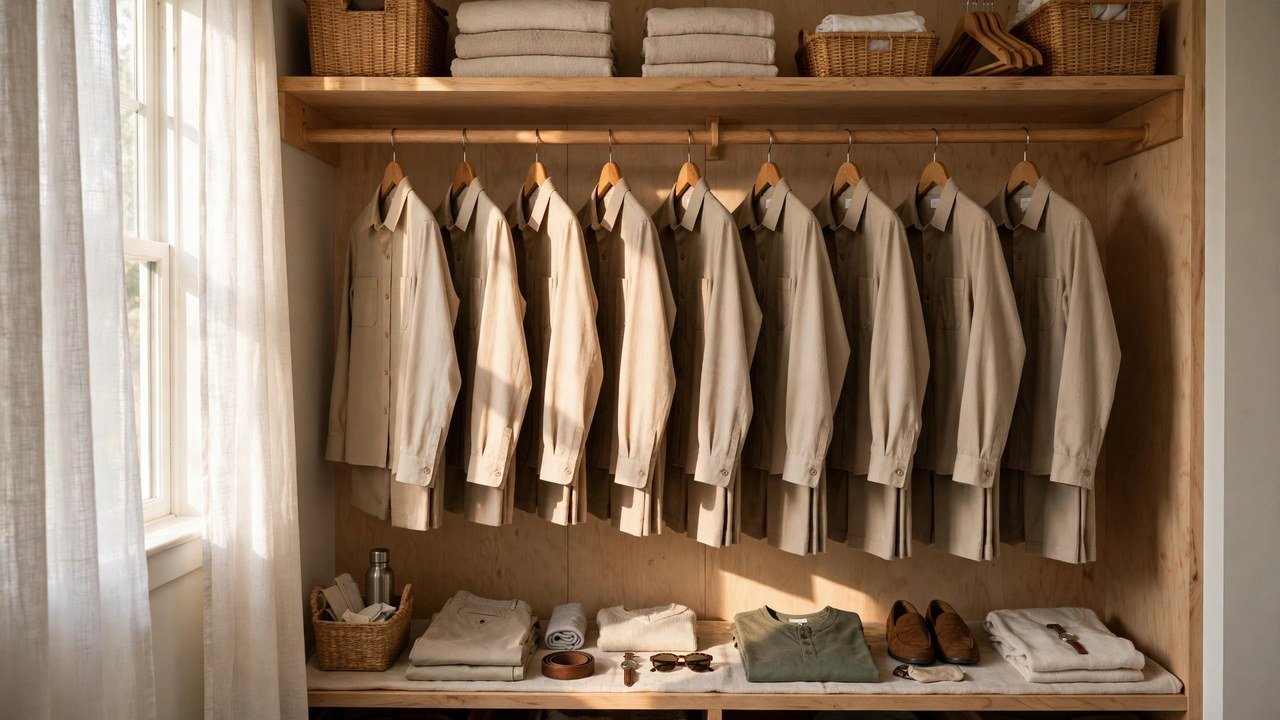
Every system above depends on one habit, and this idea is that habit. Once a week, ideally Sunday, spend five minutes resetting the whole setup: count clean sets, start one load if you are short, hang what is dry, stage tomorrow’s set, and restock the door station. Five minutes on Sunday saves twenty frantic minutes on Monday and stops the slow slide back into a tangled closet.
This costs nothing and changes nothing in the apartment, which is why it is the easiest idea to adopt and the hardest to skip once it works. Tie it to something you already do on Sunday, like making coffee or laying out your week, so it becomes a ritual instead of a reminder you ignore. If you work weekends, pick your own reset day; the day matters less than the regularity.
- Count your clean hanging sets and note how many shifts they cover before your next laundry day.
- Start a load of work clothes if you are below three clean sets, and hang anything already dry.
- Stage the set for your next shift on the staging hook, with badge, shoes, and accessories included.
- Check the door station, return stray items, and empty the work hamper of anything that should have been washed.
- Glance at the shoe tray and the shelf cubbies, and tidy anything that drifted out of place during the week.
Approximate cost: $0.
Conclusion
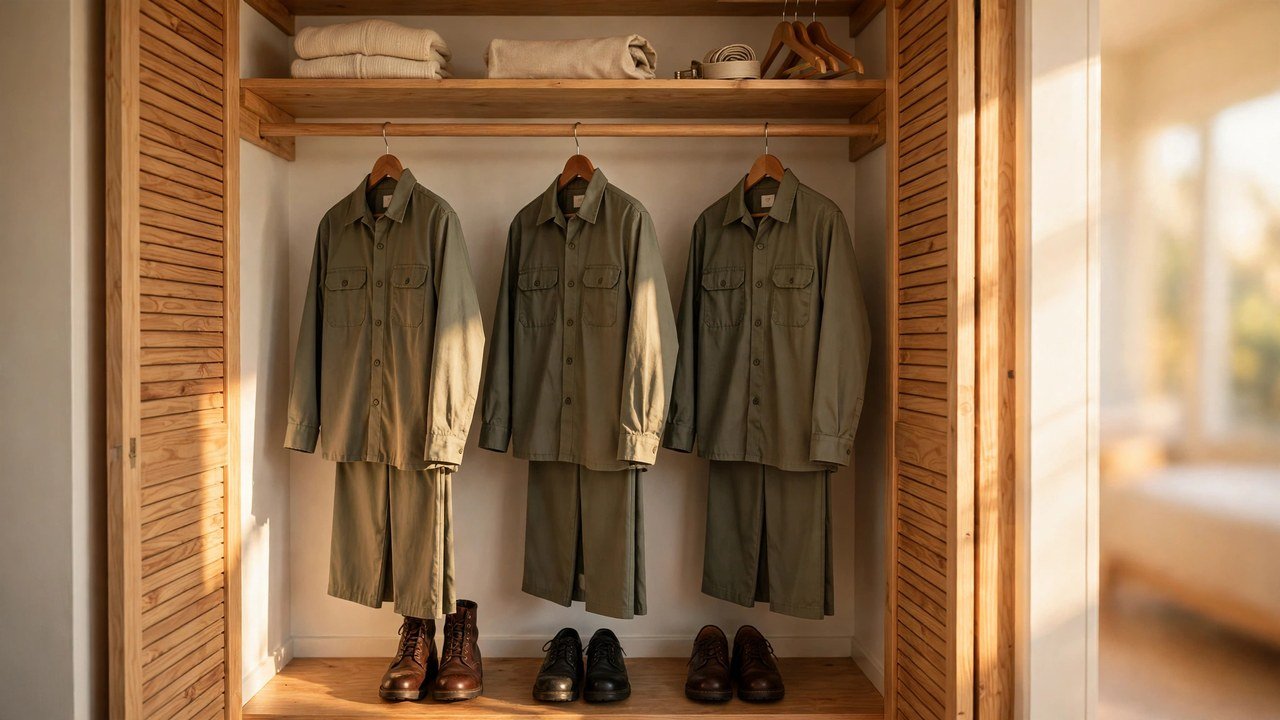
A closet that serves a shift worker does not need to be big, expensive, or renovated. It needs to be honest about how you actually live: several identical sets, early mornings, a line between clean and worn, and a small collection of things that must never go missing. Hang each set together, give uniforms the best spot, keep worn clothes out of the clean zone, stage tomorrow’s outfit tonight, and let a five-minute weekly reset hold the whole system together. I have seen renters go from dreading the morning scramble to getting dressed on autopilot, not because they bought a bigger closet, but because their closet finally matched their work. Your deposit stays safe, your landlord stays happy, and your mornings get calmer, one staged set at a time. Start with the first idea tonight, add the second tomorrow, and let the rest follow at your own pace. Please save this visual guide on Pinterest and share it with a fellow nurse, caregiver, or service worker whose mornings could use a little less chaos.

Amelia leads HavenlyStyle’s editorial vision with a passion for elegant interiors and practical home living. With years of experience in home décor and lifestyle content, she ensures every article is accurate, inspiring, and easy to follow. From timeless decorating ideas to the latest interior design trends, Amelia is committed to helping readers create beautiful, functional spaces while maintaining HavenlyStyle’s trusted and welcoming voice.