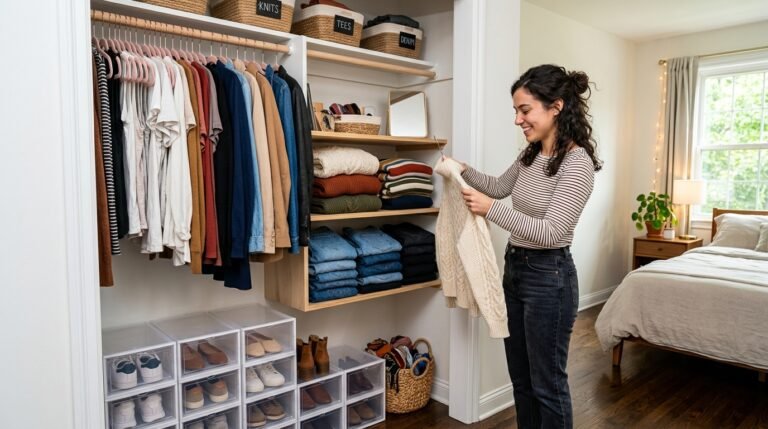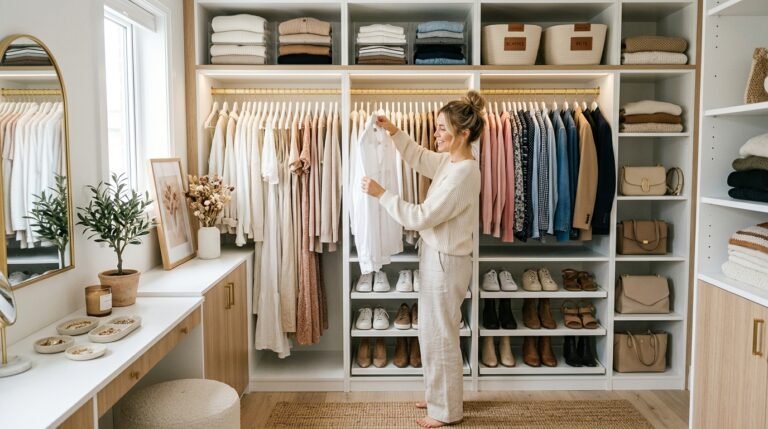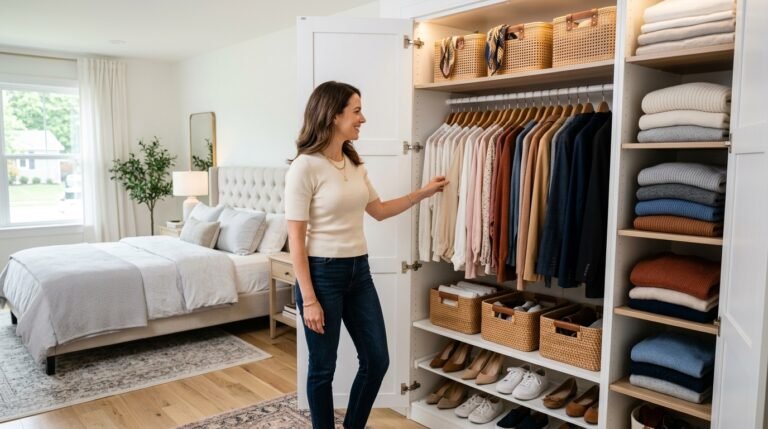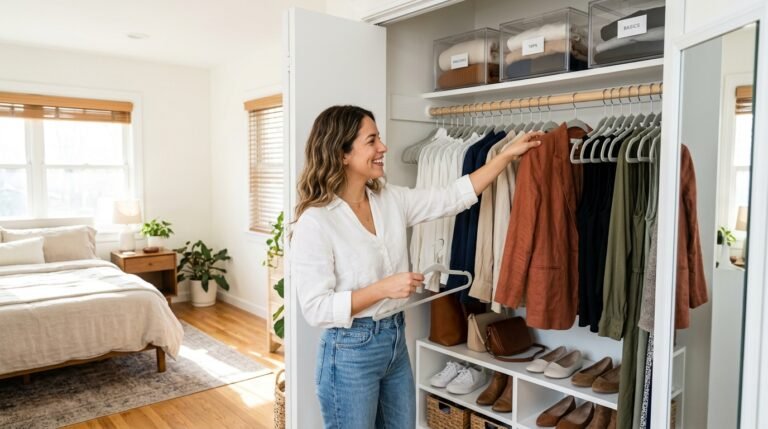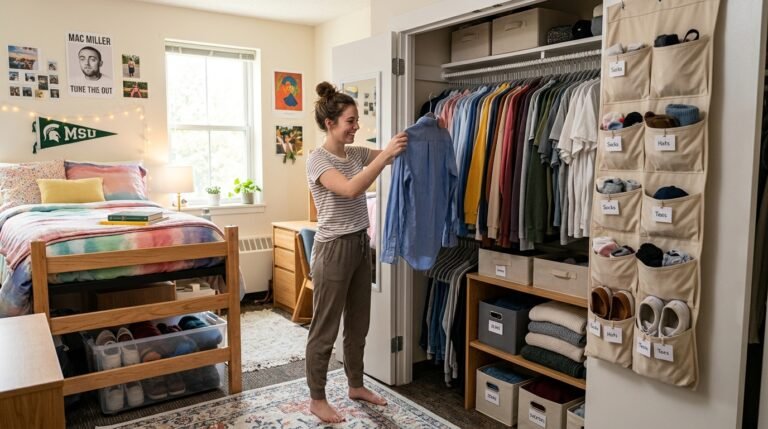
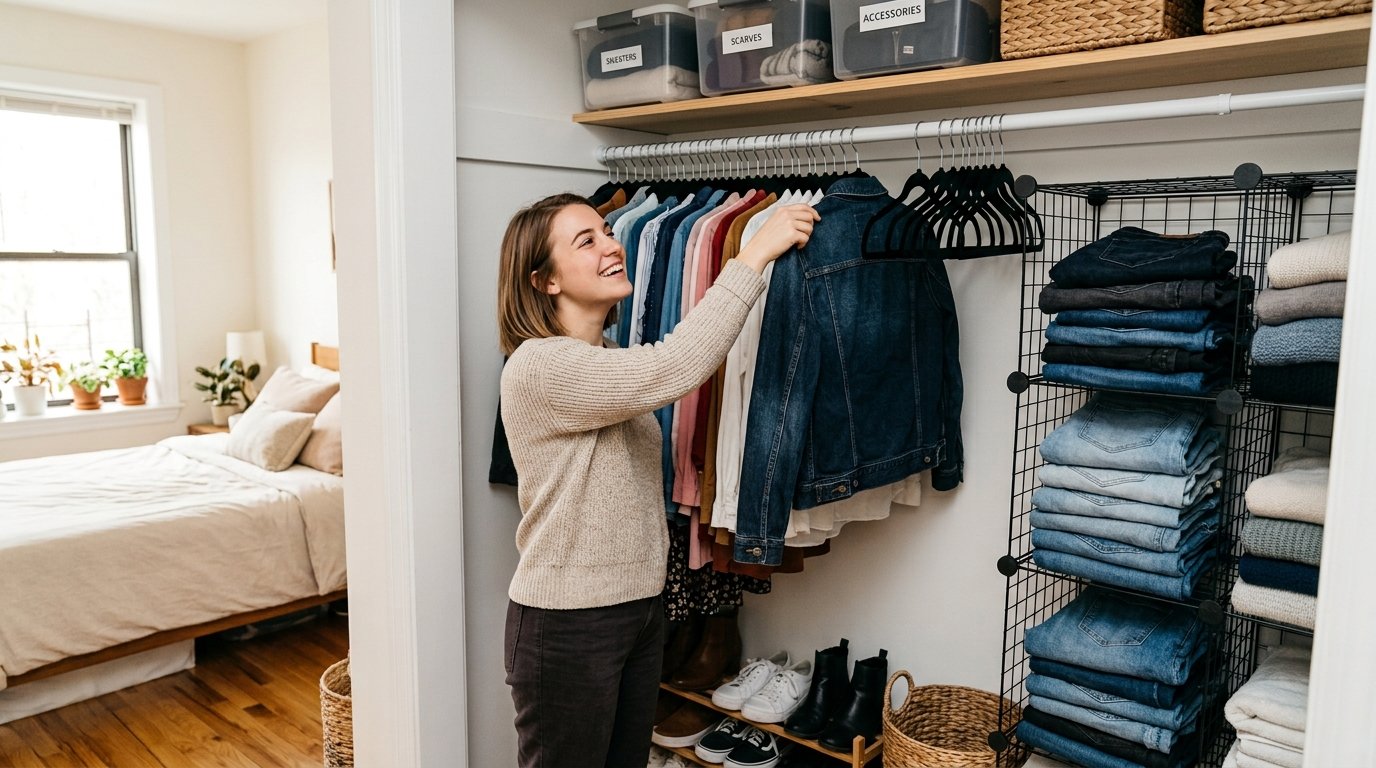
Staring at a cramped apartment closet often feels incredibly overwhelming for many renters today. You desperately want beautiful customized storage but cannot risk losing your expensive security deposit. Landlords usually prohibit drilling large holes or tearing out those flimsy single wire shelves. This frustrating reality leaves most tenants living out of messy laundry baskets permanently. Effective wardrobe organization hacks completely transform these tiny rental spaces into highly functional dressing areas. You can achieve that luxurious custom cabinet aesthetic without using a single power tool. I have noticed this approach dramatically reduces morning stress while protecting your lease agreement entirely.
Finding the right temporary solutions requires clever strategy and reliable modular products that actually work. Many cheap plastic bins just waste valuable floor space and crack under daily heavy usage. You need durable layout strategies that maximize vertical heights and utilize ignored corner gaps perfectly. We will explore practical DIY wardrobe organization hacks that elevate your daily dressing routine instantly. Your bedroom will soon feature a beautifully arranged clothing collection that looks entirely professionally designed. Let us dive into these renter-friendly methods that yield maximum storage capacity while remaining completely temporary and easily movable for your next apartment.
Executive Summary
Implementing these non-permanent layout upgrades delivers measurable results over a single productive weekend project. Most apartment dwellers reclaim nearly fifty percent of their usable storage area by following this blueprint. We cover innovative tension rod placements, freestanding furniture adaptations, and hidden compartment setups that maximize tight corners. You will discover how specific hanger upgrades and modular drawer units drastically increase your holding capacity. I have seen clients transform frustrating daily dressing routines into seamless experiences using these simple layout adjustments. Your investment of time today yields massive daily dividends in both physical space and mental clarity.
This comprehensive guide avoids generic advice and focuses entirely on realistic strict rental constraints. We intentionally exclude permanent structural renovations that would violate your standard apartment lease terms. Instead, you receive actionable solutions requiring minimal tools and affordable supplies easily found at local retailers. I have watched many renters fail because they purchased bulky organizer systems before measuring their actual dimensions accurately. This article provides a clear roadmap to prevent those costly mistakes while achieving a truly custom look. Prepare to completely redefine how you view and utilize your compact living quarters starting right now with these methods.
1. Freestanding Garment Racks
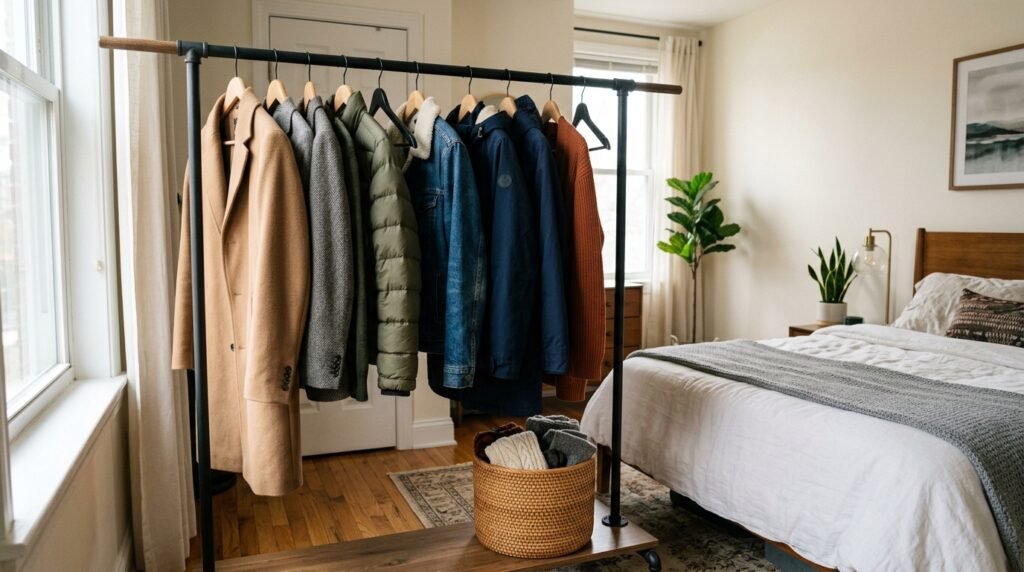
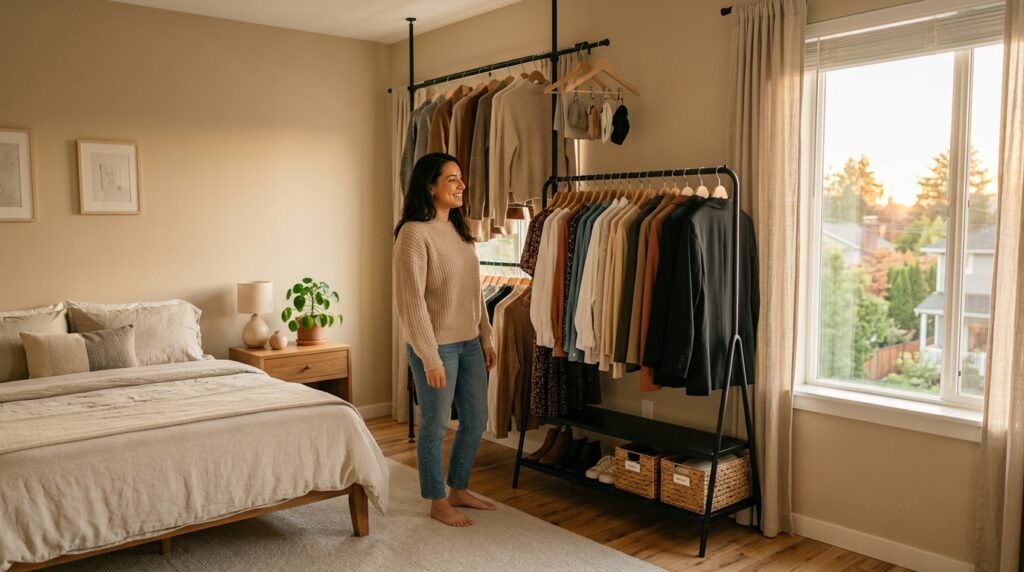
Adding a freestanding clothing rack instantly creates an entirely new zone for your favorite garments. These mobile units provide excellent overflow capacity when your tiny built-in closet reaches absolute maximum limits. You simply assemble the metal frame and place it prominently against an empty bedroom wall. I have noticed that leaving your best seasonal pieces out in the open encourages much better [clothing care habits]. Seeing your beautiful jackets displayed like a trendy boutique actually elevates the entire room aesthetic. This approach completely bypasses your restrictive rental agreement while giving you incredible daily access to your favorite outfits.
Choosing the right rack material determines how well this temporary setup survives heavy winter clothing. Flimsy plastic joints will inevitably snap under the immense weight of thick wool coats and denim. You must invest in commercial-grade steel racks with secure locking wheels for ultimate long-term stability. Brands like Simple Housewares offer excellent heavy-duty models that cost under fifty dollars generally. I have tried several cheaper alternatives and they always collapse into a frustrating pile of wrinkled fabric. Spending slightly more on solid metal construction guarantees your [temporary closet systems] remain perfectly upright and totally safe all year round.
Styling your exposed rack prevents your sleeping space from looking like a chaotic messy thrift store. You must enforce a strict visual discipline by hanging only your most aesthetically pleasing garments openly. Grouping the items by color or length creates a deliberate design statement rather than a messy dumping ground. I usually place a beautiful woven basket on the bottom shelf to hide ugly workout gear completely. Using matching wooden or velvet hangers ties the entire visual presentation together seamlessly and professionally. This careful curation turns a simple utility tool into a gorgeous focal point for your apartment.
2. Adjustable Tension Rods
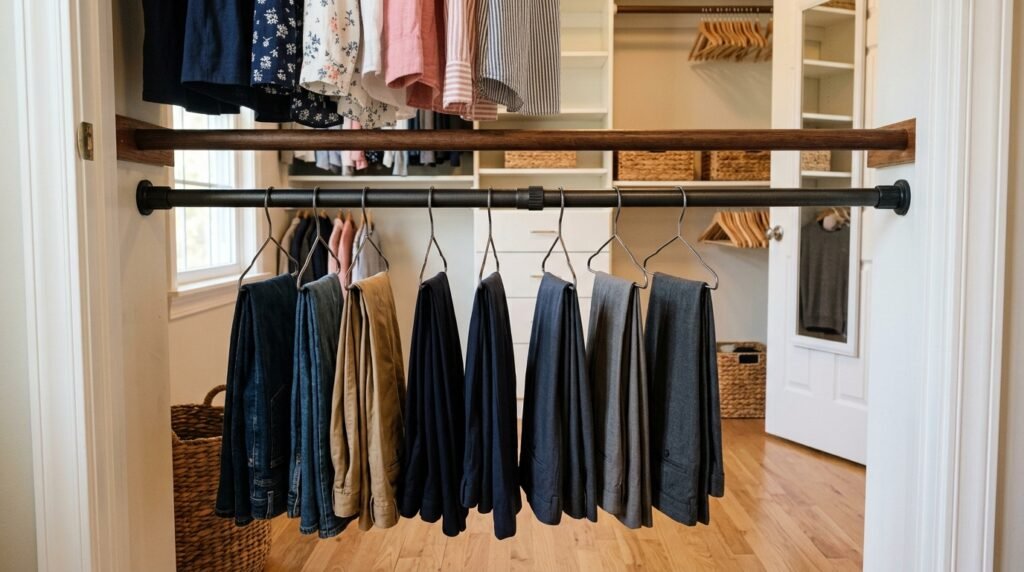
Installing heavy-duty tension rods instantly doubles your hanging capacity without leaving any permanent wall marks. These brilliant temporary bars wedge firmly between your existing walls using only internal spring pressure mechanisms. You basically create a customized double-hang system in under five minutes with zero structural damage. I have seen this specific wardrobe organization diy trick solve severe overcrowding issues in historic downtown buildings. You hang your shorter shirts on the top original bar while trousers and skirts hang perfectly below. This strategic vertical division reclaims completely wasted air space that usually sits totally empty above your floor.
Finding the exact placement for your secondary rod requires taking very precise vertical garment measurements. You must ensure your longest hanging shirts do not drag across the items stored directly below them. I always recommend placing the new lower bar exactly thirty-eight inches below the primary upper rod. This specific mathematical spacing accommodates standard adult clothing dimensions perfectly without creating any awkward overlapping wrinkles. You should test the tension strength by aggressively tugging the bar downward before adding any actual clothing. A properly installed commercial rod will easily hold forty pounds of daily [workplace attire] safely without slipping.
Heavy Coat Solutions
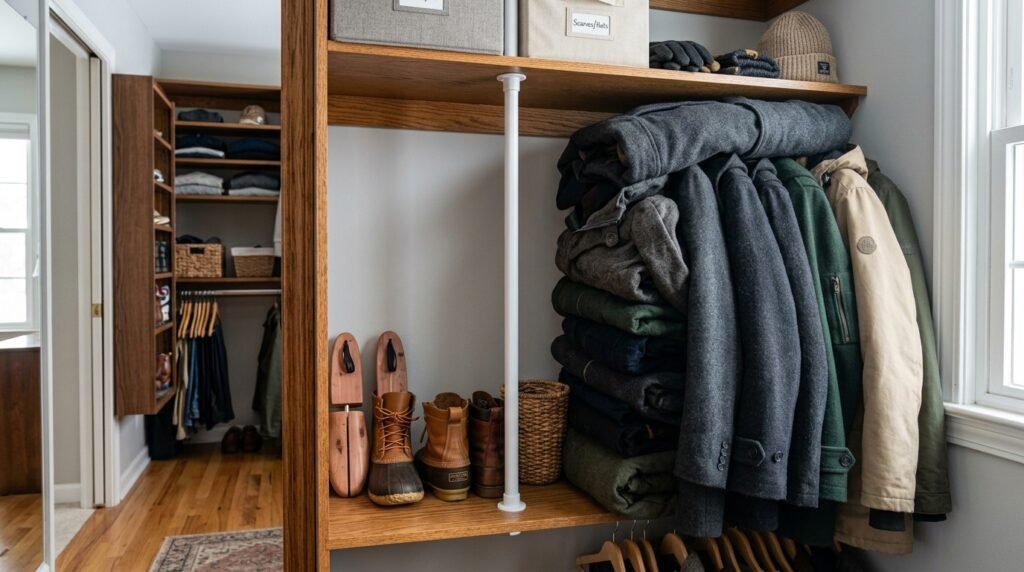
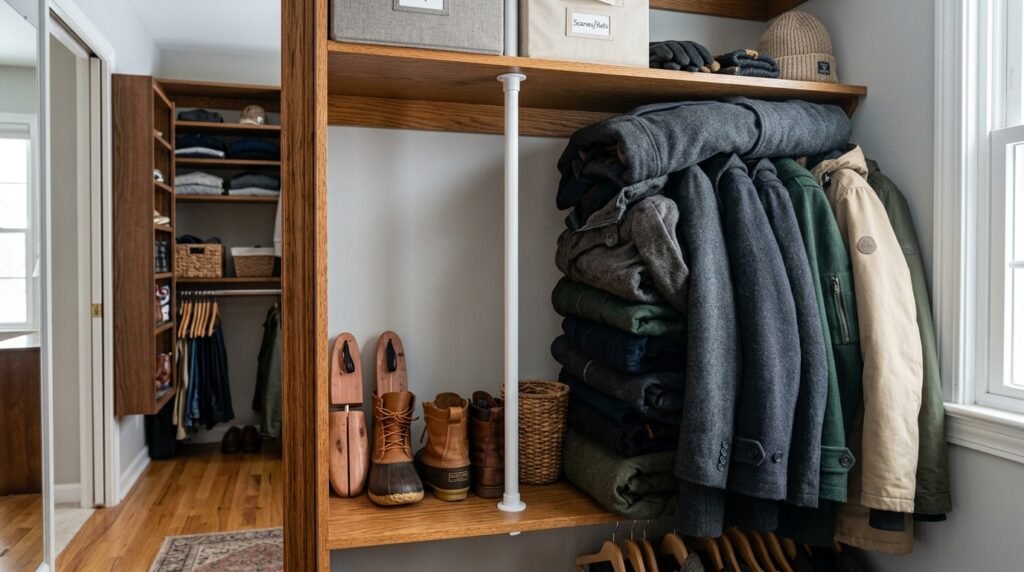
Managing massive winter jackets requires specialized tension rod applications to prevent catastrophic weight failures completely. You should place a shorter tension bar vertically between two sturdy wooden shelves to create custom cubbies. This vertical pressure application stops heavy stacked items from tipping over into a chaotic frustrating mess. I have noticed this creative workaround holds thick padded coats upright and easily accessible during freezing months. The vertical dividers act exactly like expensive custom cabinetry without requiring a single permanent metal screw. You just twist the rod loose and pack it away when your lease finally expires next year.
Supporting incredibly dense wool overcoats sometimes exceeds the maximum load capacity of standard spring rods. You must source industrial shower curtain rods that feature reinforced internal locking mechanisms for these heavy pieces. Placing small rubber gripping pads between the rod ends and your painted walls adds crucial friction strength. I have seen this simple rubber addition prevent heavily loaded bars from sliding down smooth plaster surfaces. Distributing the heaviest coats toward the outer edges near the wall anchors also reduces center bowing significantly. Your seasonal winter gear remains perfectly secure without jeopardizing your precious rental security deposit at all.
3. Modular Storage Cubes
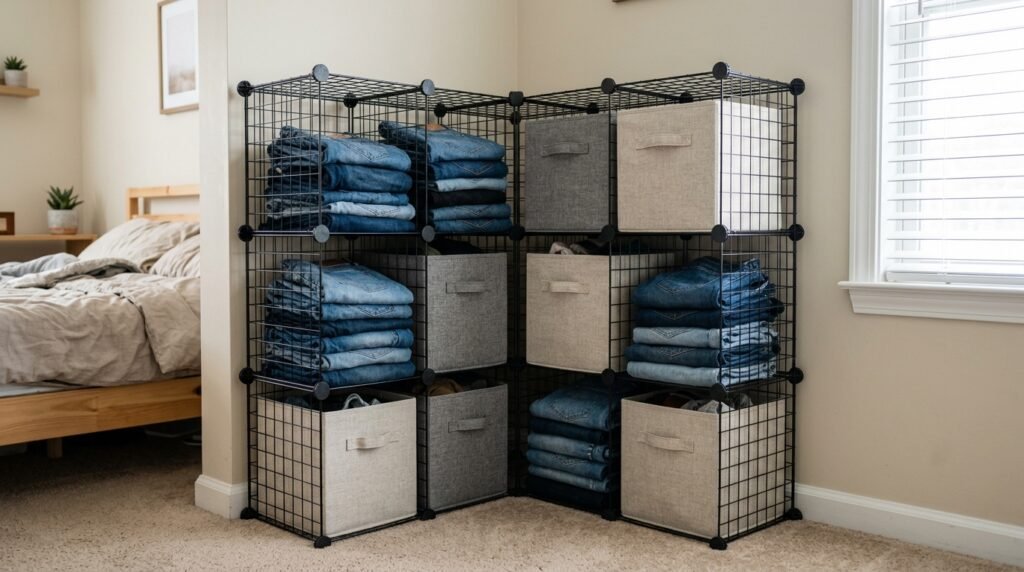
Stacking modular wire or wooden cubes transforms completely empty corner spaces into highly functional folding zones. These interlocking square units snap together easily and adapt to whatever strange architectural angles your rental possesses. You can build them high like a tower or wide like a low bedroom credenza instantly. I have noticed this incredible flexibility allows renters to maximize awkward spaces beneath low sloped ceilings effortlessly. The open faced design provides immediate visual access to folded jeans, thick sweaters, and casual athletic wear. This system offers the exact functionality of built-in shelving while remaining entirely portable and lightweight.
Adding fitted fabric bins into alternating cubes creates a highly organized and visually appealing checkerboard pattern. These soft hidden compartments work perfectly for concealing messy undergarments, loose socks, and tangled winter accessories. You maintain a pristine external appearance while keeping your less attractive necessities easily accessible and categorized. I usually label the bottom of each fabric bin discreetly with a small piece of painter tape. This simple labeling trick ensures you never waste time pulling out three different boxes searching for your [running gear]. The structured external cubes keep the soft internal bins from collapsing into a messy pile.
Securing these stacked cube towers remains absolutely critical for basic safety in small cramped living quarters. You should place the heaviest items like thick denim and chunky boots inside the absolute bottom cubes. This smart weight distribution lowers the center of gravity and prevents the entire structure from tipping forward. I always recommend securing towers taller than four cubes to the wall using temporary adhesive safety straps. These heavy-duty sticky anchors provide reliable stability without requiring any drilled holes in the drywall. Your vertical storage solution remains perfectly rigid while complying fully with strict property management rules.
4. Over-Door Organizers
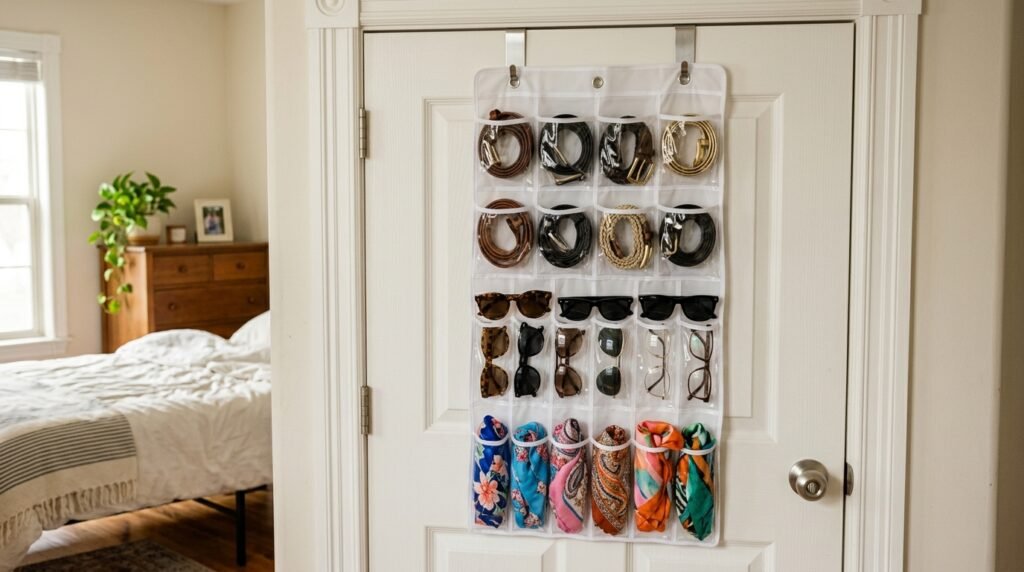
Utilizing the back of your closet door reclaims prime real estate that renters almost universally ignore. Hanging a heavy-duty pocket organizer over the top edge instantly provides dozens of new individual storage slots. While originally designed strictly for footwear, these transparent pockets hold rolled belts, scarves, and jewelry perfectly. I have tried using these for sorting bulky winter gloves and it completely cleared my main shelving. You can see every single small accessory instantly through the clear vinyl windows without opening heavy storage bins. This vertical setup completely frees your precious wooden shelves for much larger folded garments.
Selecting an organizer with sturdy metal mounting hooks prevents the fabric from tearing under extreme daily weight. You must carefully measure the physical gap between your door top and the frame beforehand. If the gap remains too tight, the metal hooks will scrape the paint and ruin the door frame. I always recommend placing your most frequently used daily accessories in the easily accessible middle row pockets. The highest pockets serve perfectly for storing off-season items or formal pieces you rarely ever need. Utilizing this hidden vertical real estate makes your main [storage area] feel significantly less crowded.
Shoe Storage Methods
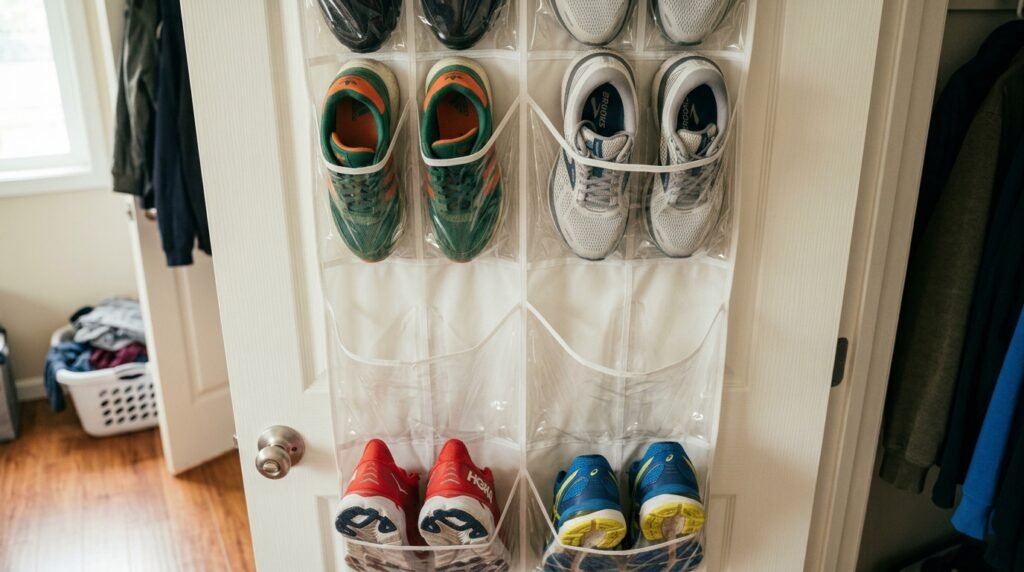
Storing large bulky sneakers in these hanging door pockets requires a specific angled insertion technique daily. You must slide the toe of the shoe downward first while angling the heavy heel slightly outward. This positioning prevents the stiff soles from stretching the clear vinyl window material beyond its limits. I have seen renters ruin expensive organizers by forcefully jamming wide athletic shoes straight down into narrow pockets. Placing alternating shoes heel-up and toe-up within the same horizontal row maximizes the available horizontal width effectively. Your footwear remains perfectly visible and protected from floor dust without taking up shelf space.
Managing expensive leather dress shoes requires much more careful placement within these tight hanging pocket structures. You should wrap delicate suede or polished leather heels in small microfiber bags before insertion. This protective layer prevents the harsh vinyl edges from scratching your expensive formal footwear during daily door movements. I usually reserve the lowest, darkest pockets for these protected dress shoes to avoid any sun damage entirely. Storing heavier boots directly on the floor below the organizer prevents the door hinges from warping under excessive weight. This balanced approach protects both your expensive footwear collection and the rental property.
5. Vacuum Seal Bags

Managing thick winter coats and heavy blankets during hot summer months requires aggressive volume reduction techniques. Vacuum sealed plastic bags compress bulky textiles into flat, rigid blocks that slide perfectly onto high shelves. You fold the items neatly, seal the heavy zipper, and extract all the air using a standard vacuum. In my experience, this single process reclaims massive sections of prime hanging space previously blocked by puffy jackets. The airtight plastic barrier also protects your valuable natural fibers from moisture, dust, and damaging insects. Your off-season items remain perfectly preserved until the weather gets colder again.
Proper execution requires ensuring all garments are completely clean and totally dry before starting the sealing process. Trapped moisture inside the plastic environment will cause severe mildew damage to your favorite expensive winter wool. I usually toss a scented cedar block or lavender sachet inside the bag before applying the final vacuum suction. This small addition keeps the fabrics smelling incredibly fresh when you finally open them six months later. Stacking these flat compressed bricks on the highest shelf utilizes awkward spaces that normally sit totally empty. This [seasonal rotation] system acts as the ultimate space multiplier trick.
Selecting premium branded vacuum bags prevents the frustrating issue of slow air leaks over long months. Cheap generic bags often lose their tight seal, causing the compressed sweaters to slowly expand and burst outward. I highly recommend investing in SpaceSaver brand bags because their dual-zip seal mechanisms rarely ever fail completely. When stacking these rigid blocks, you should place a piece of cardboard between the layers to prevent sliding. This structural support keeps your off-season wardrobe perfectly organized in a neat tower above your main hanging bar. You instantly maximize every single cubic inch of your rented closet safely.
6. Under-Bed Drawers
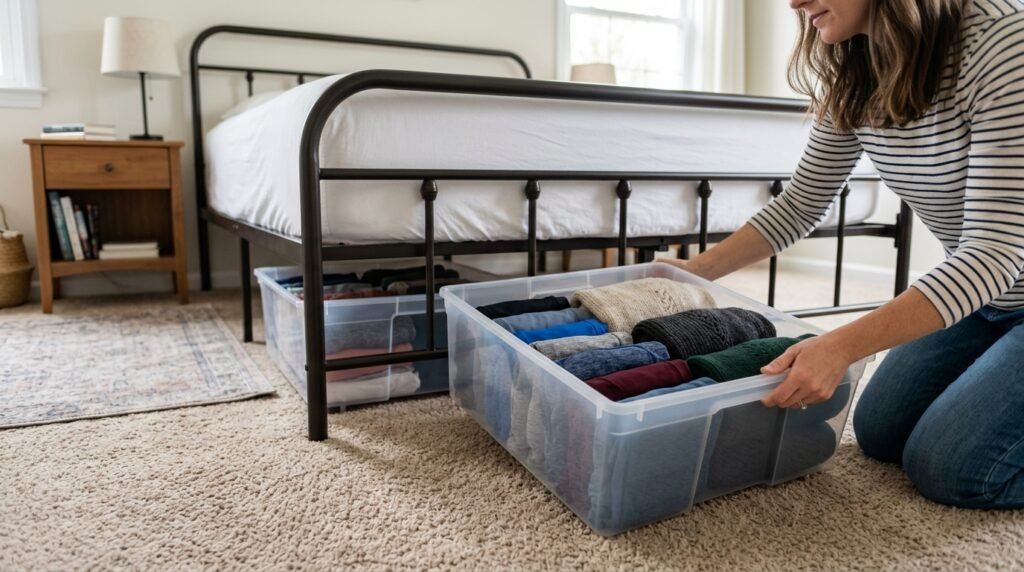
Pushing seasonal clothing under your sleeping frame unlocks a massive hidden storage zone within your bedroom. Rolling storage bins slide effortlessly beneath standard metal bed frames to hold folded jeans and thick sweaters. You completely remove these bulky items from your main closet, freeing up essential hanging space for daily wear. I have noticed this hidden territory often equals the exact square footage of a small walk-in cabinet. Utilizing clear plastic bins with smooth rolling casters ensures you can retrieve items instantly without straining your back. This brilliant relocation strategy makes your primary dressing area feel infinitely more spacious.
Maximizing this low-clearance zone requires selecting bins that fit the exact height dimensions of your metal frame. You must measure the distance from the floor to the lowest hanging metal support bar precisely before shopping. Purchasing containers that are even half an inch too tall creates a frustrating daily battle just to open them. I always recommend buying long, narrow boxes that stretch the entire width of your mattress for maximum volume. Adding a simple bed skirt completely hides these plastic containers from view, maintaining a clean [bedroom decor] aesthetic. Your hidden storage remains easily accessible but completely invisible.
Organizing the contents of these low rolling drawers properly prevents them from becoming chaotic hidden dumping grounds. You should utilize the file folding method to stand thick sweaters upright rather than stacking them flatly. Looking down into the pulled-out drawer immediately reveals every single garment without digging through heavy messy piles. I have seen clients group their off-season athletic wear in one specific bin for incredibly fast seasonal transitions. Placing small silica gel packets inside these plastic containers absorbs any ambient room moisture near the cold floor. Your relocated garments stay perfectly dry, organized, and totally out of the way.
7. Cascading Velvet Hangers
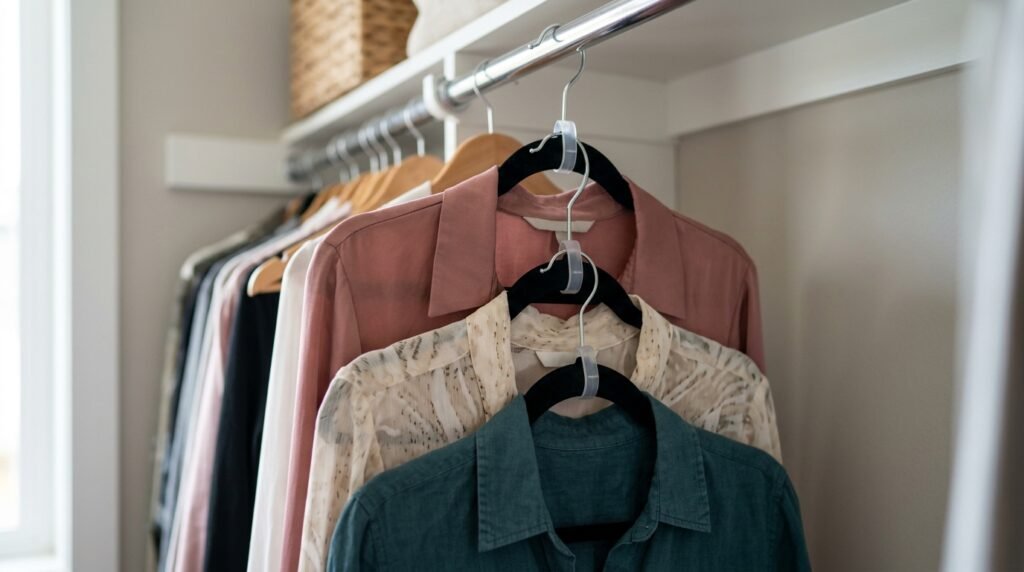
Swapping out bulky plastic or mismatched wire hangers for slim velvet alternatives creates instant visual harmony immediately. These ultra-thin tools prevent delicate garments from slipping onto the floor while saving significant horizontal bar space. You can instantly fit twice as many shirts on the same hanging rod without causing unwanted fabric wrinkles. In my experience, buying a bulk pack of matching hangers completely transforms the aesthetic of any tight rental space. This one simple investment provides the highest immediate return on your temporary layout upgrading efforts. Your garments will finally hang evenly and look incredibly polished every single day.
Taking this slim hanger strategy a step further requires cascading connecting hooks for extreme vertical space efficiency. You clip these small plastic adapters over the neck of one hanger to suspend another directly below it. This method perfectly utilizes the empty air space hanging between your short jackets and the floor down below. I have seen this technique single-handedly solve severe overcrowding issues in tiny downtown studio apartment [clothing collections]. You group similar items together vertically, making your morning selection process incredibly fast and totally stress-free. Building this cascading chain frees up massive horizontal room for your coats.
Color Coding Strategies

Arranging your newly hung garments by color transforms a basic storage area into a highly curated boutique. You should transition from light white shades on the left slowly into dark blacks on the far right. This satisfying visual gradient makes your inexpensive rental closet look like a professional interior design magazine feature instantly. I have noticed this exact styling trick motivates renters to maintain their pristine organization habits much longer overall. When you pull a red shirt, you know exactly where it returns after the laundry cycle finishes. Your daily dressing routine becomes an incredibly calming and predictable visual experience.
Breaking down the color blocks by specific garment type adds another layer of extreme organizational efficiency daily. You separate the long sleeve white shirts from the short sleeve white t-shirts within the same color zone. This precise categorization eliminates the frustrating morning hunt for a specific base layer when you are running late. I always recommend using a small colored plastic tag on the rod to mark where categories change officially. This rigid structural boundary prevents the different garment types from slowly blending together over a busy month. Your curated collection remains flawlessly organized without requiring constant weekly maintenance.
Portable Storage Solutions Comparison
Selecting the most effective temporary organizational tools requires comparing different materials, price points, and long-term durability factors carefully. This comprehensive comparison table breaks down the most reliable portable products available for tiny urban rental apartments currently. You must evaluate your specific budget constraints alongside the actual physical dimensions of your assigned sleeping quarters. I have tested dozens of competing brands to identify which solutions truly withstand daily aggressive usage without breaking apart. Review these practical options below to make highly educated purchasing decisions that maximize your limited interior space perfectly. Your final layout will reflect true professional design standards flawlessly.
| Storage Solution | Best Use Case | Average Cost | Renter Friendly | Setup Time |
| Slim Velvet Hangers | Maximizing horizontal bar space | $20 – $35 | 100% Yes | Zero |
| Heavy Tension Rods | Doubling vertical hanging capacity | $15 – $25 | 100% Yes | 5 Minutes |
| Modular Wire Cubes | Utilizing odd corner spaces | $35 – $50 | 100% Yes | 20 Minutes |
| Over-Door Pockets | Storing small daily accessories | $15 – $30 | 100% Yes | 2 Minutes |
| Vacuum Storage Bags | Compressing heavy winter coats | $20 – $40 | 100% Yes | 15 Minutes |
| Rolling Under-Bed | Hiding thick seasonal sweaters | $40 – $60 | 100% Yes | 5 Minutes |
Frequently Asked Questions
How do I organize a rental closet without drilling holes?
Organizing a rental closet without drilling requires utilizing pressure-mounted tools and freestanding modular storage units strategically. You should immediately install heavy-duty tension rods to double your vertical hanging capacity without leaving any permanent marks. Replacing bulky plastic hangers with slim velvet alternatives instantly reclaims nearly thirty percent of your horizontal bar space. I have seen renters achieve incredible results by stacking modular wire cubes in the bottom corners for folded denim. Adding an over-the-door pocket organizer creates massive accessory storage without requiring a single metal screw or nail. Your landlord will never know you upgraded the original [storage space].
What is the best way to double hanging space temporarily?
The most effective method for doubling temporary hanging space involves installing a commercial-grade adjustable tension rod. You simply twist this spring-loaded metal bar until it wedges firmly between your two existing side walls securely. I always recommend placing this secondary bar exactly thirty-eight inches below your primary upper rod for optimal clearance. This specific measurement ensures your longer shirts hanging above never drag across the folded trousers hanging down below. The installation takes less than five minutes and safely holds up to forty pounds of heavy [daily outfits]. You easily remove the bar completely when your lease agreement ends.
How can I store bulky winter sweaters in a small apartment?
Storing bulky winter sweaters in a small apartment requires adopting the vertical file folding method inside modular cubes. You fold the thick knit garments neatly and stand them upright rather than stacking them in unstable leaning towers. If you lack flat shelf space entirely, vacuum-sealed bags offer the absolute best volume reduction technique for long-term storage. You compress these massive items into flat rigid blocks and slide them safely into low under-bed rolling drawers. I have noticed this combination of file folding and vacuum sealing solves almost every single winter clothing storage crisis that frustrated downtown city apartment renters face.
Do velvet hangers really save space in tiny closets?
Slim velvet hangers absolutely save significant space and remain the highest return on investment for small rental closets. Their ultra-thin profile allows you to slide garments closely together, instantly doubling the capacity of a standard hanging rod. The textured velvet surface provides incredible friction, preventing delicate silk blouses and wide-neck shirts from constantly slipping onto the floor. I have tried multiple hanger varieties and firmly believe these are essential for maximizing tight temporary living spaces effectively. Swapping your mismatched bulky plastic units for a uniform velvet set immediately transforms a chaotic mess into a highly polished professional [clothing display].
How do I utilize the floor space under my hanging clothes?
Utilizing the awkward floor space directly beneath your hanging clothes requires measuring the exact vertical clearance remaining accurately. You can stack clear drop-front shoe boxes tightly in this zone to protect your expensive footwear from settling dust. If you have more than two feet of clearance, installing a low freestanding modular cubby system works perfectly for folded jeans. I usually recommend placing a small rolling cart in this space that you can easily pull outward when searching for hidden items. Maximizing this dark floor zone completely eliminates wasted square footage while keeping your most important daily [accessories organized].
Can I install a shoe rack without damaging the walls?
You can easily install a highly functional shoe rack without damaging your rental walls by utilizing over-the-door organizers. These heavy-duty fabric pockets hang securely over the top edge of your closet door using flat metal bracket hooks. Alternatively, you can assemble a freestanding vertical shoe tower that simply leans against the wall using gravity for stability. I have noticed that clear stackable drop-front bins offer another completely damage-free solution that looks incredibly luxurious on the floor. These freestanding methods protect your expensive footwear collection while ensuring you receive your full apartment security deposit back without any deductions.
What should I do with empty vertical space above shelves?
Transforming the empty vertical space above your top shelf requires implementing rigid acrylic dividers or stacked storage bins. Clear shelf dividers slide directly onto the wooden ledge, allowing you to stack thick denim incredibly high without tipping over. If the gap reaches the ceiling, placing vacuum-sealed seasonal clothing blocks up there maximizes the dead volume perfectly. I have seen clients use lightweight decorative woven baskets in this high zone to store out-of-season scarves and winter gloves neatly. You must keep a small sturdy folding step stool nearby to safely access these elevated [wardrobe essentials] without stretching dangerously.
How do I hide a freestanding garment rack effectively?
Hiding a freestanding garment rack in an open bedroom requires strategic placement and careful visual curation of the garments. You should position the metal rack slightly behind a decorative folding screen or a tall leafy indoor houseplant. If the rack remains fully visible, you must strictly limit its contents to a matching monochromatic color palette instantly. I always hang only my most aesthetically pleasing coats and stylish jackets on exposed racks to create a deliberate boutique vibe. Keeping the bottom shelf completely clear of messy shoes prevents the mobile unit from looking like a chaotic overflowing [laundry basket].
Are vacuum seal bags safe for expensive wool clothing?
Vacuum seal bags remain perfectly safe for expensive wool clothing if you prepare the natural fabrics properly beforehand. You must ensure the heavy winter sweaters are completely clean and totally dry before engaging the zipper seal. Any trapped moisture inside the airtight plastic environment will rapidly produce destructive mildew over the hot summer months. I strongly recommend tossing a small cedar block inside the bag to repel insects and maintain a fresh natural scent. You should also unpack the wool garments a few days before wearing them, allowing the compressed fibers to relax and regain their original fluffy shape.
How can I organize accessories without using wooden drawers?
Organizing loose accessories without built-in wooden drawers requires leveraging vertical hanging organizers and small desktop jewelry boxes. Hanging a transparent pocket organizer on the back of your door creates dozens of individual slots for belts, sunglasses, and thin scarves. You can also place a rotating lazy susan on a flat shelf to hold rolled ties and small rigid accessory cases perfectly. I have tried using small modular fabric bins stacked inside wire cubes to replicate the exact function of a sliding wooden drawer. These affordable portable solutions keep your tiny items beautifully categorized without requiring expensive permanent cabinetry.
What is the best modular storage for sloping ceilings?
The absolute best modular storage for sloping ceilings involves using interlocking wire or wooden cube systems. These versatile square blocks allow you to build a custom staircase-shaped unit that perfectly traces the exact angle of your strange ceiling. You utilize every single inch of available floor space without hitting the low slanted plaster directly above it. I have noticed this adaptable design provides massive storage volume for folded jeans and thick winter sweaters in difficult attic apartments. When you eventually move out, you easily disassemble the connected squares and pack them flat inside your standard [moving boxes].
How often should I rotate my seasonal wardrobe items?
You must aggressively rotate your seasonal wardrobe items at least twice a year when living in a tiny rental. I recommend scheduling these major transitions during early April for lightweight spring items and late October for heavy winter gear. This strict rotation schedule ensures your highly limited active hanging zones only contain garments suitable for the current outside weather. Wash all your off-season bulky items thoroughly before compressing them into flat vacuum bags for under-bed storage. This mandatory biannual habit maintains a highly functional, stress-free daily dressing environment that never feels overwhelmingly cluttered or chaotic during busy mornings.
Final Thoughts on Maximizing Rental Spaces
Mastering your limited rental space fundamentally changes how you approach every single morning of your busy professional life. Implementing these accessible non-permanent strategies proves you never need expensive custom cabinetry to achieve functional elegance. These brilliant wardrobe organization hacks compound rapidly to save you countless hours of frustrating searching every single month. I have seen how small strategic layout changes completely transform a cramped studio into a calming, highly efficient personal sanctuary. You reclaim total control over your messy environment without risking your expensive lease agreement or drilling a single hole in the landlord’s painted drywall.
Taking action today guarantees your bedroom will look entirely different and incredibly polished by this coming Sunday evening. Start by upgrading your hangers and installing a simple tension rod before attempting the more complex modular cube systems. You must save this helpful post on Pinterest to keep these highly visual DIY ideas accessible during your upcoming weekend decluttering project. Please share this comprehensive layout guide with fellow apartment renters who desperately need practical storage inspiration. Enjoy your beautifully upgraded temporary home and the massive peace of mind that comes with a perfectly structured daily dressing routine always.

Amelia leads HavenlyStyle’s editorial vision with a passion for elegant interiors and practical home living. With years of experience in home décor and lifestyle content, she ensures every article is accurate, inspiring, and easy to follow. From timeless decorating ideas to the latest interior design trends, Amelia is committed to helping readers create beautiful, functional spaces while maintaining HavenlyStyle’s trusted and welcoming voice.