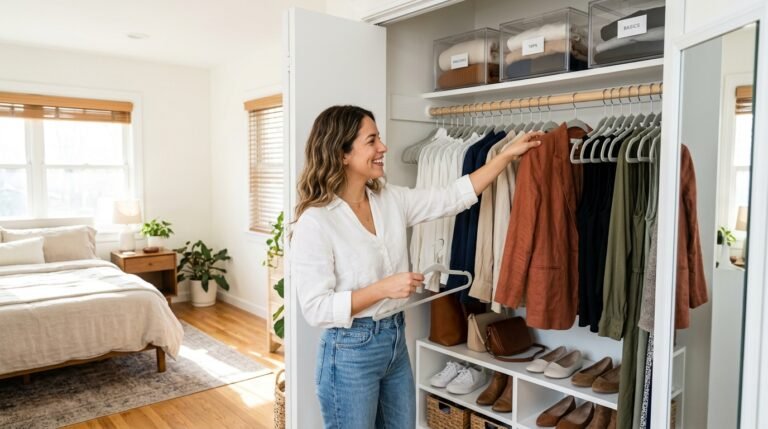
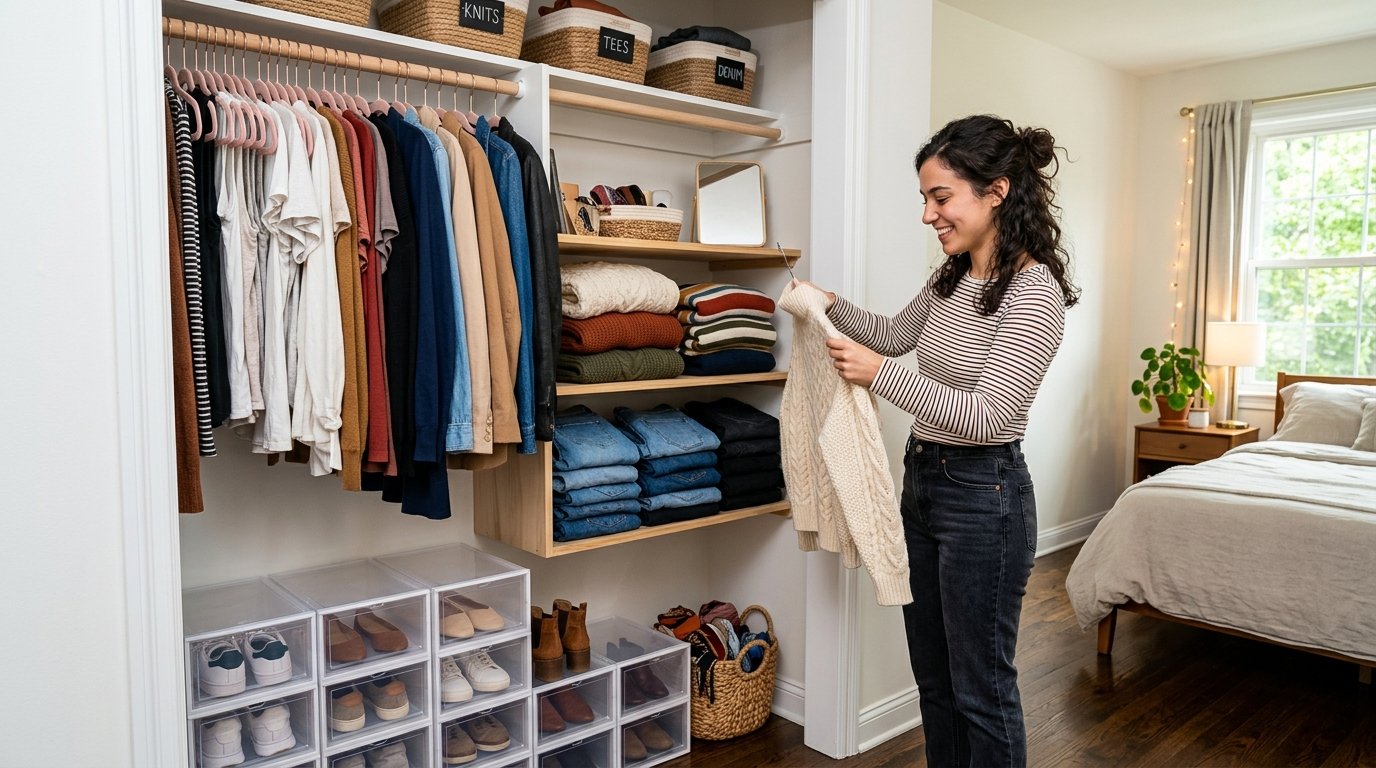
Finding space for your clothes in a tiny apartment feels impossible sometimes. You stare at that cramped space and wonder how everything will fit without looking messy. Proper wardrobe organization in small closets changes your entire morning routine completely. Instead of digging through piles of wrinkled shirts, you open the door to a calm, beautifully structured space. I have noticed that a well-arranged closet makes your entire room feel larger and much more relaxing. Creating this system requires clever [space planning] rather than simply throwing away things you actually love. We will build a beautiful system together.
Many people believe they need custom built-in cabinets to achieve that pristine designer look. The truth is much simpler and far less expensive. You just need the right layout principles to maximize every single inch of available space. In my experience with tiny city apartments, implementing smart [storage solutions] brings immense peace of mind daily. We will explore practical strategies that transform messy racks into highly functional displays. You will learn exact methods to fold, hang, and sort your garments beautifully. Your tiny sleeping quarters will soon feature a truly inspiring and perfectly arranged clothing haven.
Executive Summary
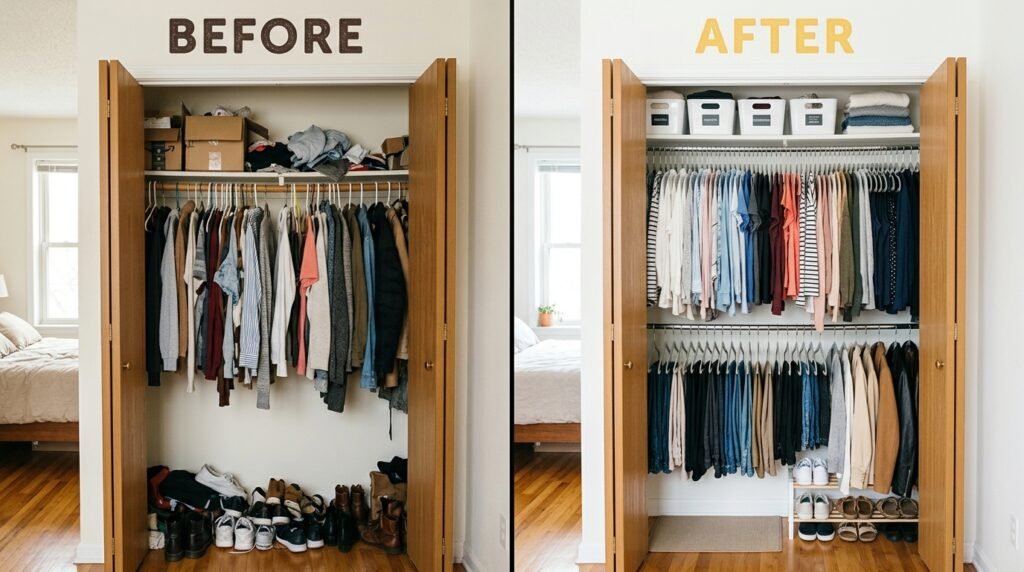
Implementing these specific layout strategies delivers measurable results within a single weekend. Most apartment renters reclaim up to forty percent of their usable storage area by following this exact blueprint. We cover innovative vertical stacking techniques, clever seasonal rotation methods, and hidden compartment setups that maximize tight corners. You will discover how specific hanger choices and customized [shelving units] drastically increase your hanging capacity. I have seen clients transform their frustrating daily dressing routines into seamless experiences using these simple layout adjustments. Your investment of time today yields massive daily dividends in both space and mental clarity.
This comprehensive guide avoids generic advice and focuses entirely on realistic rental constraints. We intentionally exclude permanent structural renovations that would jeopardize your security deposit. Instead, you get actionable solutions requiring minimal tools and affordable supplies easily found at local retailers. I have watched many renters fail because they purchased bulky [storage bins] before measuring their actual dimensions accurately. This article provides a clear roadmap to prevent those costly mistakes while achieving a truly custom look. Prepare to completely redefine how you view and utilize your compact living quarters starting right now with these proven methods.
1. Cascading Velvet Hangers
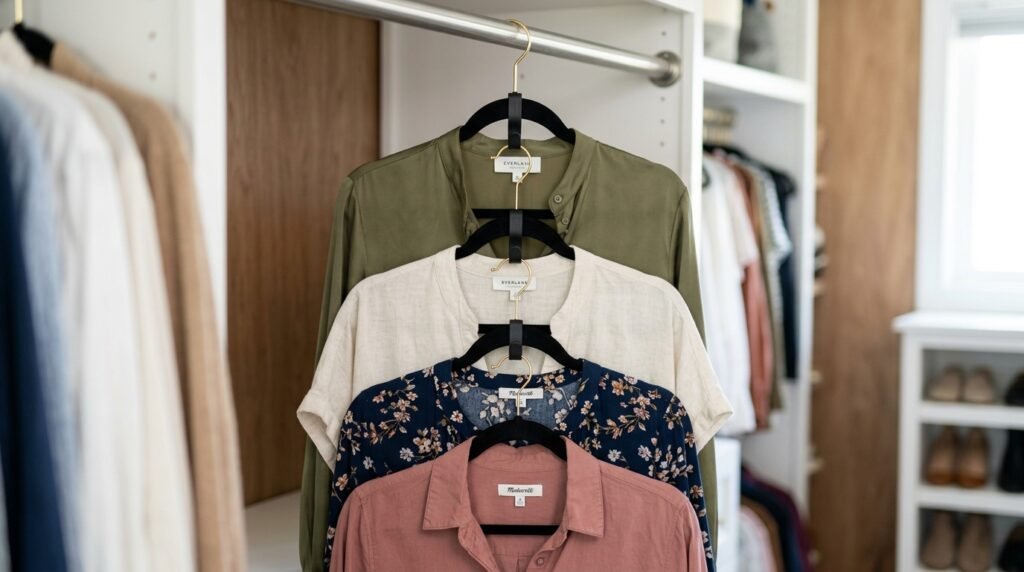
Swapping out bulky plastic or mismatched wire hangers for slim velvet alternatives creates instant visual harmony. These ultra-thin tools prevent delicate garments from slipping onto the floor while saving significant horizontal bar space. You can instantly fit twice as many shirts on the same hanging rod without causing any unwanted fabric wrinkles. In my experience, buying a bulk pack of fifty matching hangers completely transforms the aesthetic of any tight [bedroom decor] space. This one simple investment provides the highest immediate return on your organization efforts. Your garments will finally hang evenly and look incredibly polished every single day.
Taking this hanger strategy a step further requires cascading connecting hooks for vertical efficiency. You clip these small plastic adapters over the neck of one hanger to suspend another directly below it. This method perfectly utilizes the empty air space hanging between your short jackets and the floor below. I have seen this technique single-handedly solve severe overcrowding issues in historic downtown [rental apartments]. You group similar items together vertically, making your morning selection process incredibly fast and totally stress-free. Building this cascading chain frees up massive amounts of horizontal room for your larger winter coats.
2. Adjustable Tension Rods
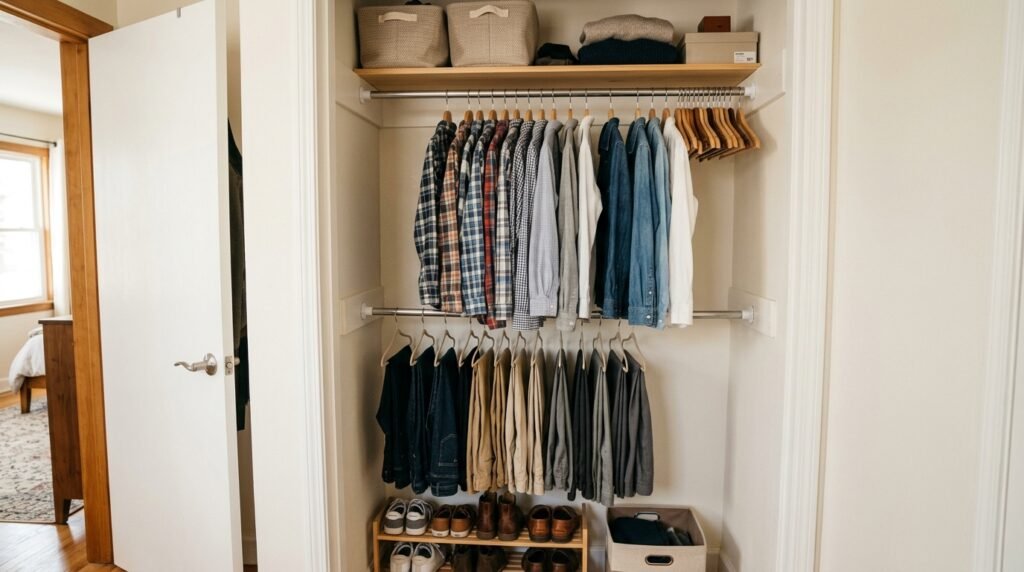
Adding a second hanging bar instantly doubles your capacity for shorter items like shirts and trousers. Tension rods require zero drilling and leave no permanent marks on your rental property walls. You simply twist the rod until it wedges firmly between the side walls at your desired height. I always recommend placing the lower bar exactly thirty-six inches below the primary top bar for optimal clearance. This exact measurement ensures your longer shirts never drag across the [folded pants] hung below them. The installation takes less than five minutes but fundamentally changes your entire daily storage capacity.
You can also use smaller tension rods vertically to create custom cubbies on your upper shelves. Placing three or four short rods between two existing shelves creates perfect slots for storing stiff handbags or bulky sweaters. I have tried this creative workaround in dozens of cramped [living quarters] with incredible success. The vertical dividers keep stacked items from tipping over into a chaotic and frustrating mess. When your lease ends, you just twist the rods loose and pack them inside your moving boxes. This modular approach allows endless configuration changes as your seasonal clothing collection naturally evolves.
3. Clear Acrylic Dividers
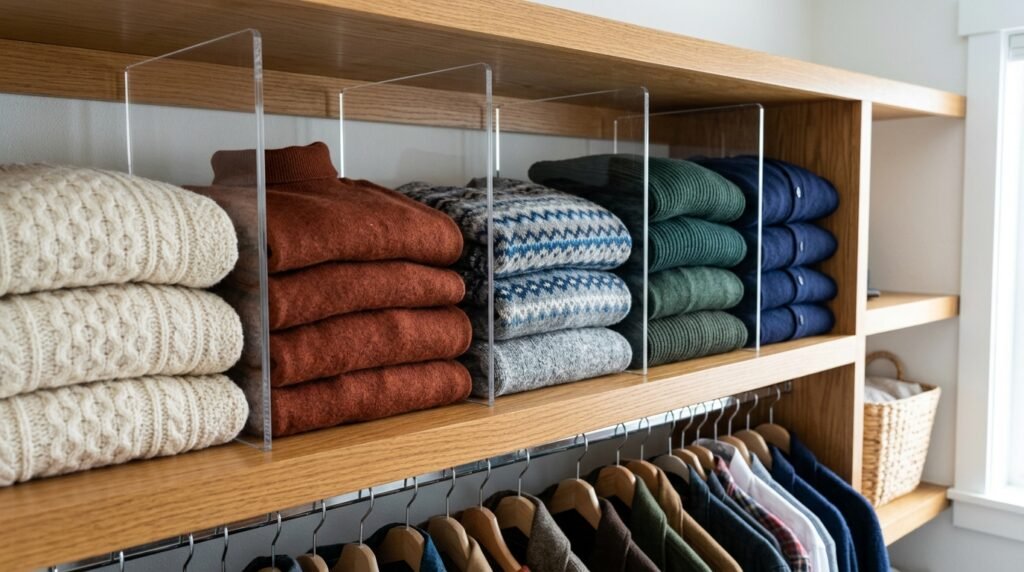
Stacking thick sweaters usually results in a leaning tower that collapses the moment you grab one piece. Clear acrylic shelf dividers slide directly onto your existing wooden or wire ledges to enforce strict boundaries. These transparent panels maintain perfectly straight piles without adding visual bulk to your cramped visual field. I have noticed that seeing the neat stacks actually motivates people to maintain the [cleaning habits] much longer. You can group your knits by color or weight, creating a boutique retail display right in your home. The pristine transparent material blends seamlessly into any interior design aesthetic flawlessly.
These versatile dividers also work brilliantly for organizing stiff denim jeans and heavy winter scarves. You place the dividers approximately ten inches apart to create customized storage slots across the entire top shelf. I suggest folding your jeans so the back pocket faces outward for quick and easy style identification. This small adjustment prevents you from pulling down three pairs before finding your favorite dark wash [denim style]. Using vertical boundaries maximizes the vertical height of deep shelves that usually become dark dumping grounds. Your entire collection remains visible, accessible, and perfectly structured throughout the busy work week.
Boutique Denim Stacking
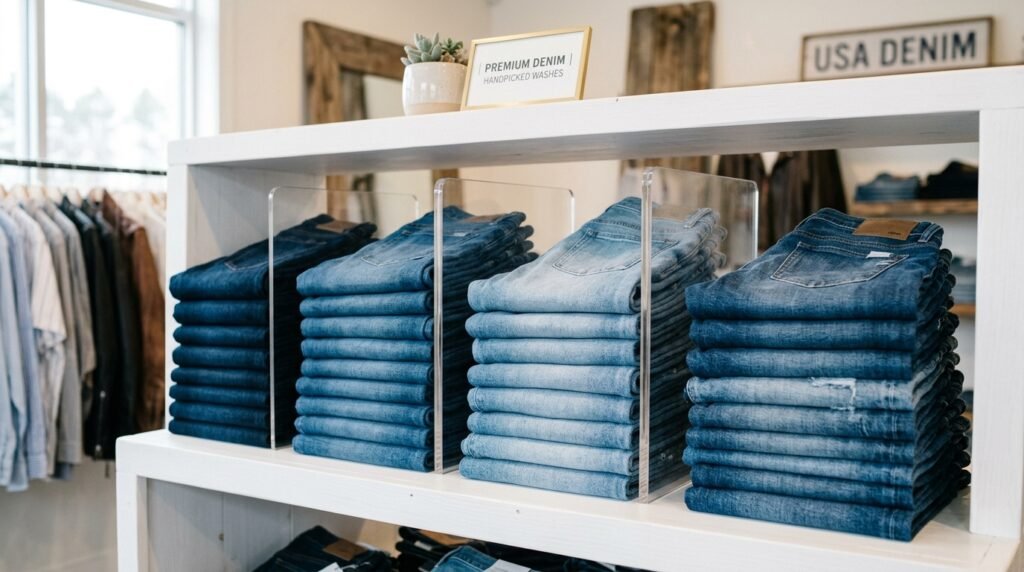
Mastering the boutique folding technique ensures your denim collection stays pristine and incredibly easy to browse. You fold the jeans in half lengthwise, tuck the crotch point inward, and fold them into perfect thirds. This specific method creates a smooth, uniform rectangle that stacks beautifully between your new acrylic dividers. I have seen this [folding technique] save massive amounts of drawer space in tiny downtown studios. When you align the folded edges cleanly facing the front, the visual result feels incredibly satisfying and professional. This habit takes seconds but prevents that messy, rumpled look completely.
4. Over-The-Door Shoe Organizers
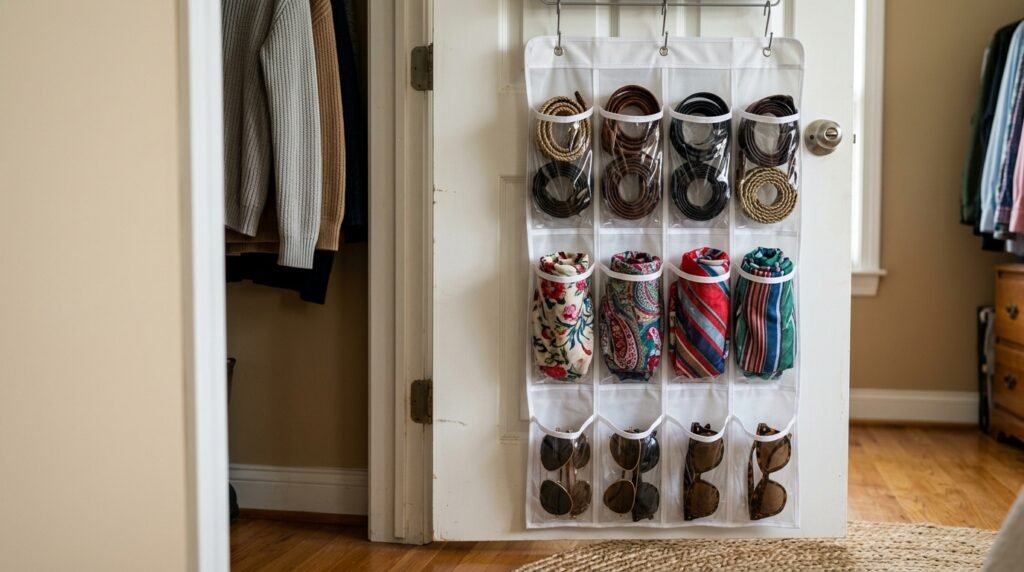
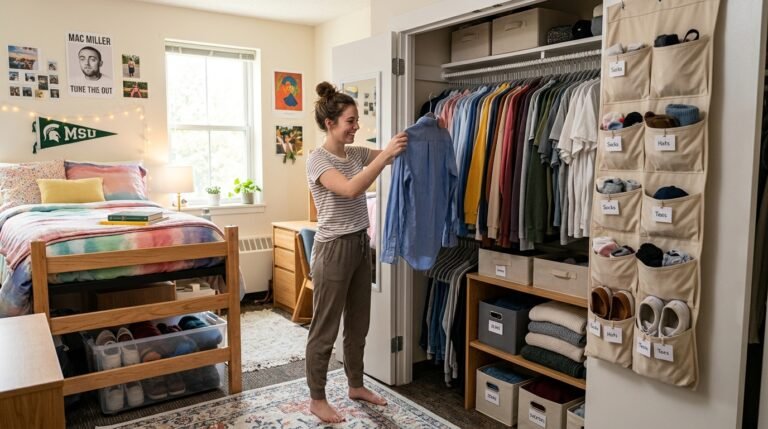
The back of your door remains one of the most underutilized zones in any compact living space. Hanging a fabric organizer with clear plastic pockets instantly creates storage for dozens of small loose items. While designed for footwear, these versatile hanging units hold rolled belts, winter gloves, and delicate silk scarves perfectly. I have transformed completely chaotic [accessory collections] into beautifully categorized displays using this exact affordable tool. You can see every single item instantly through the transparent vinyl windows without opening bulky storage bins. This vertical setup completely frees your precious shelf space for much larger garments.
Choosing an organizer with sturdy metal hooks prevents the fabric from tearing under heavy weight over time. You must measure the gap between your door top and the frame to ensure it closes properly beforehand. I always recommend placing your most frequently used daily items in the easily accessible middle row pockets. The highest pockets serve perfectly for storing [off-season accessories] or formal pieces you rarely need. Utilizing this hidden vertical real estate makes your main storage area feel significantly less crowded and chaotic. Every accessory finally gains a designated permanent home that you can easily maintain.
5. Vacuum Sealed Storage Bags
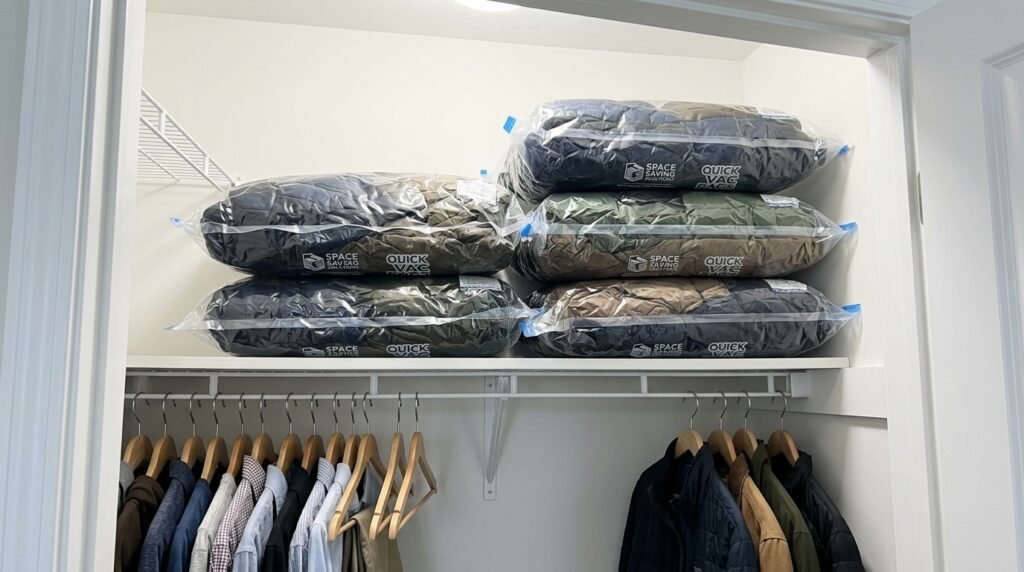
Managing thick winter coats and heavy blankets during hot summer months requires aggressive volume reduction techniques. Vacuum sealed plastic bags compress bulky textiles into flat, rigid blocks that slide perfectly under your bed. You fold the items neatly, seal the heavy zipper, and extract all the air using a standard vacuum hose. In my experience, this single process reclaims massive sections of prime hanging space previously blocked by [puffy jackets]. The airtight plastic barrier also protects your valuable natural fibers from moisture, dust, and damaging insects. Your off-season items remain perfectly preserved until the weather gets colder again.
Proper execution requires ensuring all garments are completely clean and totally dry before starting the sealing process. Trapped moisture inside the plastic environment will cause severe mildew damage to your favorite expensive winter wool. I usually toss a scented cedar block or lavender sachet inside the bag before applying the final vacuum suction. This small addition keeps the fabrics smelling incredibly fresh when you finally open them six months later. Stacking these flat compressed bricks on the highest shelf utilizes awkward spaces that normally sit totally empty. This [seasonal rotation] system acts as the ultimate space multiplier trick.
6. Modular Drawer Inserts
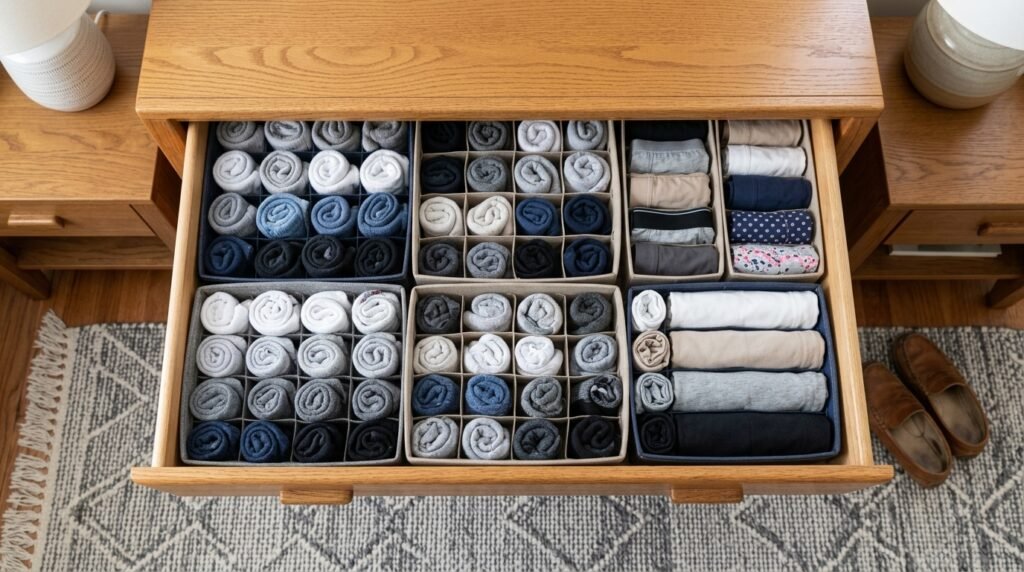
Throwing small items into a large empty drawer creates a tangled mess of socks and undergarments instantly. Modular fabric boxes or adjustable wooden dividers partition the open space into dedicated micro zones. You assign a specific square to gym socks, another to dress socks, and one to delicate undergarments. I have tried many configurations and found that small square boxes work best for tightly rolled intimate items. This rigid internal structure prevents the contents from shifting into a massive pile when you open the [dresser drawer] quickly. You instantly locate the exact pair of socks you desperately need.
Folding techniques play a massive role in maximizing the efficiency of these newly divided drawer compartments. The popular file folding method allows you to stand garments upright rather than stacking them on top of one another. When you look down into the drawer, you see the edge of every single shirt simultaneously. I have noticed this method completely stops the frustrating habit of ruining an entire stack just to grab the bottom shirt. The modular boxes hold these upright [folded items] securely in place even as the drawer slowly empties throughout the week. Everything remains perfectly categorized always.
Proper File Folding Setup
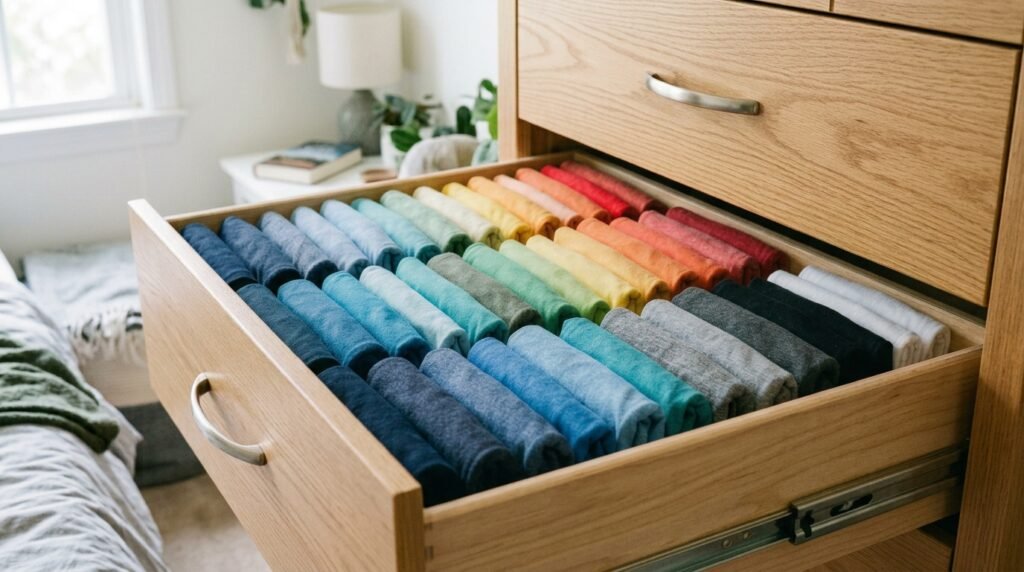
Transitioning to the file folding method requires a slight adjustment to your weekly laundry day routine. You fold the sides of the shirt inward, then fold the remaining rectangle into neat thirds vertically. This creates a compact, sturdy packet that stands upright on its own without needing any external support. I always recommend placing the darker colors toward the back and lighter colors near the front edge. This visual gradient makes the drawer look incredibly appealing while helping you select the perfect [daily outfit] faster every morning. Your clothing stays completely wrinkle-free and highly visible at a single glance.
7. Pull-Out Valet Rods
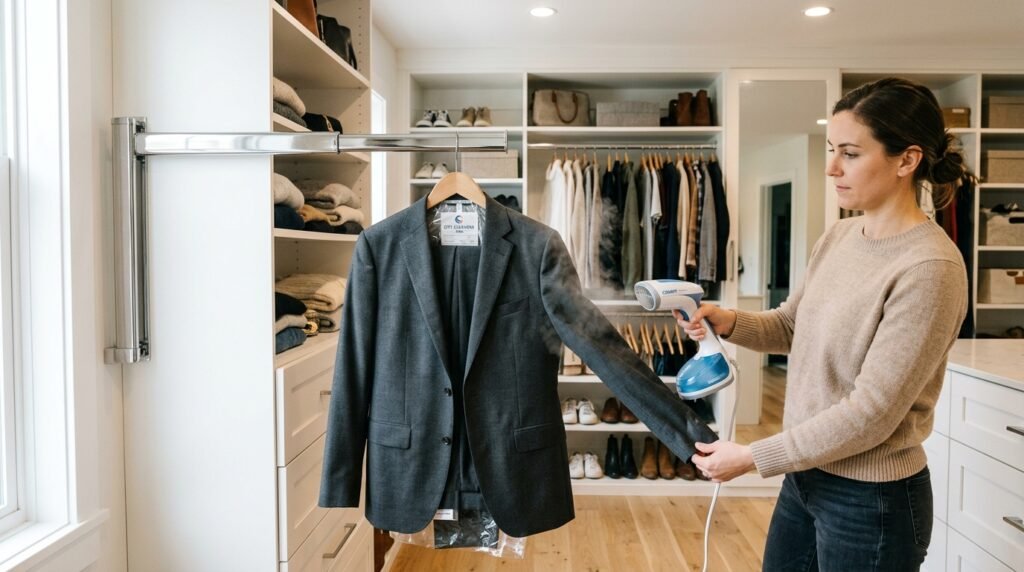
Mounting a retractable valet rod to the side wall offers an incredible convenience for planning your daily outfits. This sleek metal extension pulls outward to hold tomorrow’s clothes, dry cleaning bags, or items needing steaming. You avoid draping garments over chairs or door knobs, keeping your main living area completely clutter-free always. In my experience, preparing your outfit the night before reduces morning anxiety and saves massive amounts of time. The rod slides invisibly back against the wall when not in use, taking up absolutely zero permanent [floor space]. It adds a touch of high-end luxury to basic rentals.
Installing these small rods requires only two basic screws and takes less than ten minutes to complete. You must secure the bracket directly into a wooden stud to ensure it can support heavy winter coats safely. I usually mount one rod on each side of the doorway to maximize the staging area for multi-piece outfits. This temporary hanging zone also works perfectly for air-drying delicate shirts that cannot withstand the harsh heat of standard dryers. Creating this dedicated prep station fundamentally changes how you interact with your entire [clothing collection] every single day of the busy work week.
8. Floor Level Shoe Bins
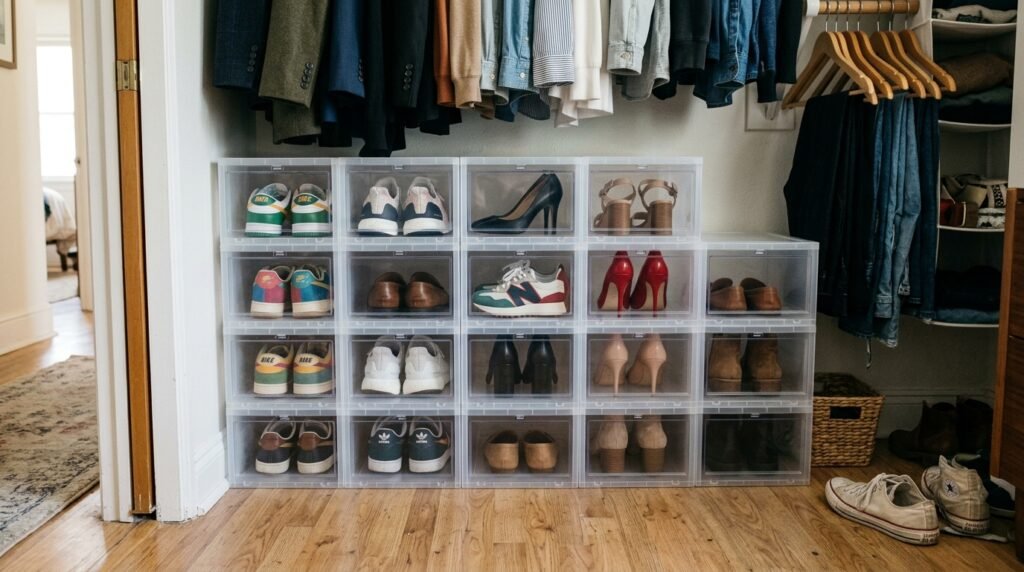
Leaving footwear scattered across the floor wastes valuable square footage and creates severe visual chaos instantly. Implementing stackable drop-front clear plastic bins transforms the muddy ground zone into a pristine retail display. You access any pair directly through the front swinging door without unstacking the heavy boxes sitting above it. I have seen clients fit triple the amount of shoes in the same floor footprint using this exact vertical method. The enclosed plastic environment also protects expensive leather boots from gathering thick dust over long periods of disuse. Your [footwear collection] becomes a beautifully structured and protected exhibit.
Sorting your collection intentionally within these stacked bins improves your daily dressing speed and overall convenience significantly. You should place heavy winter boots and rarely worn formal heels in the absolute bottom rows. Your daily walking sneakers and casual flats belong at eye level for quick, effortless grabbing on busy mornings. I recommend adding small cedar inserts inside the bins to neutralize odors and absorb any lingering moisture trapped inside. This rigid stacking system creates a flat top surface that can double as an additional low shelf for storing bulky [duffel bags]. The transformation feels incredibly rewarding always.
9. Utilizing Unused Corners
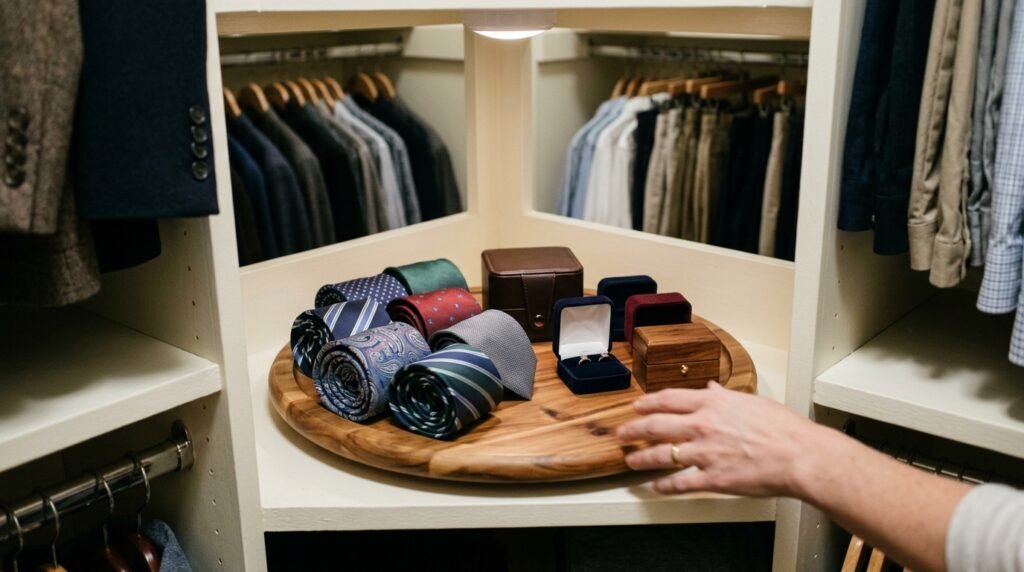
Deep awkward corners often become dark black holes where out-of-season garments go to get completely lost forever. Installing a spinning lazy susan in the corner turns that dead zone into a highly functional accessory station. You can place folded belts, rolled ties, or small jewelry boxes on this rotating circular wooden platform. I have noticed this simple addition rescues hundreds of dollars worth of lost accessories from gathering heavy dust. A quick spin reveals exactly what you need without requiring you to reach blindly into the dark crevices. Your daily [morning routine] becomes much smoother and far more enjoyable.
If a rotating tray does not fit, corner-specific angled shelving provides another brilliant solution for dead space. You mount these triangular wooden slabs to connect the two adjacent walls seamlessly and cleanly. I always utilize these small shelves to display decorative items, perfume bottles, or small framed photographs beautifully. Adding personal aesthetic touches prevents the area from feeling like a sterile, purely utilitarian storage locker. A well-lit and thoughtfully decorated storage zone encourages you to keep the entire space much cleaner over the long term. You transform a frustrating architectural flaw into a beautiful, highly customized personal [dressing room].
Strategic Lighting Implementation
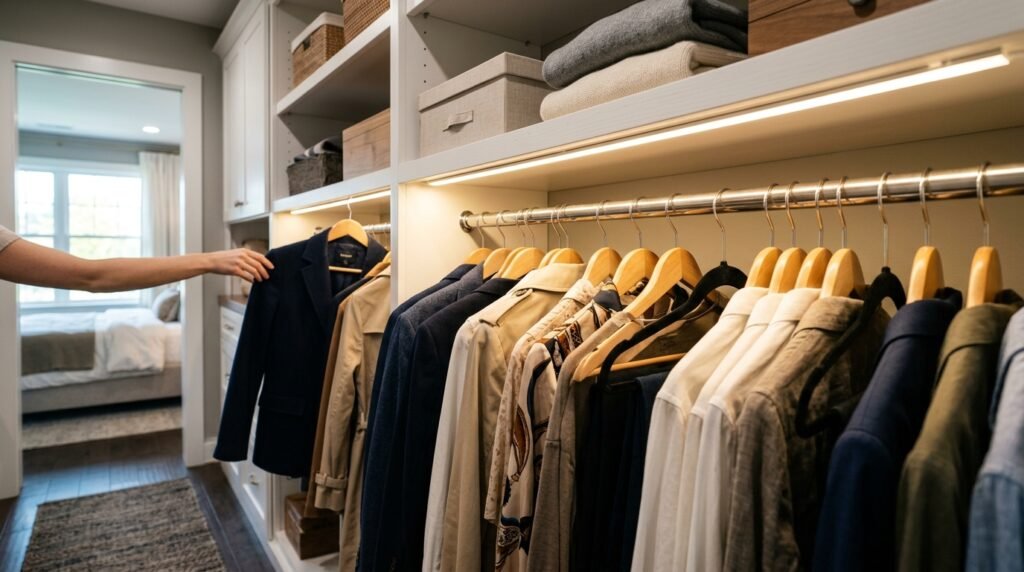
Proper illumination completely changes how you perceive and interact with your beautifully structured new storage system. Battery-operated motion sensor LED strips stick effortlessly to the bottom of shelves or along the door frame. The bright white light activates instantly when you open the door, revealing the true colors of your garments. I have seen countless people mistake navy blue for black simply because their lighting was horribly inadequate. These affordable wireless lights require zero electrical knowledge and stick firmly using double-sided mounting tape. You achieve that luxurious [custom cabinet] feel without hiring an expensive professional residential electrician.
Selecting the best organizational tools requires comparing different materials, price points, and long-term durability factors carefully. This comprehensive comparison table breaks down the most effective products available for tiny urban apartments currently. You must evaluate your specific budget constraints alongside the actual physical dimensions of your rented sleeping quarters. I have tested dozens of competing brands to identify which solutions truly withstand daily aggressive usage without breaking apart. Review these practical options below to make highly educated purchasing decisions that maximize your limited interior space perfectly. Your final layout will reflect true professional [design standards] and extreme functional efficiency.
| Storage Solution | Best Use Case | Average Cost | Durability | Installation Time |
| Slim Velvet Hangers | Maximizing horizontal bar space | $20 – $35 (50 pack) | High | Zero |
| Adjustable Tension Rods | Doubling vertical hanging capacity | $15 – $25 each | Medium | 5 Minutes |
| Clear Acrylic Dividers | Stacking thick sweaters and denim | $25 – $40 (6 pack) | High | 2 Minutes |
| Over-Door Shoe Pockets | Storing small daily accessories | $15 – $30 each | Medium | 5 Minutes |
| Vacuum Storage Bags | Compressing heavy winter seasonal coats | $20 – $40 (pack) | Medium | 15 Minutes |
| Drop-Front Shoe Bins | Organizing floor-level footwear neatly | $45 – $60 (6 pack) | High | 10 Minutes |
Frequently Asked Questions
Begin by pulling absolutely everything out onto your bed to assess the true volume of your collection. You must aggressively declutter items you have not worn in the past twelve months without feeling any guilt. Once you reduce the inventory, implement slim velvet hangers to reclaim massive amounts of horizontal bar space. I recommend installing a secondary tension rod immediately to double your hanging capacity for shorter shirts and pants. Fold thick sweaters and denim using the file method inside modular drawer boxes to prevent messy leaning towers. This layered approach creates functional zones that comfortably hold your entire [wardrobe collection] easily.
Beginners should always start by upgrading their hangers before attempting any complicated structural modifications or custom shelving. Replacing mismatched plastic and wire units with ultra-thin velvet alternatives creates instant visual uniformity and doubles capacity. You will immediately feel a sense of accomplishment that motivates you to tackle the remaining cluttered areas. I have noticed that starting with simple visual upgrades builds momentum for the more difficult seasonal rotation tasks. Add an over-the-door shoe organizer next to quickly clear small accessories off your valuable middle shelving units. These two affordable steps completely transform the space within a single [weekend project].
The highest shelf remains incredibly difficult to reach, making it terrible for storing your daily wear items. You should reserve this prime real estate exclusively for bulky seasonal items and heavy extra bedding materials. Utilizing vacuum-sealed plastic bags compresses massive winter coats into rigid bricks that stack beautifully near the ceiling. I usually slide clear acrylic dividers onto the shelf to keep folded seasonal sweaters perfectly straight and secure. Adding a sturdy folding step stool nearby ensures you can safely access these items during unexpected weather changes. This strategy frees your accessible lower zones for everyday professional [work outfits].
Standard shoe racks leave enormous amounts of vertical air space completely unused between the varying shelf tiers. Drop-front plastic boxes stack securely upon one another, allowing you to build a tower straight to the ceiling. You access any pair of sneakers instantly through the swinging front door without ever unstacking the structure. In my experience, this enclosed system holds triple the amount of footwear in the exact same floor footprint. The rigid plastic walls also prevent your expensive leather shoes from getting crushed by heavier boots nearby. Your floor remains entirely clear, making weekly vacuuming a completely effortless [cleaning chore].
Living in a compact studio requires performing a comprehensive seasonal wardrobe swap twice a year without fail. You should schedule these rotations during early April for spring items and late October for heavy winter gear. This strict schedule ensures your limited active storage zones only contain garments suitable for the current weather patterns. I have seen clients struggle daily simply because massive winter coats blocked access to lightweight summer dresses constantly. Wash all off-season items thoroughly, place them inside vacuum-sealed bags, and store them tightly under your bed. This habit maintains a highly functional and stress-free daily [dressing environment].
The biggest mistake renters make is buying expensive storage bins before aggressively decluttering their unwanted clothing items. You end up wasting money purchasing beautiful boxes to store outdated garments you will never wear again. Always purge the inventory completely before measuring your space to buy any new organizational plastic or wooden containers. I constantly see people purchase bins that are too deep, preventing the main door from closing properly afterward. You must measure the depth, width, and height of every single shelf down to the exact quarter inch. Accurate measurements prevent endless frustrating return trips to the [container store].
Hanging heavy knit sweaters on standard hangers forces the material to stretch downward, ruining the delicate shoulder seams. You must always fold these heavy garments carefully and stack them on flat shelves to maintain their shape. Utilizing clear acrylic dividers keeps the sweater piles perfectly straight, preventing them from tipping over onto neighboring items. I have tried a special folding technique where you drape the folded sweater gently over the hanger bar. This alternative method works well if you have excessive hanging space but zero available flat wooden shelving. Flat stacking remains the absolute safest preservation method for [heavy knits].
You can completely illuminate a dark storage area using battery-operated motion sensor LED light strips very easily. These lightweight fixtures attach directly to the wall or ceiling using temporary double-sided adhesive command mounting strips. The bright lights turn on automatically when you open the door, allowing you to distinguish dark colors clearly. I always recommend placing one strip under each major shelf to ensure the lower levels receive adequate illumination. When your lease ends, you simply pull the adhesive tabs and remove the lights without damaging the paint. This affordable upgrade makes a tiny space feel incredibly [luxurious immediately].
Double hanging rods eliminate the vertical drop required for long dresses, maxi skirts, and long winter coats. You must dedicate one small section of the top rod exclusively for these lengthy garments without a bottom rod. Sometimes, this requires using a hacksaw to shorten the lower tension rod slightly to create this necessary gap. I have noticed that moving all long garments to the far left or right corner creates the cleanest visual lines. If you lack any full-length space, you must fold the dresses carefully over a pant hanger. This compromise preserves the fabric without dragging on [dirty floors].
Investing thousands of dollars into permanent wooden cabinetry makes absolutely zero financial sense for a temporary rental property. You cannot take these custom built structures with you, meaning you are essentially upgrading the landlord’s property freely. Instead, focus entirely on modular, removable systems like tension rods, hanging shelves, and stackable clear plastic bins. I have seen renters achieve the exact same pristine aesthetic using high-quality removable components for a fraction of the cost. These portable tools adapt perfectly when you eventually move into a different space with completely different dimensions. Always prioritize extreme flexibility when investing in [rental upgrades].
Maintaining a pristine setup requires following the strict one in, one out rule whenever you purchase new items. If you buy a new sweater, you must immediately donate or sell an older sweater to maintain perfect equilibrium. You should also dedicate ten minutes every Sunday evening to re-folding any garments that got disturbed during the week. I have noticed that labeling the edges of your shelves or boxes reinforces the designated zones for everyone living there. When every single item has a specific, logical home, putting things away properly becomes a mindless, automatic daily habit rather than a tedious [household chore].
Placing a massive dirty clothes hamper inside a cramped storage zone consumes valuable floor space needed for shoes. You should seek a tall, slim fabric hamper that slides effortlessly into a narrow gap between your hanging garments. If floor space remains nonexistent, consider hanging a heavy-duty canvas laundry bag on the back of the door securely. I usually recommend moving the laundry basket completely out of the area into the bathroom if space allows it. Removing the bulky hamper instantly makes the tiny apartment feel much larger, cleaner, and significantly more functional for your daily morning [routine prep].
Final Thoughts on Maximizing Space
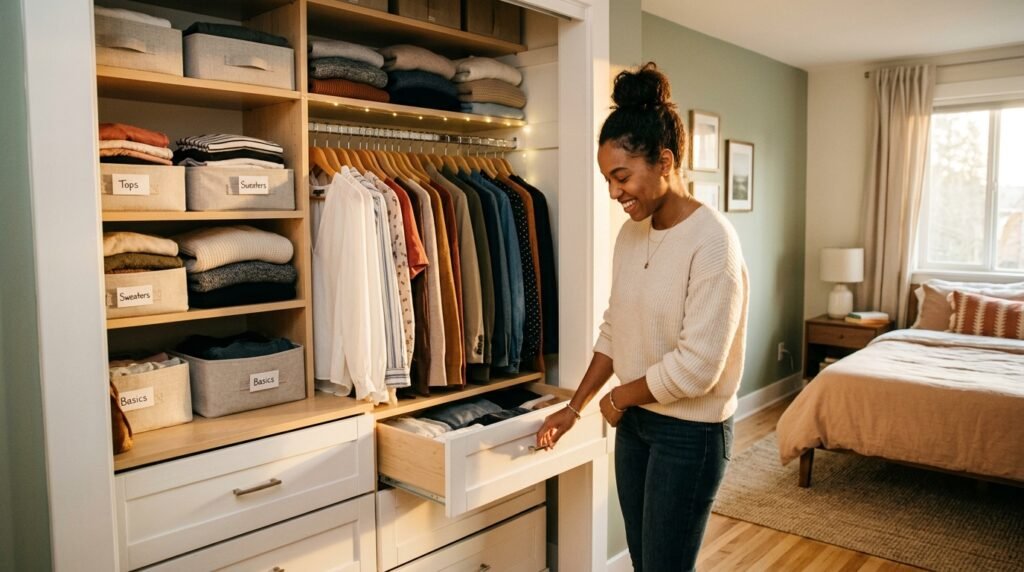
Mastering your personal space completely changes how you approach every single morning of your busy professional life. Implementing these accessible strategies proves that you never need a massive walk-in room to achieve ultimate functional elegance. Small wardrobe organization ideas bedroom upgrades compound rapidly to save you countless hours of frustrating searching every month. I have seen how small changes like these can completely transform a space into a calming, highly efficient sanctuary. Save this post on Pinterest to keep these visual ideas handy during your upcoming weekend decluttering project. Please share this helpful guide with fellow apartment renters today

Amelia leads HavenlyStyle’s editorial vision with a passion for elegant interiors and practical home living. With years of experience in home décor and lifestyle content, she ensures every article is accurate, inspiring, and easy to follow. From timeless decorating ideas to the latest interior design trends, Amelia is committed to helping readers create beautiful, functional spaces while maintaining HavenlyStyle’s trusted and welcoming voice.