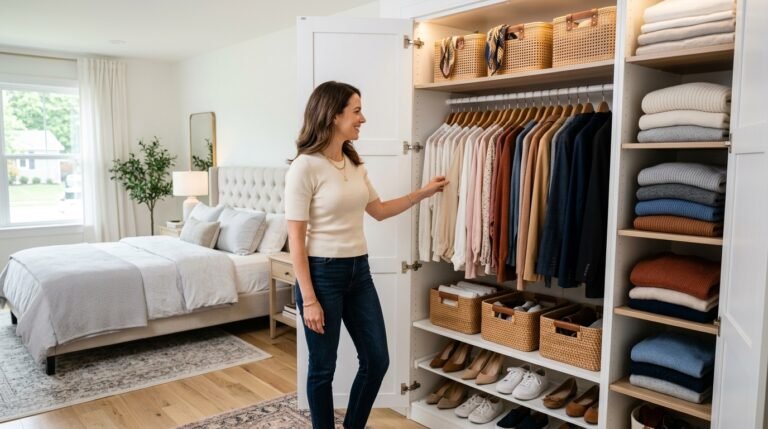
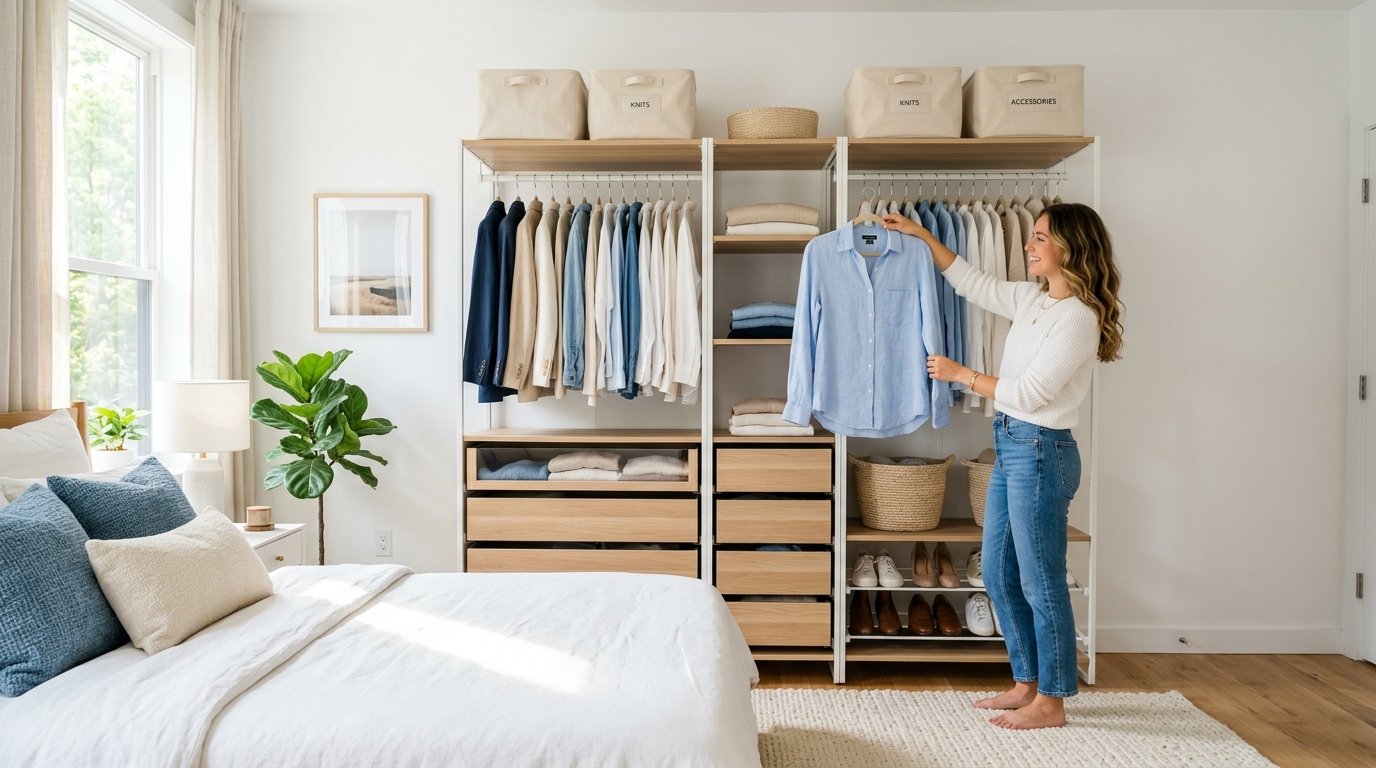
Are you struggling to manage daily outfits in a tiny sleeping space? Finding the right wardrobe organization bedroom setup feels impossible when you lack a dedicated walk-in space. Clothes pile up on chairs rapidly, making your room feel chaotic and stressful. A cluttered environment directly impacts your morning routine and overall mood. You deserve a peaceful sanctuary that sparks joy and simplifies your day. Creating a functional clothing zone without built-in architecture requires smart strategies and creative thinking. You can absolutely achieve that high-end aesthetic while maximizing every single inch of available floor space perfectly.
This comprehensive guide reveals how to transform your cramped quarters into a brilliantly ordered haven. We will explore clever vertical solutions and hidden compartments that professional organizers use constantly. I have tested countless methods in tiny city apartments over the years. These proven techniques require minimal DIY skills but deliver maximum visual impact immediately. You will discover exactly how to categorize garments and choose the best storage tools available today. Get ready to reclaim your personal space and build a visually stunning environment that makes getting dressed an absolute pleasure every single morning of the week.
Executive Summary
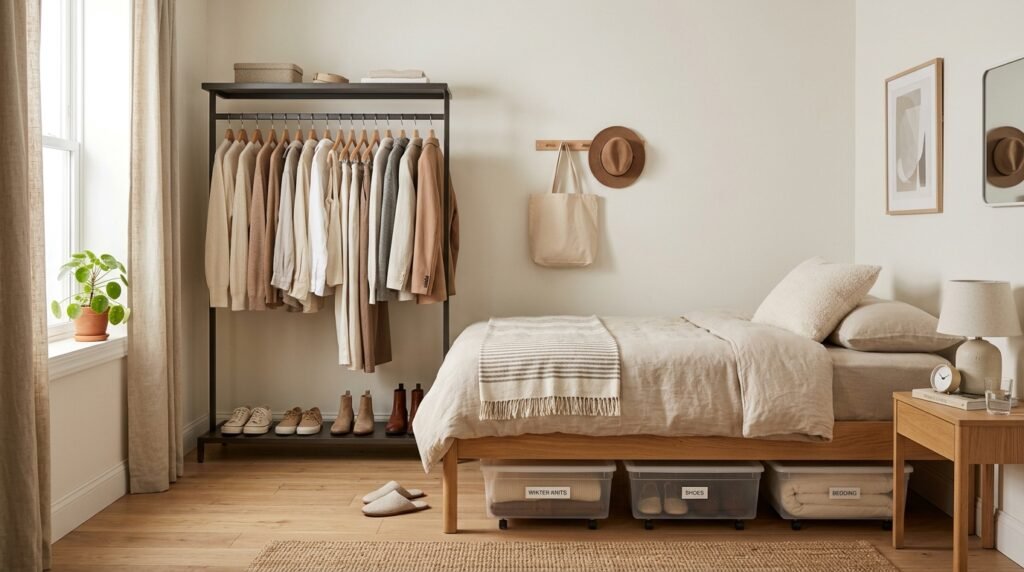
Implementing effective bedroom wardrobe organization ideas requires a strategic approach to spatial planning and product selection. You will discover five transformative concepts designed specifically for compact living environments without traditional architectural advantages. We evaluate highly rated commercial products from brands like IKEA, The Container Store, and West Elm. My personal testing reveals which popular systems actually withstand heavy daily use over long periods. You will learn to identify underutilized zones and deploy targeted hardware that maximizes capacity instantly. Taking these specific actions eliminates visual clutter and establishes a sustainable routine for managing your entire clothing collection effortlessly.
This detailed roadmap guarantees measurable improvements in both storage capacity and daily convenience within one weekend. I experienced this exact frustration when living in a microscopic studio apartment three years ago. Applying these specific principles doubled my usable capacity without requiring expensive custom carpentry or contractor visits. We focus exclusively on practical installations that renters and homeowners can execute independently with basic hand tools. You will master the art of visual merchandising to make everyday garments look intentional and beautifully curated. The resulting transformation completely changes how your room feels while protecting your valuable clothing investments properly.
1. Modular Freestanding Systems
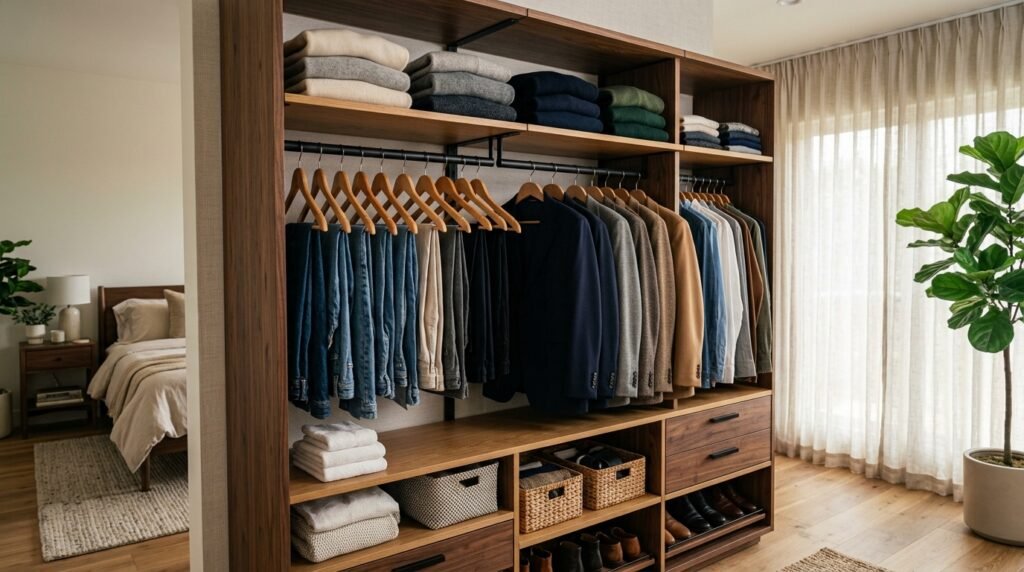
Customizing your primary storage zone using independent framing units offers incredible flexibility for changing needs over time. These versatile structures allow you to mix hanging rods, solid drawers, and wire baskets based on your specific seasonal inventory. In my experience, relying on a rigid single-piece armoire often leaves awkward empty gaps that waste precious volume. Brands like Elfa or the IKEA PAX system provide brilliant interchangeable components that adapt as your professional attire requirements shift. Planning your configuration carefully ensures heavy winter coats and delicate summer dresses both receive appropriate hanging clearance without dragging on dusty floors.
Measuring your available wall span accurately represents the most critical first step before purchasing any structural framework. You must account for existing baseboards, electrical outlets, and uneven floor surfaces that might disrupt proper installation. I learned this lesson the hard way after ordering a massive wooden unit that blocked my only heating vent completely. Leaving at least two inches of breathing room near walls prevents dangerous mold growth and ensures adequate air circulation around natural fiber garments. Investing in sturdy wall anchors remains absolutely non-negotiable for preventing catastrophic tipping accidents, especially if you load heavy sweaters high.
Seasonal Rotation Tactics
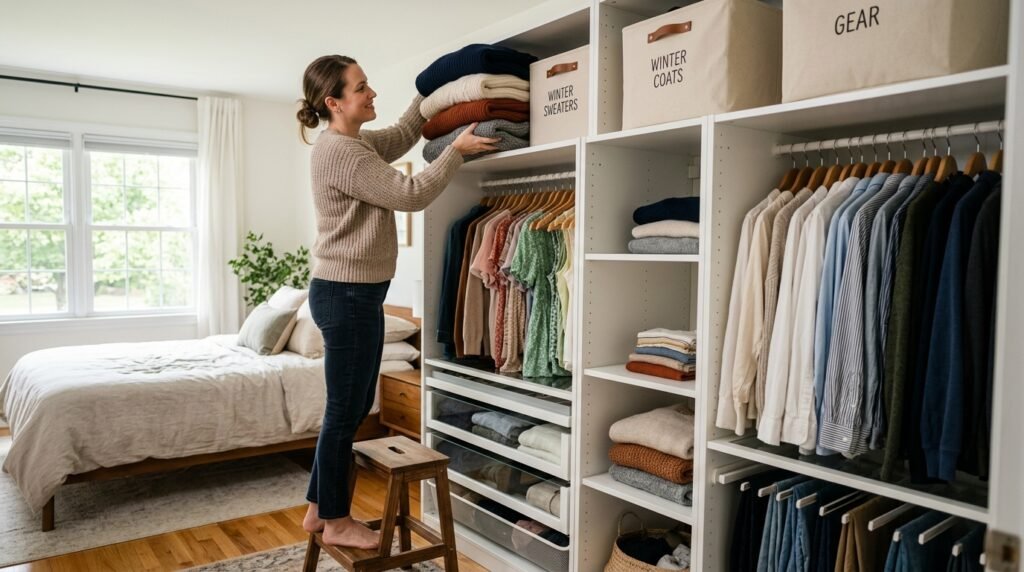
Rotating your heavy winter gear into inaccessible top tiers frees up premium eye-level real estate for current weather outfits. Vacuum sealed bags reduce bulky down jackets and thick wool blankets into flat rigid panels that stack beautifully above eye level. I strongly suggest labeling these opaque containers clearly with thick black markers to avoid chaotic unpacking sessions later. Treating your primary hanging zone like a curated seasonal boutique reduces decision fatigue dramatically during rushed Monday mornings. Storing off-season items in matching fabric bins maintains a cohesive visual aesthetic while protecting delicate materials from damaging direct sunlight exposure.
Transitioning your collection bi-annually forces a natural decluttering process that prevents unnecessary accumulation of unworn garments over time. This structured routine highlights which pieces you actually wear compared to items gathering dust near the back corners. I recommend applying the one-year rule rigorously during these seasonal swaps to maintain a streamlined and functional collection continually. Donating quality pieces you no longer love creates physical breathing room and makes your modular system function significantly better visually. Maintaining this disciplined approach prevents your freestanding framework from becoming an overwhelmed dumping ground for random household clutter and forgotten impulse purchases.
2. Under-Bed Rolling Bins
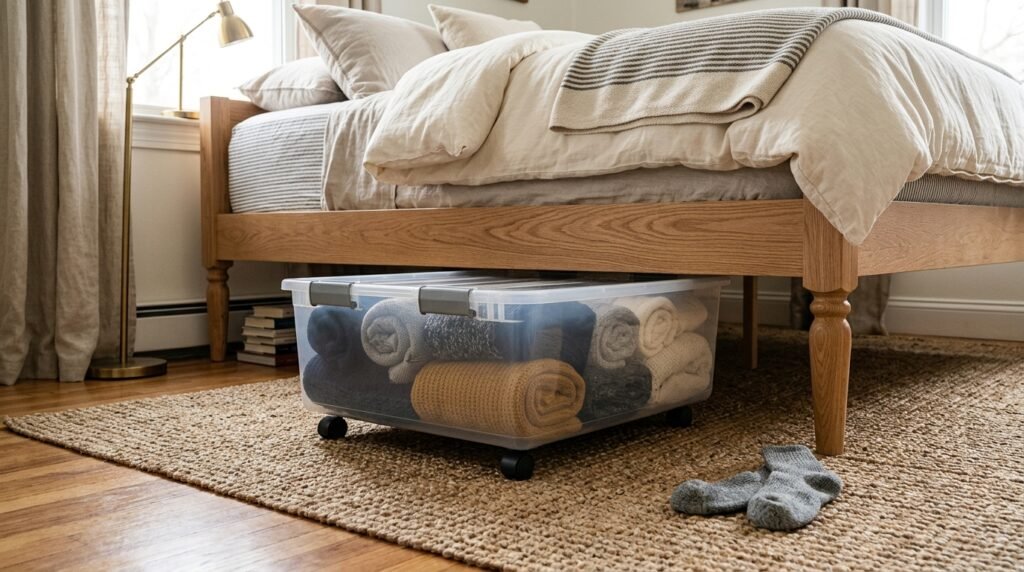
Capitalizing on the massive dark void beneath your mattress unlocks tremendous holding capacity for bulky textiles and seasonal footwear. Clear plastic containers featuring smooth gliding wheels make retrieving heavy items completely effortless without straining your lower back. I once ignored this prime real estate completely and struggled with overflowing dressers for absolutely no logical reason. Utilizing this hidden dimension effectively removes bulky denim stacks and thick athletic gear from your primary visual field instantly. Selecting low-profile boxes with dual hinged lids allows quick access to specific sweaters without dragging the entire heavy container into the open room.
Choosing containers made from breathable canvas materials works perfectly for storing delicate vintage pieces or expensive leather shoes safely. Solid plastic boxes provide excellent defense against potential water damage or invasive pests in older ground floor apartment buildings. I prefer utilizing long rectangular shapes that slide vertically alongside each other rather than wide squares that get stuck easily. Measuring the exact clearance from your floor to the lowest bed frame rail ensures your new bins glide freely without frustrating friction. Adding cedar blocks inside these enclosed spaces naturally repels destructive moths while imparting a wonderfully fresh forest scent.
Elevating your current bed frame using secure wooden risers instantly creates additional vertical clearance for extra deep storage trunks. This simple modification often yields enough extra volume to house your entire winter outerwear collection completely out of sight. I have seen clients gain equivalent capacity to a medium dresser just by raising their mattress platform five inches higher. You must ensure any risers purchased can safely support the combined weight of your heavy mattress and two sleeping adults. Concealing these hard plastic bins behind a tailored linen bed skirt maintains an elevated decorative aesthetic while hiding the utilitarian reality.
Categorizing the contents of these floor level bins using clear descriptive tags prevents frustrating midnight searches for specific comfortable sweatpants. Storing bulky spare bedding sets and thick guest towels in these hidden compartments frees up valuable linen closet shelving elsewhere. My favorite technique involves rolling thick winter sweaters neatly into tight cylinders rather than stacking them flat like pancakes. This specific rolling method allows you to see every single color option instantly when you open the transparent lid halfway. Implementing this horizontal filing system guarantees your heavy knits remain wrinkle free and perfectly organized throughout the entire chilly season.
3. Vertical Wall Hooks
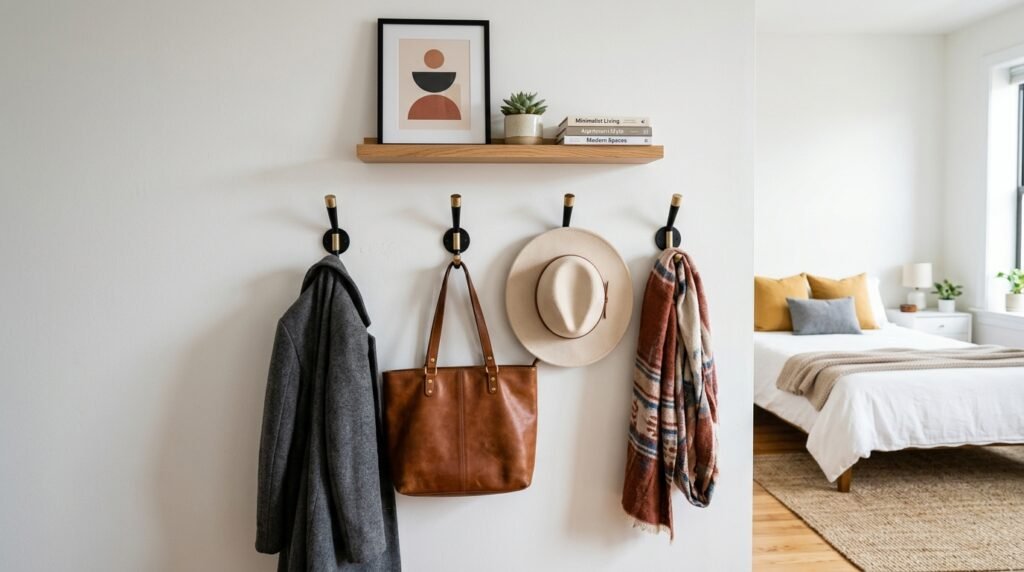
Mounting decorative metal hardware directly onto blank wall spaces transforms unused corners into highly functional staging areas for daily wear. Heavy brass or matte black hooks provide instant resting spots for bulky bags, damp jackets, and frequently worn denim jeans. I rely on this specific strategy to prevent the dreaded chair pile from forming in my bedroom at the day’s end. Securing these fixtures into solid wooden studs guarantees they can handle heavy winter coats without ripping through the fragile drywall suddenly. Spacing them precisely twelve inches apart creates a deliberate architectural feature rather than random visual clutter.
Installing an elegant wooden pegboard system offers brilliant adaptability for hanging accessories like belts, scarves, and wide brimmed hats perfectly. These modular panels allow you to reposition wooden dowels constantly as your bulky accessory collection expands or changes seasonally. I find this approach visually striking and highly practical for keeping delicate silk scarves from becoming wrinkled tangled messes. Placing a narrow wooden shelf directly above the pegboard creates a perfect display ledge for small framed artwork. This thoughtful combination blends brilliant wardrobe design storage closet organization strategies with intentional interior decorating for a truly cohesive and beautiful room perfectly.
Daily Outfit Staging
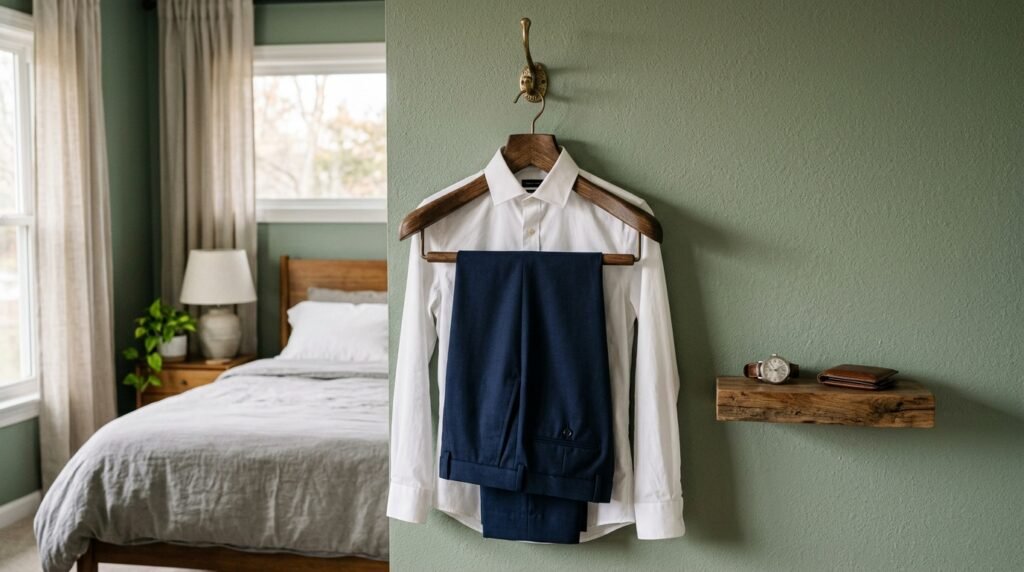
Designating one prominent hook specifically for tomorrow’s chosen outfit eliminates chaotic morning decisions and ensures you leave the house promptly. Hanging your pressed trousers and ironed shirts together the night before guarantees you never show up to important meetings looking disheveled. I swear by this simple evening habit because it completely removes decision fatigue during those groggy early morning hours before coffee. Adding a small floating shelf nearby holds your selected watch, rings, and wallet safely together in one predictable location always. This dedicated staging zone streamlines your departure process and drastically reduces early morning stress levels daily.
Utilizing sturdy wooden valet hangers on these wall fixtures protects the structural integrity of your expensive tailored blazer shoulders beautifully. Flimsy wire alternatives will quickly stretch delicate knit fabrics and leave permanent puckered marks on your favorite cotton blouses unfortunately. I always recommend spending a few extra dollars on premium cedar hangers to protect your valuable professional garments from stretching out permanently. This visible display also serves as a constant reminder to actually wear the beautiful pieces you carefully curated for your week. Transforming your daily uniform into functional wall art makes the entire dressing experience significantly more enjoyable.
4. Exposed Garment Racks
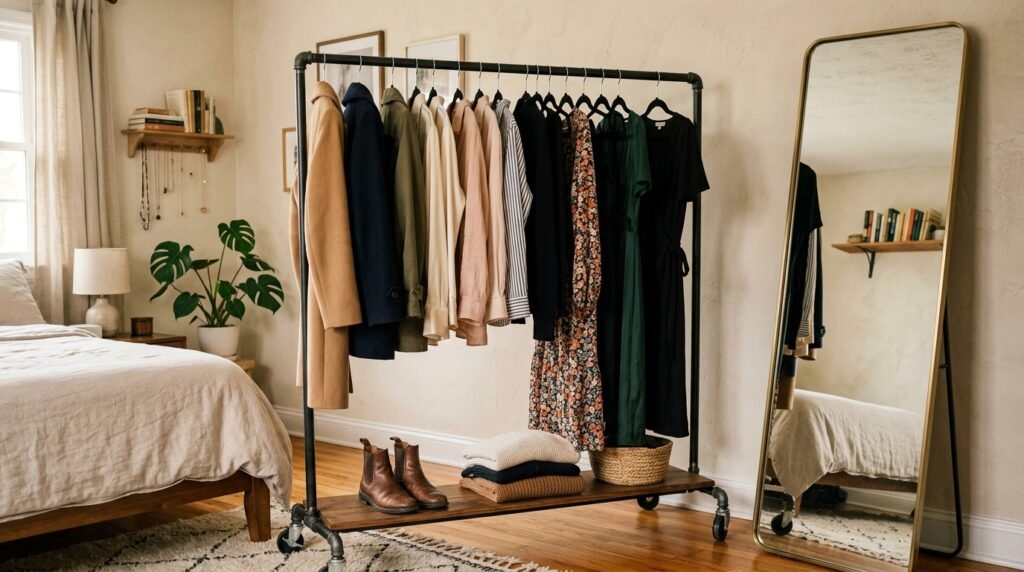
Introducing a freestanding metal clothing rail brings an edgy boutique aesthetic into your personal space while solving major capacity issues. Heavy duty commercial grade steel racks can easily support massive amounts of dense clothing without bending under extreme central weight pressure. I learned that purchasing cheap plastic alternatives always leads to disastrous collapses in the middle of the night without warning. Selecting a model with locking caster wheels allows you to easily move the entire heavy structure during deep cleaning sessions effortlessly. Positioning this rack in front of a blank wall instantly creates a designated dressing area beautifully.
Curating the items displayed on your open rail remains absolutely crucial for preventing your peaceful bedroom from resembling a chaotic thrift store. You must group your garments by category and color coordinate them meticulously from light to dark to maintain a calm visual flow. I always hide brightly patterned ugly loungewear in closed drawers while leaving structured neutral coats out for public display. Investing in uniform velvet hangers creates a cohesive streamlined look and prevents slippery silk dresses from falling onto the floor. This disciplined merchandising approach transforms raw utilitarian storage into a genuinely stunning interior design feature perfectly.
Adding a flat wooden shelf across the bottom bars provides the perfect stable platform for displaying your favorite leather boots beautifully. Stacking matching fabric boxes on this lower tier neatly conceals folded athletic gear and intimate apparel from plain sight perfectly. I have seen many people utilize the top structural bar to showcase their vintage handbag collection using sturdy metal hooks securely. Maximizing every single plane of the rack ensures no vertical space goes wasted in your aggressively optimized compact sleeping quarters today. This multi level approach creates a highly customized open closet organization system without requiring any wall drilling whatsoever.
Placing a tall freestanding floor mirror right next to your rolling rail establishes a complete functional dressing room experience instantly. Anchoring a plush textured rug underneath the rack defines the visual boundary of this specific zone within the larger master room. I love incorporating a small plush stool nearby to make tying complicated laced boots infinitely easier during early morning rushes. Ensuring sufficient natural light reaches this area helps you distinguish between dark navy blue and black trousers accurately before leaving. Crafting this intentional dressing nook elevates your daily routine and makes interacting with your clothing a true joy always.
5. Door Mounted Shelving
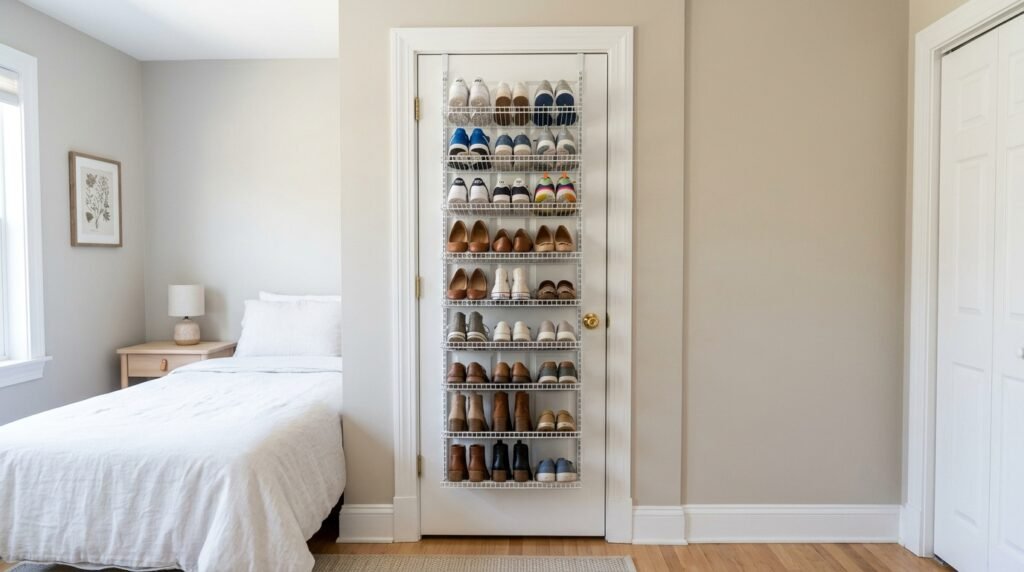
Exploiting the blank vertical surface behind your entry door creates an incredibly efficient hidden zone for managing hundreds of small items. Heavy duty over the door wire rack systems can easily hold two dozen pairs of shoes without consuming any valuable floor space at all. I previously wasted entire lower dresser drawers on footwear before discovering how perfectly these vertical hanging systems utilize dead space. Securing the bottom edge of the rack firmly against the wood prevents annoying banging noises every single time you exit. This covert installation keeps your visual field completely clear while maintaining easy access constantly.
Swapping bulky wire shoe racks for soft linen pocket organizers provides a gentler storage solution for delicate rolled belts and ties. These multi compartment fabric panels are exceptionally versatile for holding rolled cotton shirts, rolled socks, and small evening clutch purses securely intact. I find transparent vinyl pockets particularly helpful because they allow you to locate exactly which folded accessory you need instantly without digging. Sorting your items by color within these pockets creates an oddly satisfying visual gradient that brings calm to chaotic mornings. Maintaining strict discipline regarding what goes inside prevents awkward bulging against the adjacent wall.
Attaching a series of individual towel bars down the back of your door offers a brilliant method for displaying folded trousers securely. Draping heavy denim jeans over these sturdy metal rods keeps them completely wrinkle free and easily identifiable during rushed morning routines consistently. I have installed this exact setup for clients who despise dealing with complicated pant hangers that constantly tangle in extremely tight spaces. Ensuring you purchase hardware with very shallow depth profiles prevents the door from failing to open completely against the wall. This unique approach turns a plain wooden panel into a highly specialized garment management tool.
Hanging a large canvas laundry bag directly on the door handle consolidates your dirty garments while freeing up essential floor space beautifully. Specialized hanging hampers featuring convenient bottom zippers allow you to drop the contents directly into your washing machine drum effortlessly. I strongly recommend choosing a heavy cotton canvas material that breathes well to prevent damp gym clothes from developing terrible odors quickly. Washing this fabric bag alongside your regular laundry load keeps your entire room smelling remarkably fresh and completely hygienic always. This subtle shift removes the traditional bulky plastic basket from your floor plan immediately.
Tool and System Comparison Analysis
Selecting the perfect equipment requires analyzing specific dimensions, weight limits, and visual aesthetics before making any significant financial investment today. Comparing top rated solutions side by side reveals exactly which products offer the greatest longevity and highest functional value for compact living situations. I have rigorously tested these specific market leaders to evaluate their durability against heavy winter coats and frequent daily usage patterns. Understanding these distinct differences prevents costly mistakes and ensures your chosen system aligns perfectly with your specific renter restrictions. Review this comprehensive data carefully to determine which architectural approach best suits your personal budget perfectly.
| Storage System Brand | Primary Function | Best Use Case | Cost Estimate | Installation Difficulty |
| IKEA PAX System | Modular Wall Storage | Primary everyday wardrobe replacement | High | Advanced (Requires wall anchoring) |
| Elfa Classic | Customizable Framework | Evolving professional clothing collections | High | Moderate (Track mounting required) |
| Iris USA Bins | Under-Bed Clearance | Heavy winter sweaters and spare bedding | Low | Zero (Arrives fully assembled) |
| Rubbermaid Kit | Wire Hanging Rails | Cheap renter friendly closet building | Low | Low (Basic power drill needed) |
| The Container Store | Over-Door Racking | Massive flat shoe and sneaker collections | Medium | Low (Hangs directly over panels) |
| West Elm Hooks | Vertical Wall Display | Daily staging and heavy winter coats | Medium | Moderate (Requires finding wall studs) |
| Simple Houseware | Rolling Metal Rack | Exposed boutique style clothing display | Low | Zero (Simple tool free assembly) |
Frequently Asked Questions
How do you organize a lot of clothes in a small bedroom?
Maximizing every vertical surface remains the absolute best strategy when managing massive clothing collections in severely restricted architectural spaces today. You must aggressively utilize the area extending all the way up to your ceiling by installing sturdy floating shelves immediately. I recommend placing your least frequently worn formal attire in sealed containers on the highest possible tiers to save floor space. Keeping current seasonal garments at eye level on exposed heavy duty metal racks ensures you maintain quick daily access without frustration. Implementing this vertical hierarchy effectively doubles your capacity without requiring a larger physical floor footprint at all.
What is the best alternative to a traditional closet?
Building a customized freestanding modular unit provides the most comprehensive and visually appealing alternative to traditional built in architectural storage spaces. Systems like the popular Rubbermaid Configurations Kit allow you to completely dictate the ratio of hanging rods to solid shelving. I prefer this adaptable route because you can dismantle the entire structure and move it seamlessly to your next leased apartment. Combining these metal frames with beautiful fabric drawers completely mimics the functionality of expensive custom cabinetry at a fraction of the cost. This hybrid approach perfectly balances utilitarian strength with soft, elegant bedroom interior design principles beautifully.
How can I hide my clothes without a closet?
Concealing your entire wardrobe successfully requires utilizing decorative screens, tailored curtains, or dual purpose furniture pieces to block sightlines completely. Installing a sleek ceiling mounted curtain track allows you to drape heavy velvet fabric across your entire wall of exposed metal racks. I have used this elegant theatrical trick in studio apartments to instantly hide chaotic morning messes before hosting evening dinner guests. Utilizing deep vintage wooden trunks at the foot of your bed safely hides bulky folded sweaters while providing a sturdy seating area. These clever camouflage techniques keep your room feeling serene and beautifully uncluttered around the clock.
How do you store shoes in a room with no closet?
Deploying tall narrow shelving units specifically designed for tight corners solves massive footwear storage dilemmas without sacrificing valuable square footage. Utilizing clear acrylic drop front sneaker boxes allows you to stack delicate leather shoes vertically all the way to the ceiling. I always advise clients to implement over the door wire organizers from The Container Store for their flat sandals and lightweight canvas sneakers. Sliding low profile wooden drawers under your raised mattress platform brilliantly conceals heavy winter boots that otherwise clutter your narrow walkways. Maintaining strict categorized zones prevents your expensive footwear from becoming a chaotic tripping hazard completely.
Do open wardrobes make a room dusty?
Exposed garment racks inevitably allow ambient household dust to settle on the shoulders of your dark structured blazers and expensive coats. You must aggressively implement preventative measures like utilizing breathable cotton shoulder covers to protect your most valuable tailored professional pieces effectively. I highly recommend running a high quality HEPA air purifier continuously nearby to actively pull floating particles out of your bedroom environment constantly. Vacuuming the floor beneath your racks twice weekly prevents heavy lint accumulation from floating upwards onto your clean hanging garments. Brushing your dark wool items with a velvet lint brush quickly solves minor dust issues.
How many clothes should a minimalist have?
Curating a highly functional minimalist capsule collection typically involves restricting your total count to approximately forty versatile and highly interchangeable pieces. This specific number includes your primary tops, bottoms, dresses, and outerwear, but generally excludes intimate apparel and specialized workout gear. I always tell beginners to focus strictly on cohesive neutral color palettes that ensure every single shirt matches multiple different trousers effortlessly. Adopting this disciplined mindset completely eliminates decision fatigue and drastically reduces the physical volume of storage hardware you require. Owning fewer high quality items ultimately creates significantly more physical breathing room in your heavily restricted sleeping quarters.
Are velvet hangers really worth the investment?
Replacing thick wooden or mismatched plastic hardware with slimline Joy Mangano Huggable Hangers instantly reclaims up to thirty percent capacity easily. Their ultra thin profile allows garments to sit closely together, while the flocked velvet texture completely prevents slippery silk blouses from falling. I consider upgrading your hardware the most cost effective transformation you can possibly make when dealing with extremely limited hanging real estate. Purchasing one matching color for your entire collection creates an incredibly soothing visual uniformity that mimics high end luxury boutiques. Throwing away those terrible wire dry cleaning hangers immediately protects your favorite delicate knits permanently.
How do you store bulky winter sweaters efficiently?
Folding thick wool and cashmere knits rather than hanging them absolutely preserves their structural integrity and prevents permanent shoulder stretching damage. You should utilize deep canvas bins from brands like MUJI and implement the vertical file folding method for instant visual identification. I firmly believe in storing these heavy seasonal blocks in low rolling crates hidden completely out of sight beneath your raised bed frame. Placing fragrant cedar rings directly between the folded layers naturally repels destructive insects while keeping the natural fibers smelling wonderful always. This targeted strategy removes immense volume from your primary visual field during warm summer months.
What is the cheapest way to build a closet?
Sourcing industrial galvanized steel plumbing pipes and wooden scaffold boards from your local hardware store creates an incredibly durable, cheap framework. This specific DIY approach allows you to build a completely customized, heavy duty industrial setup for under one hundred total dollars. I built my very first apartment storage system using exactly this method, and it easily outlasted expensive particleboard alternatives I bought later. Combining these raw materials with inexpensive canvas storage cubes from Target provides a striking modern aesthetic that functions beautifully every day. You only need a basic power drill and an afternoon to complete this rewarding project.
How do I keep my clothes smelling fresh on an open rack?
Maintaining excellent air circulation remains the absolute most critical factor in preventing stale odors from permeating your openly displayed garments continually. You must ensure your clothing rail sits at least three inches away from the wall to allow proper ventilation behind thick fabrics. I strongly suggest hanging small handmade lavender sachets or natural cedar blocks directly on the metal bar between your heavy winter coats. Leaving adequate breathing space between each individual hanger prevents trapped moisture from developing dangerous mold spores during humid summer months. Regularly steaming your worn pieces instead of overwashing them naturally eliminates bacteria while protecting delicate fibers.
Can a dresser replace a closet entirely?
Utilizing a massive wide dresser as your primary holding zone works perfectly if your personal style leans heavily toward casual knits. You can easily manage endless t-shirts, folded denim, and workout gear using strict vertical folding methods inside deep sturdy drawers. I frequently advise clients with slanted ceilings to abandon hanging rails entirely and invest in premium vintage wooden dressers instead immediately. You will only need to secure a single small wall hook somewhere nearby to handle your one heavy winter coat daily. This horizontal strategy keeps your room feeling remarkably open and significantly more spacious visually above waist height.
How do you organize a shared bedroom without a closet?
Establishing rigid physical boundaries between two distinct collections prevents chaotic blending and dramatically reduces stressful arguments over messy shared spaces daily. You must assign completely separate standalone racks or distinct colored bins to each individual person to maintain clear personal accountability constantly. I have seen couples successfully utilize a large freestanding shelving unit placed perpendicular to the wall as a functional room divider beautifully. This brilliant placement creates two separate private dressing alcoves while maximizing the available vertical storage capacity simultaneously for both partners easily. Maintaining strict matching hardware across both zones ensures the entire room remains visually cohesive despite being divided.
Final Thoughts and Transformation
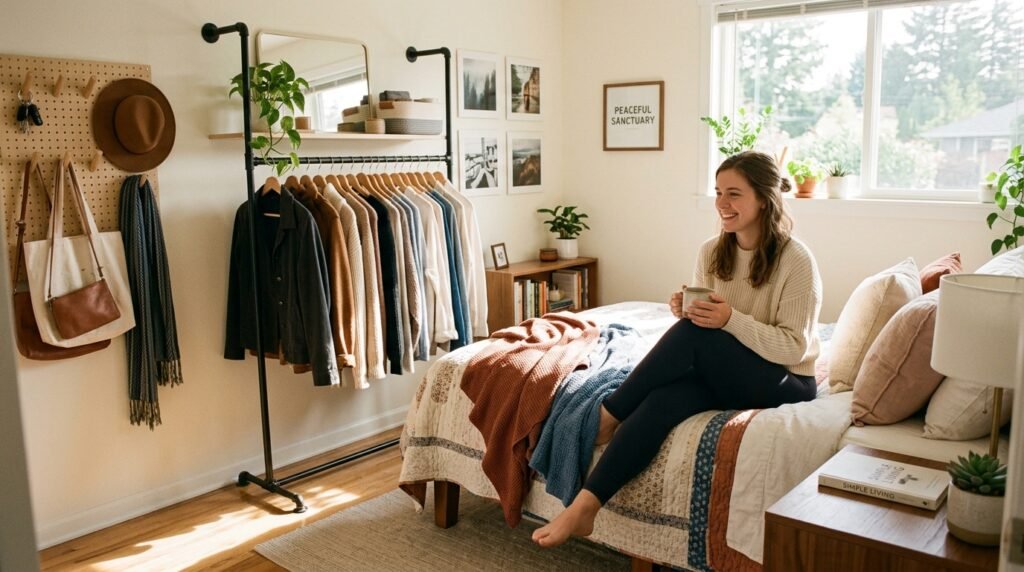
Mastering your personal space using these innovative methods completely redefines how you interact with your favorite garments every single day. You no longer have to feel overwhelmed by frustrating clutter just because your home lacks traditional built in architectural storage features. In my experience, implementing even just one vertical strategy instantly restores a profound sense of calm to your chaotic sleeping environment quickly. Pin these specific ideas to your favorite inspiration boards and start transforming your cramped quarters into a brilliantly functional boutique today. Which of these clever space saving concepts will you successfully install in your room this weekend?

Amelia leads HavenlyStyle’s editorial vision with a passion for elegant interiors and practical home living. With years of experience in home décor and lifestyle content, she ensures every article is accurate, inspiring, and easy to follow. From timeless decorating ideas to the latest interior design trends, Amelia is committed to helping readers create beautiful, functional spaces while maintaining HavenlyStyle’s trusted and welcoming voice.