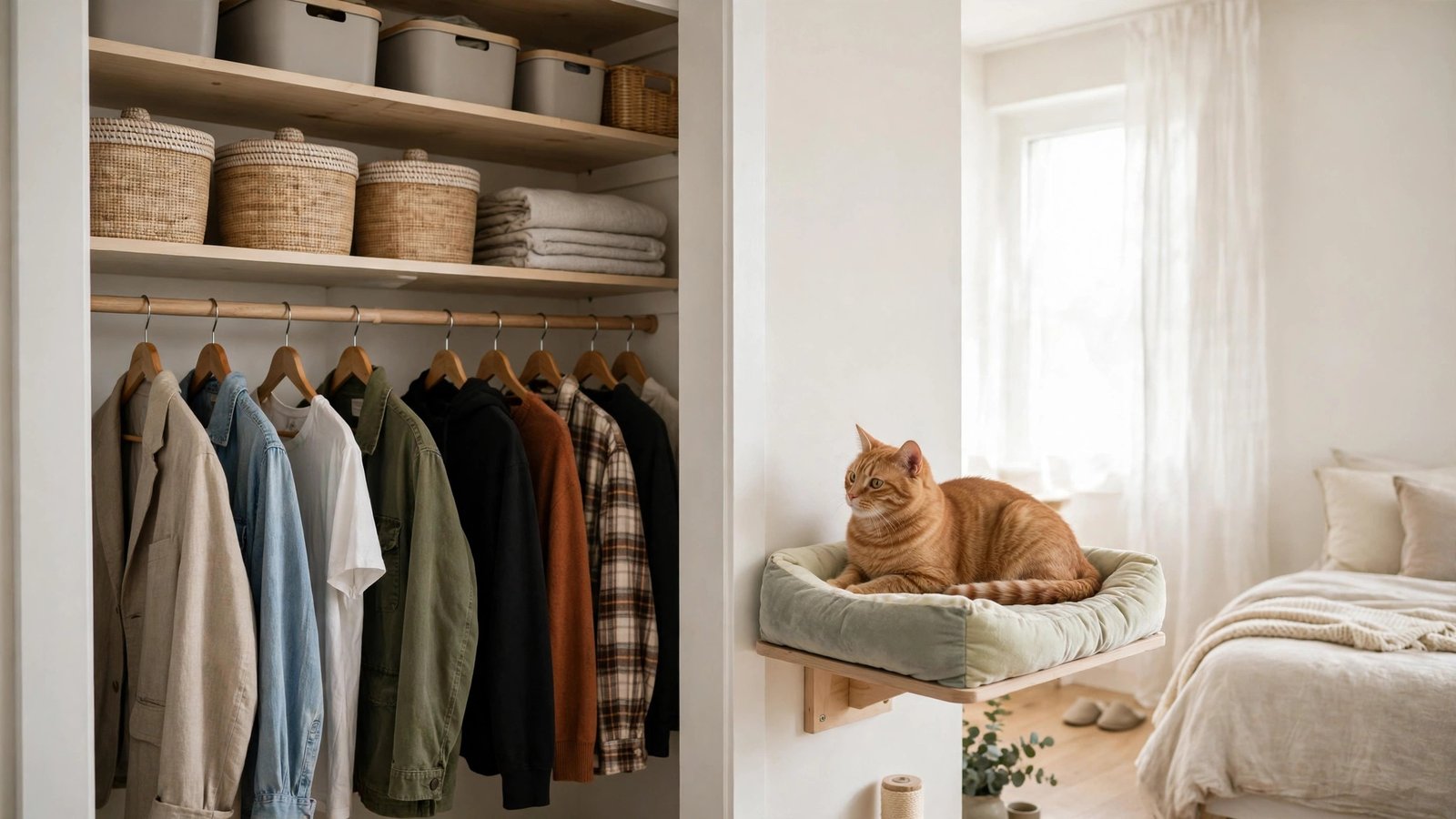
An open closet and a cat are a combination that sounds charming until you live with it. I have helped dozens of renters set up open closets — the kind with no door, just an open frame, a rod, and a few shelves — and I have heard the same story over and over from cat owners. You fold a stack of sweaters, turn around, and there is your cat asleep right in the middle of them, covered in fur and completely unbothered. Your favorite blazer comes out with a snag. A scarf you loved disappears into a game of chase under the bed.
Here is the thing: your cat is not being bad. An open closet is basically a cat paradise. It is warm, it smells like you, it has soft things to sleep on, high shelves to survey from, and dangly things to bat at. If you want your clothes to survive, you do not need to fight your cat’s instincts. You need to design around them.
Every idea below is deposit-safe and fully removable. Nothing here requires drilling, painting, or permanently changing your closet, and nothing here punishes your cat. The goal is simple: your clothes stay clean, fur-free, and intact, and your cat still gets to be a cat — just not inside your wardrobe.
Executive Summary
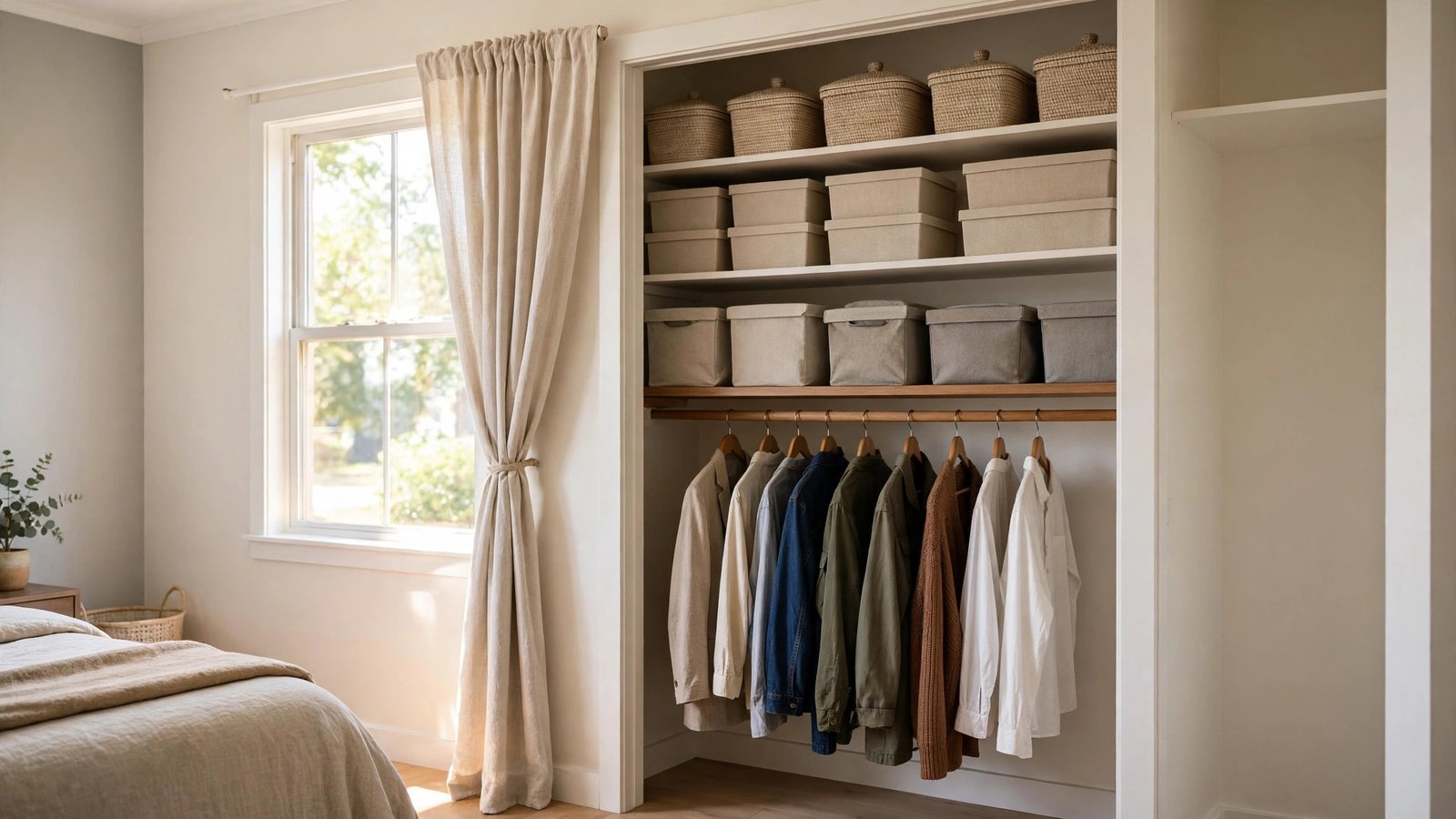
- An open closet invites cats because it is warm, soft, high, and full of dangly things. Pet-proofing means closing off access and removing the temptations, not scolding the cat.
- A tension-rod curtain is the single highest-impact fix: it closes a doorless closet in minutes, costs very little, and comes down clean on move-out day.
- Lidded bins, zippered garment bags, and closed shoe storage beat open baskets every time, because a lid is the one thing a cat cannot sleep on or dig through.
- Move delicates high, box up dangly accessories, and use a lidded hamper, because the bottom two feet of an open closet are prime cat territory.
- Give your cat a better option right next to the closet — a perch, a bed, and a scratching post — and most cats will choose it over your sweaters.
- Every idea below costs roughly $10 to $80, installs in under an hour, and leaves no trace when you move out.
1. Close It Off With a Tension-Rod Curtain
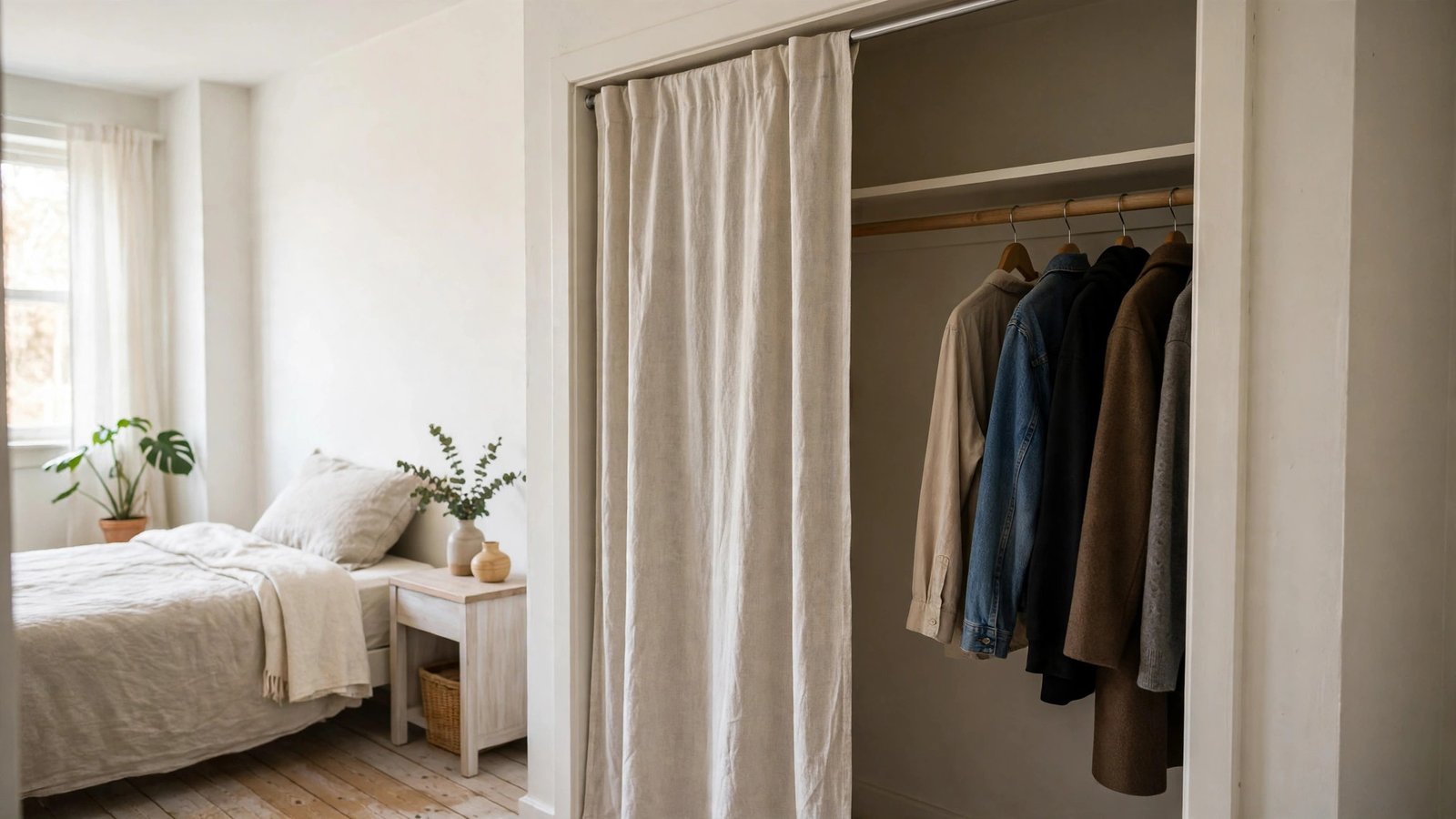
An open closet has no door, which means your cat has a standing invitation. A curtain on a tension rod is the fastest, cheapest way to revoke that invitation, and it is the first thing I suggest to every cat-owning renter with a doorless closet.
This works so well for renters because a tension rod grips the closet frame with pressure alone. No screws, no holes, no landlord conversation. When you move out, you twist it loose and the closet looks exactly like it did on move-in day. It also makes the whole bedroom look more finished, which is a nice bonus.
I have personally seen a simple curtain end a months-long war between a renter and her two cats in a single afternoon. The cats grumbled for a day, then found the sunny windowsill instead.
Here is how to do it:
- Measure the width of your closet opening at the very top of the frame, where the rod will sit. Measure twice, because older frames are rarely perfectly square.
- Buy a sturdy tension rod rated for curtains, not a flimsy shower rod, and a curtain panel slightly wider than the opening so it hangs in soft folds.
- Twist the rod into place inside the frame, as high as you can get it, so the curtain covers the full opening.
- Hem or clip the curtain so the bottom just brushes the floor. A curtain that pools on the floor becomes a new cat toy, so keep it tidy.
- Choose a smooth, tightly woven fabric rather than a loose knit or fringe, so claws do not catch and pull threads.
Approximate cost: $15 to $40.
2. Swap Open Baskets for Lidded Bins on Every Shelf
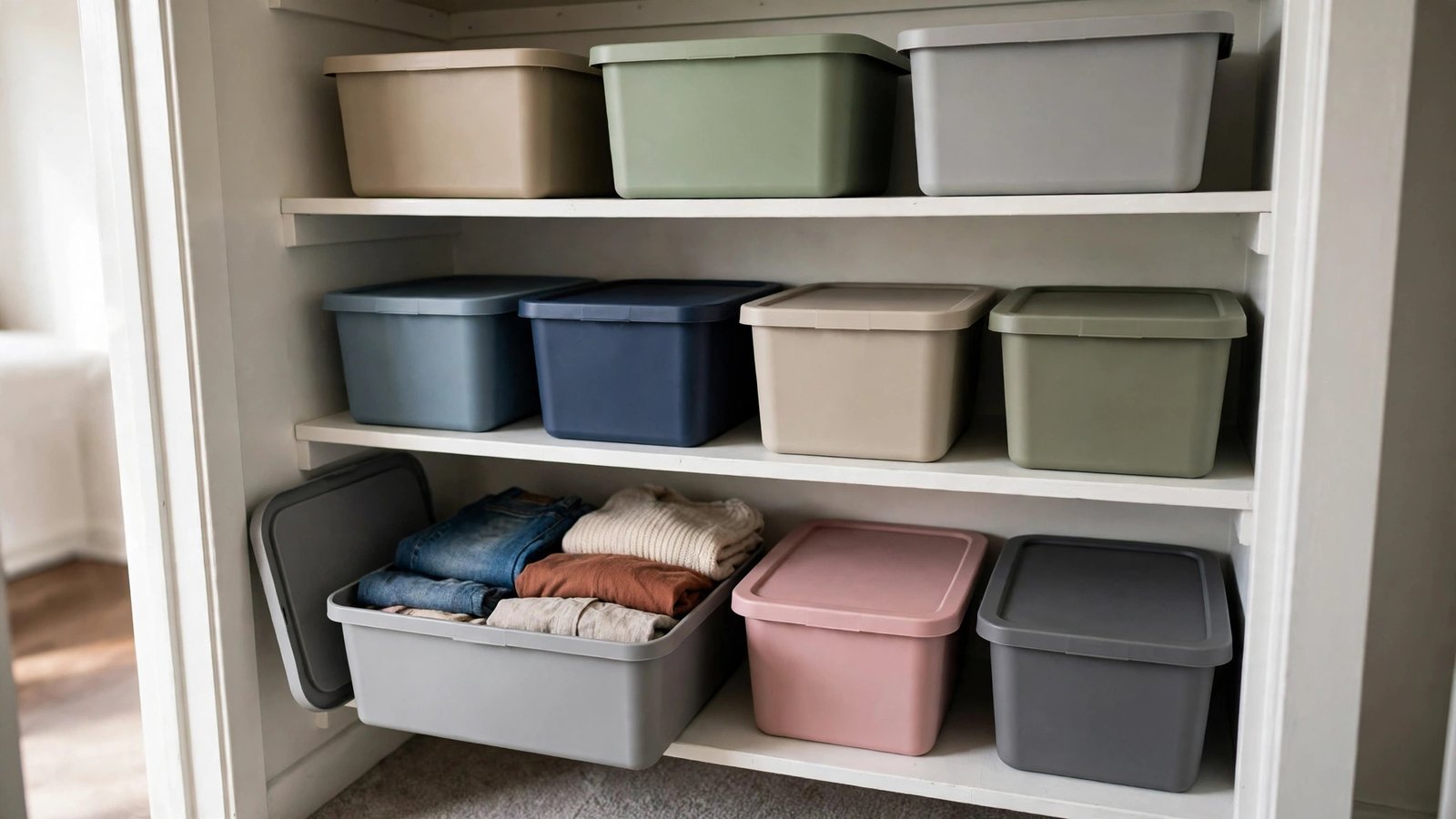
Open baskets are cat magnets. To a cat, an open basket of folded sweaters is a bed that smells like you, and it will be claimed within hours. Lidded bins change the equation completely, because a flat lid is not a bed, and a closed bin is not a toy box.
This is a renter favorite because bins are furniture, not fixtures. They move with you, they need no installation, and they protect your clothes from fur, dust, and the occasional hairball incident. Clear bins work, but solid ones work even better, because your cat cannot see the soft things inside and lose interest faster.
I have noticed that renters who switch to lidded bins stop finding fur on their folded clothes almost immediately, which tells you everything about where the fur was coming from.
Here is how to do it:
- Measure each shelf’s height, depth, and width, and buy bins that leave about an inch of clearance so you can slide them out easily.
- Put folded clothes, underwear, and anything soft and nestable into bins with snapping or hinged lids, not open-top baskets.
- Label each bin with a removable clip-on tag, not a sticker that leaves residue on the bin or the shelf.
- Keep the heaviest bins on the lowest shelf and the lightest on top, so nothing topples when you pull one out.
- If a bin lid warps or will not close flat, replace the bin. A lid that gaps is an invitation a curious paw will accept.
Approximate cost: $25 to $60 for a set.
3. Protect Special Pieces in Zippered Garment Bags
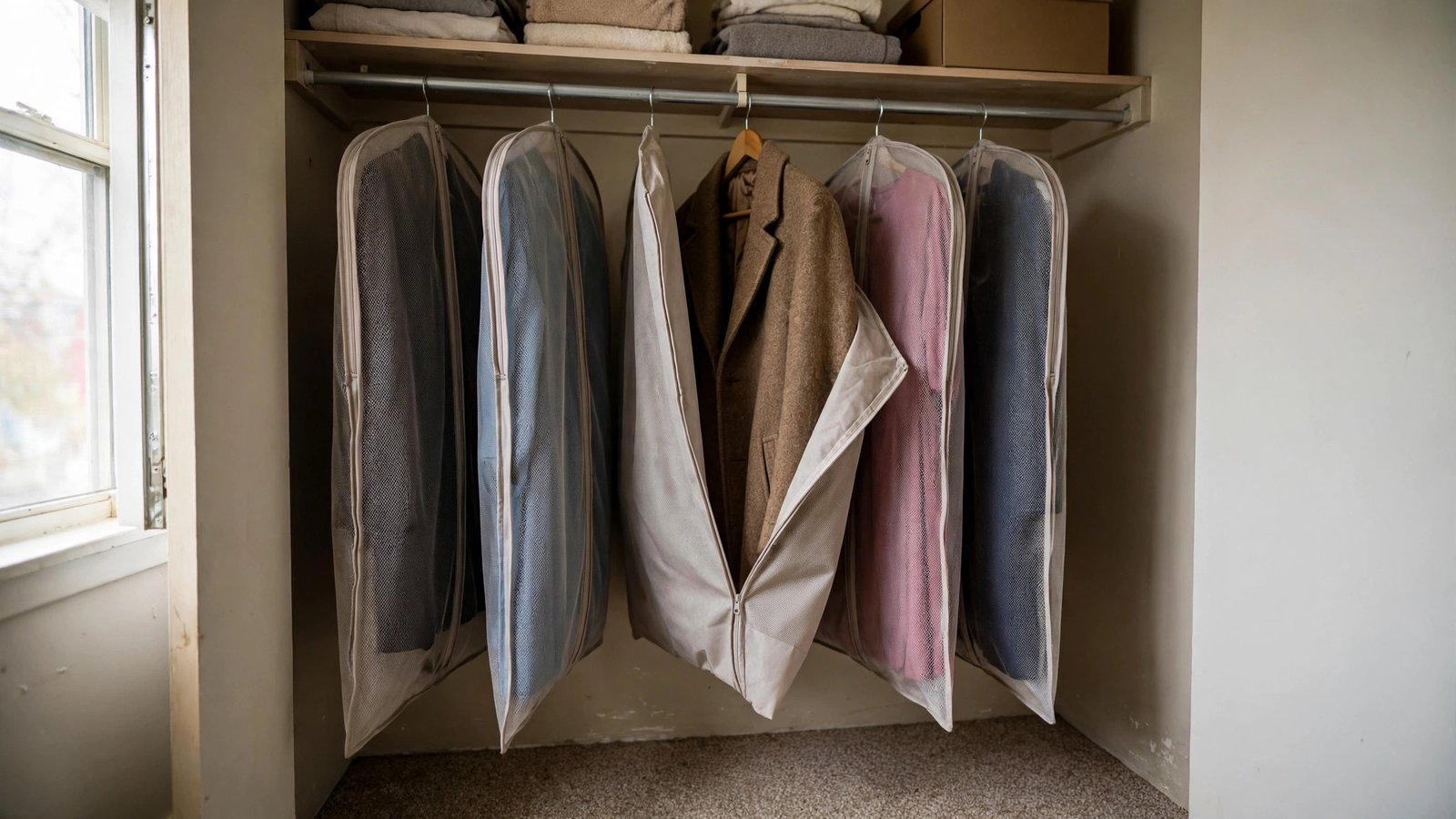
Some clothes cannot survive a cat, no matter how tidy the closet is. A wool coat, a silk blouse, a suit you wear to interviews — one kneading session with claws out, and the fabric is snagged for good. Zippered garment bags are the answer, because a cat cannot knead what it cannot reach.
Renters love this one because it costs almost nothing and requires zero installation. The bags hang on your existing rod, they fold flat when you move, and they keep out dust and fur at the same time. Clear-front bags are handy, because you can see what is inside without unzipping and re-exposing the garment.
I have personally seen a renter save a vintage wool coat this way after her cat had already claimed it as a scratching post twice. The third time, the coat was in a bag, and the cat moved on to the actual scratching post.
Here is how to do it:
- Group your most vulnerable pieces: wool, silk, velvet, anything with loose weave or embellishment.
- Buy zippered, breathable garment bags, not plastic dry-cleaning bags, which trap moisture and can damage fabric over time.
- Hang one garment per bag where possible, so clothes are not crushed together inside the bag.
- Zip the bag fully closed every time. A bag left half-open is just a tent with a cat door.
- Store the bags on the upper rod or the least-accessible section of the closet, away from the shelves your cat can jump to.
Approximate cost: $12 to $30 for a multi-pack.
4. Roll In a Covered Garment Rack or Freestanding Wardrobe With Doors
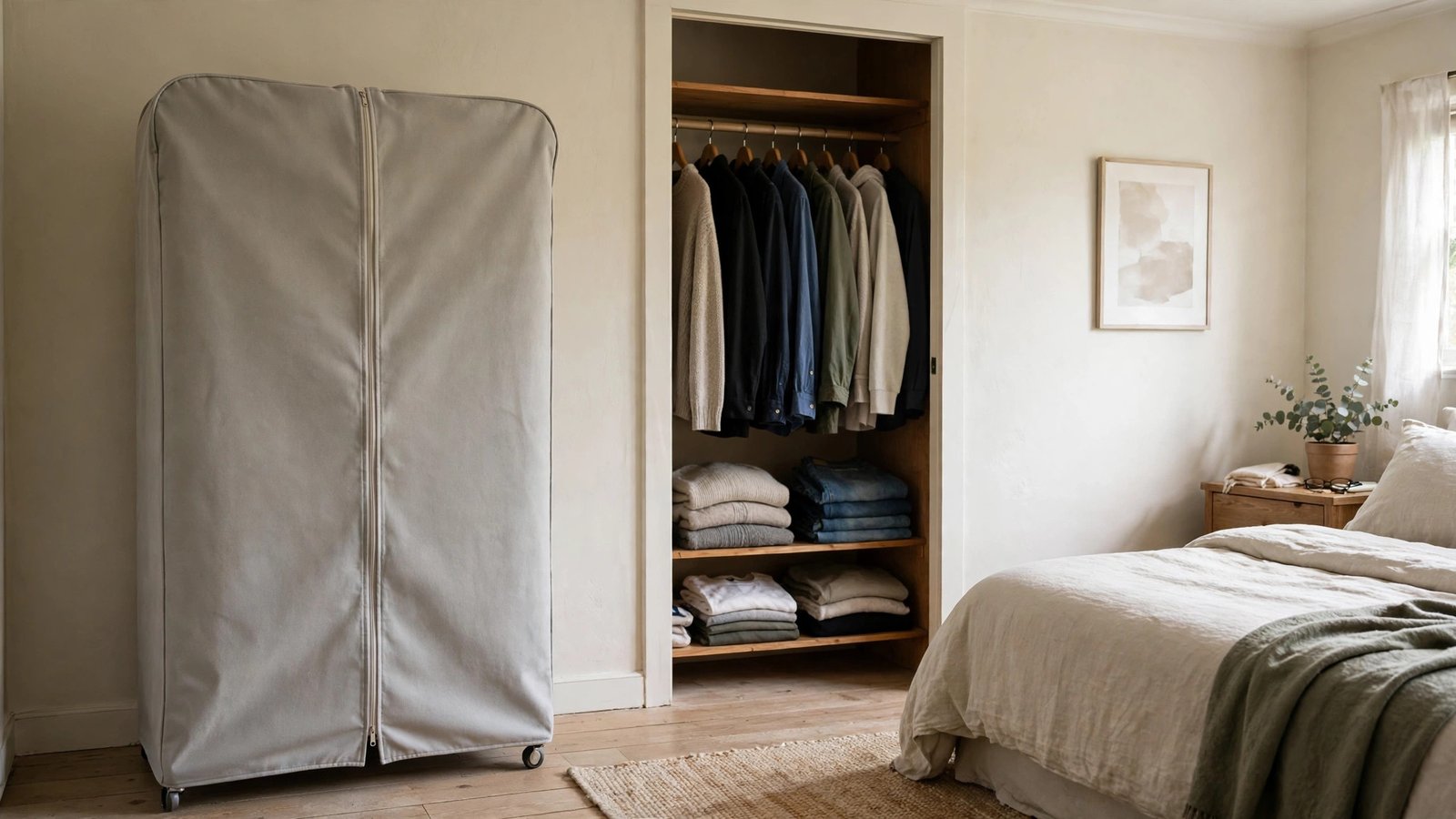
Sometimes the open closet itself is the problem, and no amount of bins will fix it. In that case, bring in your own closed storage: a garment rack with a zippered fabric cover, or a freestanding fabric wardrobe with doors. Your clothes live inside a closed box, and your cat lives outside it.
This is fully renter-safe because the piece is furniture. It needs no screws in the wall, it moves with you to the next apartment, and it can sit in front of or beside the open closet to effectively give it doors. A covered rack is also a great overflow solution when the closet is small and the cat has claimed the top shelf.
I have helped renters use a covered rack as a “cat-free zone” for their work clothes, while everyday clothes stay in the open closet. The work clothes stay pristine, and the cat keeps the rest of the closet, which is a fair trade.
Here is how to do it:
- Measure the space where the rack or wardrobe will stand, including ceiling height, so the cover does not brush a light fixture or a sloped ceiling.
- Choose a rack with a full zippered cover that reaches the floor, or a fabric wardrobe with doors that latch or zip shut. Partial covers that leave the bottom open will not stop a determined cat.
- Put your most fur-sensitive clothes inside: dark fabrics, work clothes, anything you wear to the office.
- Keep the cover zipped closed. A rack left open is just a second open closet.
- Place the rack where you can reach it easily in the morning, or it will not get used and the clothes will migrate back to the open shelves.
Approximate cost: $40 to $80.
5. Hang Delicates High, Out of Paw Range
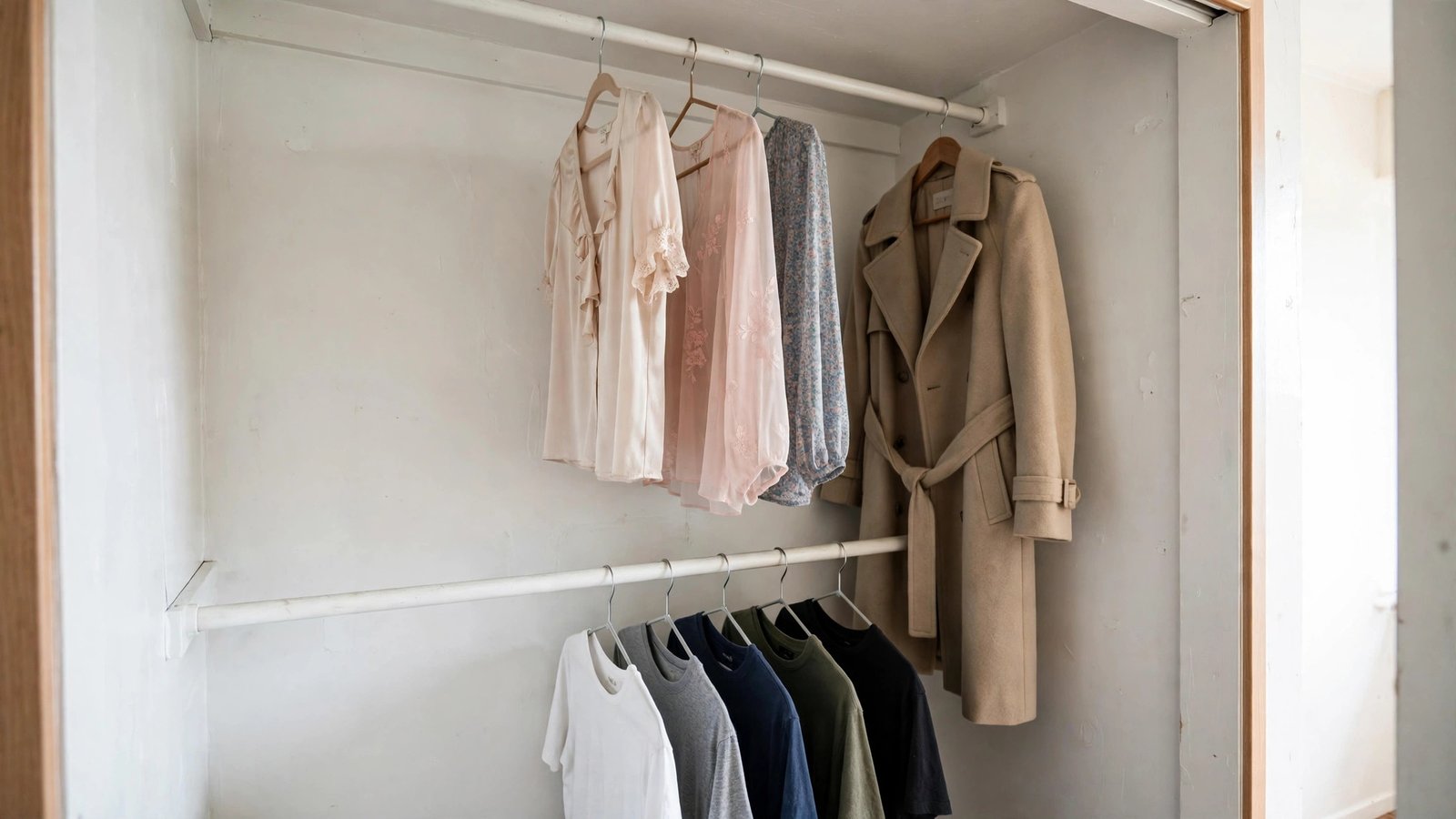
Cats are climbers, but they are also opportunists. The clothes that get destroyed are almost always the ones hanging at cat height: hems that dangle within batting range, sleeves that swing when batted, and anything on the lowest rod. Moving delicates to the highest rod takes them out of the game.
This works for renters because it uses the closet you already have. No purchase, no installation, just a smarter arrangement. Anything above about five feet is out of reach for most cats from the floor, and if the shelf above it is blocked, they cannot get a launching pad either.
I have noticed that renters who move their good clothes up and their everyday clothes down see the damage stop almost overnight, because the cat can only reach the t-shirts, and t-shirts can take it.
Here is how to do it:
- Reserve the highest rod in your closet for delicates, dark fabrics, and anything you cannot afford to have snagged.
- Move everyday clothes, t-shirts, and sturdy denim to the lower rod, where a little batting does no real harm.
- Keep the shelf directly above the high rod clear of anything your cat could stand on to reach higher, or block it with a lidded bin.
- Use slim, non-slip hangers so garments do not slide off the rod when bumped.
- If your closet has only one low rod, add a second tension rod higher up for the delicates, which is a no-drill fix that takes five minutes.
Approximate cost: $0 to $25 for a tension rod.
6. Use a Lidded Hamper, Because Cats Nap in Laundry
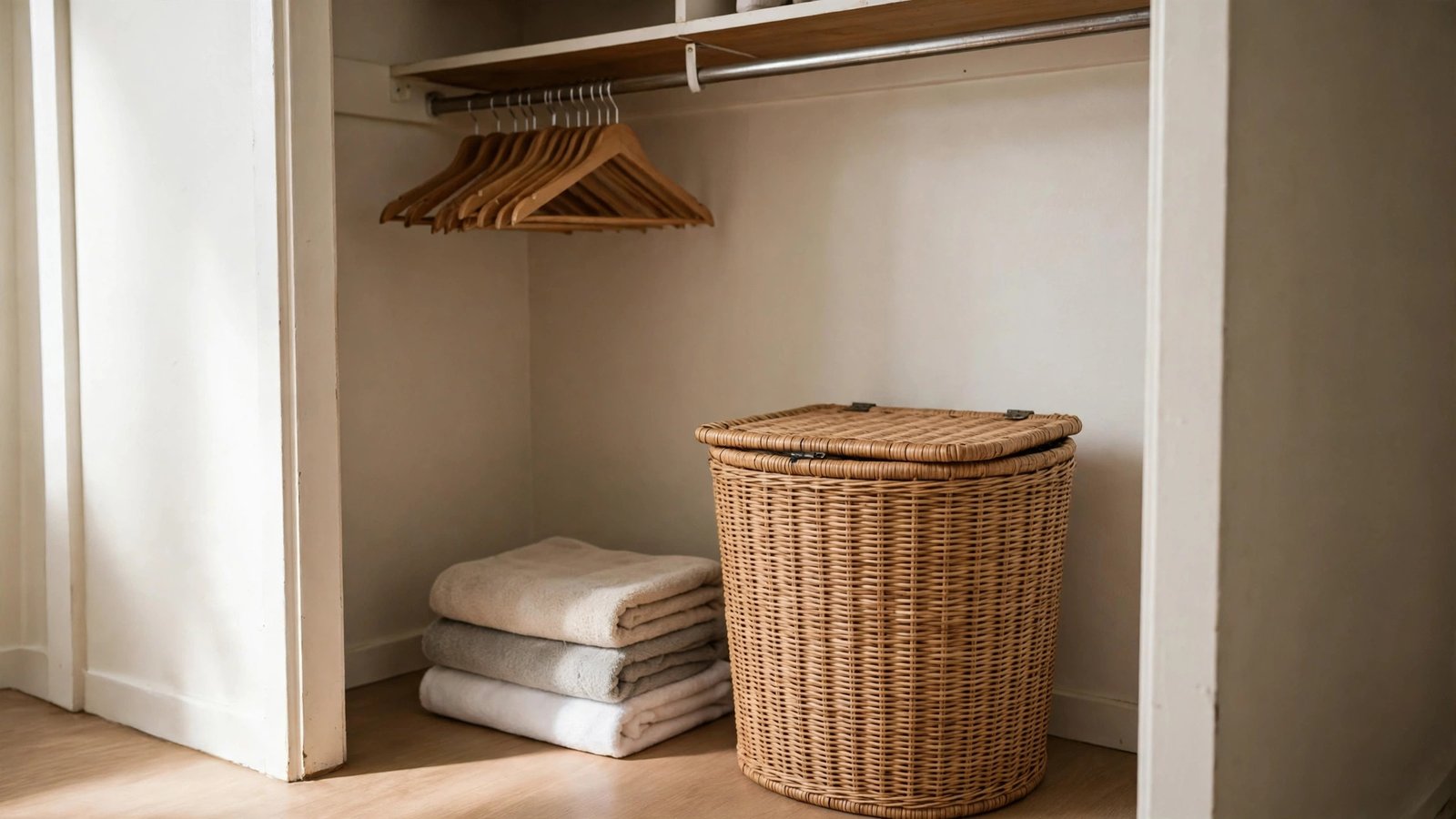
Every cat owner knows this one. A pile of dirty laundry is the single most attractive sleeping spot in a bedroom, and an open hamper in an open closet is a five-star hotel. The problem is not just the fur. Clothes that sit in a cat-napped pile come out smelling like a litter box, and delicates get kneaded and snagged before they ever reach the wash.
A lidded hamper fixes this completely, and it is one of the easiest wins on this list. The lid keeps the cat out, keeps the smell in, and keeps your dirty clothes actually dirty in the normal way rather than the cat way.
I have personally seen renters go from washing everything twice to washing once, just by switching to a hamper with a lid that latches. The cat, meanwhile, was perfectly happy with the clean laundry basket it stole instead, which is a separate problem.
Here is how to do it:
- Replace any open hamper or laundry basket in the closet with a hamper that has a hinged or latching lid.
- Choose a lid that stays shut under a cat’s weight. A lightweight flip lid that a cat can nose open will not hold up for long.
- Keep the hamper inside the closet rather than beside the bed, so the laundry smell stays contained and the cat has one less target.
- Empty it on laundry day before it overflows, because an overfull hamper is a hamper whose lid will not close.
- If your cat has already claimed the hamper, wash it out with a pet-safe cleaner before switching, so the old scent does not draw the cat back.
Approximate cost: $20 to $45.
7. Box Up Accessories, Because Dangly Things Are Cat Toys
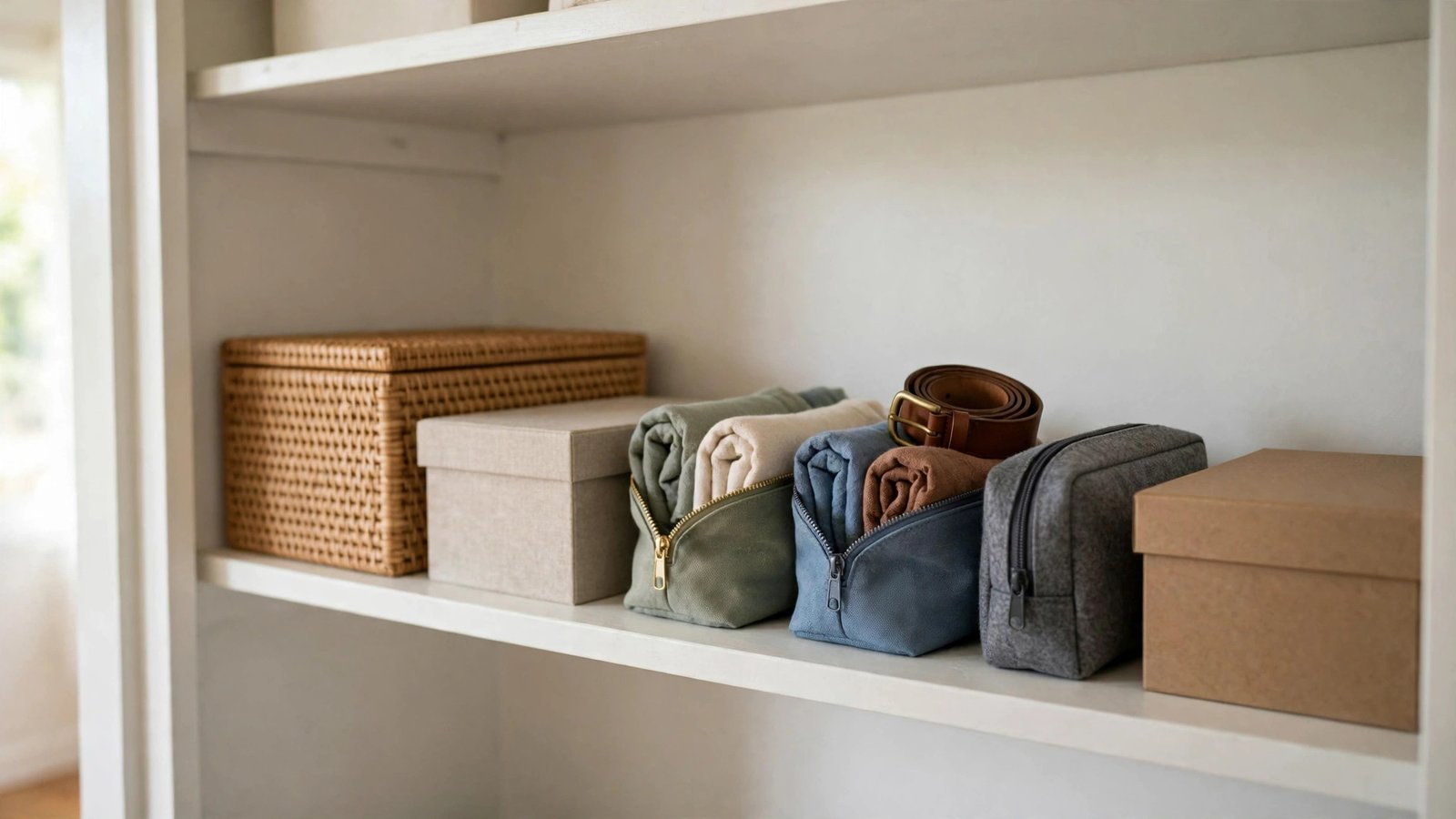
Scarves, belts, necklaces, and ties hanging on hooks or draped over a rod are, to a cat, the greatest toys ever invented. They dangle, they swing, they make noise, and they are at perfect batting height. They also end up on the floor, tangled, chewed, or lost under the bed.
Worse, dangling cords and chains are a real safety hazard. A cat that gets tangled in a necklace or a belt loop can panic and injure itself, so this idea is about your cat’s safety as much as your accessories. Closed boxes and lidded trays keep everything safe, visible, and fur-free.
I have helped dozens of renters move their accessories into boxes, and the ones who do it always tell me the same thing: they can actually find their belts now, because the belts are no longer under the dresser.
Here is how to do it:
- Take every dangling scarf, belt, necklace, and tie off the hooks and rods in the open closet.
- Sort them into lidded boxes, zippered pouches, or a small lidded tray that sits on a shelf inside a closed bin.
- Roll belts and scarves instead of hanging them, so they keep their shape and stay compact in the box.
- Keep the box on a middle shelf, where you can reach it easily but your cat cannot knock it off the edge.
- Never leave a cord, chain, or ribbon dangling from a hook, even for a day. If it dangles, it will be played with.
Approximate cost: $10 to $30.
8. Switch to Closed Shoe Storage
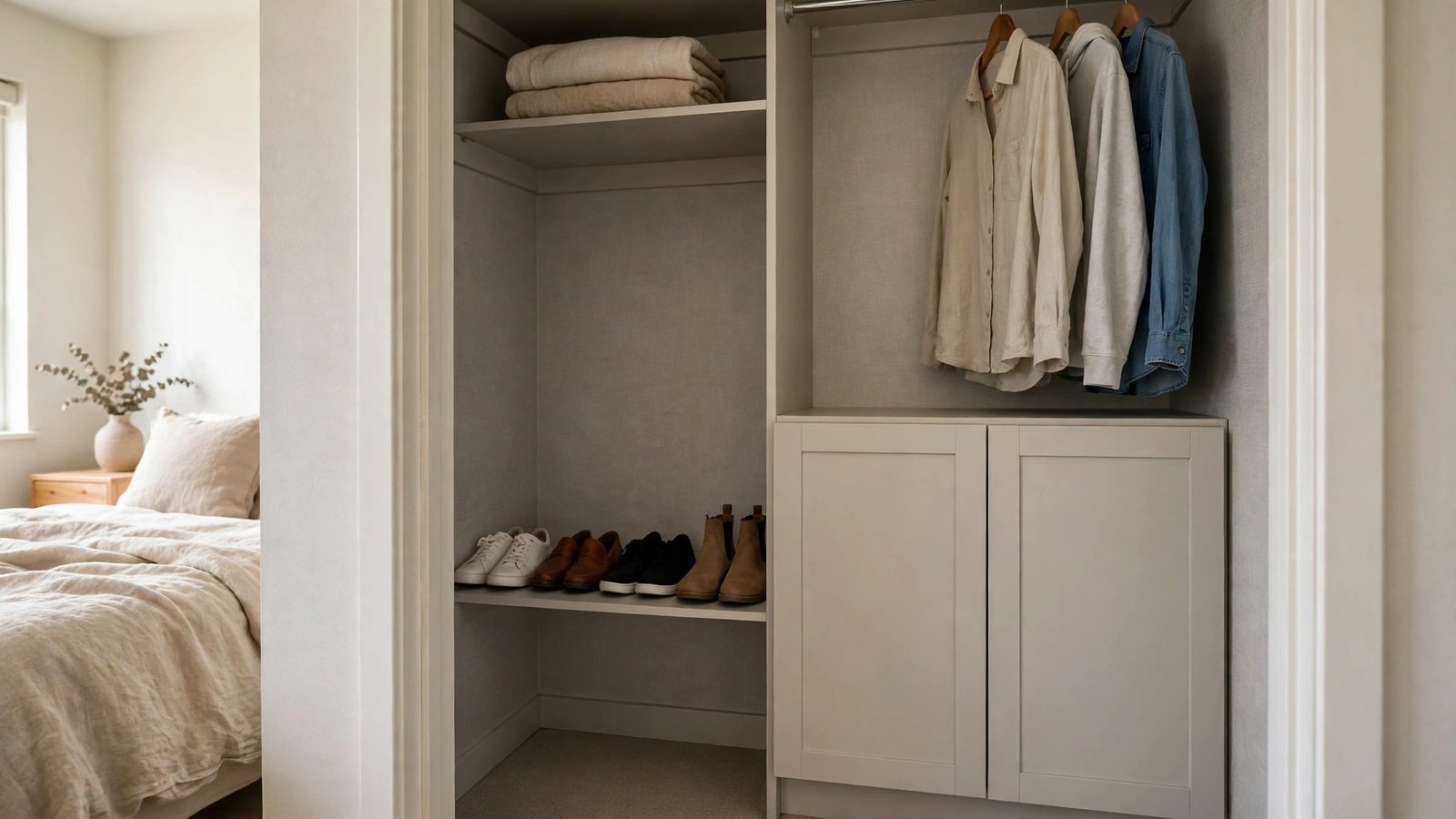
Shoes are a cat’s second favorite closet target. They smell interesting, they are fun to bat across the floor, and the inside of a boot is, apparently, an excellent place to sleep. Open shoe racks in an open closet mean shoes scattered across the bedroom, laces chewed, and insoles covered in fur.
Closed shoe storage solves all of it. A shoe cabinet with doors, lidded shoe boxes, or a lidded bench keeps shoes contained, keeps laces out of reach, and keeps the closet floor clear, which matters because a clear floor is a floor your cat cannot turn into a playground.
This is renter-friendly because shoe storage is furniture. It slides into the closet or sits beside it, it moves with you, and it never touches the walls.
I have noticed that renters who close up their shoes also stop losing socks, because the socks were being stolen by the same cat that was stealing the shoes. Solve one problem, solve both.
Here is how to do it:
- Replace any open shoe rack with a shoe cabinet with doors, a set of lidded shoe boxes, or a lidded storage bench.
- Put shoes away as soon as you take them off. Shoes left out overnight are shoes that will be played with.
- Tuck laces inside the shoes before boxing them, so nothing dangles for a cat to chew.
- Keep the shoe storage on the closet floor or just outside the closet, not on a low shelf your cat uses as a step.
- Wipe shoes before storing them if they have been outside, so dirt and outdoor smells do not draw extra attention from your cat.
Approximate cost: $25 to $70.
9. Train Cats Off the Shelves With Double-Sided Tape Strips
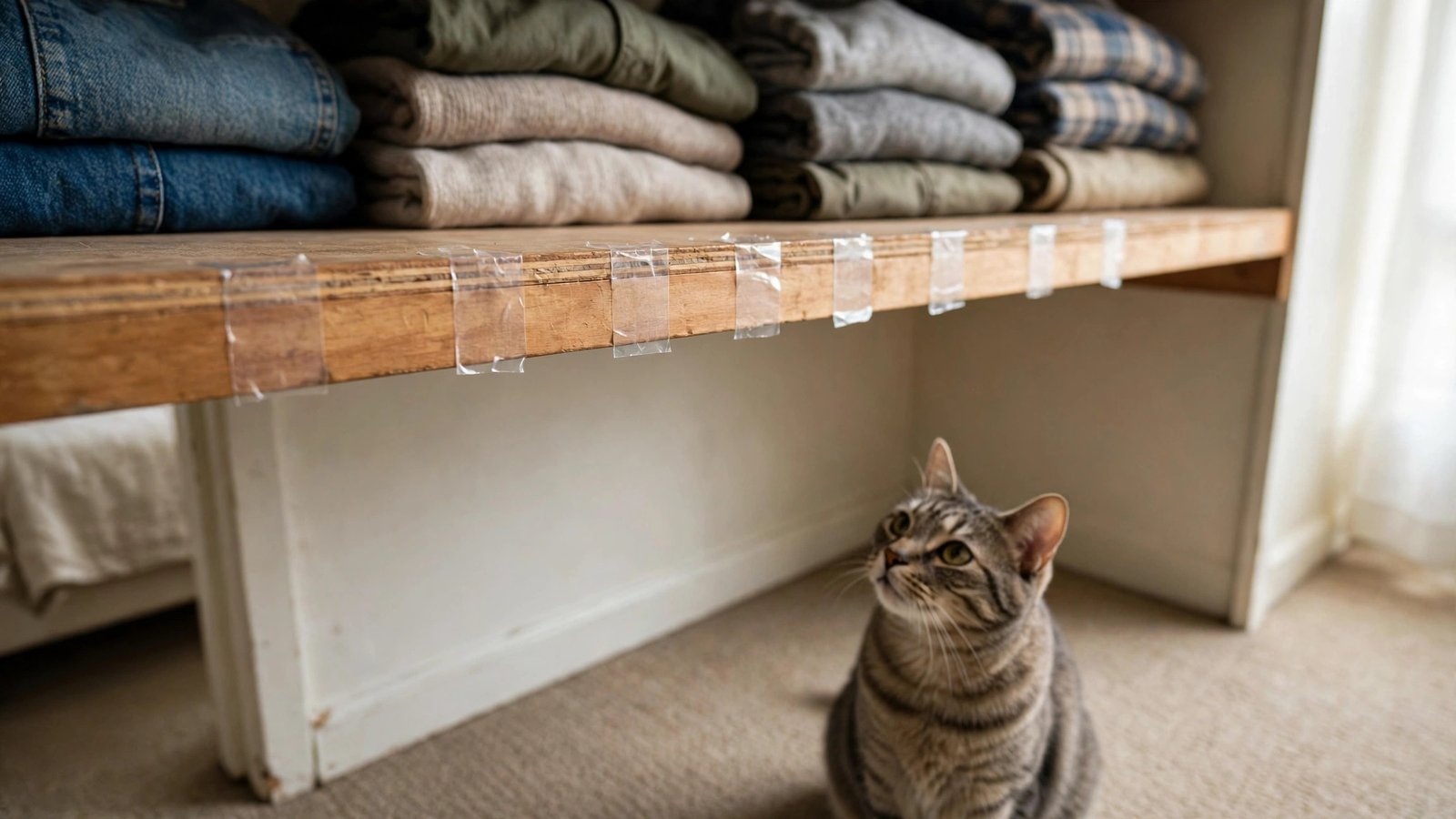
Sometimes you need to teach the cat, not just block the cat. Double-sided tape strips on shelf edges are the classic, humane way to do it. Cats hate the sticky feeling on their paws, so after a few encounters, most cats stop jumping onto the taped surface entirely, even after you remove the tape.
This is renter-safe because the tape sticks to the shelf, not the wall, and it peels off cleanly. Use strips made for furniture and pet training, which are designed to come off without residue, and never use industrial tape on a surface you do not own.
I have personally seen this work in under a week with a very stubborn cat who had claimed the top shelf of her owner’s closet for two years. The tape went up on Monday, and by Friday the cat had moved to the windowsill and never went back.
Here is how to do it:
- Identify the shelves your cat actually jumps onto, usually the ones at window height or near a launching pad like a dresser.
- Apply strips of pet-training double-sided tape along the front edge of those shelves, where paws land first.
- Leave the tape in place for one to two weeks, replacing strips that lose their stickiness.
- Give your cat an approved high spot nearby, like a cat tree or a window perch, so it has somewhere legal to climb.
- Once the cat has stopped jumping up for several days in a row, remove the tape and watch for a week. Reapply if the habit returns.
Approximate cost: $10 to $20.
10. Give Your Cat Its Own Perch and Bed Beside the Closet
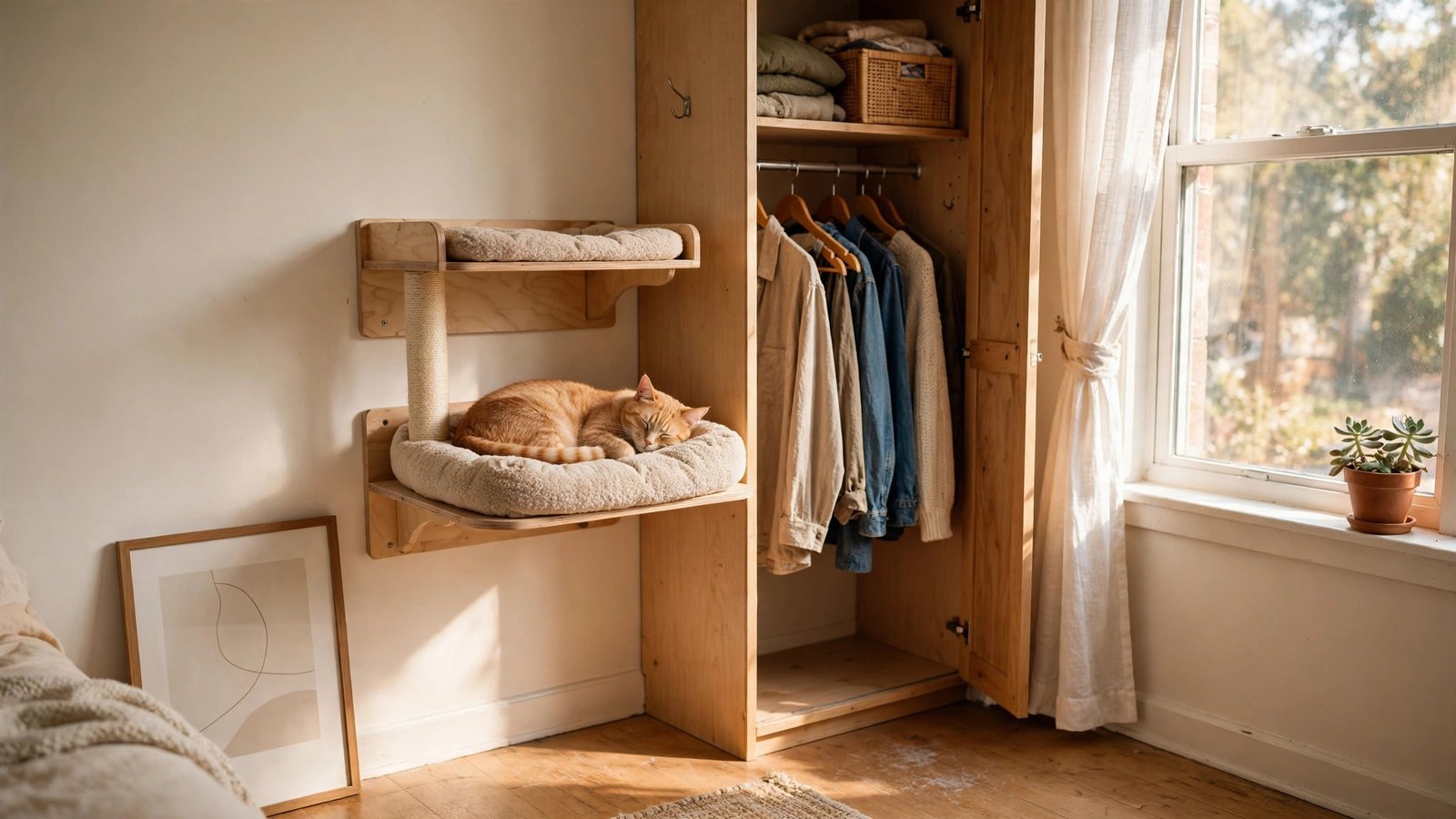
Here is the secret most pet-proofing advice misses: your cat is in your closet because the closet is the best spot in the room. If you give your cat a better spot, right next to the closet, most cats will choose it voluntarily. A window perch with a view, or a cozy bed on a shelf of its own, beats a pile of sweaters once the cat figures out the perch is warmer and sunnier.
This is the kindest idea on this list, and in my experience it is also one of the most effective. You are not fighting your cat’s nature. You are redirecting it to a spot that does not ruin your clothes.
I have helped renters set up a simple window perch next to a closet, and within days the cat had abandoned the closet entirely, because the perch had sun, a view of the birds, and a bed that smelled like the cat instead of the owner.
Here is how to do it:
- Place a cat perch, cat tree, or a simple cushioned bed right beside the closet, ideally near a window.
- Put a blanket or bed your cat already sleeps on in the new spot, so it smells familiar from day one.
- Sprinkle a little catnip on the new bed for the first few days, if your cat responds to it, to build a positive association.
- Keep the new spot consistently available. If you move it around, the cat will go back to the reliable closet.
- Be patient for a week or two. Cats switch loyalties slowly, but once they switch, they tend to stay switched.
Approximate cost: $20 to $50.
11. Put a Scratching Post Right Next to the Closet
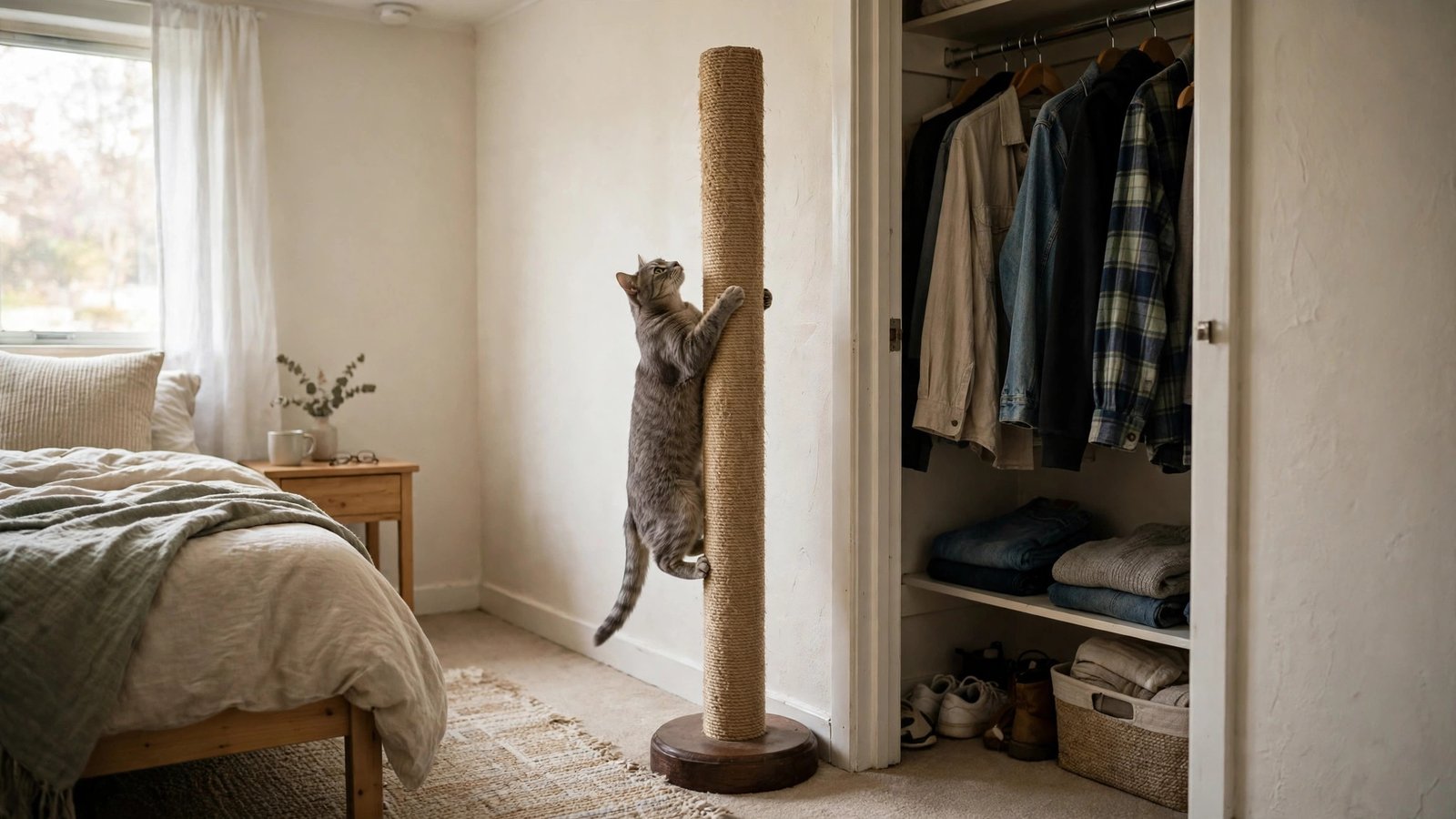
If your cat scratches your clothes, it is probably not being spiteful. Cats scratch to mark territory, stretch, and maintain their claws, and the side of a closet full of interesting textures is a natural target. A scratching post placed right beside the closet gives your cat a legal target in the exact spot it already wants to scratch.
This works for renters because a scratching post is freestanding furniture. It needs no installation, it moves with you, and it protects both your clothes and your landlord’s closet frame from claw marks, which is a deposit issue as well as a wardrobe issue.
I have noticed that placement is everything with scratching posts. A post hidden in the corner of another room gets ignored. A post standing right where the cat already scratches gets used daily.
Here is how to do it:
- Buy a sturdy, tall scratching post, tall enough for your cat to stretch fully upright, with a heavy base that will not tip.
- Place it directly beside the closet opening, on the side your cat approaches from, not across the room.
- Choose a scratching surface your cat likes. Some cats prefer sisal rope, others prefer carpet or cardboard, so watch what your cat already scratches and match it.
- Rub a little catnip into the post for the first week to draw your cat to it.
- If your cat still scratches the closet frame, cover that spot temporarily with double-sided tape while the post becomes the habit.
Approximate cost: $15 to $40.
12. Add Washable Shelf Liners and a Lint-Roller Station by the Closet
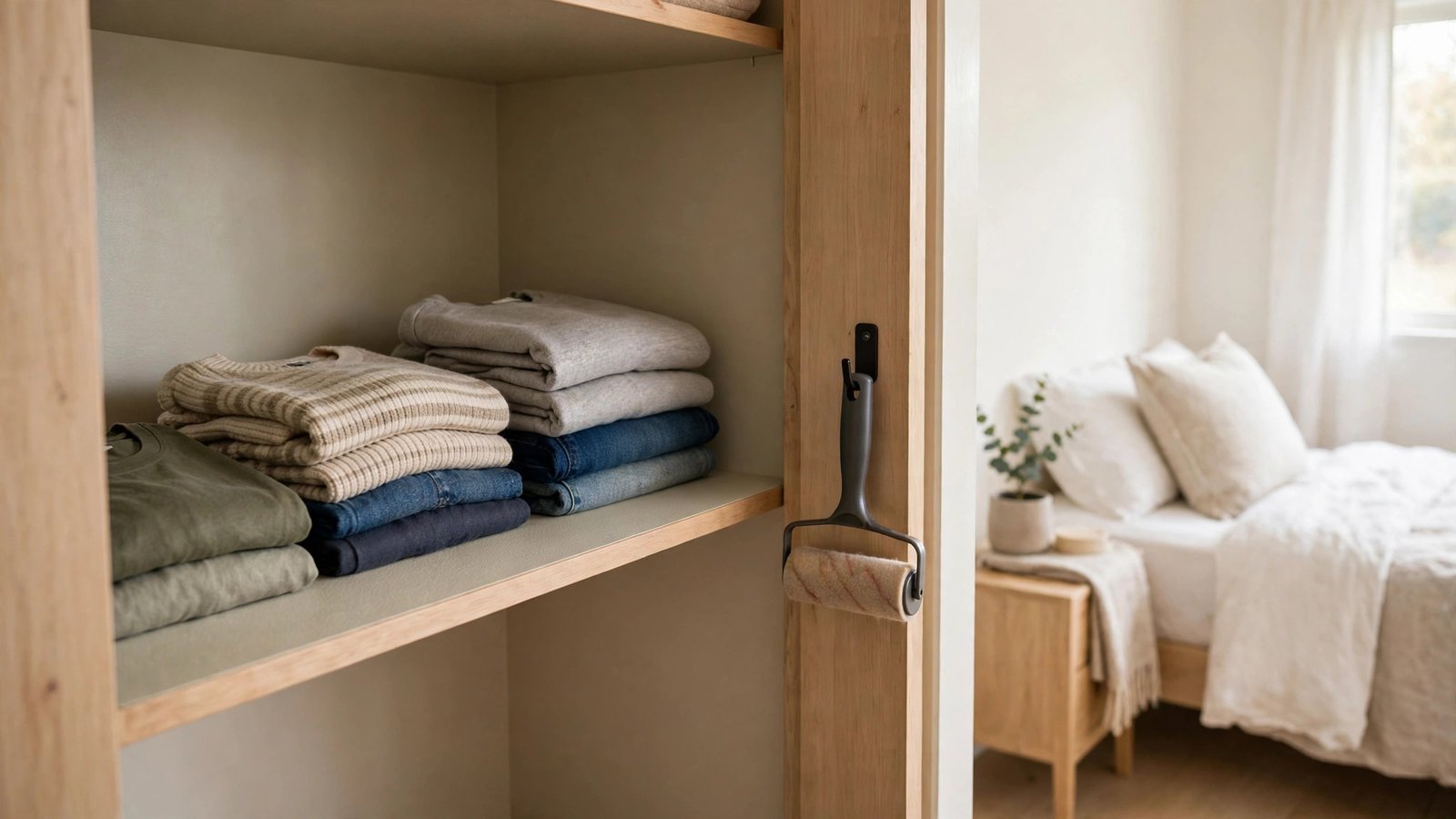
Even with every other idea in place, you live with a cat, and some fur will find its way into the closet. The last idea is about making that fur easy to deal with, so it never builds up into a problem. Washable shelf liners protect the shelves, and a lint roller by the closet makes a thirty-second de-furring part of your morning routine.
This is renter-friendly because shelf liners are removable and washable, they protect the landlord’s shelves from scratches and stains, and they come out clean on move-out day. A lint roller station costs almost nothing and saves you from discovering fur on your black blazer in the office elevator.
I have personally seen renters turn this into a habit that takes less time than brushing their teeth, and their clothes look noticeably better for it.
Here is how to do it:
- Line every closet shelf with a washable, non-slip shelf liner, cut to fit. Choose a smooth, tightly woven liner that fur does not cling to.
- Wash the liners every few weeks, or whenever you notice fur building up, and let them dry fully before putting them back.
- Mount a small adhesive hook or a cup right beside the closet opening to hold a lint roller, so it is always within reach.
- Keep a spare roller refill in the same spot, so you never run out on the morning you need it most.
- Make it a habit: one quick roll over dark clothes before you leave the house, every day, no exceptions.
Approximate cost: $15 to $35.
Conclusion
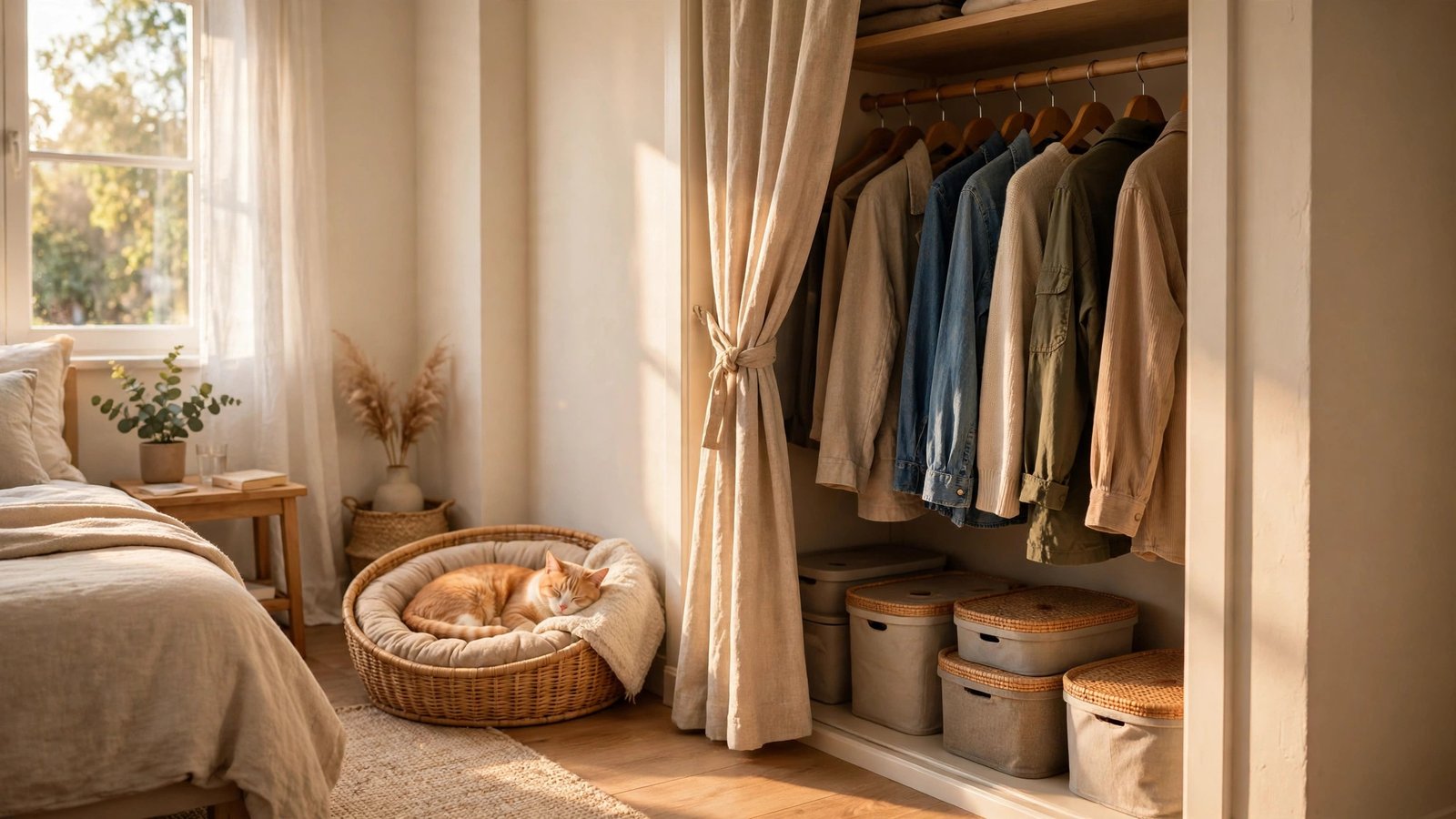
Your open closet does not have to be a battleground between you and your cat. A curtain on a tension rod closes the door your closet never had. Lidded bins, garment bags, and closed shoe storage keep the soft, dangly, interesting things out of reach. Delicates go high, accessories go in boxes, and the hamper gets a lid that actually stays shut. And your cat, who was never the villain in this story, gets a sunny perch, a scratching post, and a bed of its own right next to the closet, which is usually all it ever wanted.
I have seen renters transform cat-chaotic closets in a single weekend, with no tools, no landlord calls, and no deposit risk. Pick the two or three ideas that match your closet and your cat, start there, and let the rest follow. Your clothes will stay cleaner, your cat will stay happier, and your mornings will get a lot less furry. Please save this visual guide on Pinterest and share it with a fellow cat-owning renter who is tired of finding fur on everything they own — because nobody should have to choose between their cat and their wardrobe.

Amelia leads HavenlyStyle’s editorial vision with a passion for elegant interiors and practical home living. With years of experience in home décor and lifestyle content, she ensures every article is accurate, inspiring, and easy to follow. From timeless decorating ideas to the latest interior design trends, Amelia is committed to helping readers create beautiful, functional spaces while maintaining HavenlyStyle’s trusted and welcoming voice.