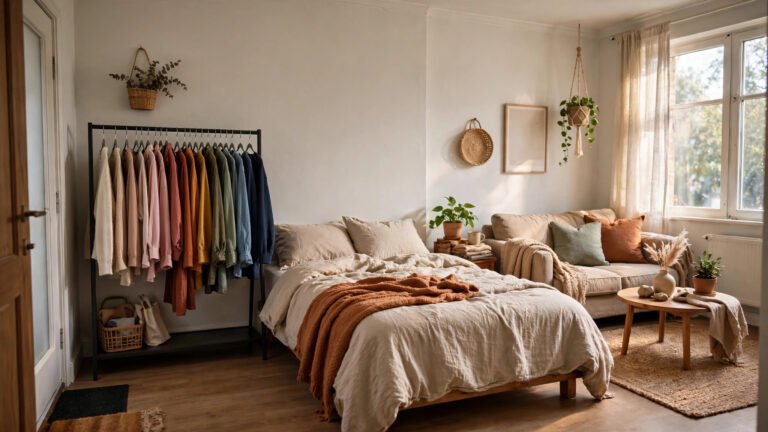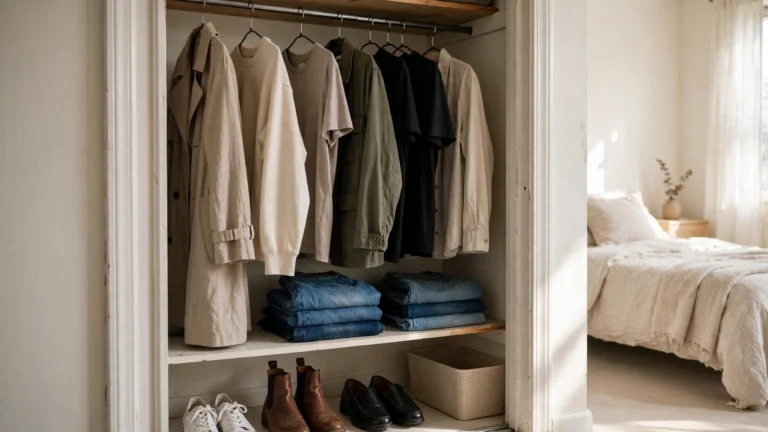

Working from your rental apartment has completely changed what your closet needs to do. You no longer dress for a commute, an office dress code, or a full-body impression at the elevator — you dress for a camera rectangle that shows you from the waist up, and for the comfort of your own couch between meetings. Yet most renters I talk to are still styling themselves like it’s 2019: a cramped closet full of “office clothes” they never touch, and a drawer full of tops that look terrible on Zoom.
I’ve helped dozens of renters rebuild their wardrobes around the way they actually live, and the work-from-home capsule is one of the most satisfying transformations I get to witness. You don’t need a walk-in closet or a bigger apartment. You need roughly 25 to 30 well-chosen pieces, organized around one simple truth: the camera sees your shoulders and your neckline, and nobody on a video call knows you’re wearing your softest joggers below the frame.
A work-from-home capsule does three jobs at once. It makes you look sharp on every call without daily decision fatigue. It keeps your small rental closet from bursting — no extra furniture, no drilling into walls you don’t own. And it respects your real life: laundry every week or so, and the freedom to change into something softer the moment your last meeting ends.
Below are the twelve ideas that make it work.
Executive Summary
– Dress for the camera frame, not the commute: your tops and third layers do 90% of the visual work on video calls, so that’s where your capsule investment goes. – Split your wardrobe in two lanes: “on-camera” pieces (structured, camera-friendly tops) and “off-camera” comfort (soft bottoms nobody sees) — the split is the whole strategy. – A 5-day home week needs fewer pieces than you think: about 7–8 camera tops, 4 comfort bottoms, and 2–3 hero layers cover a full week with one laundry day. – Every storage idea is renter-safe: over-the-door hooks, command-style adhesive hooks, and a folding garment rack — nothing drilled, nothing permanent, nothing your landlord can bill you for. – Build a weekly rhythm, not a rulebook: a short Sunday reset (steam the week’s tops, plan camera outfits) replaces willpower with a system.
1. Start With the Camera-Frame Wardrobe Concept
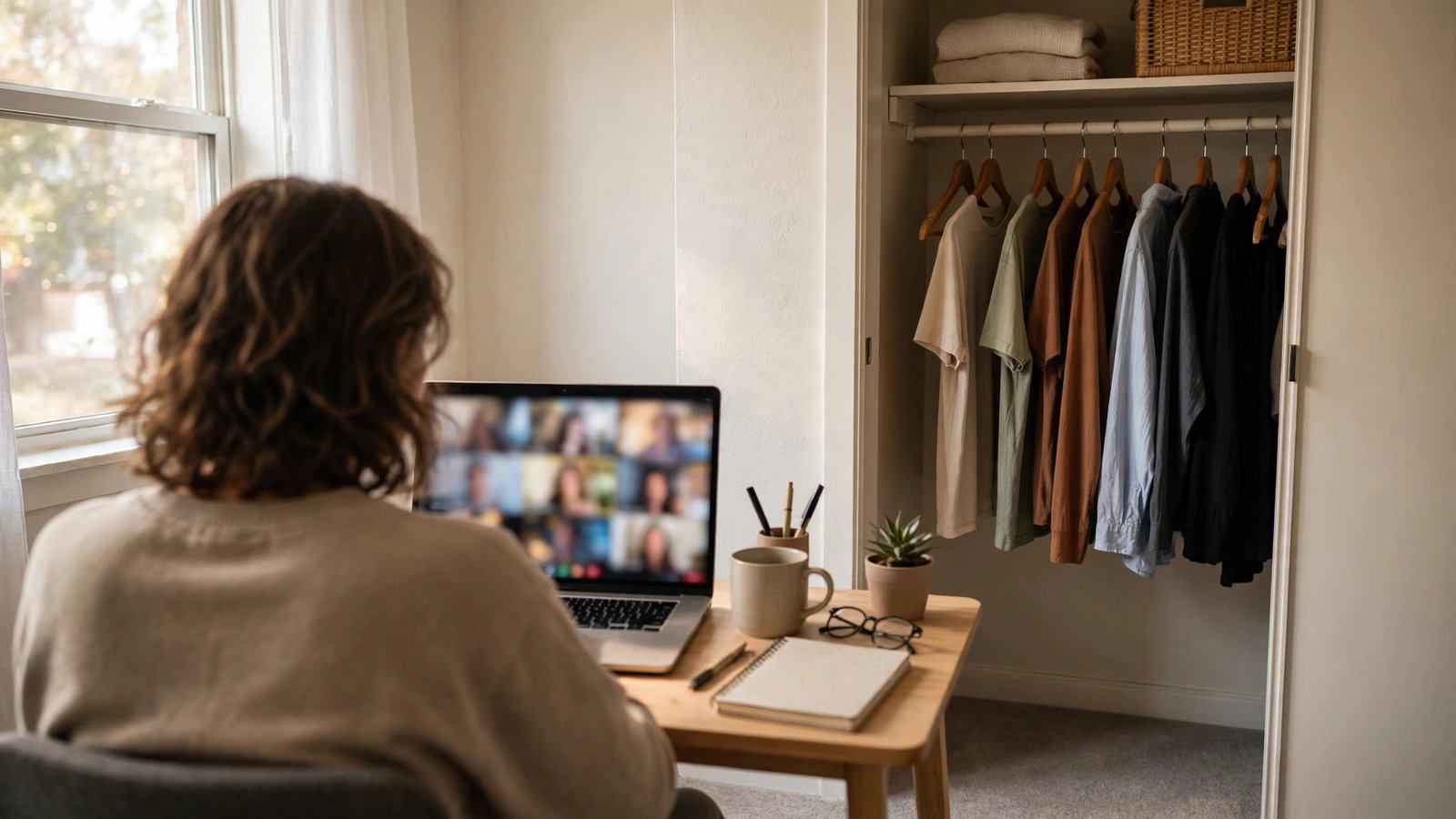
The single most impactful shift a work-from-home renter can make is to stop dressing your whole body and start dressing the camera frame. On a typical video call, what people see is a rectangle from roughly your mid-chest up: your neckline, your shoulders, your face, and whatever’s on the wall behind you. Everything below that rectangle is your business.
Here’s what the concept looks like in practice. Sit where you work and open your laptop camera. Take a phone photo of exactly what the screen shows. Now audit your current wardrobe against that photo: which of your tops actually look good inside that frame? For most renters I help, the answer is sobering — maybe four tops look genuinely sharp on camera, and the rest were bought for a full-body mirror.
Why it works for renters specifically: a small rental closet forces choices, and this concept tells you exactly which choices matter. Instead of maintaining two full wardrobes — “work clothes” and “home clothes” — you maintain one capsule where the visible half is polished and the invisible half is comfortable. Nothing new to buy for storage; you’re reorganizing around the lens.
How to build it:
- Photograph your actual camera frame from your desk chair, using your real webcam, in your real lighting.
- Pull every top you own and hold each one up inside that frame; keep only the ones that look intentional.
- Split keepers into “camera” and “off-camera” piles — you’ll build the capsule from the camera pile first.
- Write the frame dimensions on a sticky note inside your closet: this is now your styling brief for every future purchase.
- Purge the tops that fail the frame test to donation bags; they’re stealing hanger space.
Approximate cost: $0 — this is a mindset and an audit, not a purchase.
2. Stock 7 Camera-Friendly Tops (Solids Win on Screen)
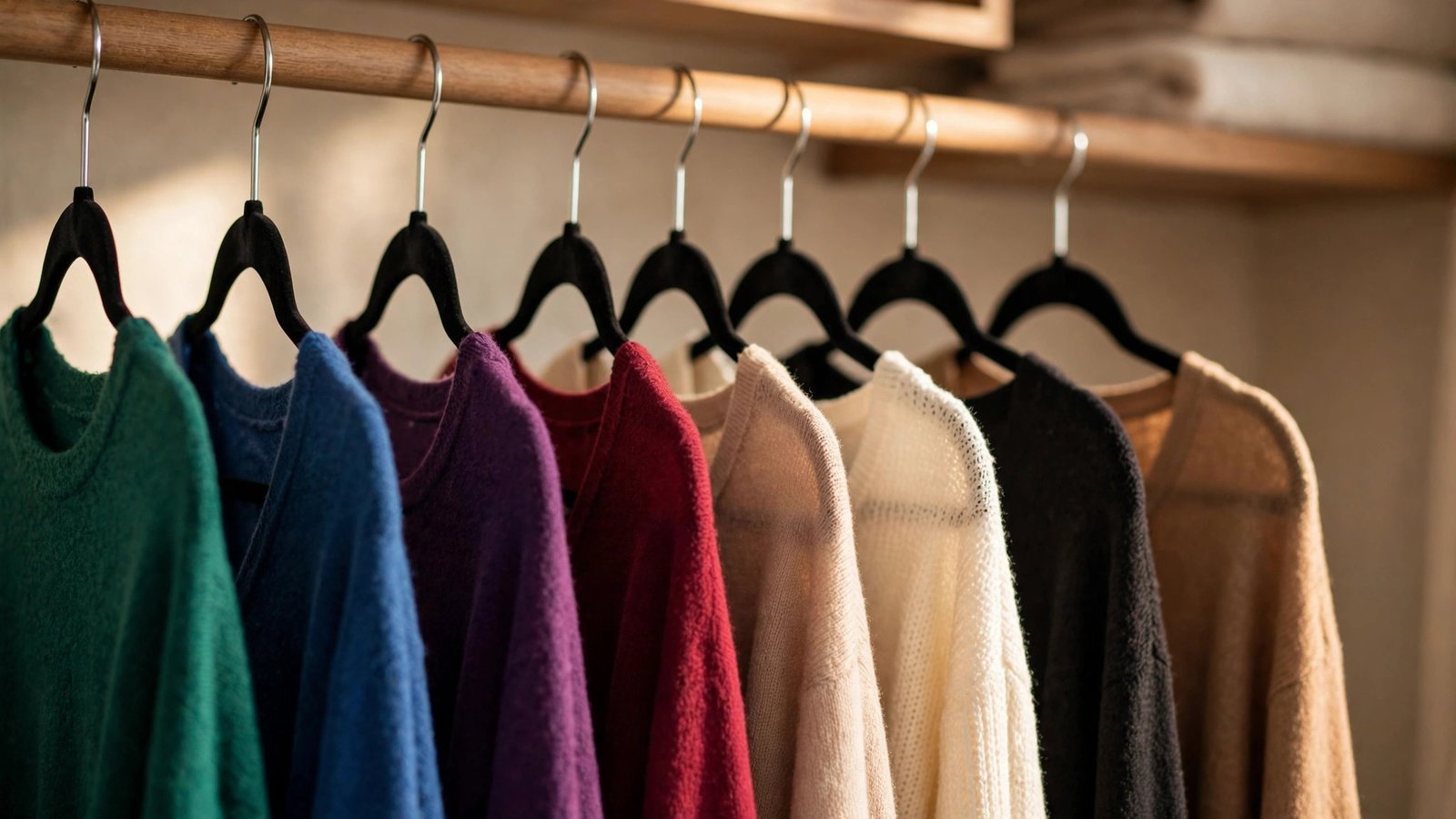
Your camera is a harsh, tiny critic. Webcam sensors and video compression do ugly things to thin stripes (they shimmer), tiny prints (they turn to mush), and white (it blows out). What reads beautifully on screen is simple: solid colors, medium-contrast necklines, and a little structure at the shoulder.
The seven-top target is deliberate. Seven camera-friendly tops cover five workdays with two spares for back-to-back meeting days and the occasional spill. With this many, you’re never doing emergency laundry midweek, but you’re also not maintaining an unwieldy collection in a 24-inch-wide rental closet.
Why it works for renters specifically: seven tops hang on seven slim hangers, which takes up about 14 inches of rod space — leaving room for everything else this plan adds. And because these are your most-worn pieces, buying them in washable, wrinkle-resistant fabrics means no iron, no steamer drama, and no dry-cleaning bills on a renter’s budget.
How to choose and keep them:
- Pick a tight color palette: three neutrals (navy, gray, black — whatever flatters you) plus two to four “camera colors” that make your face look alive on screen. Jewel tones and warm earth tones photograph beautifully; avoid optic white and neon.
- Prioritize necklines that frame the face: crew, boat, V-neck, and collared shirts. Skip cowl necks and anything that pools near the camera’s bottom edge.
- Choose fabrics with a little body — ponte knit, cotton-modal blends, structured jersey. Limp, tissue-thin knits collapse on camera.
- Retire one weak top for every new one you add; the count stays at seven.
- Hang these seven together at the front of your rod as your “camera row” — the most reachable real estate in the closet.
Approximate cost: $10–$30 per top if you’re filling gaps; many renters need only 2–3 new ones.
3. Keep 4 Off-Camera Comfort Bottoms (Your Secret Weapon)
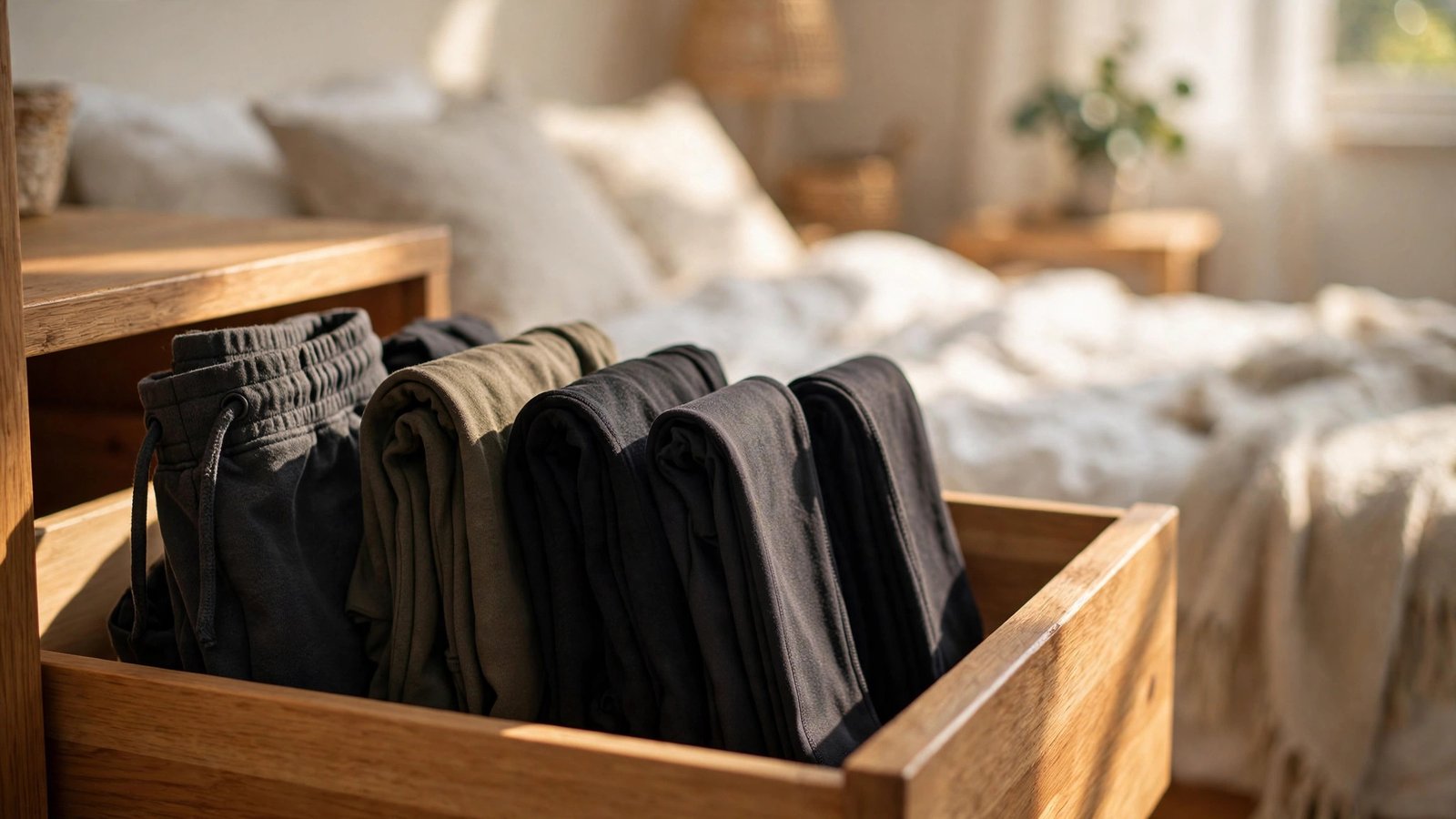
Below the camera line, comfort is king. Four pairs of soft, presentable bottoms — joggers, leggings, knit pants, bike shorts in warm months — cover the five-day week with a weekend rotation. Nobody knows, nobody cares, and your body will thank you by 3 p.m.
This is the piece most work-from-home guides skip, but it’s the emotional core of the capsule. The reason renters burn out on “getting dressed” at home isn’t the tops — it’s the bottoms. Jeans with a button fly are fine for a two-hour office stint; they’re misery for a ten-hour home day. Giving yourself explicit permission to keep a comfort lane removes the guilt and keeps the capsule honest.
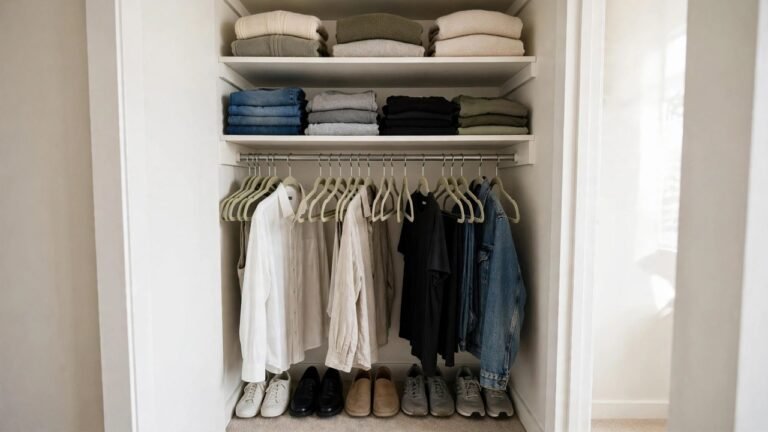
Why it works for renters specifically: four bottoms fold flat into a single drawer or one shelf cubby — no hanging space consumed at all. And there’s a subtle deposit-protection angle: you’re not buying an office wardrobe for a life you don’t live, which means fewer purchases and less closet churn.
How to build the comfort lane:
- Choose bottoms in dark neutrals (black, charcoal, navy) so they’re presentable if you stand up unexpectedly.
- Avoid loud logos, graphics, or pajama prints — dark solids keep you one step from “presentable.”
- Fold them using a simple file-fold so all four stand upright in a drawer; you’ll see everything at a glance.
- Keep one pair “door-ready” (clean, no pet hair) for package deliveries and video-on-doorbell moments.
- Wash this lane on your regular laundry day — synthetics and knits dry fast on a rack.
Approximate cost: $15–$35 per pair; most renters already own these.
4. Add 2 Hero Layers for High-Stakes Calls
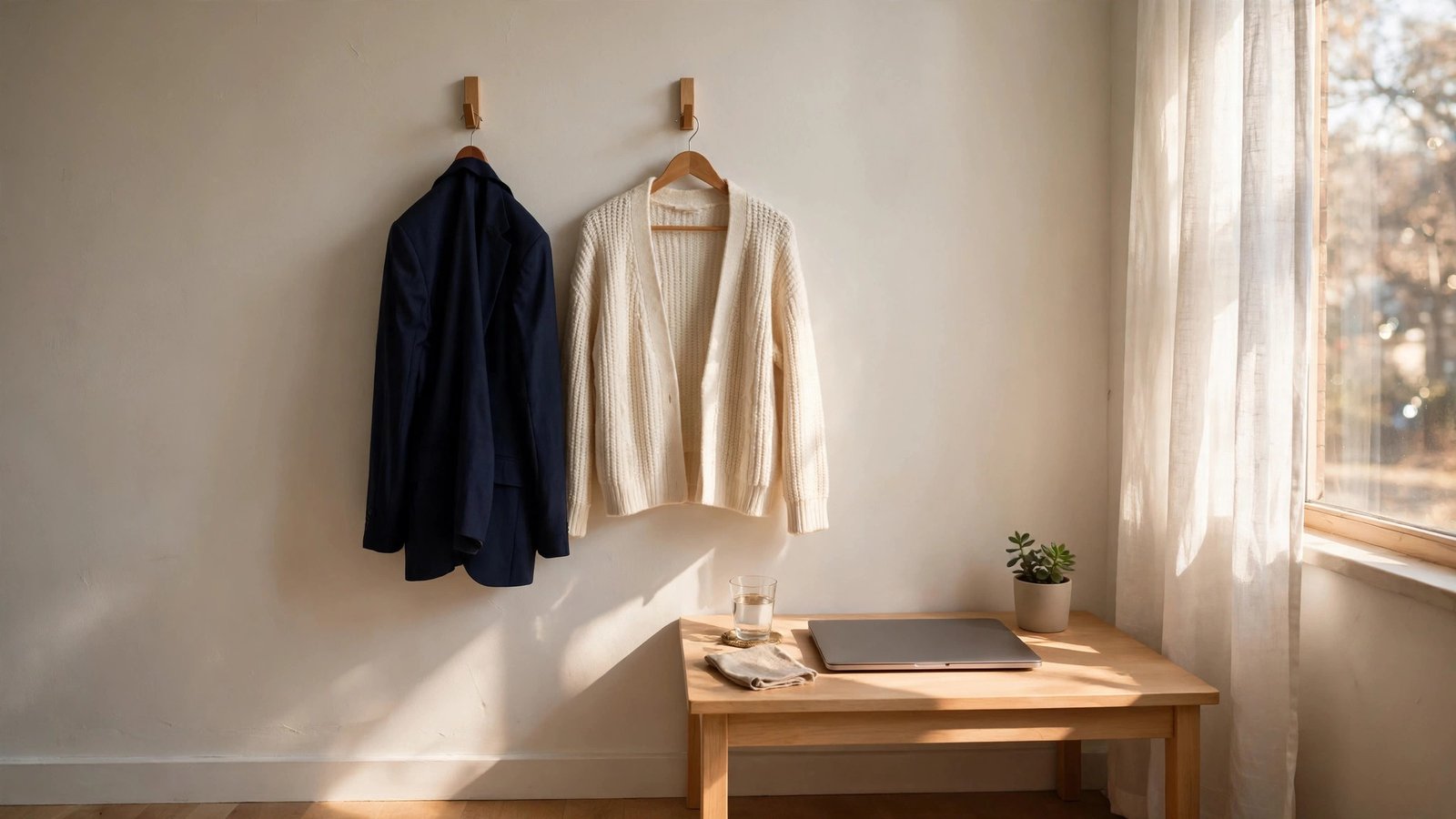
Every capsule needs its power pieces, and for the work-from-home renter, those are layers — a blazer, a structured cardigan, a sharp overshirt, a knit vest. Two hero layers, thrown over any of your seven tops, instantly upgrade you from “home casual” to “client-meeting ready” in about four seconds. This is the entire WFH cheat code in one idea.
I’ve personally seen this transform a renter’s work life. One client kept a navy blazer on the back of her desk chair — not in the closet — and called it her “meeting armor.” Job interviews, performance reviews, investor calls: blazer on, camera on, done. Interview over, blazer off, back to the cozy tee. The layer does the performing so the rest of your outfit doesn’t have to.
Why it works for renters specifically: layers are the highest-impact-per-inch pieces in a small closet. Two blazers take up less rod space than a stack of dress shirts, and they’re fully removable — the most renter-friendly garment category there is. No alterations, no special storage, no commitment.
How to pick them:
- Choose one structured layer (blazer, tailored overshirt) and one soft layer (chunky cardigan, knit vest) for different call energies.
- Stick to your neutral palette so each layer works over all seven tops.
- Store the structured layer on a proper hanger (not a wire one) at the front of the rod or on a desk-side hook.
- Test each layer in your actual camera frame before committing — shoulder fit matters more than anything else.
- Add a lint roller to your desk drawer; dark layers collect dust between calls.
Approximate cost: $30–$80 per layer new; thrifted blazers often run $10–$25.
5. Master the 3-Second Transition (Loungewear as Layers)
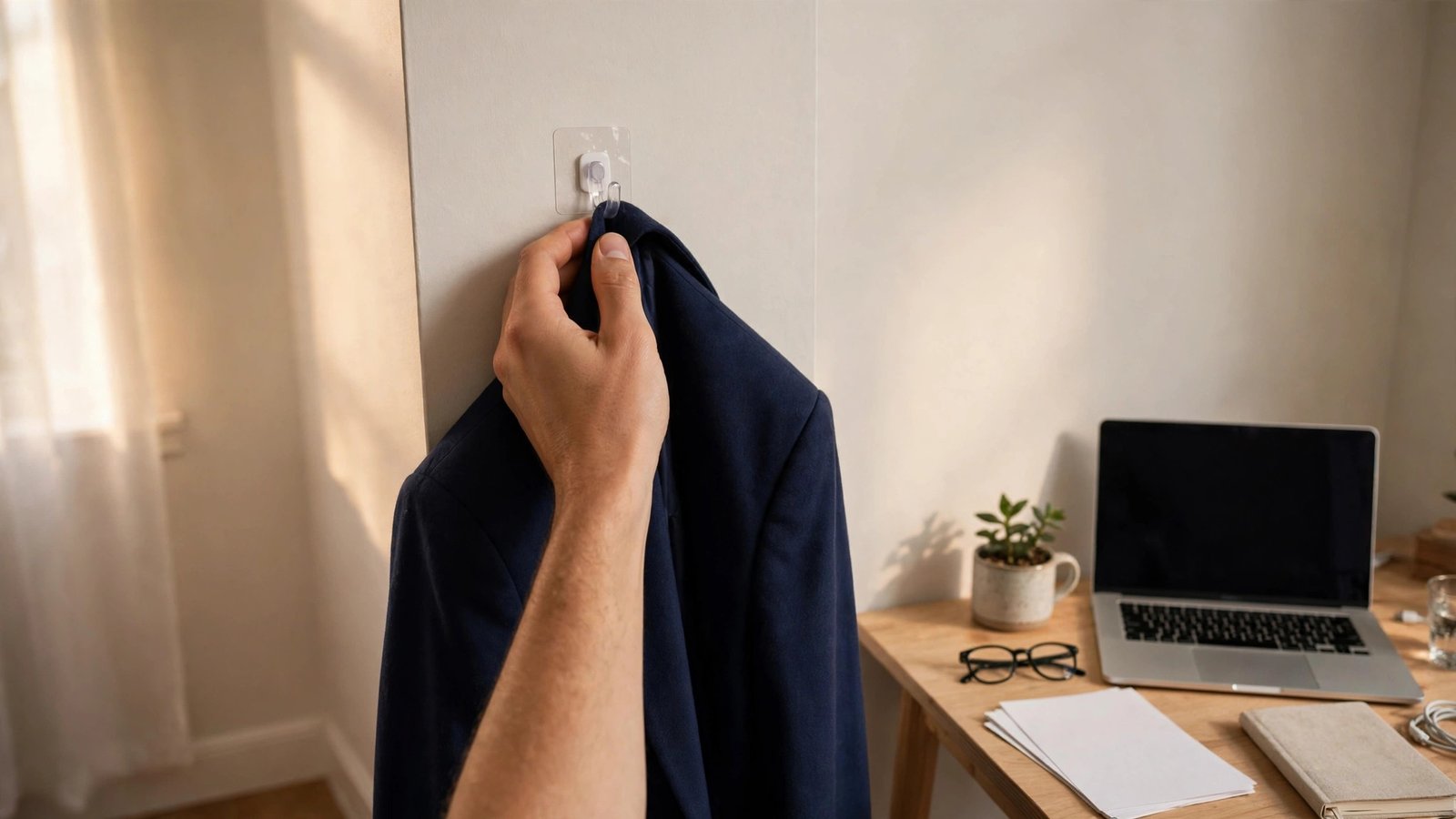
The real WFH wardrobe skill isn’t picking outfits — it’s switching modes between meetings without a full costume change. The 3-second transition is a system: keep a “layer station” within arm’s reach of your desk, and practice the two moves that matter. Layer on: grab the blazer or cardigan, camera-ready. Layer off: hang it back up, back to your base comfort tee.
Think of it like theater costume changes. Your base layer — a decent solid tee or knit top — is your “understudy outfit”: fine for internal calls, fine for deep-work hours. Your hero layers are the “lead role”: interviews, client calls, anything recorded. The transition between them should be faster than brewing coffee.
Why it works for renters specifically: this system needs zero new storage furniture. A single adhesive hook on the wall beside your desk, or the back of your desk chair, is your layer station. Renters can’t always put a wardrobe where they want it — but they can almost always stick a removable hook where they need it. Check your lease about adhesive hooks; most leases allow removable ones, and they peel off cleanly.
How to set it up:
- Place one removable adhesive hook (rated for 3+ lbs) on the wall or door beside your desk, at shoulder height.
- Hang your current week’s hero layer there — not in the closet across the room.
- Keep your base top on; the layer is the only thing that changes.
- After the call, return the layer to the hook immediately — never let it migrate to the chair pile.
- Rotate the hook layer each Sunday with your weekly plan.
Approximate cost: $5–$15 for a pack of removable hooks; $0 if you use the back of your chair.
6. Do the WFH Capsule Math: 5 Workdays, One Laundry Day
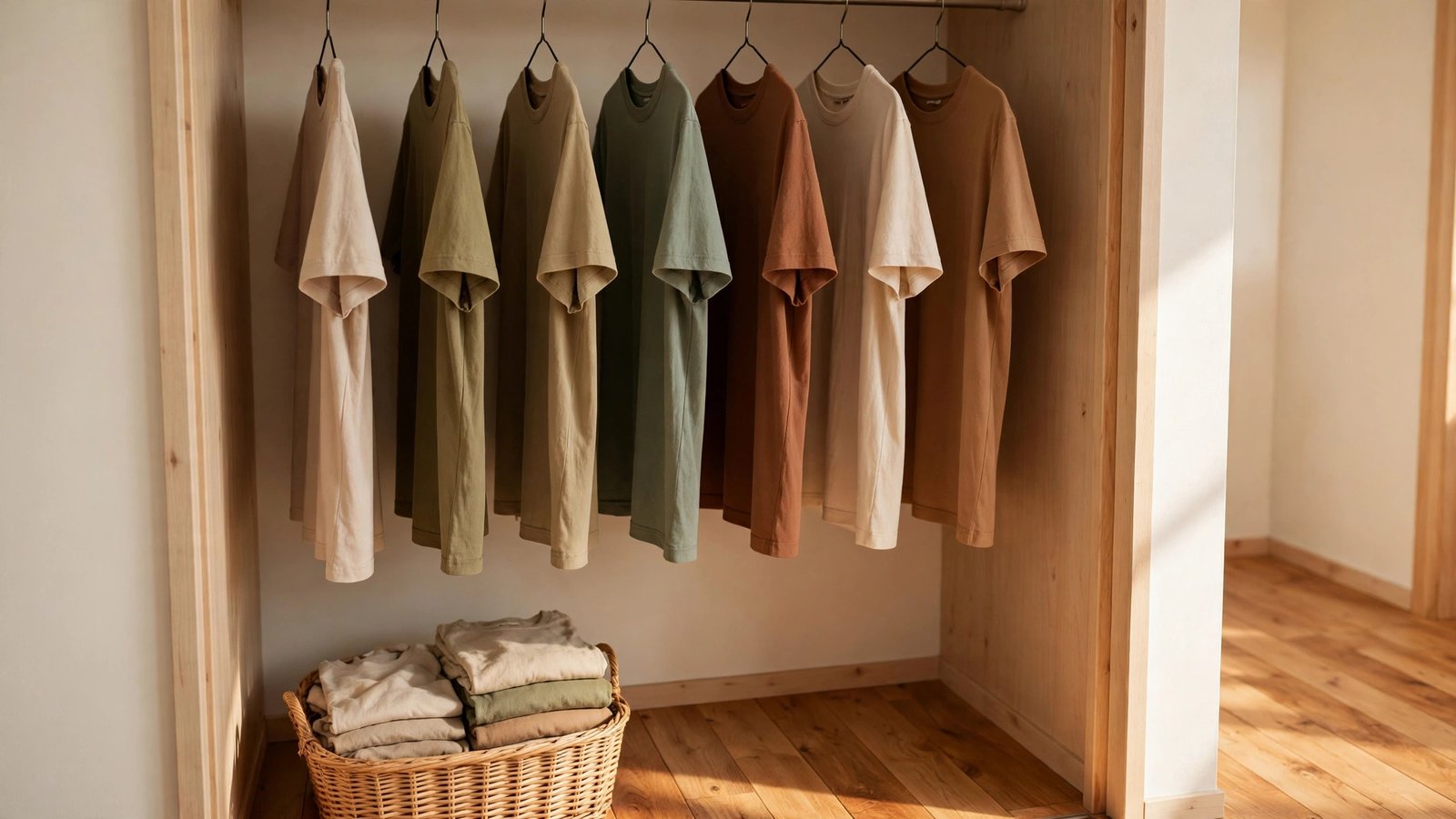
Here’s the arithmetic that makes a work-from-home capsule so liberating. You need five “camera looks” per week — but a look is just a top plus a layer, and layers repeat freely. Seven tops, worn once each across the week, means laundry can happen on a single day with zero repeats. Four bottoms cover the same week because nobody sees them twice in a row anyway.
Compare that to an office capsule, which typically needs more bottoms, more shoes, and more variety because the whole outfit is visible all day. The WFH version is roughly 25–30% smaller in piece count, which is exactly what a small rental closet ordered.
Why it works for renters specifically: fewer pieces means fewer hangers, fewer drawers, and — critically for renters who move every year or two — fewer boxes when moving day comes. I’ve helped renters fit their entire work wardrobe into a single medium box. Moving-day you will be grateful.
How to run the math:
- Count your workdays: five. Count your camera tops: seven. That’s your buffer of two.
- Schedule one laundry day (Sunday evening or your quietest day); wash tops and bottoms together.
- Assign hero layers to your heaviest meeting days — check your calendar on Sunday.
- If a week has back-to-back video days, that’s what the two spare tops are for.
- Track for two weeks: if you consistently have unworn tops left over, your palette is off — adjust, don’t add.
Approximate cost: $0 — this is planning, and it saves money by preventing over-buying.
7. Stage a Camera-Ready Corner With No-Drill Storage
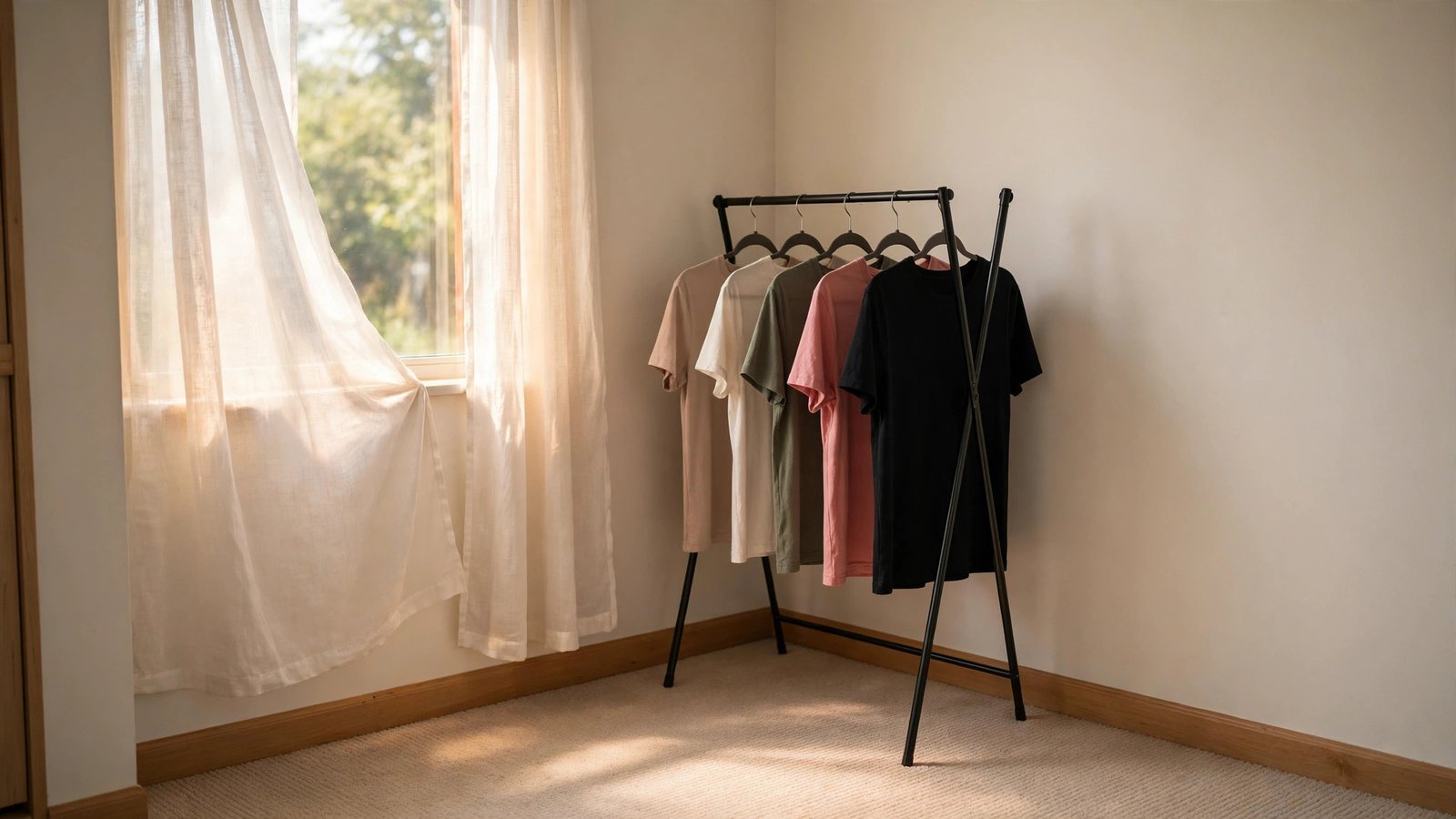
Your capsule fails if the good stuff is buried. Renters often hang everything in one cramped reach-in closet, which means the camera tops migrate to the back and the hero blazer ends up wrinkled on a chair. The fix is a tiny, dedicated staging zone near your desk — built with 100% renter-safe hardware.
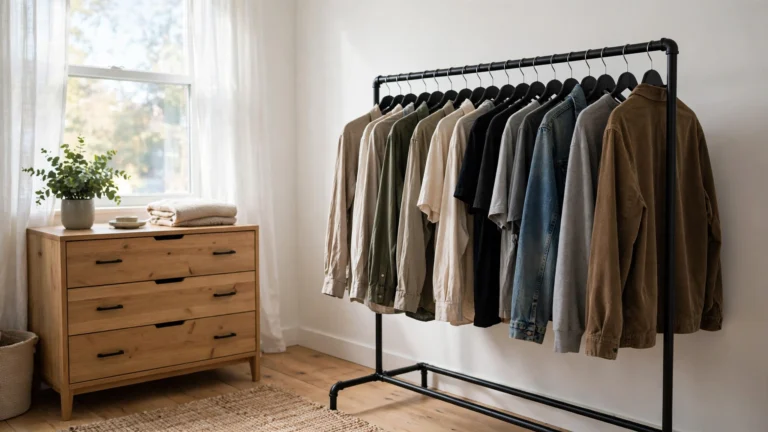
The classic setup: an over-the-door hook on your bedroom or closet door holding tomorrow’s camera top and hero layer, pre-paired. Or a slim folding garment rack tucked in a corner near your desk, holding the week’s five tops in order. Both are freestanding or hooked — no screws, no holes, no landlord conversation needed.
Why it works for renters specifically: this is the idea that turns a capsule from theory into a daily habit. When your week’s outfits are visible and sequenced, decision fatigue disappears. And because everything is freestanding or over-the-door, it all packs flat on moving day. Flag: if your lease prohibits over-the-door hooks (rare, but some do), switch to a folding garment rack — always freestanding.
How to build it:
- Choose your staging spot: within 10 steps of your desk, ideally visible when you wake up.
- Option A: an over-the-door hook set ($10–$20) on your closet or bedroom door — holds the full week’s tops on slim hangers.
- Option B: a slim folding garment rack ($25–$45) in a corner — holds the week’s five tops in Monday-to-Friday order.
- Each Sunday, hang the week’s camera tops in day order; move the hero layer to your desk-side hook.
- Nothing else lives in this zone — it’s a runway, not storage.
Approximate cost: $10–$45 depending on the option you choose.
8. Blend Athleisure the Renter Way: Soft Base, Structured Top

Athleisure is the unofficial uniform of the home office, and there’s nothing wrong with it — as long as it’s deliberate. The formula that photographs well and feels intentional is simple: soft on the bottom (your comfort lane), structured on top (camera tops and hero layers). Leggings with a sloppy tee reads “just rolled out of bed.” Leggings with a ponte-knit top and a cardigan reads “polished professional” — same comfort, completely different message.
This matters because camera quality is unforgiving with slouch. A structured shoulder line and a clean neckline are what separate “put-together” from “sloppy” on video, and those come from your top half only. Your bottom half can stay as soft as you like.
Why it works for renters specifically: you probably already own athleisure bottoms — this idea costs almost nothing and rescues pieces that were making you feel underdressed. It’s also the most space-efficient styling trick in the plan: no new garments, just a new pairing rule.
How to blend it:
- Pair every athleisure bottom with a structured top half — never a slouchy top with slouchy bottoms on a call day.
- Keep your athletic wear and your “camera” athleisure separate: one drawer for workout gear, one for the capsule lane.
- Dark, solid leggings or joggers only for the camera-adjacent lane — save prints and bright colors for workouts.
- Add one structured element for high-stakes calls: the hero blazer over a clean tee and joggers is a legitimate power outfit.
- If a piece has visible pilling or stretched-out knees, it leaves the capsule lane — comfort pieces still need standards.
Approximate cost: $0 — this is a pairing rule for pieces you already own.
9. Match Tops to Meeting Types (Color Psychology, Lightly)

Not all video calls are equal, and your capsule can flex with that. A calm blue or soft gray reads steady and trustworthy for one-on-ones and difficult conversations. A saturated jewel tone or warm red reads energetic and confident for presentations and pitches. Neutrals are your everyday default. This isn’t magic — it’s just using color the way stylists have for decades, adapted to the webcam.
I’ve noticed renters who do this stop dreading their calendars. Planning “presentation top” on Sunday takes thirty seconds and removes the morning scramble. The psychological trick is real too: dressing slightly up for a big call changes how you carry yourself, even through a screen.
Why it works for renters specifically: this system adds zero pieces and zero storage. It’s purely an assignment layer on top of the seven tops you already have — Sunday planning, not shopping. For a renter watching every dollar and every inch of closet space, free systems beat new stuff every time.
How to set it up:
- Label your seven tops by energy: 2–3 calm (blues, grays, soft greens), 2–3 confident (jewel tones, warm reds, rich teal), 2 neutrals (black, white-adjacent — but test white on camera first).
- On Sunday, glance at your calendar and assign tops to days: confident colors on presentation days, calm colors on 1:1-heavy days.
- Hang the week’s tops in your staging zone in day order (see Idea 7) — the plan is now visible.
- Keep one “emergency confident” top as a spare for surprise big calls.
- Revisit quarterly: if you never reach for a color, swap it out — the capsule serves you, not the other way around.
Approximate cost: $0 — assignment, not acquisition.
10. Choose Video-Call Accessories That Read on Screen

Accessories are the fastest way to multiply seven tops into what looks like fourteen outfits on camera — but webcam scale is different from real-life scale. Delicate stud earrings disappear entirely on video; a medium hoop or a structured pendant reads clearly. A thin necklace vanishes; a scarf with some presence frames your face beautifully. Glasses, a watch glimpsed when you gesture, a textured scarf: these are your on-screen multipliers.
The rule of thumb: go one size bolder than you’d wear in person. What looks “statement” in the mirror reads “just right” through a webcam. And keep it to one focal accessory per call — earrings or scarf or glasses chain, not all three.
Why it works for renters specifically: accessories are the smallest, cheapest, most storage-friendly pieces in any wardrobe. A small tray or a single drawer organizer holds your entire video-call accessory kit — no closet space required. For renters in studios where every square foot counts, this is maximum impact per inch.
How to build the kit:
- Pick 3–4 earrings or ear cuffs in a medium scale — visible but not distracting.
- Add 1–2 scarves or neckerchiefs in your camera colors; they frame the face and hide a multitude of neckline sins.
- If you wear glasses, keep them clean — smudged lenses are surprisingly visible on camera.
- Store the kit in a small tray on your desk or nightstand, not buried in the closet.
- One focal piece per call — let the accessory do the work of making the outfit feel new.
Approximate cost: $5–$25 total; thrifted scarves and simple jewelry are capsule gold.
11. Build a 10-Minute Sunday Reset Ritual

A capsule wardrobe is a system, and systems need maintenance. The Sunday reset is ten minutes that keeps the whole plan running: steam or shake out the week’s camera tops, check the calendar, hang the five tops in day order in your staging zone, move the hero layer to the desk hook, and toss anything stained or pilled into a mending pile.
This ritual replaces the daily 15-minute “what do I wear” panic with a single calm weekly session. I’ve personally seen renters go from dreading Monday mornings to barely thinking about clothes at all — which is the entire point of a capsule. The wardrobe becomes infrastructure, not a project.
Why it works for renters specifically: the reset needs no special equipment beyond what you have — a handheld steamer or even a hot shower’s steam works for wrinkles, and your staging zone (Idea 7) is the ritual’s home base. In a small apartment, rituals beat square footage: ten focused minutes in a tiny closet beats an hour in a walk-in you don’t have.
How to run it:
- Pull the week’s five camera tops and give each a 30-second steam or shake-out.
- Check next week’s calendar: flag presentation days and 1:1-heavy days for color matching (Idea 9).
- Hang tops in day order in your staging zone; move the hero layer to the desk-side hook.
- Inspect for stains, pilling, or loose threads — repair or retire on the spot.
- Fold the comfort bottoms back into their drawer lane, door-ready pair on top.
Approximate cost: $0–$20 for a handheld steamer if you don’t own one; a steamy bathroom works free.
12. Plan the Seasonal Swap Without a Storage Unit
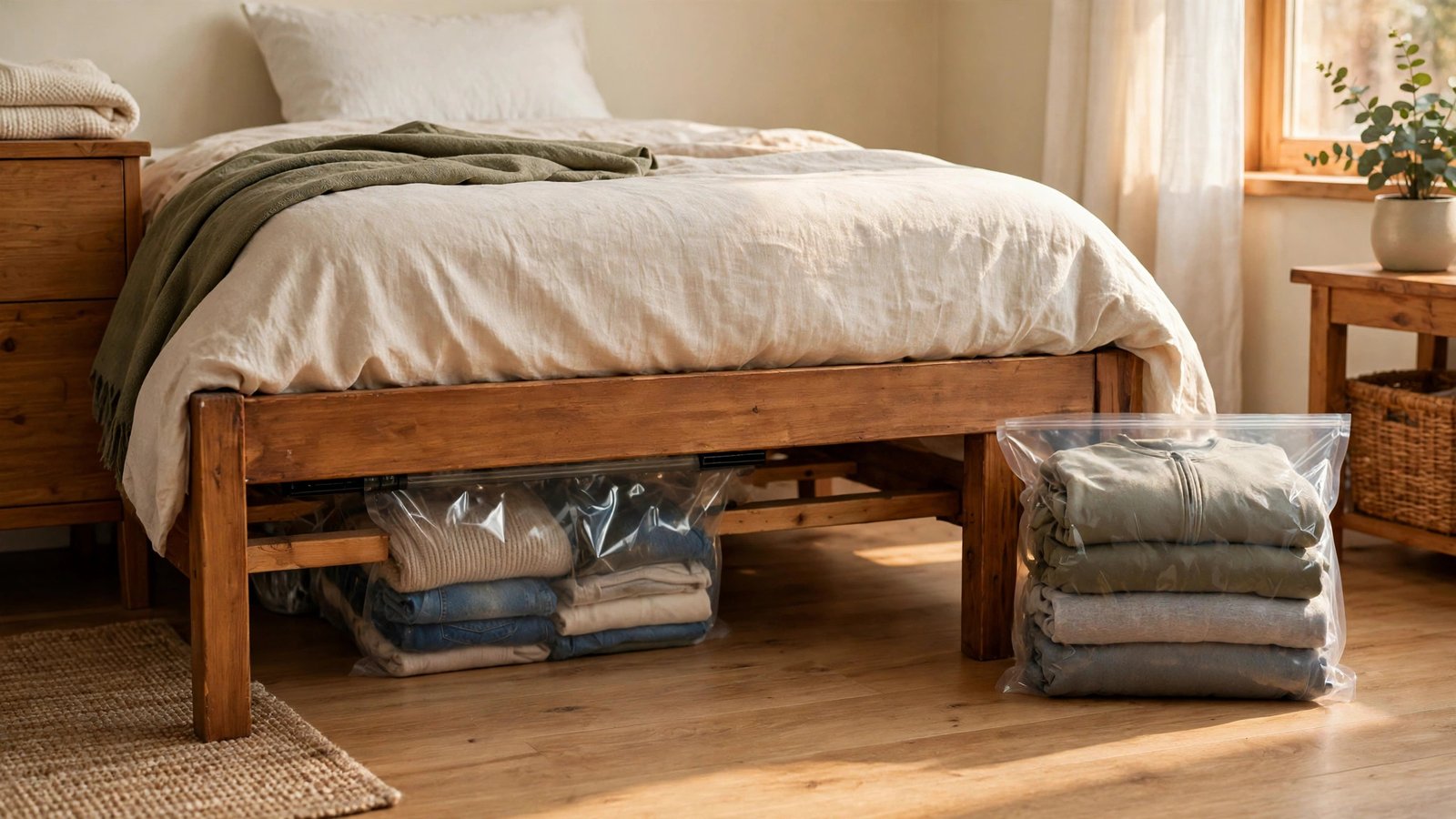
Renters rarely have attic or basement storage, so seasonal swaps have to be ruthless and compact. The WFH capsule makes this easy: your core formula — camera tops, comfort bottoms, hero layers — doesn’t change with the seasons. Only the fabrics and weights do. Swap short sleeves for long sleeves, swap bike shorts for full joggers, swap the lightweight cardigan for the chunky one. Same slots, different fills.
The goal is a swap that fits in one under-bed bin or one shelf cubby. Vacuum-seal bags (the roll-up kind, no vacuum needed) compress a season’s worth of off-season tops to nearly nothing — and they slide under any bed, no landlord permission required.
Why it works for renters specifically: this is the anti-storage-unit plan. Renters move; storage units are a tax on moving. Keeping the swap to a single bin means your entire wardrobe transition happens in an afternoon and moves with you in one trip. Flag nothing here needs permission — it’s all soft goods and freestanding storage.
How to do the swap:
- Twice a year (spring/fall), pull every capsule piece and sort into “current season” and “off-season” piles.
- Roll off-season pieces into vacuum-seal bags; label with a sticky note (contents + date).
- Slide bags under the bed or onto a high closet shelf — one bin’s worth, maximum.
- Refill the capsule slots 1:1 — seven tops stay seven tops, just seasonally weighted.
- Donate anything you didn’t wear last season in its slot; the capsule only keeps earners.
Approximate cost: $10–$20 for a set of roll-up vacuum bags, reusable for years.
Your Camera-Ready Rental Closet
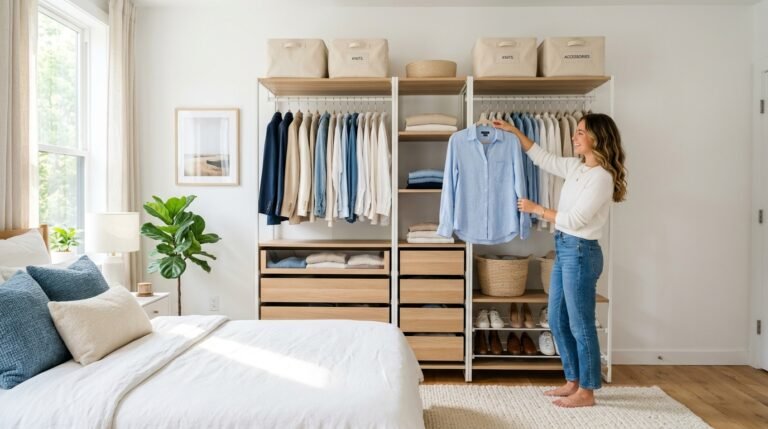
Here’s the transformation this plan delivers: a closet that used to be a stressful jumble of never-worn office clothes becomes a tight, intentional system of about 25 to 30 pieces — seven camera tops doing the heavy lifting, four comfort bottoms keeping you sane, two hero layers for the big moments, and a small kit of accessories that multiply everything. One staging zone near your desk, one ten-minute Sunday ritual, one laundry day a week. That’s the whole operating system.
The deeper win is psychological. Working from home blurs every boundary, and getting dressed — really dressed, in a way that reads on camera — is one of the few levers you control completely. Renters can’t renovate the apartment, but they can absolutely renovate the rectangle the world sees them in. Start with the camera-frame audit this weekend: photograph your frame, pull your tops, and keep only what earns its place. Everything else in this plan builds on that single honest hour.
Please save this visual guide on Pinterest and pin it to your work-from-home board — future you, mid-Zoom-call and looking sharp, will be glad you did.

Amelia leads HavenlyStyle’s editorial vision with a passion for elegant interiors and practical home living. With years of experience in home décor and lifestyle content, she ensures every article is accurate, inspiring, and easy to follow. From timeless decorating ideas to the latest interior design trends, Amelia is committed to helping readers create beautiful, functional spaces while maintaining HavenlyStyle’s trusted and welcoming voice.