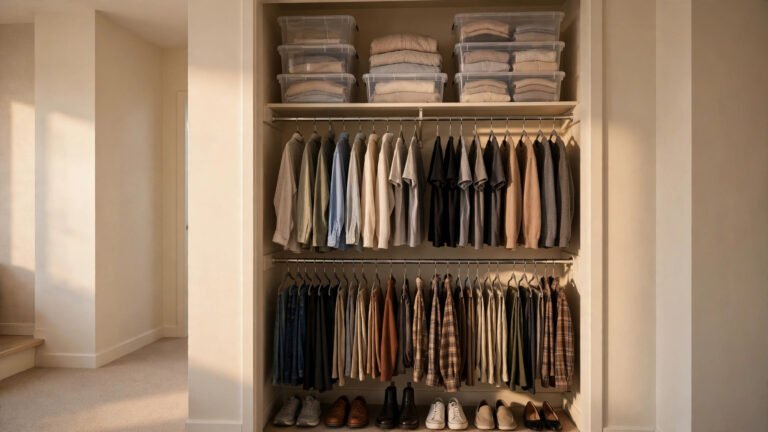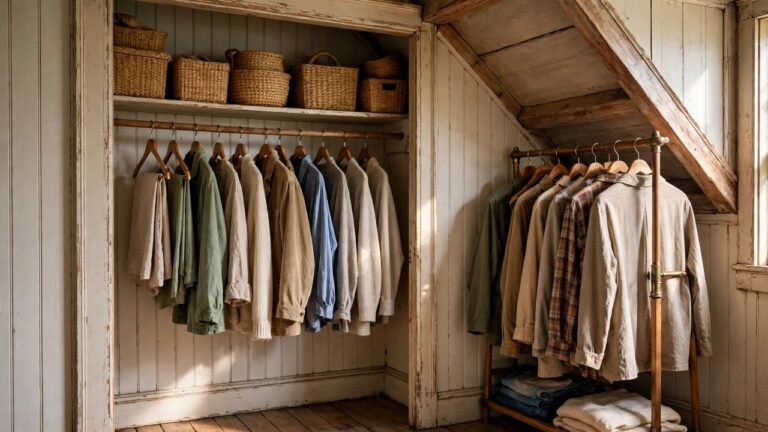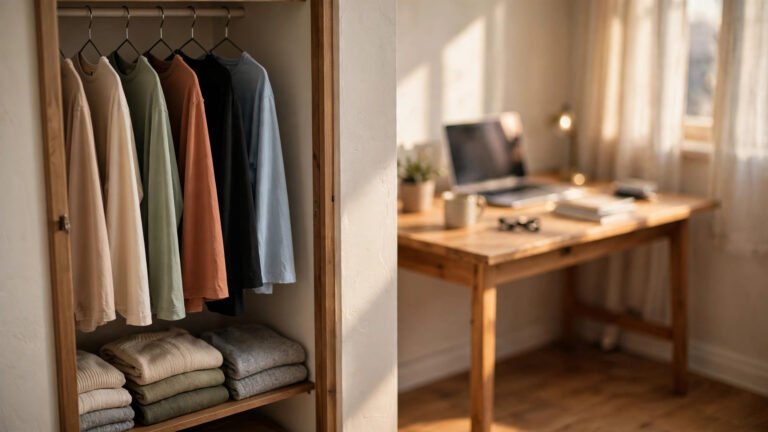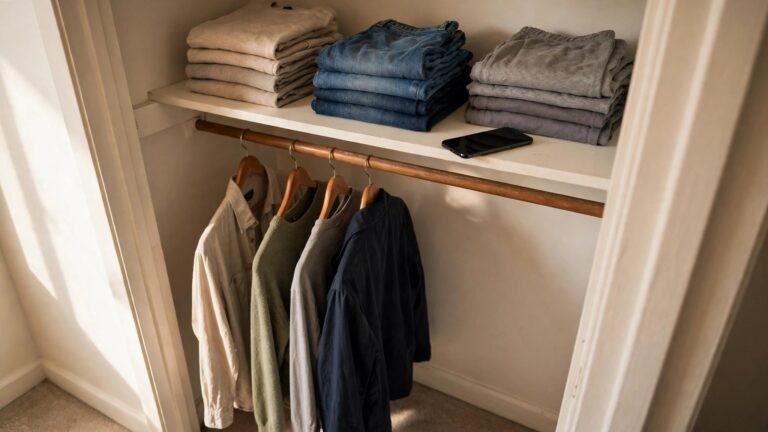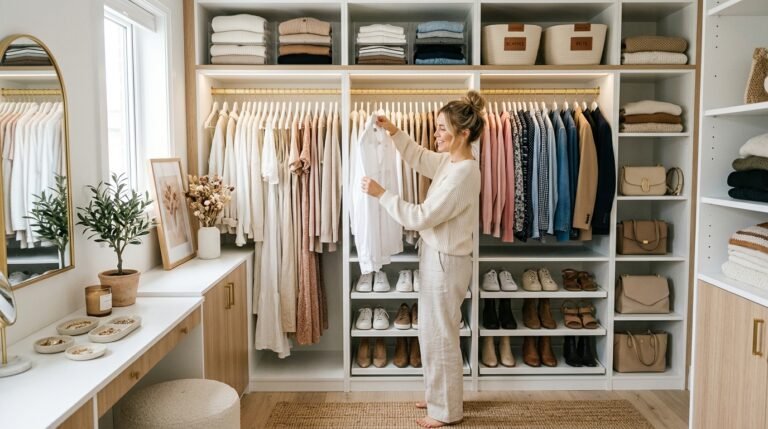
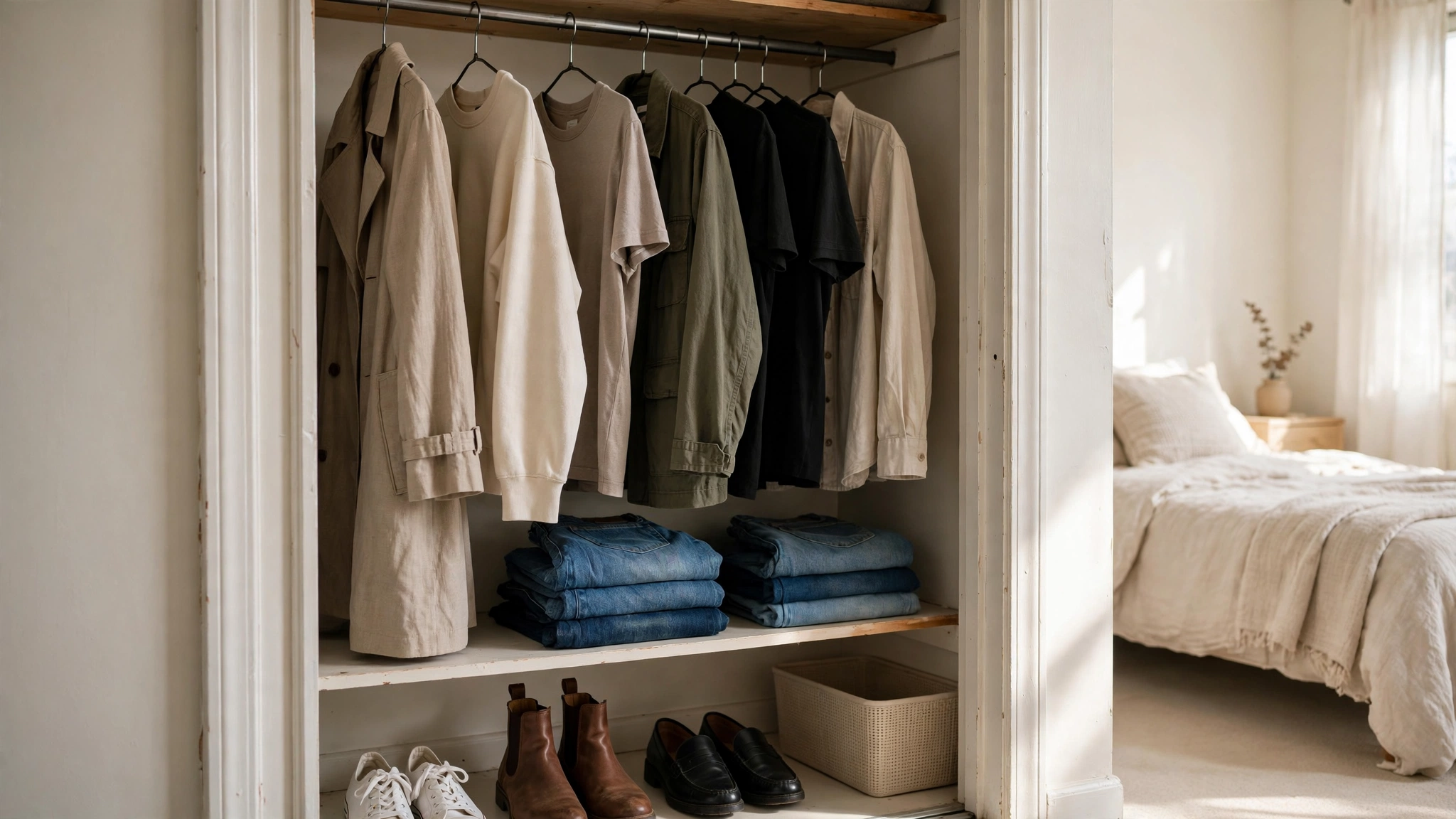
I have helped dozens of renters stare down the same tiny closet and ask the same frustrated question: how am I supposed to fit a whole wardrobe in a space barely bigger than a pantry? Here’s what I’ve noticed — the problem is almost never the closet. It’s that we’re trying to store fifty unrelated pieces in a space designed for thirty coordinated ones.
A capsule wardrobe is simply a small, intentional collection of clothes where everything matches everything else. The classic formula is around 30 pieces, and it was practically invented for small rental closets. Thirty pieces means 30 to 40 outfits without thinking, a closet that closes without a wrestling match, and mornings that take five minutes instead of forty. I’ve personally seen renters go from a bursting single-rod closet to a calm, boutique-looking wardrobe in a single weekend — no drilling, no landlord permission needed, nothing that risks the deposit.
This post is the full plan: the exact 30 pieces, organized into six building blocks, plus the renter-specific organization tricks that make a small closet actually work — slim hangers, vertical storage, seasonal swaps, and care habits that keep 30 pieces looking new for years. Every idea below is removable, reversible, and deposit-safe. If an idea needs landlord permission, I’ll flag it. Let’s build the wardrobe your closet was always meant to hold.
Executive Summary
- A 30-piece capsule wardrobe is the highest-impact fix for a small rental closet — everything matches, so 30 pieces make 30+ outfits.
- The 30 pieces split into six blocks: 8 tops, 6 bottoms, 5 layers, 3 dresses, 4 pairs of shoes, and 4 accessories.
- Stick to a 3-color base palette (one dark neutral, one light neutral, one accent) so every combination works without effort.
- No-drill, deposit-safe storage upgrades — slim velvet hangers, hanging shelf units, and over-the-door organizers — can double usable closet space in an afternoon.
- A seasonal swap system keeps only in-season pieces in the closet; everything else lives in under-bed storage.
- One-in-one-out and a simple care routine (wash less, steam more, rotate shoes) keep the capsule at 30 pieces and looking new for years.
1. Start With 8 Neutral Tops That All Match Each Other
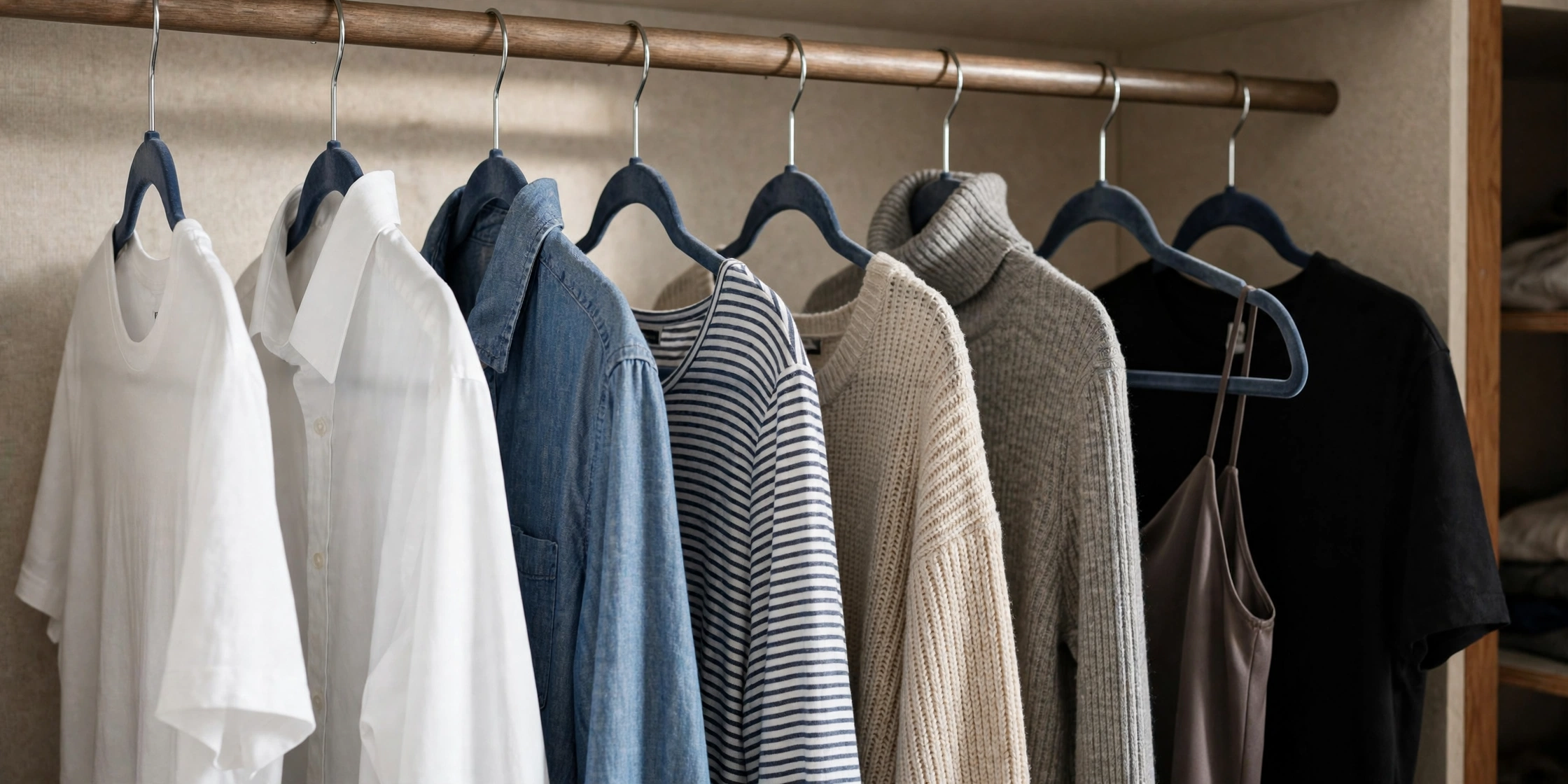
The tops are the engine of the capsule. Eight tops, chosen right, carry the entire wardrobe because tops pair with every bottom you own. I’ve seen renters with twenty tops and five bottoms who wear the same three combinations — the fix is fewer tops, better chosen, all in colors that play nicely together.
Why it works for renters: you change nothing in the apartment. This is a shopping strategy, not a renovation. Eight tops fit on one end of a single closet rod with room to spare, which is exactly what a small rental closet needs.
The 8 tops: 2 plain crew-neck tees (one white, one black or navy), 2 button-up shirts (one white, one chambray or light blue), 1 striped Breton-style top, 1 solid knit top in your accent color, 1 lightweight turtleneck, and 1 sleeveless shell or tank for layering.
- Pick your palette first. Choose one dark neutral (black or navy), one light neutral (white or cream), and one accent (olive, rust, burgundy, or whatever you love). Every top should contain at least one of these.
- Buy solids over prints. Prints only match a few things; solids match everything. The one striped top is your single exception — stripes behave like a neutral.
- Choose natural fabrics when the budget allows. Cotton, linen, and cotton blends wrinkle less and last longer than pure synthetics.
- Try everything against your actual bottoms. Before keeping a top, mentally pair it with your jeans, your trousers, and your skirt. If it only works with one, it doesn’t belong.
- Hang tops on slim hangers, color-grouped. Light to dark, left to right — you’ll see gaps and duplicates instantly.
Approximate cost: $80–$200 total, depending on whether you thrift, buy fast-fashion basics, or invest in a few mid-range pieces.
2. Build the Bottoms: 6 Pairs That Earn Their Hanger Space
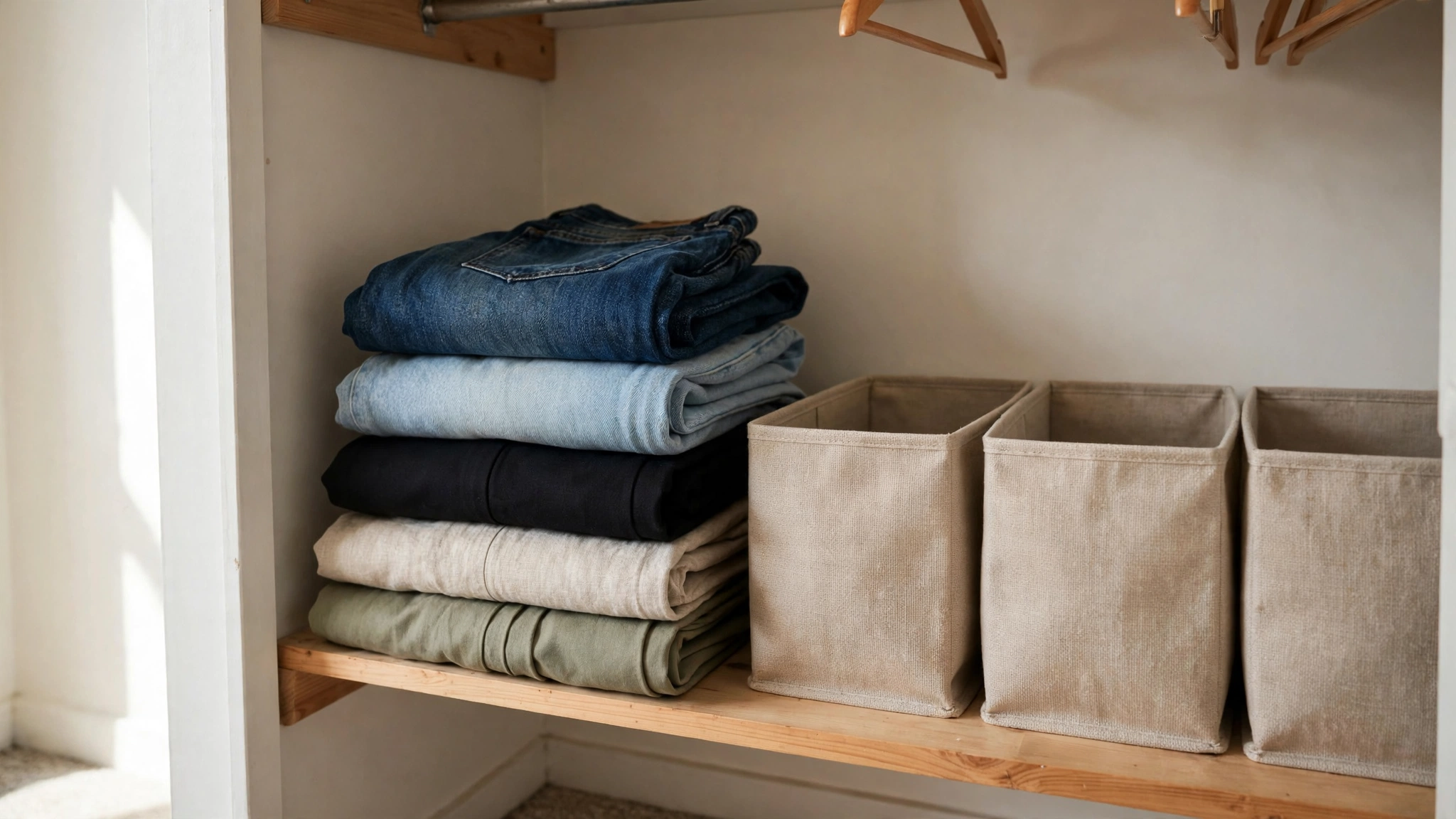
Bottoms are the most space-hungry part of any wardrobe — jeans and trousers take up twice the rod space of tops. Six bottoms is the sweet spot for a small closet: enough variety for two weeks of outfits, few enough that every pair gets worn regularly.
Why it works for renters: folding jeans and trousers on a closet shelf (or in a hanging shelf organizer, idea 9) instead of hanging them frees an entire section of rod for the pieces that actually need hanging.
The 6 bottoms: 2 pairs of jeans (one dark wash, one medium or light wash), 1 pair of black tailored trousers, 1 pair of casual linen or cotton pants in a light neutral, 1 knee-length or midi skirt in a dark neutral, and 1 pair of tailored shorts or a second casual pant for warm weather.
- Fit first, fashion second. One perfectly fitting pair of dark jeans beats three pairs that bag at the knee. Alterations on a thrifted pair often cost less than a new one.
- Make the dark pair do double duty. Dark-wash jeans or black trousers can dress up with the blazer from idea 3 — that’s your going-out outfit sorted.
- Limit silhouettes to two. If you live in straight-leg jeans, make both pairs straight-leg in different washes. Variety in silhouette is what makes bottoms hard to pair.
- Store flat, not hung. Fold jeans over a shelf or stack them in a fabric cube — hanging trousers crease and hog rod space.
- Check the sit test. Sit down in the fitting room. If you have to adjust when you stand, walk away.
Approximate cost: $120–$300 total, with the biggest variable being whether denim comes from a thrift store or a premium brand.
3. Add 5 Layers That Turn Basics Into Outfits
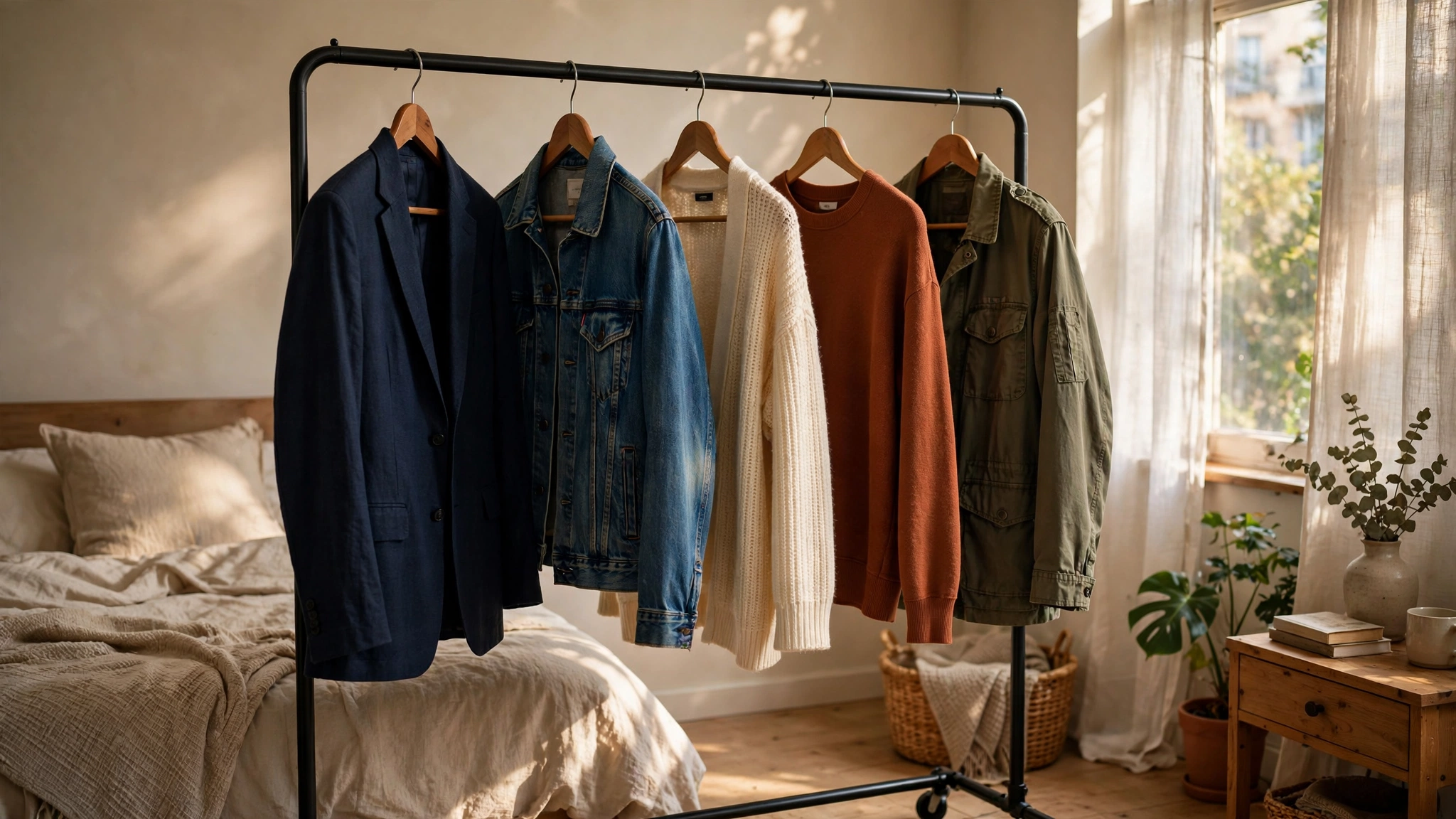
This is the idea I rank highest for visual impact. A plain tee and jeans is an errand outfit; add a blazer and it’s dinner. Layers — the “third piece” — are what make a capsule look styled instead of spare, and five layers are enough to give every bottom a different personality.
Why it works for renters: layers are the least closet-hungry category for their impact. A blazer on a hanger takes the same space as a tee but changes ten outfits.
The 5 layers: 1 unstructured blazer in black or navy, 1 denim jacket, 1 open-front cardigan in a light neutral, 1 cozy pullover sweater in your accent color, and 1 utility or field jacket for weather.
- Start with the blazer. It’s the single highest-impact piece in the whole 30. Try it over a tee, over the turtleneck, over the day dress — it works over all of them.
- Make sure layers fit over your tops. Bring your bulkiest sweater to try on jackets. A jacket that only fits over a tank top is a one-season piece.
- Keep the denim jacket classic. Medium wash, no heavy distressing — it pairs with the trousers and skirts too, not just jeans.
- Hang the structured pieces, fold the knits. Blazer and jackets on hangers; cardigan and sweater folded on a shelf so the shoulders don’t stretch.
- Weather-check your fifth layer. If your city barely gets cold, swap the field jacket for a light trench or a second cardigan in a different neutral.
Approximate cost: $100–$280 total; blazers and jackets are the priciest per piece, so thrift these first.
4. Keep 3 Dresses for Zero-Decision Days
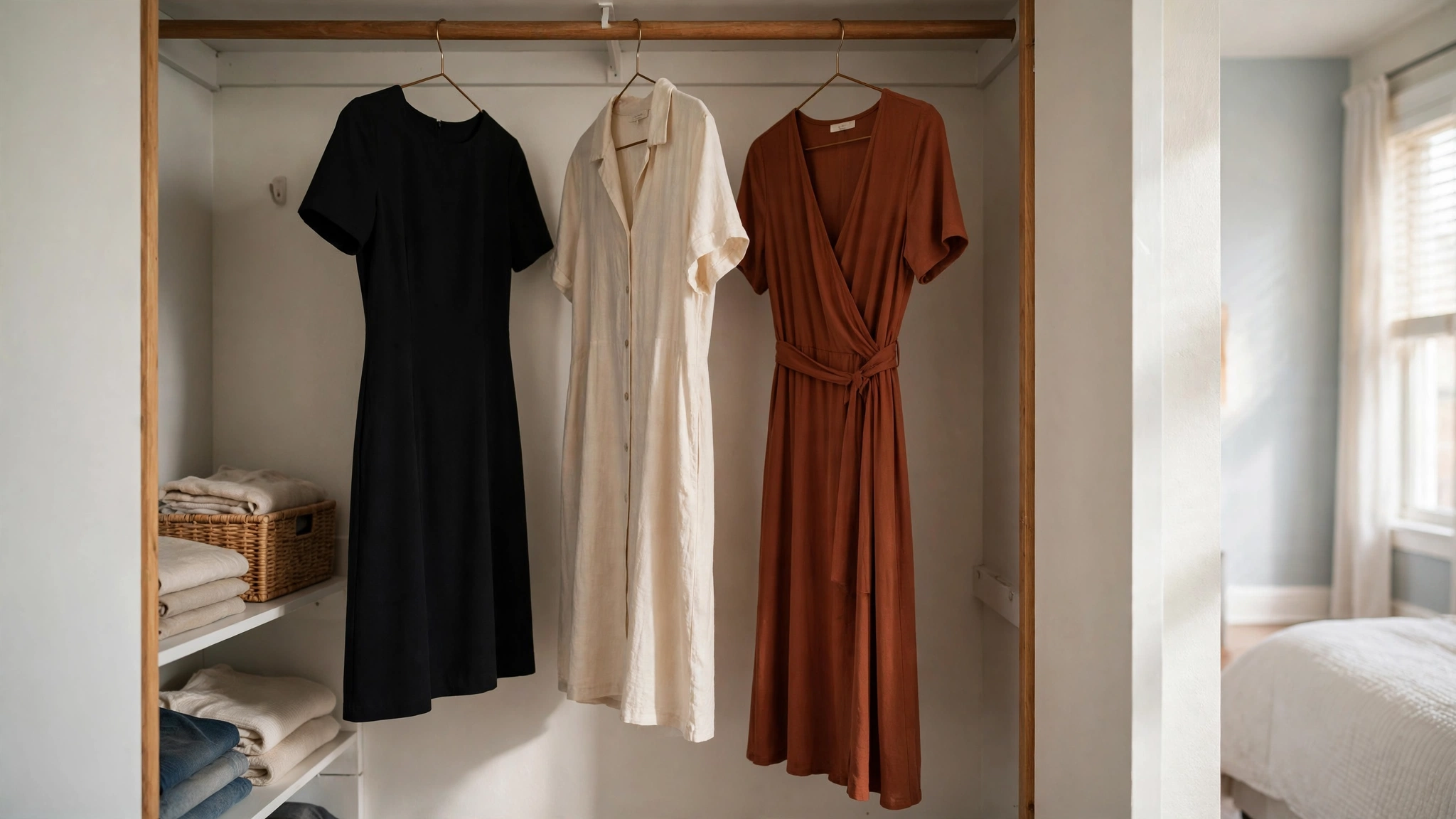
Every capsule needs its easy button: a one-piece outfit for the mornings when your brain refuses to coordinate separates. Three dresses cover casual, polished, and in-between — and a dress takes up exactly one hanger.
Why it works for renters: dresses are the most outfit-per-inch pieces you own. One hanger, zero pairing decisions, and each one doubles as a top when layered under the cardigan or blazer.
The 3 dresses: 1 little black dress (knee-length, simple neckline), 1 casual day dress in a solid neutral or subtle print, and 1 wrap or midi dress in your accent color or a soft pattern.
- Choose dresses that work with your existing shoes. The black dress should pair with your ankle boots AND your flats; the day dress with sneakers AND sandals.
- Prioritize pockets and comfort. A dress you can’t sit in comfortably or carry your phone in will live at the back of the closet.
- Check the layering test. Each dress should look good with at least two of your five layers over it — that’s how three dresses become nine outfits.
- Mind the hemline for your life. If you bike, chase toddlers, or climb apartment stairs, a midi beats a mini for daily wear.
- Steam, don’t iron. A handheld steamer keeps all three dresses wrinkle-free with no ironing board to store (see idea 10).
Approximate cost: $90–$240 total for three dresses.
5. Ground Everything With 4 Pairs of Shoes
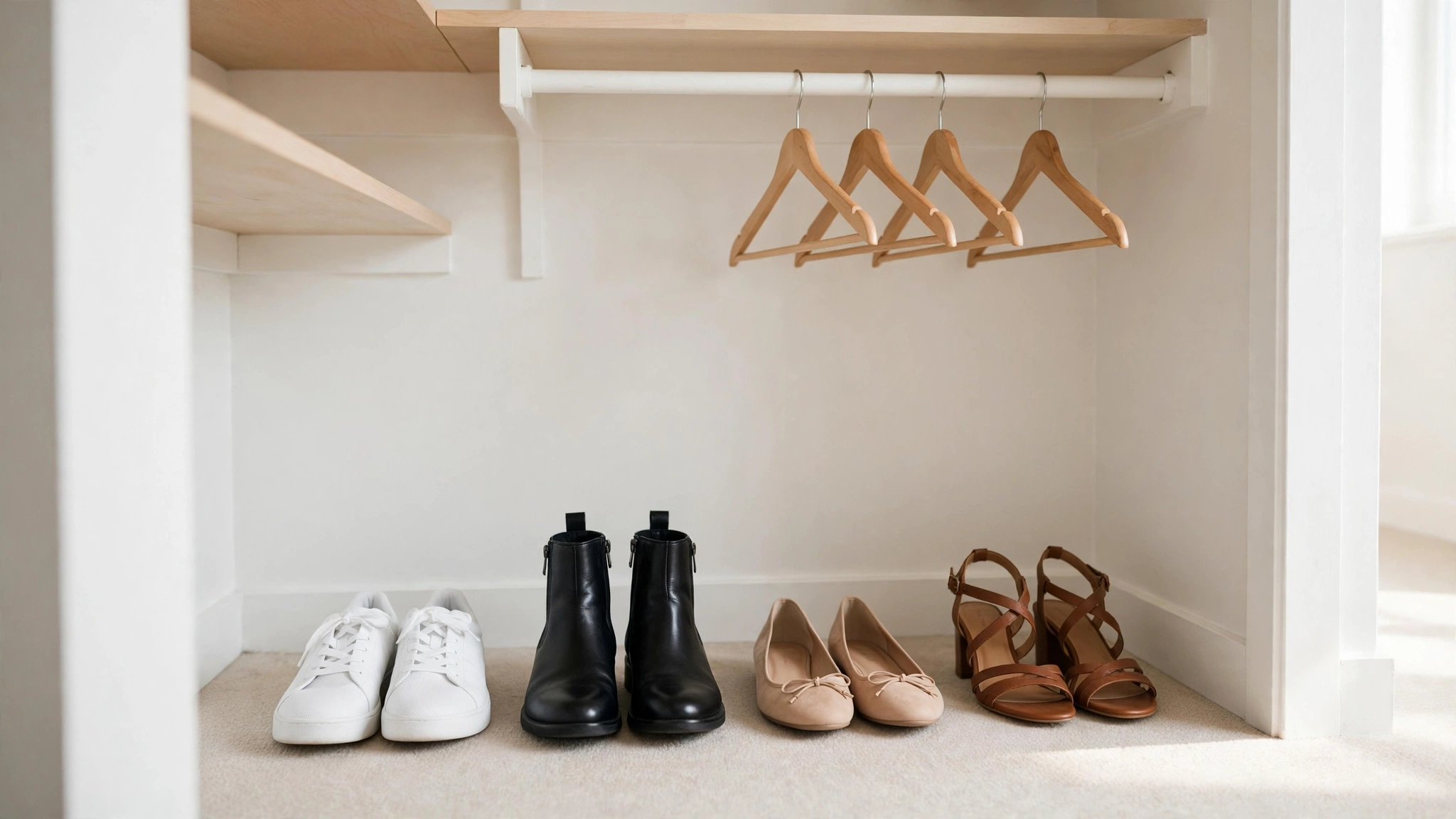
Shoes are where small closets suffer most — they’re bulky, oddly shaped, and rental closets rarely have real shoe storage. Four pairs, chosen to span casual to dressy and warm to cool weather, cover a renter’s whole life without a shoe explosion.
Why it works for renters: four pairs fit on a single closet floor or one over-the-door organizer. Every pair beyond four needs a storage system you probably don’t have room for.
The 4 pairs: 1 pair of clean white or neutral sneakers, 1 pair of ankle boots in black or brown, 1 pair of comfortable flats or loafers, and 1 pair of dressier shoes (strappy sandals, block heels, or polished oxfords — whatever suits your life).
- Match shoe colors to your palette. Black boots, white sneakers, nude or black flats — neutrals pair with all six bottoms and all three dresses.
- Prioritize comfort over height. A block heel you’ll wear beats a stiletto you won’t. Unworn shoes are the fastest way to break the 30-piece limit.
- Rotate daily. Shoes need 24 hours to air out between wears — this alone doubles their lifespan (more in idea 10).
- Store on the closet floor in a row, or over the door. Never stacked in a pile; you forget what’s at the bottom and it never gets worn.
- Weather-proof once a season. An inexpensive weatherproofing spray protects boots and sneakers and takes five minutes.
Approximate cost: $120–$350 total; shoes are worth spending on since you wear four pairs constantly.
6. Finish With 4 Accessories That Multiply Every Outfit
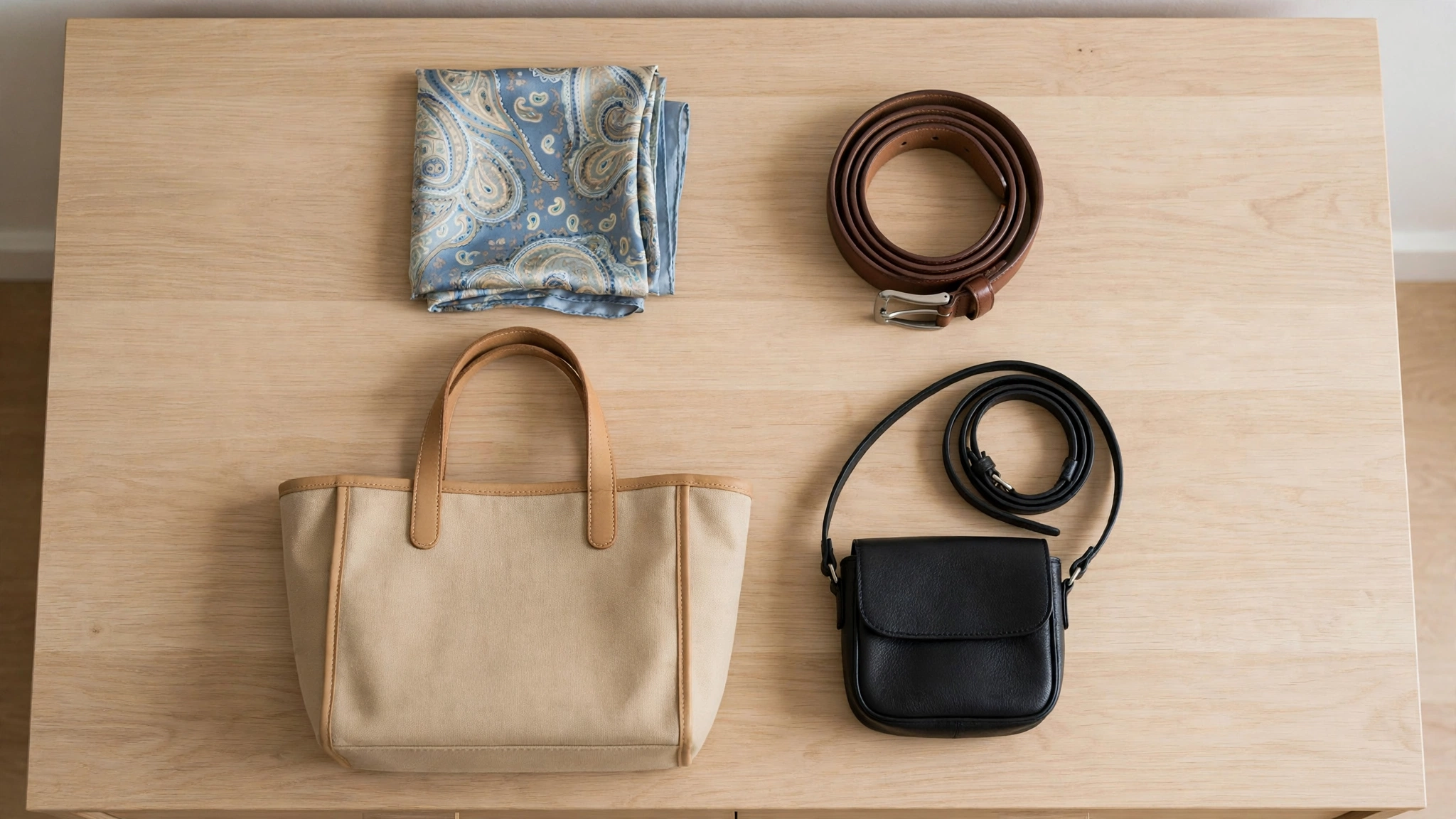
Accessories are the capsule’s secret weapon: the same black dress reads completely differently with a silk scarf versus a statement belt. Four well-chosen accessories create outfit variations without a single extra hanger.
Why it works for renters: accessories store in a drawer, a small box, or a single hook — essentially zero closet footprint for maximum outfit multiplication.
The 4 accessories: 1 versatile scarf (silk or lightweight wool in your accent color or a classic pattern), 1 quality belt in black or brown leather (or vegan leather), 1 structured tote bag for work and errands, and 1 small crossbody bag for evenings and weekends.
- Let the scarf be your pattern piece. If the rest of the capsule is solid, a patterned scarf adds all the visual interest your outfits need.
- Match metals and leathers loosely. Your belt, bag hardware, and watch don’t need to match exactly, but keeping to one metal family (all silver or all gold) looks intentional.
- Size the tote for your real life. It should fit a laptop or a paperback and groceries — if it’s too small for errands and too big for evenings, it fails both.
- Store bags stuffed. Tissue or a rolled tee inside keeps totes from slumping; hang the crossbody on a single adhesive hook inside the closet door.
Approximate cost: $60–$200 total; thrift stores are excellent for scarves and belts.
7. Audit Before You Buy: The Weekend Closet Clean-Out
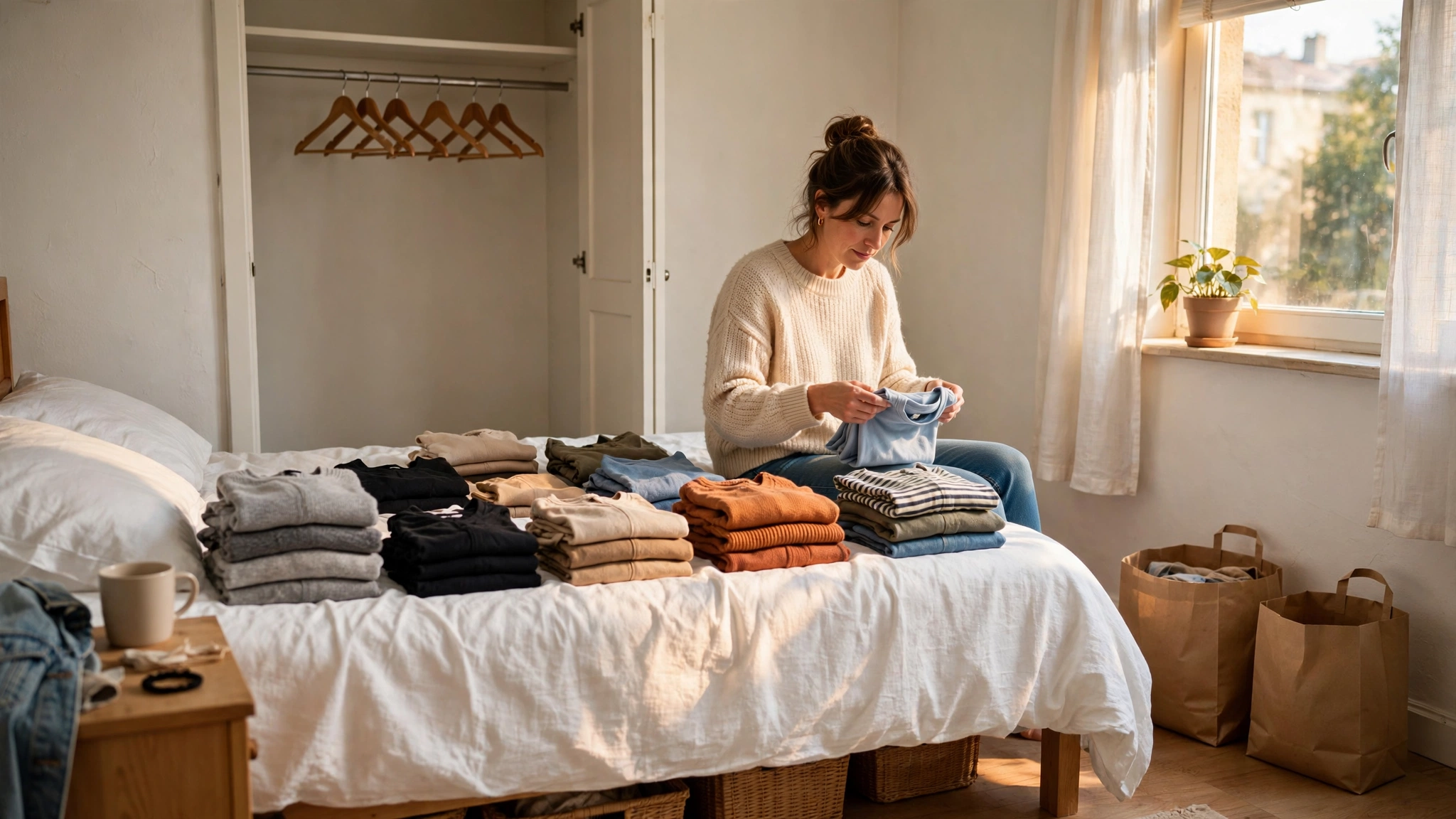
Before you buy a single new piece, audit what you own. I’ve watched renters skip this step, buy the full 30, and end up with 45 pieces because the old stuff never left. The audit is free and it’s the foundation everything else stands on.
Why it works for renters: moving day comes for every renter eventually. Purging now means fewer boxes, less to haul up apartment stairs, and a closet that actually fits the space you have.
- Pull everything out. Every top, bottom, shoe, and accessory onto the bed. Yes, all of it — you can’t audit what you can’t see.
- Sort into three piles: love and wear, maybe, and out. “Out” means donate, sell, or recycle — stained, stretched, unworn for a year, or duplicates of something better.
- Match the “love” pile against the 30-piece list. Check off what you already own from ideas 1–6. Most renters discover they own 15–20 of the 30 already.
- Photograph the “maybe” pile and box it for 30 days. If you don’t open the box, donate it unopened. No guilt — it served its time.
- Write your buy list. Only the missing pieces from the 30. This list is your shopping plan; nothing else comes home.
Approximate cost: $0. Donation bags are free, and selling the “out” pile can fund the buy list.
8. Zone Your Closet Like a Small Boutique
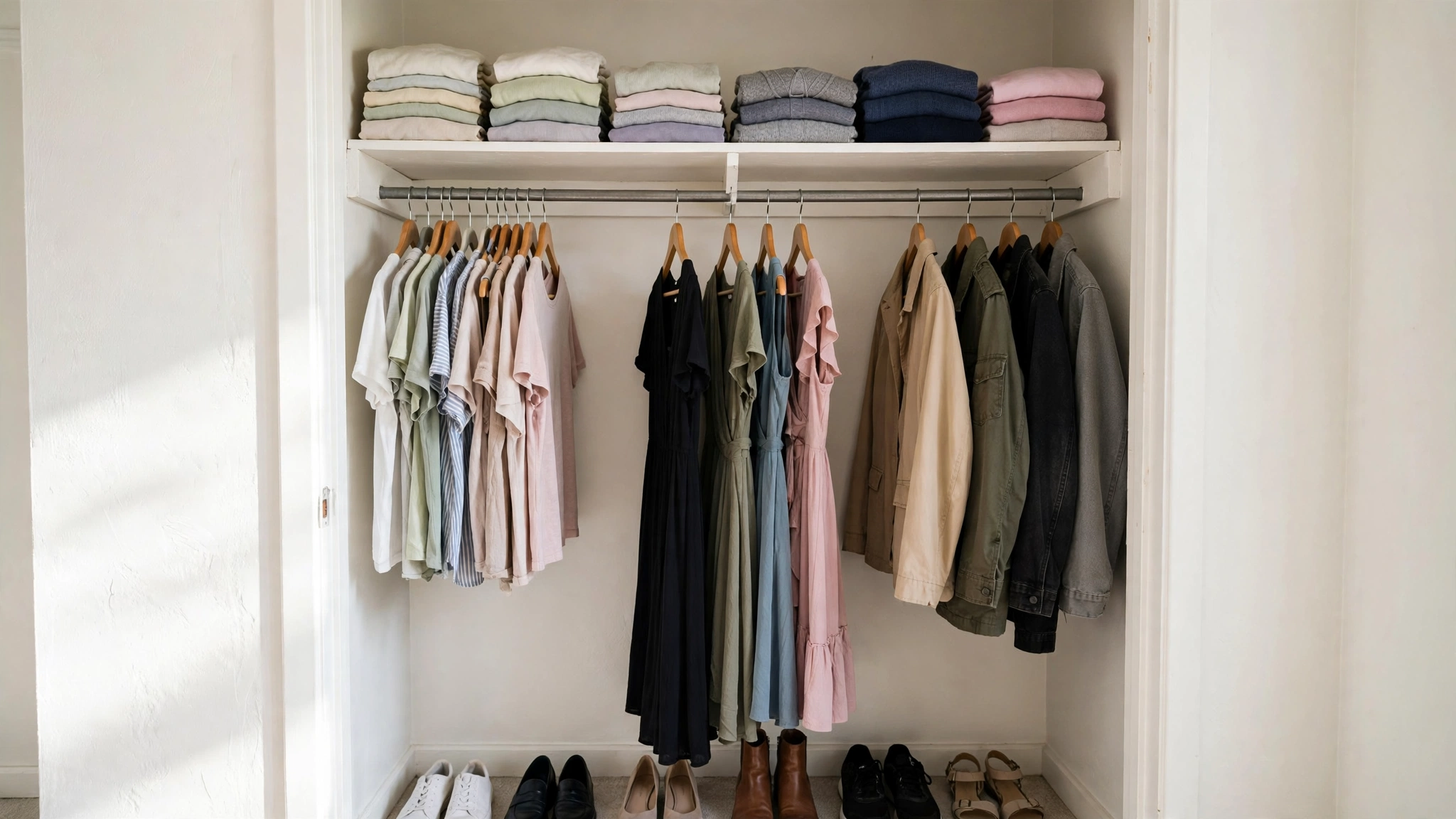
Once the 30 pieces are chosen, where they live matters as much as what they are. Zoning — assigning each category a fixed home — turns a cramped rental closet into something that feels designed. I’ve personally seen this single change cut morning decision time in half.
Why it works for renters: zoning uses the closet exactly as your landlord gave it to you. No new holes, no new hardware — just intention about which rod section and shelf holds what.
- Put daily pieces at eye level. Tops on the left of the rod, layers on the right, dresses in the middle — the pieces you grab most live where your hands naturally go.
- Give bottoms the shelf. Folded jeans and trousers stack neatly on the top shelf or in a hanging organizer; they don’t need rod space.
- Dedicate one zone to tomorrow. A single hook or the end of the rod holds tonight’s outfit for tomorrow morning — future you will be grateful.
- Keep the floor clear except shoes. Four pairs in a row, nothing else. A clear floor makes the closet feel twice as big.
- Label zones for the first month. Small adhesive labels or washi tape on the shelf edge — removable, and they train the habit until it’s automatic.
Approximate cost: $0–$15 for washi tape or removable labels if you want them.
9. Double Your Space With Slim Hangers and No-Drill Storage
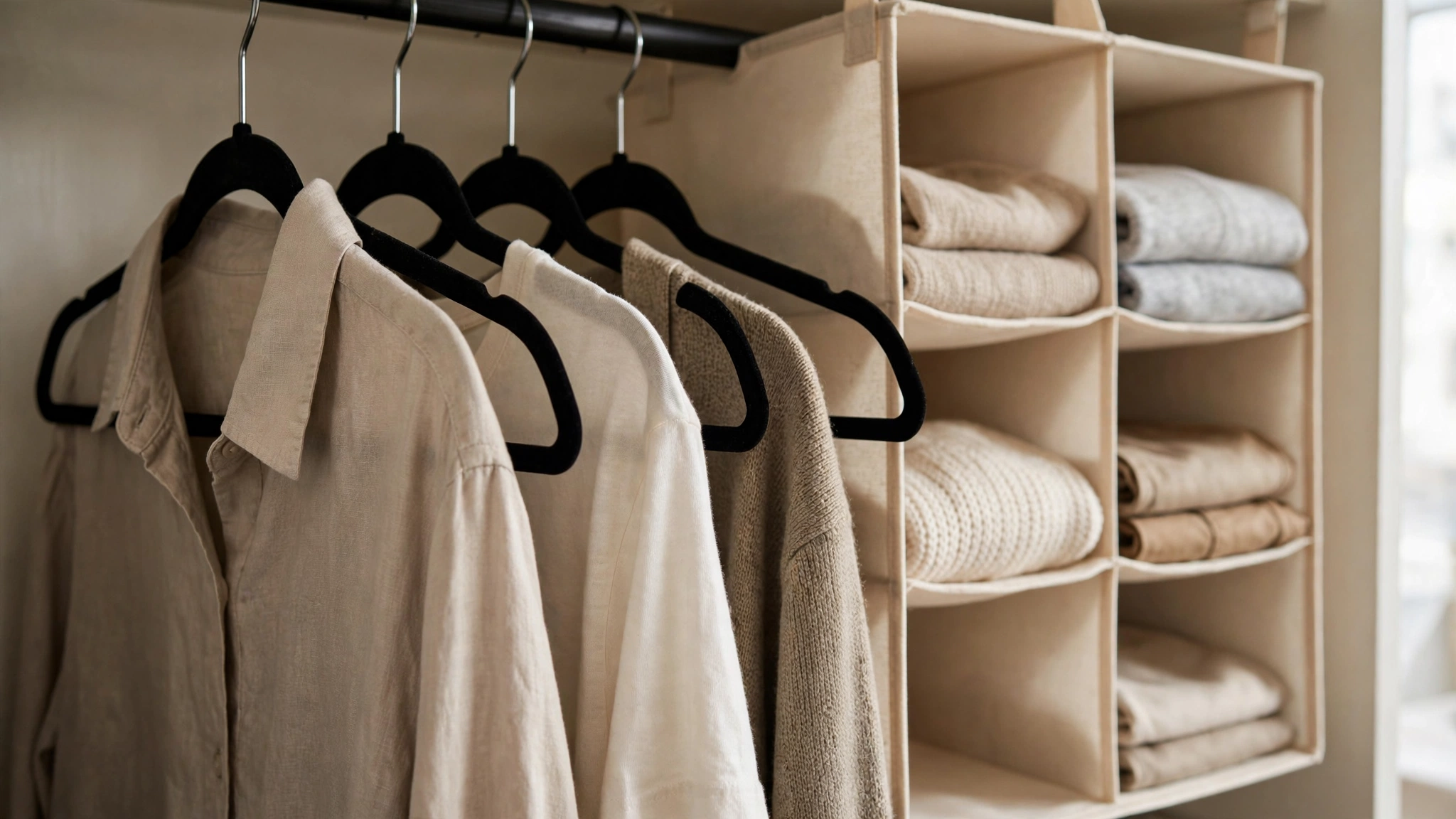
Here’s the uncomfortable truth about rental closets: the chunky plastic hangers most of us own waste up to a third of the rod. Switching to slim hangers is the cheapest space upgrade in existence, and no-drill add-ons handle the rest.
Why it works for renters: every single item here is removable and leaves zero trace. Slim hangers, hanging shelf units, and over-the-door organizers go up in minutes and come down in seconds on moving day.
- Swap every hanger for slim velvet ones. A 30-pack costs little and reclaims inches of rod. Bonus: clothes stop sliding off.
- Hang a fabric shelf unit from the rod. Five cubbies instantly become homes for folded knits, bottoms, and accessories — no tools, no screws.
- Use the door. An over-the-door hook rack holds tomorrow’s outfit, the crossbody bag, and the scarf collection without touching a wall.
- Add under-shelf baskets on the top shelf. Wire or fabric baskets that hook over the existing shelf corral small items without any mounting.
- Keep one empty hanger visible. It’s your visual cue that the capsule is at capacity — a full closet with no empty hanger means something needs to go (see idea 11).
Approximate cost: $30–$80 total for hangers, a hanging shelf unit, and an over-the-door rack.
10. The Care Ritual That Keeps 30 Pieces Looking New
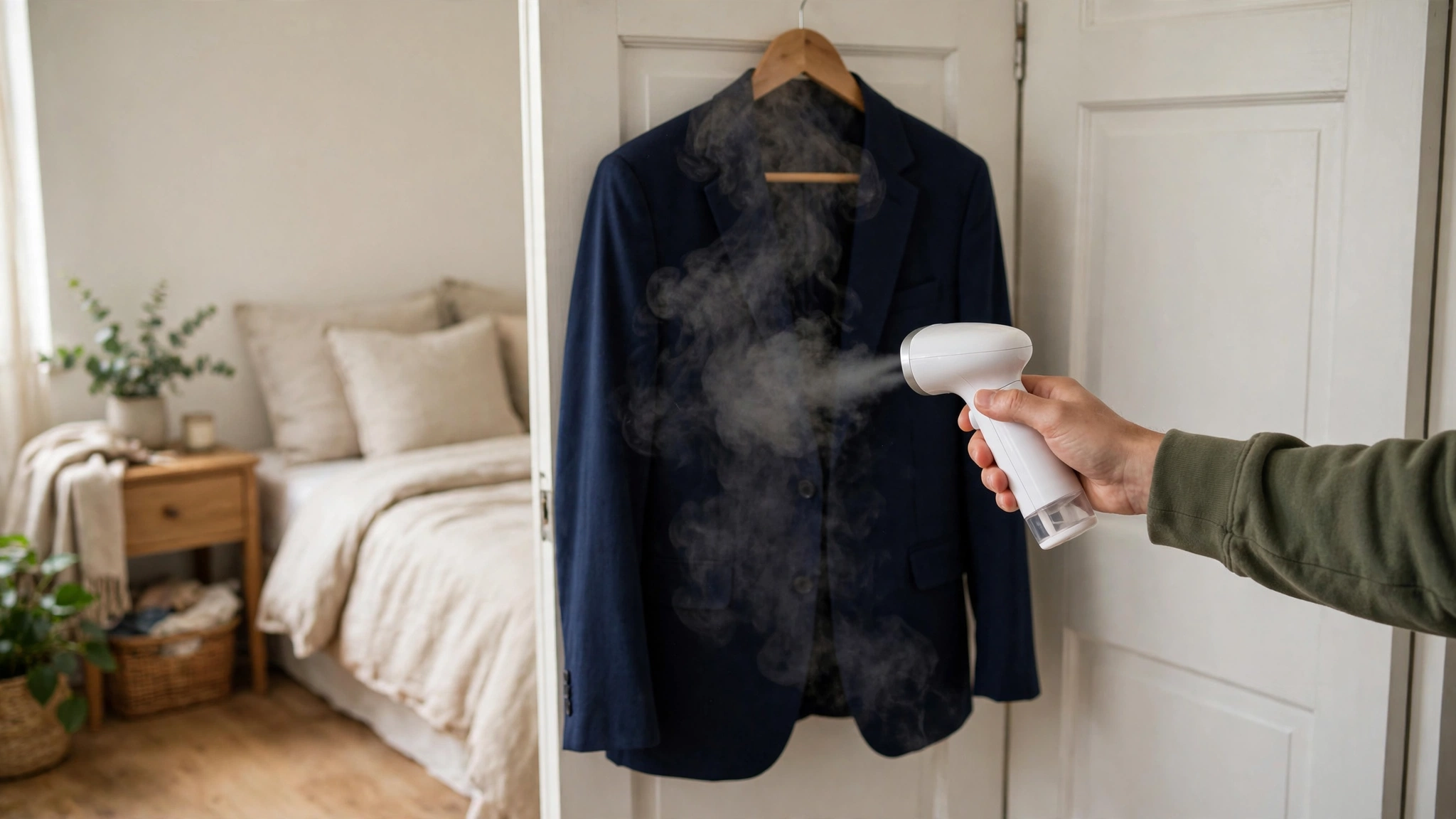
When you own 30 pieces instead of 60, each one works twice as hard — so care matters twice as much. The good news: a small capsule is actually easier to maintain, because you always know what needs attention. This ritual takes about twenty minutes a week.
Why it works for renters: no special equipment to store. A steamer, a drying rack, and a lint roller fit in the corner of any closet, and everything here protects the clothes you already own — the most budget-friendly move of all.
- Wash less, air more. Jeans and sweaters rarely need washing after one wear — hang them to air overnight. Less washing means less fading, less pilling, longer life.
- Steam instead of iron. A handheld steamer de-wrinkles tops, dresses, and blazers in minutes with no board to store and no scorch risk.
- Rotate shoes and rest them. Never wear the same pair two days running; insert cedar shoe trees or crumpled paper in boots to hold their shape.
- Treat stains the day they happen. Keep a small stain stick in the bathroom — a 30-second treatment now beats a ruined $60 top later.
- Do a monthly 10-minute repair check. Tighten a button, snip a loose thread, de-pill a sweater. Small fixes prevent small problems from retiring a piece early.
Approximate cost: $30–$60 for a handheld steamer and basic supplies; the habit itself is free.
11. One In, One Out: Keeping the Capsule at 30 Pieces
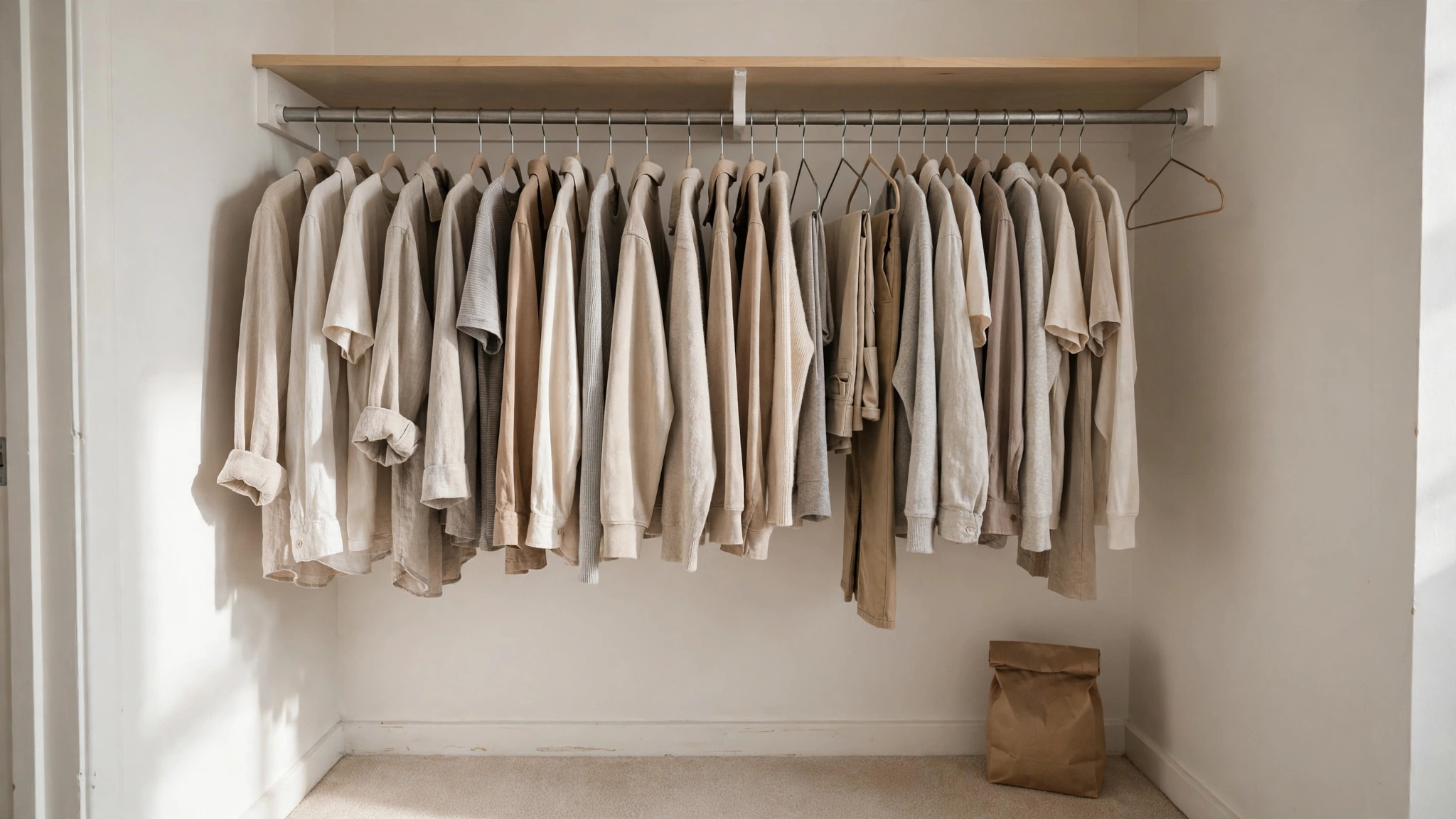
A capsule only stays a capsule if the number holds. Without a rule, 30 drifts to 40 within a season — I’ve seen it happen every time. One-in-one-out is the simplest maintenance rule there is: something new comes home, something old leaves.
Why it works for renters: it prevents the slow closet creep that turns every small rental closet back into a bursting one, and it makes moving day dramatically easier — you never accumulate more than fits.
- Make it non-negotiable. New sweater? An old top gets donated the same day. No “transition period” — that’s how drift starts.
- Keep a donation bag in the closet. A small bag on the closet floor catches the “out” piece immediately, so it doesn’t migrate back onto a hanger.
- Track the 30 on your phone. A simple notes list of your pieces — snap a photo of each once. Shopping with the list stops impulse buys cold.
- Do a seasonal count. Four times a year, count hangers. Still 30? The system works. Creeping up? The donation bag is waiting.
- Allow intentional swaps, not additions. Trading the striped top for a different print is fine — that’s still 30. Adding a 31st “just because” is not.
Approximate cost: $0. This rule saves money by definition.
12. Seasonal Swaps Without a Storage Unit
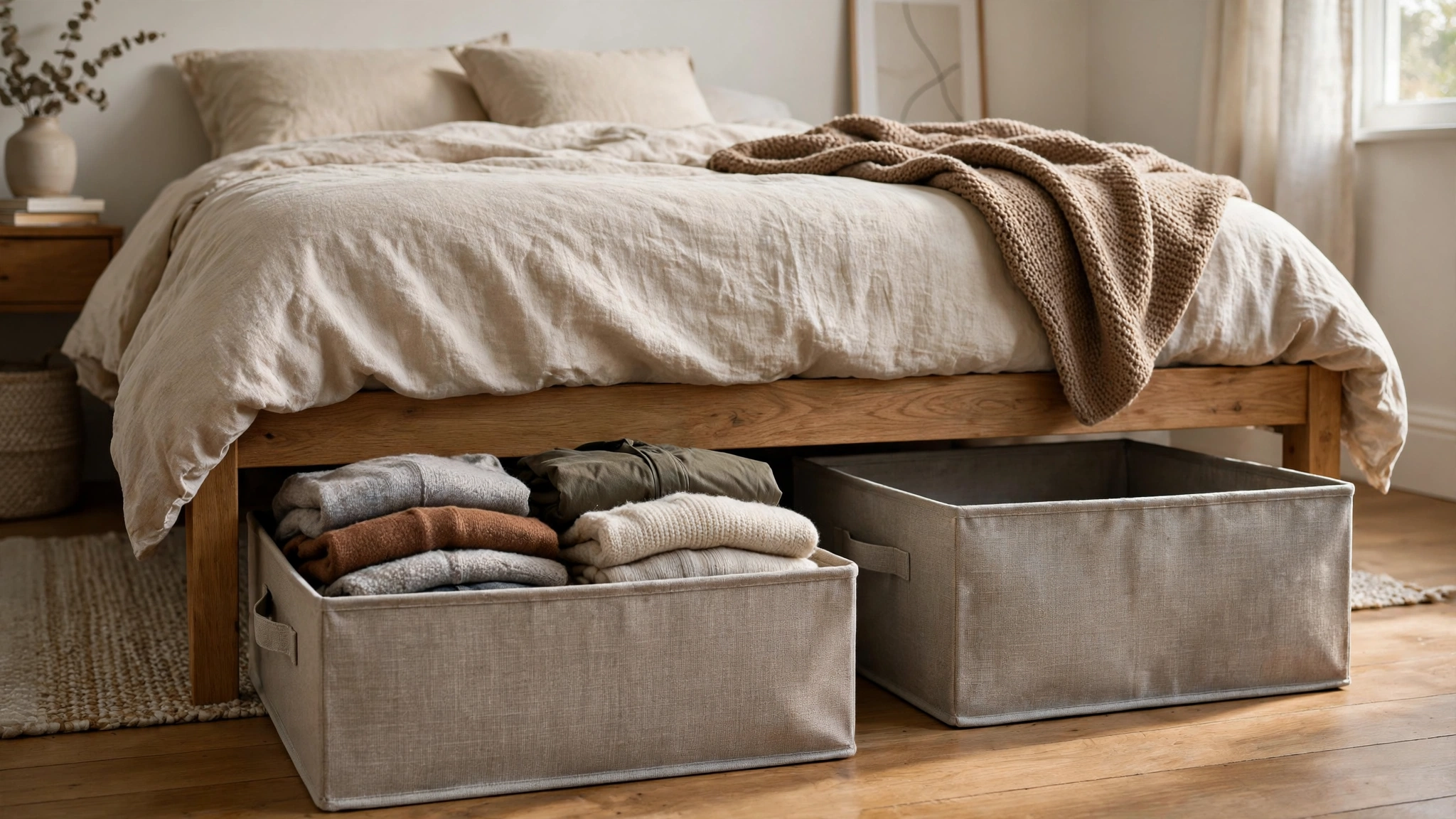
Renters don’t have attics, basements, or spare closets — so off-season clothes have to live somewhere smart. The seasonal swap keeps only current-season pieces in the closet and stores the rest under the bed or on the closet’s top shelf, twice a year, in under an hour.
Why it works for renters: under-bed storage bins and vacuum bags are fully portable and leave no trace. When the lease ends, they slide out and move with you.
- Schedule two swap days a year. Late October and late April work for most of the US — put them on your calendar now so they actually happen.
- Pack by category, labeled. One bin for off-season tops, one for bottoms and layers; label the ends so you can read them without pulling bins out.
- Wash before storing. Stains set over months and moths love body oils — clean everything before it goes in the bin.
- Use the swap as your audit. Each swap day is a natural moment to re-check idea 11’s count and retire anything worn out.
- Keep one “shoulder season” box accessible. A light layer and a versatile dress stay out year-round for weird-weather weeks — because October in Texas is not October in Minnesota.
Approximate cost: $20–$50 for two under-bed bins or vacuum storage bags, bought once and reused for years.
Your Small Closet Is Enough
Thirty pieces. Six building blocks. One weekend of auditing, a few no-drill upgrades, and a handful of habits that take minutes a week. That’s the whole plan — and I’ve watched it transform closets I would have sworn were hopeless into spaces that feel calm, intentional, and honestly a little luxurious.
The real payoff isn’t just a tidier closet. It’s the mornings you get back: no more staring at a packed rod in a towel, no more “I have nothing to wear” surrounded by clothes, no more buying duplicates of things you already own because you couldn’t see them. A capsule gives you fewer decisions and better outfits, which is exactly what a busy renter needs.
Start this weekend with idea 7 — the audit costs nothing and tells you exactly what to buy next. Then work through the six building blocks at whatever pace your budget allows; there’s no rule that says the capsule has to be complete by Sunday. And when your closet finally closes without a fight, take the photo.
Please save this visual guide on Pinterest and share it with a fellow renter whose closet is bursting at the seams — good style shouldn’t require a walk-in.

Amelia leads HavenlyStyle’s editorial vision with a passion for elegant interiors and practical home living. With years of experience in home décor and lifestyle content, she ensures every article is accurate, inspiring, and easy to follow. From timeless decorating ideas to the latest interior design trends, Amelia is committed to helping readers create beautiful, functional spaces while maintaining HavenlyStyle’s trusted and welcoming voice.