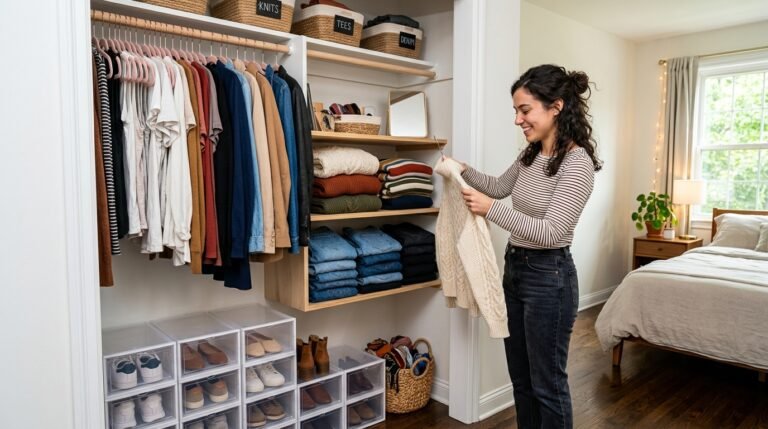
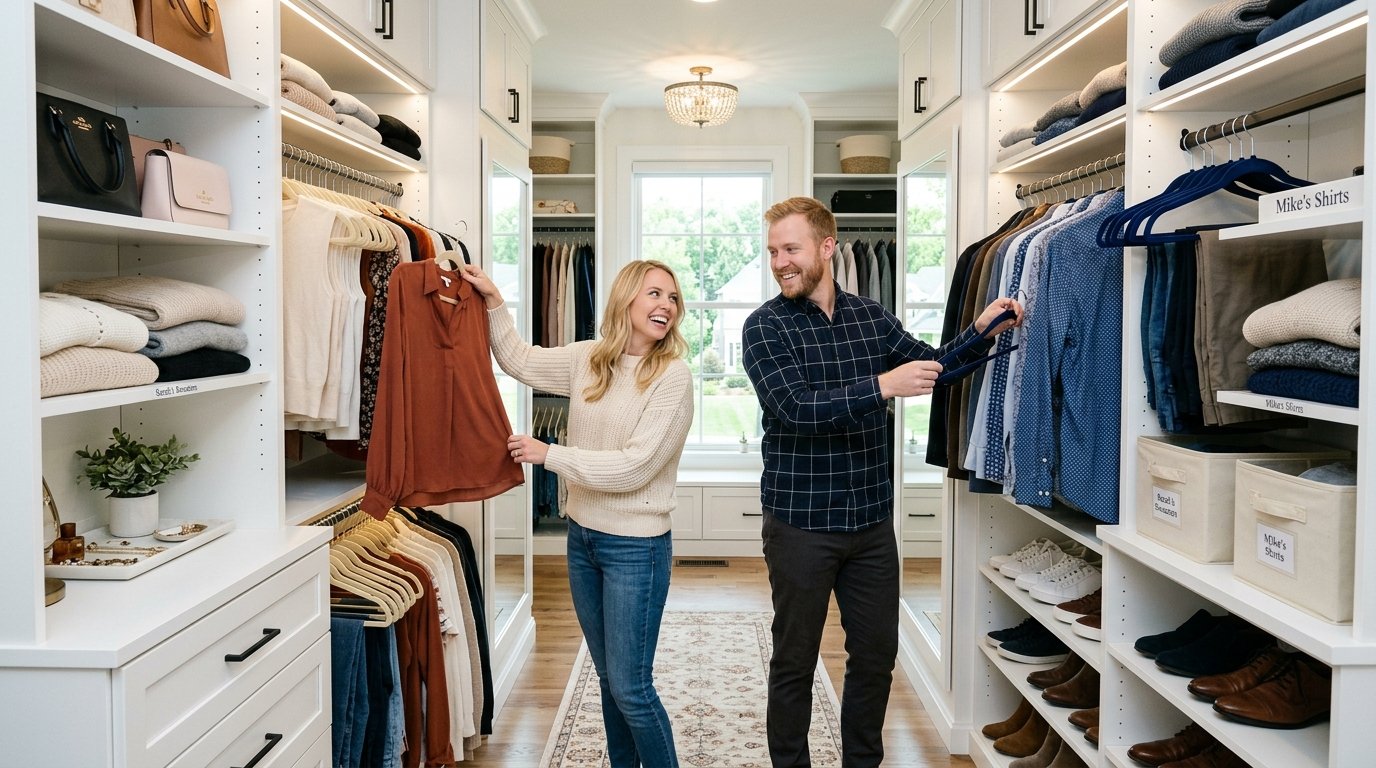
Sharing a single space often creates daily frustration, but mastering husband and wife wardrobe organization changes everything about your morning routine. When two people compress their lives into one confined area, clutter naturally takes over, leading to lost items and unnecessary stress. You might feel like you constantly fight for an extra inch of hanging space while your partner encroaches on your territory. The secret does not require knocking down walls to build a massive walk-in space. Instead, smart planning transforms chaotic clothing piles into a beautifully functional system where both partners easily find exactly what they need immediately.
In my experience, couples who implement visual boundaries completely eliminate morning arguments over misplaced clothing. We will explore highly actionable techniques that solve the most stubborn [storage problems] without requiring an expensive contractor. From clever vertical stacking methods to strategic seasonal rotations, these solutions create breathing room for everyone. You will learn exactly how to maximize awkward corners, implement proper lighting, and select the right storage tools that actually last. Let us dive into these proven strategies that will turn your frustrating shared space into a peaceful, perfectly balanced retreat you both genuinely enjoy using every single day.
Executive Summary
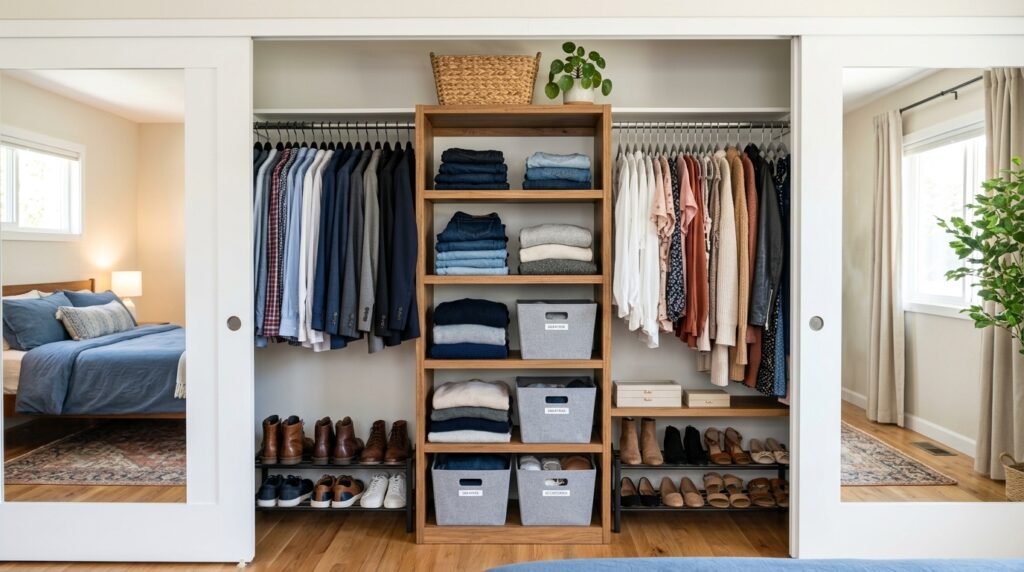
This comprehensive guide delivers a realistic roadmap for couples desperate to reclaim their shared storage spaces immediately. You will discover exactly how to implement structural boundaries, deploy advanced folding techniques, and utilize unused vertical areas to instantly double your available room. We cover specific product recommendations, including exact pricing and honest performance reviews from real household testing. Many designers recommend establishing clear [individual zones] first, which prevents the inevitable blending of garments over time. By following these specific steps, you can expect to increase your usable storage capacity by at least forty percent within a single weekend project.
Beyond simple tidying, this resource tackles the root causes of clutter that specifically plague dual-user spaces. We break down cost-effective strategies ranging from simple twenty-dollar bracket adjustments to comprehensive modular systems requiring slightly larger investments. You will learn how to handle bulky winter coats, manage expansive shoe collections, and organize delicate accessories without crushing anything. Whether you rent a small apartment or own a home with challenging architectural quirks, these adaptable frameworks guarantee long-lasting results. Prepare to overhaul your daily routine, eliminate visual chaos, and finally achieve that beautifully [serene aesthetic] you have been striving to create.
1. Split Zone Strategy
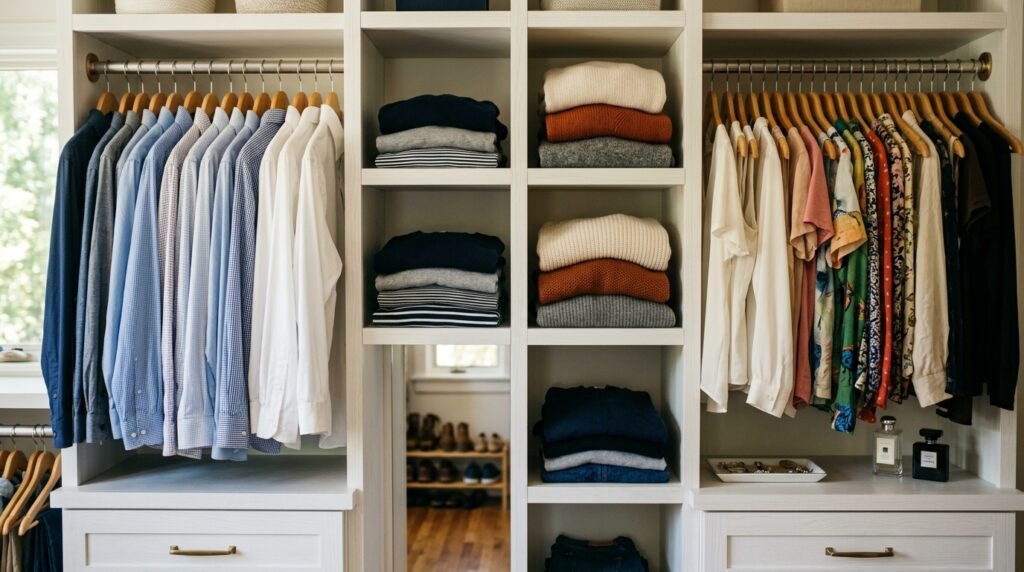
Creating a definitive split zone strategy instantly resolves the most common conflicts in any shared storage environment. I have noticed that couples who physically divide their space down the middle experience significantly fewer arguments about creeping clutter. You must establish a hard boundary using a physical divider, a tall shelving unit, or a distinct change in hanger styles to mark territories. This clear delineation forces both individuals to manage their own specific footprint without slowly overtaking the other side. A structured division creates personal accountability, ensuring that one person cannot secretly expand their collection into shared neutral territory.
To implement this effectively, empty the entire space and measure the usable linear footage before returning a single garment. Discuss your specific volume needs honestly, because an equal fifty-fifty split rarely works if one partner owns three times as much clothing. Sometimes a sixty-forty arrangement makes much more practical sense and prevents immediate overflowing on one side. Use a heavy-duty [vertical organizer] from brands like Elfa or Rubbermaid right in the center to create a structural wall. This physical barrier instantly organizes folded sweaters while definitively marking the exact point where your designated territory officially begins and ends.
Once you establish these borders, respect them religiously to maintain the integrity of your new household system. I always recommend placing shared items like luggage or off-season blankets on the highest shelves spanning the middle section. Keep your everyday work attire exactly at eye level within your specific zone for maximum morning efficiency. If you find your section bursting while your partner has empty space, you must declutter your own items rather than crossing the established boundary line. This strict limitation actually encourages mindful shopping habits because you physically see when your personal allocated capacity reaches absolute maximum fullness.
Let us consider a real case study where a couple constantly fought over a cramped six-foot sliding door space. After installing a central Ikea PAX unit acting as a divider, they instantly gained four extra drawers and stopped blending their garments. The installation cost roughly two hundred dollars but saved them countless hours of frustrating searches through tangled shirts. They reported a drastic reduction in morning stress simply because they no longer bumped elbows while getting dressed simultaneously. Adding clear [visual boundaries] truly forms the foundational step before attempting any other advanced storage optimization techniques in your home.
2. Double Hang Systems
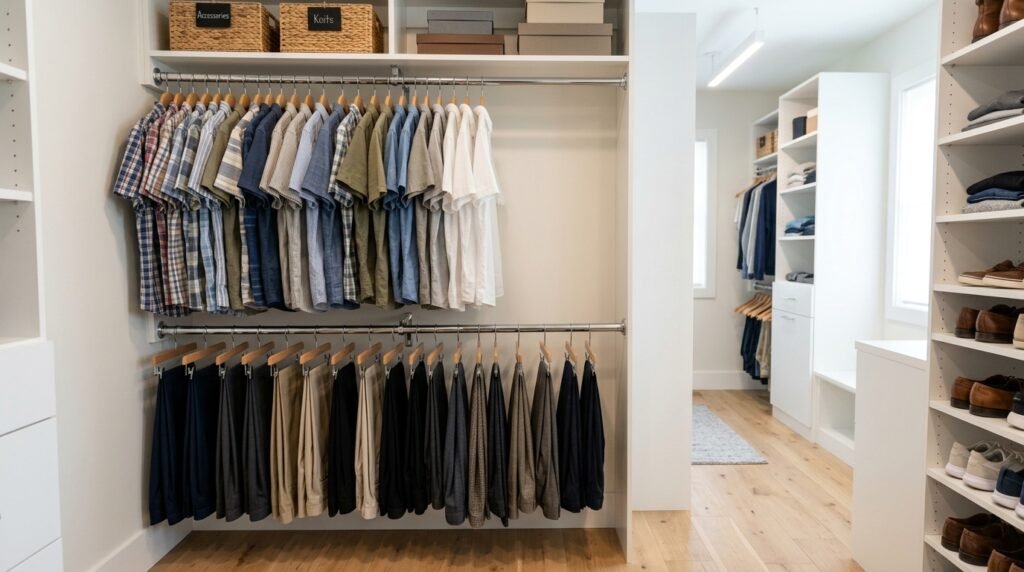
Installing a double hang system instantly multiplies your hanging capacity without requiring any complex demolition or expensive renovations. Traditional single rods waste enormous amounts of valuable vertical space beneath short items like blouses, shirts, and folded trousers. By adding a second rod exactly thirty-six to forty inches below the top one, you immediately double your storage real estate. I have seen this simple modification completely transform a cramped closet into a highly functional area that easily accommodates two full professional wardrobes. It represents the absolute highest return on investment for any couple struggling with a tiny residential footprint.
When tackling men wardrobe organisation closet organization, shorter garments like dress shirts and folded slacks perfectly fit these double configurations. You can purchase adjustable tension rods from Target or The Container Store for under thirty dollars to test this concept immediately. Simply hook the commercial extender onto your existing wooden or wire rod and adjust the height to fit your longest shirts. Make sure you leave at least one small section of single hanging space for longer items like winter coats or evening gowns. Proper measurement prevents your upper row of clothing from dragging across the bottom row.
Beginner Setup
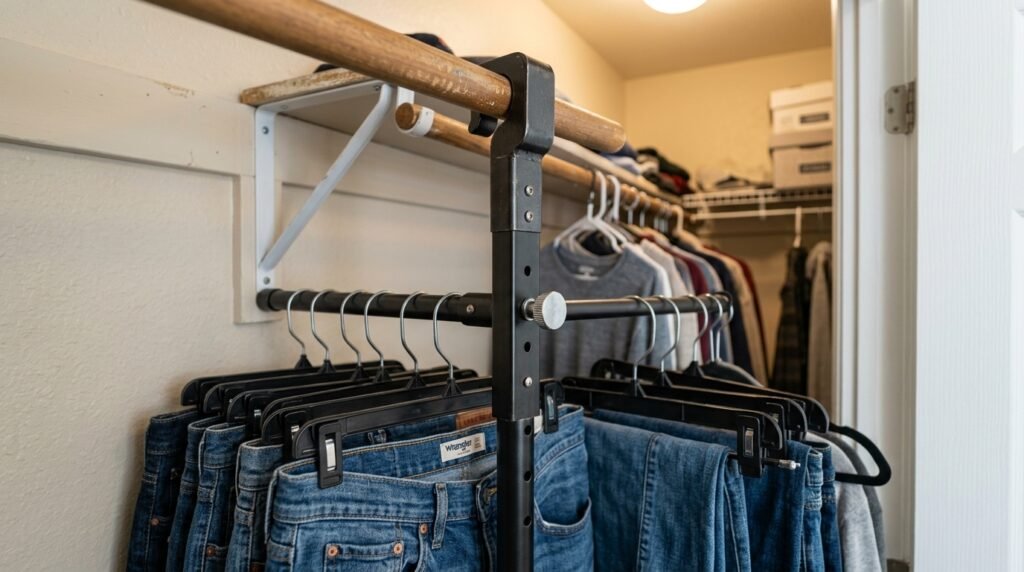
A beginner setup requires zero power tools and utilizes inexpensive hanging rod expanders available at most local hardware stores. You simply hook the sturdy metal arms over your existing top bar and adjust the width to match your needs. I recommend the Umbra adjustable closet rod because its heavy-duty steel construction safely holds heavy denim without bending or snapping. This temporary solution works perfectly for apartment renters who cannot drill holes into their drywall but desperately need more [vertical capacity]. It takes approximately five minutes to install and completely alters how you utilize your available storage volume.
Advanced Customization
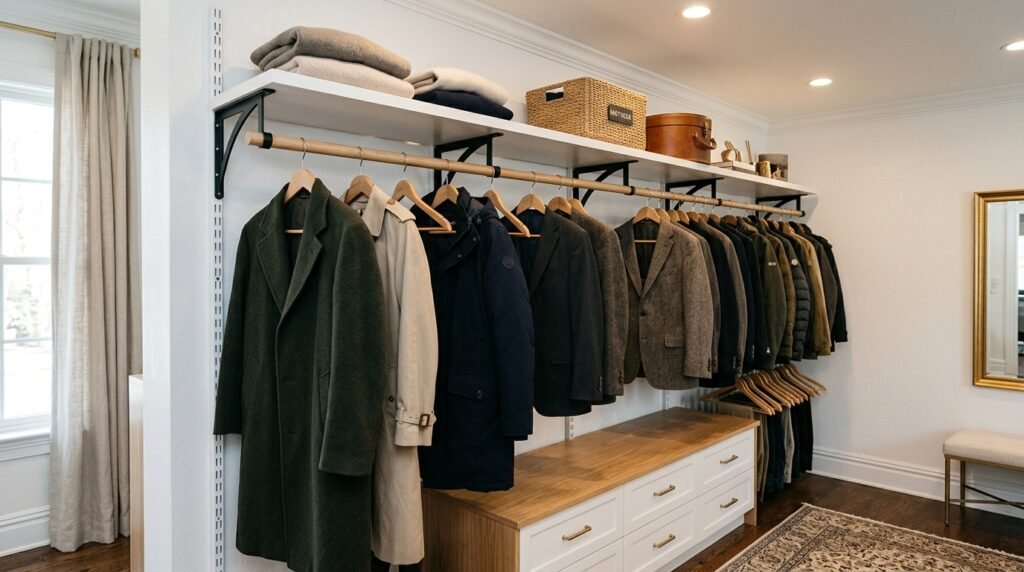
Advanced customization involves completely removing the builder-grade wire racks and installing a modular track system directly into your wall studs. Systems like the Rubbermaid Configurations kit allow you to customize rod heights perfectly tailored to your exact garment lengths. I recommend measuring your longest shirt and adding two inches of clearance before locking the lower rod into its final position. This permanent upgrade usually costs between one hundred and three hundred dollars depending on the total width required. The resulting aesthetic looks incredibly professional and adds genuine property value while securely holding hundreds of heavy seasonal garments effortlessly.
3. Color Coded Hangers

Upgrading your hangers offers the most dramatic visual transformation for any frustratingly cluttered or chaotic shared storage space. Mismatched plastic, wire, and wooden hangers create intense visual noise that makes a space feel much smaller and messier than reality. I highly recommend investing in high-quality velvet hangers because their ultra-slim profile literally saves up to thirty percent more horizontal rod space. Using distinct colors for each person provides an instant visual cue identifying exactly whose clothes belong where. This simple psychological trick reinforces your designated zones and makes putting away clean laundry a remarkably fast and efficient process.
When you assign black hangers to one partner and grey hangers to the other, boundary lines become undeniably clear. You can purchase bulk packs of premium velvet hangers from Amazon Basics for roughly twenty-five dollars per fifty count box. Throw away every single thick plastic tube hanger and dry cleaner wire immediately to establish a uniform, high-end boutique appearance. I have noticed that when a space looks visually stunning, couples naturally try much harder to keep it exceptionally organized. The velvet material also prevents wide-neck shirts and delicate silk blouses from constantly slipping off onto the dusty floor.
Beyond just separating partners, you can use color coding to categorize different types of clothing within your own personal zone. For example, use standard grey hangers for everyday work attire and distinct wooden hangers exclusively for heavy winter outerwear. This systematic approach helps your brain quickly process where specific items live when you are rushing during a busy weekday morning. Ensure you purchase hangers featuring swiveling metal hooks so you can easily turn garments to face the same uniform direction. A visually cohesive hanging line instantly elevates the entire aesthetic and reduces daily mental decision fatigue significantly.
Be warned that velvet hangers can sometimes snap under the extreme weight of heavy leather motorcycle jackets or wool coats. For those specific bulky items, invest in a dozen matching solid wood hangers painted in the same color palette as your velvet ones. Brands like Zober offer excellent wooden options that provide superior shoulder support without compromising your beautifully established [color scheme]. Maintaining hanger consistency might sound somewhat obsessive, but designers swear by this precise technique to calm chaotic spaces. It remains the most cost-effective aesthetic upgrade any frustrated couple can implement during a rainy Saturday afternoon.
4. Seasonal Rotation Bins
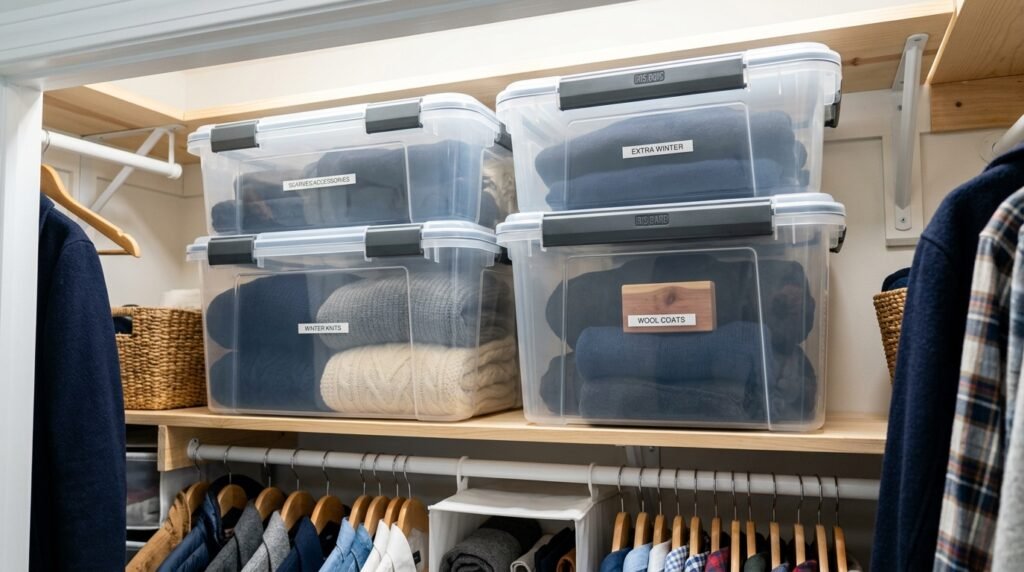
Keeping heavy winter coats mixed alongside lightweight summer swimwear completely suffocates your limited daily usable storage real estate. Implementing a strict seasonal rotation system frees up massive amounts of prime space for the clothes you actually wear right now. I always advise couples to purchase durable, airtight storage bins and completely remove off-season garments from their primary active zone. Store these packed bins under your bed, in a guest room, or up on the highest inaccessible shelves safely out of sight. This practice instantly cuts your active wardrobe in half and provides incredible visual relief immediately.
When selecting storage containers, avoid cheap cardboard boxes that attract destructive pests, moisture, and musty odors over long periods. Instead, invest in clear plastic Weathertight totes from Iris USA, which feature heavy-duty latches and protective polyurethane foam seals. At roughly twenty dollars per bin, they provide exceptional protection for your expensive cashmere sweaters and delicate linen trousers. Add a few natural cedar blocks or lavender sachets into each bin before sealing them to ensure garments emerge smelling wonderfully fresh. This proactive step prevents moth damage and eliminates the need to wash everything again when the seasons finally change.
The actual process of rotating your wardrobe creates a perfect natural opportunity to ruthlessly declutter items you no longer wear. As you pack away your summer clothes, carefully inspect each piece and donate anything that remains unworn, stained, or poorly fitting. I have seen couples eliminate dozens of unused garments simply because they forced themselves to evaluate everything twice a year. Make this a fun bi-annual household event paired with good music and your favorite beverage to reduce the chore factor. A lighter wardrobe requires significantly less management and dramatically decreases the daily frustration of finding specific outfits.
For items that must remain hanging, use breathable canvas garment bags to protect expensive suits and formal dresses safely. Do not use those terrible plastic dry cleaning bags, which trap harmful moisture and cause yellowing on light colored natural fabrics. The Container Store sells excellent cotton canvas options that allow air circulation while blocking dust accumulation entirely during long off-season months. Label the outside of these bags with simple luggage tags so you can quickly identify the contents without unzipping every single one. [Seasonal rotation] demands minor effort but yields absolutely massive dividends for shared compact spaces.
5. Vertical Shoe Stacking
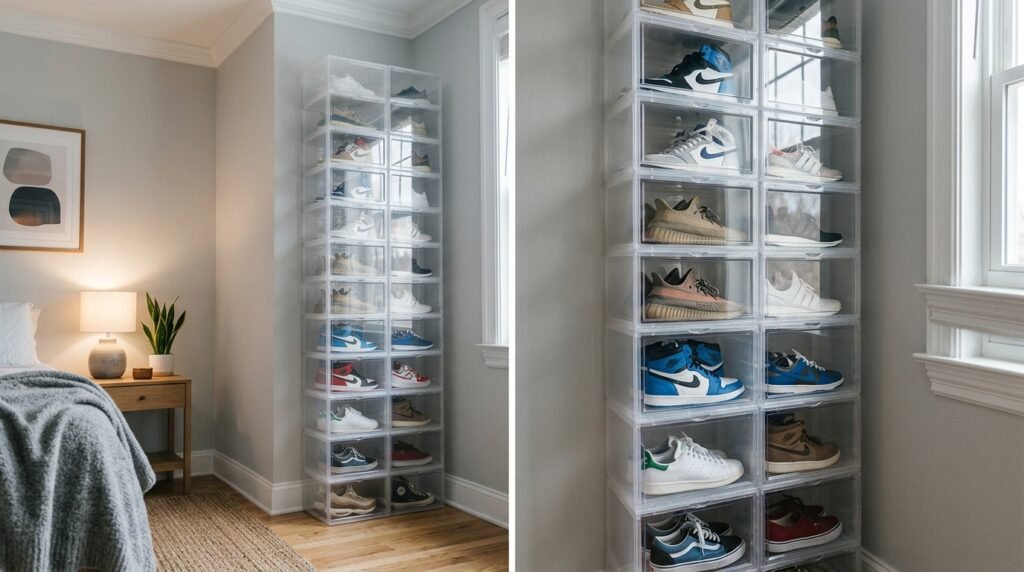
Shoes consume a tremendous amount of floor space and typically devolve into a massive, tangled mountain of mismatched pairs quickly. Utilizing vertical shoe stacking methods reclaims your valuable floor real estate while keeping expensive footwear perfectly protected from crushing damage. Traditional flat racks waste too much horizontal room, making them completely impractical when two people combine their extensive footwear collections together. I have tried numerous solutions, but clear drop-front acrylic shoeboxes consistently provide the absolute best combination of dense storage and high visibility. These stackable units create a stunning custom display wall that reaches all the way upward.
You can source excellent drop-front boxes from brands like Crep Protect or cheaper alternatives directly from Amazon for bulk pricing. Expect to spend around sixty dollars for a pack of eight high-quality boxes featuring magnetic door closures for easy access. By stacking them six or seven units high, you utilize previously wasted vertical air space beneath your hanging garments effortlessly. This method completely protects delicate suede and premium leather from dust accumulation while preventing accidental scuffing from adjacent pairs. Plus, the clear acrylic material ensures you can locate your favorite running sneakers instantly without opening multiple confusing lids.
If acrylic boxes exceed your current budget, consider installing an over-the-door hanging organizer featuring deep canvas pockets instead. This simple twenty-dollar addition holds up to twelve pairs of standard shoes and utilizes completely dead space behind your swinging door. For heavy work boots or tall winter footwear, install a specialized vertical tension pole that securely grips footwear from floor to ceiling. Ensure you allocate specific rows for each partner to maintain your established boundary rules and prevent future territorial disputes. Proper [shoe organization] makes cleaning the floor significantly easier since you no longer have to move heavy piles.
Another brilliant strategy involves alternating the direction of your shoes on standard shelving to maximize depth efficiency seamlessly. Place the left shoe facing forward and the right shoe facing backward with the heel pointing outward toward the room. This simple geometric trick allows you to fit an extra pair of shoes on every single shelf without spending any additional money. I have seen this technique save relationships where one partner owns significantly more footwear than the other person. Getting shoes off the floor and into a structured vertical system instantly makes the entire area feel professionally designed.
6. Drawer Divider Grids
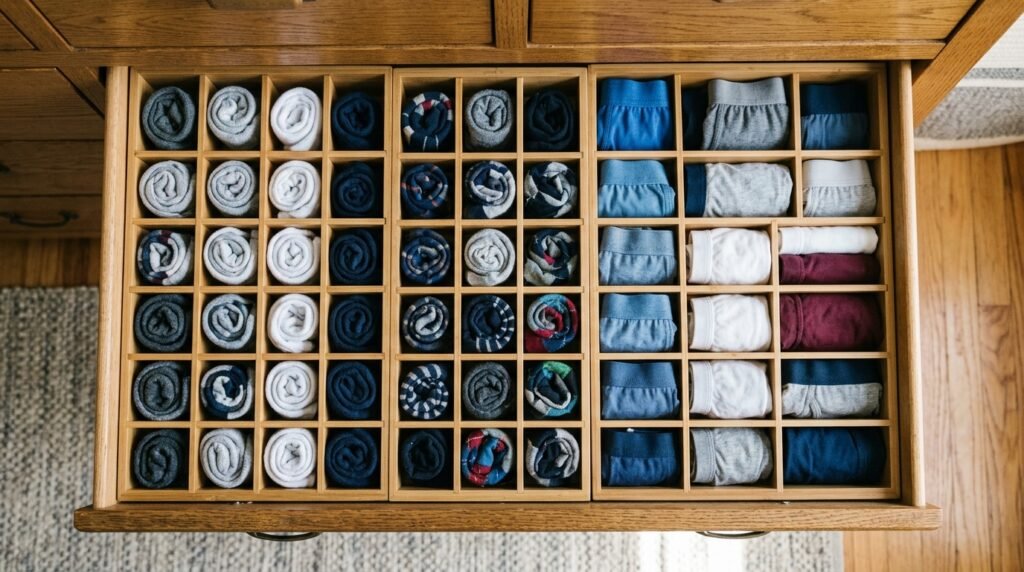
Deep dresser drawers often turn into chaotic black holes where socks, underwear, and expensive accessories tangle into frustrating, unmanageable knots. Introducing drawer divider grids forces discipline upon these hidden spaces, ensuring every single item has a designated, restrictive micro-home. I firmly believe that micro-organizing your intimates saves critical time during hurried mornings when you desperately need matching dark dress socks. By folding garments using the famous KonMari vertical method, you can clearly see every single shirt or undergarment simultaneously upon opening. Expanding bamboo spring-loaded dividers cost around thirty dollars and adjust perfectly to fit any standard dresser dimension.
These rigid dividers create neat, organized channels that prevent soft fabrics from expanding and collapsing into adjacent organized categories messily. When managing wardrobe clothes organization women room challenges, smaller grids perfectly separate delicate lingerie, preventing hooks from snagging expensive silk fabrics. You can buy specialized fabric honeycomb organizers from IKEA for under ten dollars that snap together in seconds for immediate deployment. The sheer satisfaction of opening a perfectly gridded drawer provides a powerful psychological boost that actually encourages you to fold laundry promptly. This hidden organization significantly reduces the visual anxiety associated with messy, overflowing storage furniture.
Sock and Underwear Zones
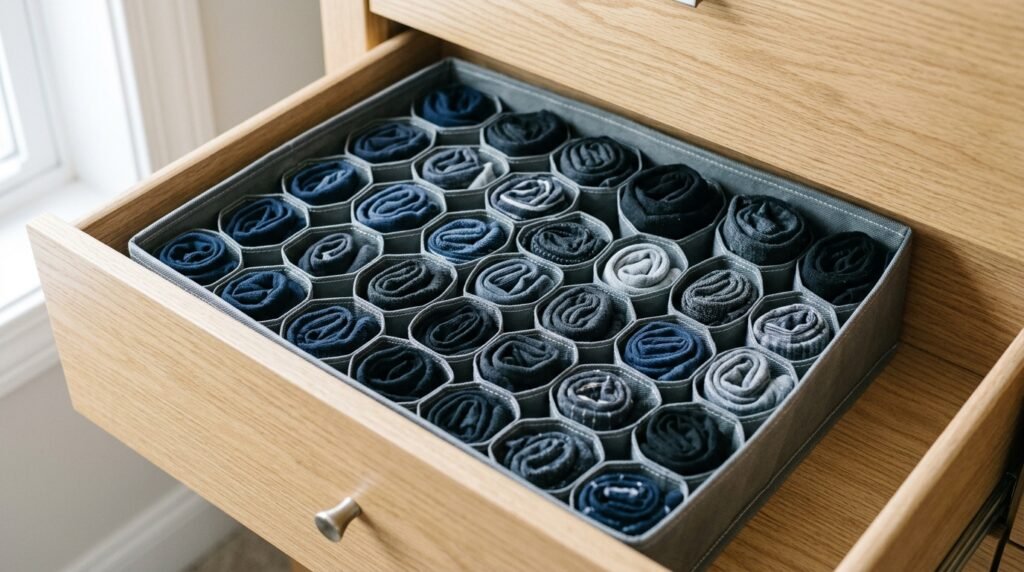
Creating dedicated sock and underwear zones using rigid acrylic inserts ensures these tiny items never migrate across the entire drawer. I recommend grouping athletic socks separately from formal dress socks to speed up your specific morning selection process dramatically. Roll your belts tightly and slot them into individual square compartments so they never unravel or lose their natural leather shape. Dedicating a single drawer entirely to these categorized micro-items prevents the frustrating daily scavenger hunt that plagues most busy modern couples. This tiny investment yields daily dividends when you can blindly reach in and grab exactly what you need.
Folded Shirt Channels
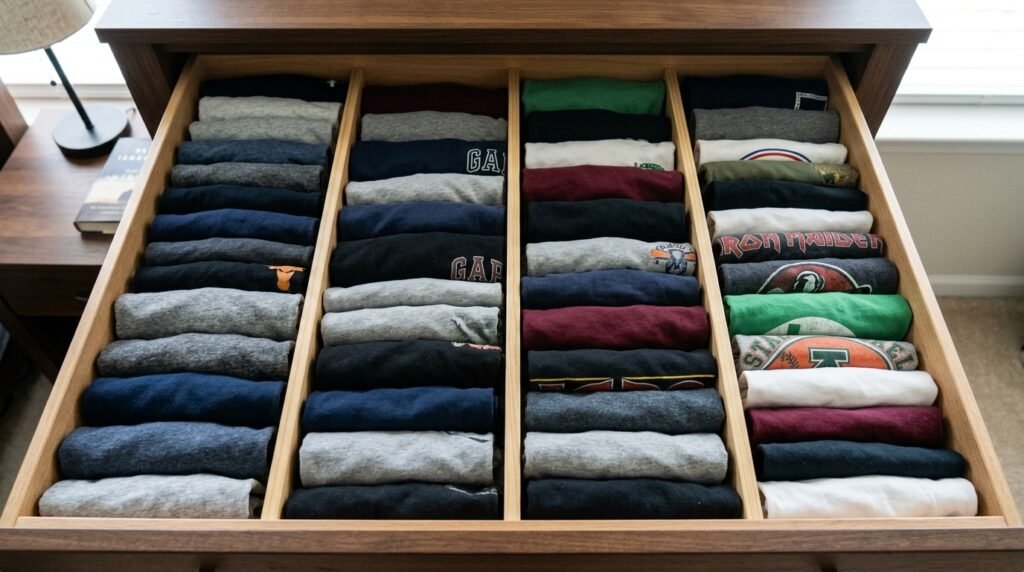
Establishing folded shirt channels using long bamboo dividers completely revolutionizes how you store thick sweaters and casual graphic tees horizontally. Fold your shirts into tight rectangles and stack them upright like files in a cabinet rather than stacking them flat. This ingenious vertical orientation means pulling out one shirt never destroys the entire carefully folded stack underneath it ever again. A neatly channelized drawer holds roughly twice as many garments as a traditional messy pile while maintaining perfect visibility always. Implementing these boundaries ensures your partner’s workout gear never accidentally bleeds over into your pristine folded premium knitwear.
7. Custom Shelving Units
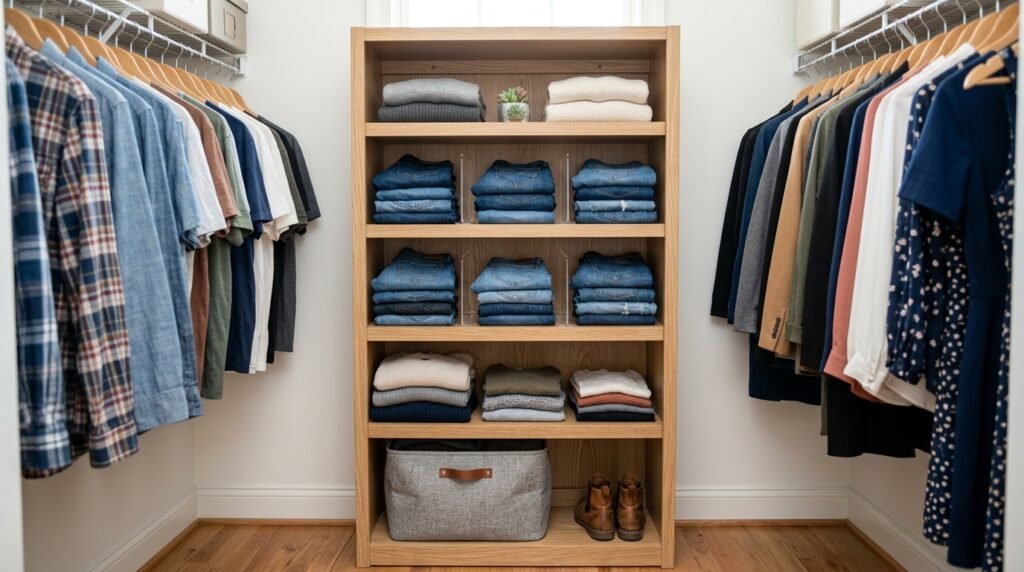
Relying solely on a single hanging rod severely limits your ability to store bulky items like heavy denim and sweaters. Adding custom shelving units introduces crucial flat surface area required for items that easily stretch or distort on standard hangers. I have noticed that installing a tall, narrow tower unit directly in the center creates an excellent natural room divider. Brands like ClosetMaid sell affordable laminate wood towers starting around eighty dollars that require only basic hand tools for complete assembly. These versatile towers provide adjustable vertical storage that adapts perfectly as your specific seasonal wardrobe inevitably changes.
When placing items on these shelves, never stack garments higher than ten inches, or the pile will inevitably topple over. Use clear acrylic shelf dividers to support tall stacks of jeans, keeping them perfectly upright and beautifully aligned like a boutique. These slide-on acrylic pieces cost about twenty dollars for a set of four and instantly elevate the aesthetic appeal of your shelves. I recommend placing your heaviest items like raw denim on the bottom shelves and lighter cashmere sweaters near the top. This strategic weight distribution prevents the shelving hardware from bowing under excessive heavy pressure over time.
For couples renting their current home, freestanding shelving racks offer incredible flexibility without risking your valuable security deposit upon move-out. Industrial wire racks from brands like Seville Classics hold tremendous weight and add a cool, modern aesthetic to any urban apartment bedroom. You can customize the shelf heights perfectly to accommodate tall boots on the bottom and folded stacks on the upper levels. Add textured fabric bins onto the middle shelves to discreetly hide unsightly items like gym accessories or mismatched athletic gear. Freestanding units easily move with you to your next home, making them a fantastic long-term investment.
If you own your property and possess a slightly larger budget, consider installing a completely integrated modular wall system professionally. Systems from California Closets or the Container Store’s Elfa line utilize thick, high-quality materials that look incredibly luxurious and permanent. While these can cost anywhere from five hundred to two thousand dollars, they dramatically increase the resale value of your property. These premium setups allow couples to design highly specific configurations featuring built-in laundry hampers, jewelry drawers, and angled shoe displays. A well-designed custom shelf layout maximizes every single square inch of available wall space with exceptional efficiency.
8. Valet Hook Addition
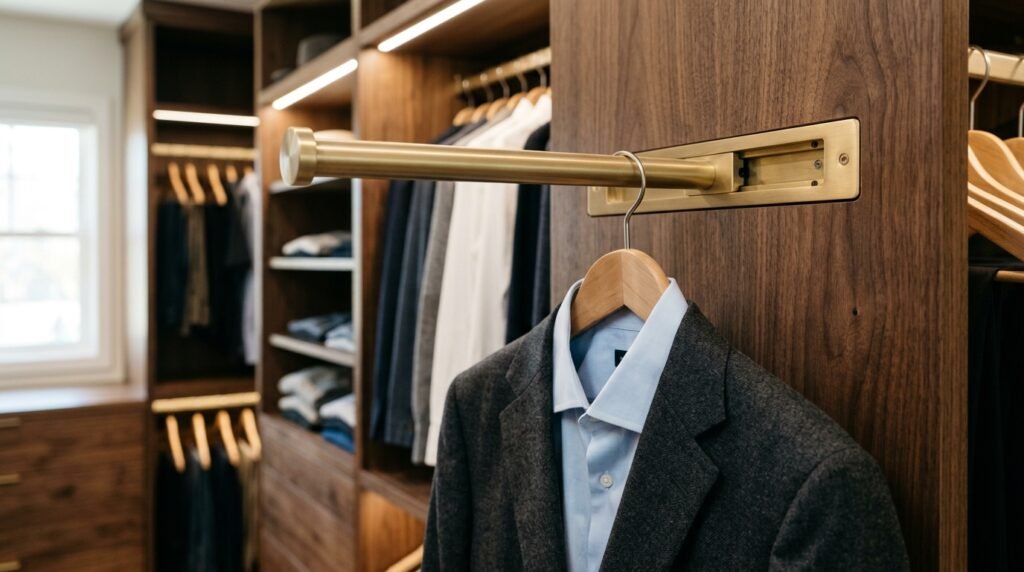
Valet hooks represent the most underrated and highly effective organizational tools you can possibly add to your shared storage environment. These simple retractable metal rods mount directly onto existing vertical panels and slide out to hold tomorrow’s planned outfit perfectly. I always recommend couples install one valet hook on each respective side to establish a seamless, stress-free daily morning routine. Pulling your clothes out the night before prevents you from aggressively digging through cramped hangers while your partner is still sleeping peacefully. This twenty-dollar hardware upgrade fundamentally changes how you interact with your wardrobe on busy weekday mornings.
You can easily find heavy-duty metal valet rods on Amazon from brands like Rev-A-Shelf in various elegant finishes including brushed brass. Installation takes fewer than ten minutes using just two small wood screws driven directly into your wooden shelf supports safely. When not in use, the rod slides discreetly back against the wall, remaining completely invisible and safely out of your way. I have seen clients use these hooks for staging dry cleaning, hanging belts, or temporarily holding garments while organizing their main racks. It serves as an incredibly versatile [temporary holding zone] that prevents clothes from landing on beds.
If you lack wooden panels for mounting retractable rods, simple heavy-duty command hooks provide an excellent, damage-free alternative for renters. Place one large stylish metal command hook on the outside door frame or a blank wall adjacent to your storage area. Use this dedicated spot exclusively for staging your daily outfit, hanging your current purse, or draping your lightly worn jackets. Establishing this specific staging area stops the dreaded chair pile from accumulating in the corner of your beautiful bedroom over time. A designated staging hook forces you to make decisive outfit choices quickly without creating any additional clutter.
Valet hooks also provide the perfect location to hang items that need to air out slightly before returning to the main racks. If you wear a heavy wool blazer that smells faintly of a restaurant, hanging it separately prevents odors from transferring. You can hit the garment lightly with a fabric refresher spray and let it breathe on the extended valet rod overnight comfortably. This small, highly functional addition bridges the gap between clean clothes stored away and dirty clothes sitting heavily in the laundry basket. Every shared space absolutely requires this highly strategic temporary holding mechanism to function smoothly.
9. Shared Accessory Trays
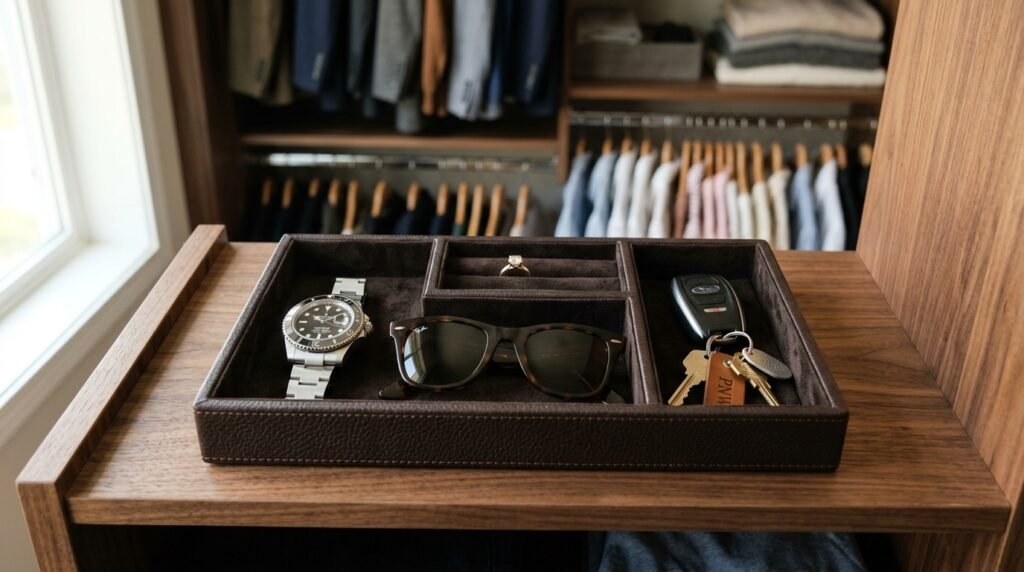
Managing small accessories like watches, sunglasses, rings, and loose change often creates incredibly frustrating micro-clutter across all available flat surfaces. Implementing a beautiful shared accessory tray system contains this daily pocket dump while maintaining an elegant, highly organized visual aesthetic. I suggest placing a large, luxurious leather or velvet-lined tray directly on the most accessible center shelf at natural waist height. This dedicated landing zone gives both partners a specific, safe location to deposit their valuable daily carry items immediately upon arriving home. Containing small items properly prevents expensive watches from getting accidentally knocked off shelves and breaking on floors.
You should look for valet trays featuring multiple divided compartments to keep different types of metal jewelry completely separated and scratch-free. Brands like Courant even make stunning premium leather trays featuring built-in wireless phone chargers that add incredible modern functionality seamlessly. Expect to invest roughly forty to eighty dollars for a high-quality tray that will withstand years of heavy daily use effortlessly. When each partner knows exactly where their keys and sunglasses live, you completely eliminate those stressful, frantic five-minute searches before leaving the house. A centralized accessory hub streamlines your departure routine while keeping tiny clutter completely contained visually.
For expansive jewelry collections, utilize stackable velvet-lined trays hidden discreetly inside a shallow drawer to maximize your available flat space. These modular felt trays from brands like Stackers allow you to customize exact compartment sizes for chunky necklaces or tiny earrings. The soft inner lining prevents silver from tarnishing quickly and protects delicate gemstone settings from harsh daily impacts against hard wood. I recommend allocating specific colored trays or specific drawer sides to each partner to maintain those crucial physical boundaries established earlier. Keeping shiny accessories neatly aligned makes selecting the perfect finishing touch feel like shopping in a luxury boutique.
Do not forget to add a small decorative bowl nearby specifically designated for collecting random loose change and dry cleaning receipts. Emptying your pockets completely before hanging your pants prevents heavy coins from distorting the fabric over long storage periods significantly. Once a month, you can empty this shared change bowl and use the found money for a fun coffee date together. Managing the smallest items effectively proves that you have completely mastered the intricate details of shared household organization successfully. These tiny, thoughtful systems separate a basic messy space from a truly professional, high-end, highly functional home environment entirely.
10. Floating Wall Racks
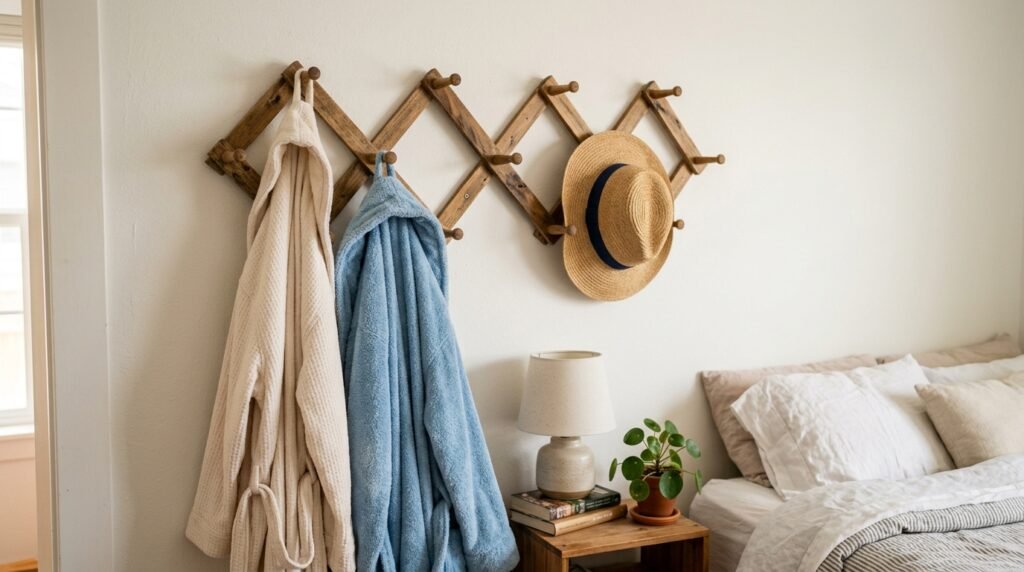
When you have absolutely exhausted every single inch of interior storage space, you must look outward to the surrounding bedroom walls. Installing elegant floating wall racks provides incredible supplementary hanging capacity for items you wear daily, like heavy robes or hats. I always recommend finding beautifully crafted wooden peg racks or sleek matte black metal bars that actually complement your bedroom decor. A well-designed floating rack turns your beautiful fedoras or colorful silk scarves into highly functional, visually striking, three-dimensional wall art instantly. This strategy pulls bulky accessories out of the cramped main area, freeing up incredibly valuable interior volume.
You can mount a sturdy rustic wooden accordion rack near the doorway specifically for staging thick bathrobes and comfortable lounging wear. These expandable racks cost under thirty dollars on Amazon and easily accommodate five or six heavy garments without bending or breaking. Keep in mind that anything displayed in the open bedroom must remain relatively neat, or it will just look like chaotic clutter. Limit these floating wall racks strictly to aesthetically pleasing accessories, heavy coats in winter, or your beautiful daily handbags. Utilizing blank wall space efficiently acts as an incredible safety valve for overflowing shared storage environments.
If you collect expensive sneakers or designer handbags, consider installing individual floating acrylic shelves to showcase your absolute favorite premium pieces. This approach transforms luxury fashion investments into stunning room decor while safely removing them from the chaotic, dusty floor zone entirely. Ensure you use heavy-duty drywall anchors during installation so the shelves can safely support the weight of heavy leather goods securely. I have seen couples dedicate one entire blank wall just to beautifully displaying their combined hat and handbag collections with incredible visual success. It frees up critical enclosed space for less attractive items like basic gym wear.
Finally, consider installing a tall, thin floating mirror featuring hidden storage hooks discreetly tucked directly behind the reflective glass surface. These ingenious mirrored cabinets cost roughly one hundred and fifty dollars and swing open to reveal brilliant shallow storage for delicate necklaces. This dual-purpose furniture piece provides the mandatory full-length mirror every couple needs while secretly housing hundreds of easily tangled accessories flawlessly. Maximizing multi-functional wall elements ensures you extract absolute maximum utility from every single square inch of your available bedroom real estate. Smart floating additions finalize your ultimate shared organization strategy, leaving your main space beautifully balanced and pristine.
Frequently Asked Questions
How do we divide a closet if one partner has way more clothes? You should never force a strict fifty-fifty split if one person clearly owns eighty percent of the household clothing. Instead, calculate a proportional division based on actual volume, perhaps utilizing a sixty-forty or seventy-thirty footprint to reflect reality accurately. The partner with fewer items might take the easily accessible lower rods, while the other utilizes extensive upper shelving and secondary bins. I have noticed that acknowledging this volume disparity openly prevents the larger collection from aggressively encroaching on the smaller one. Honesty ensures both partners receive exactly the functional space they genuinely require without feeling unfairly restricted.
What is the best way to store bulky winter coats in a small space? Bulky winter coats completely destroy functional daily space because they require incredible horizontal width and extended vertical dropping room to hang properly. You must remove them from your primary active area immediately when the spring season finally arrives to reclaim your territory. Pack heavy wool coats and thick puffer jackets into vacuum-sealed space bags to compress their massive volume by almost seventy percent instantly. Store these flattened bags in sturdy plastic totes under your guest bed or high up on inaccessible top shelves. Returning them only when temperatures drop ensures your daily garments have room to breathe properly.
How can we prevent our clothes from smelling musty over time? Musty odors develop rapidly in deeply cramped spaces lacking proper air circulation, especially when storing natural fibers like wool or vintage leather. You must create breathing room by decluttering garments until you can comfortably slide your hand between each hanging hanger effortlessly. Add natural moisture absorbers like activated charcoal bags or silica gel canisters to trap excess humidity before mildew starts forming. I highly recommend placing aromatic cedar blocks directly on the shelves to naturally repel destructive moths while providing a fresh, woody scent. Avoid using plastic dry cleaning bags, which trap dangerous moisture against expensive fabrics permanently.
Should we organize our clothes by color or by clothing category? Organizing strictly by distinct categories remains the most functional approach for busy couples sharing a tight, frustratingly small morning space. Group all your long-sleeve shirts together, followed by short-sleeve shirts, then heavy trousers, creating a highly logical flow for dressing. Once you establish these firm categories, you can certainly arrange the items by color within that specific section for beautiful visual appeal. I have seen this dual-method approach drastically reduce the time it takes to find a specific blue dress shirt during a frantic morning. It combines pure logical functionality with that incredibly satisfying, high-end boutique visual aesthetic perfectly.
What is the most cost-effective way to add more shelving? The absolute most cost-effective method involves purchasing a basic, freestanding laminated wood bookcase from a store like Target or IKEA immediately. For under forty dollars, you can slide a tall, narrow bookcase directly into the center of your space to create an instant divider. This eliminates the need for expensive custom carpentry, power tools, or complicated wall anchor installations that might damage your drywall. You can easily add fabric storage cubes onto these shelves to hide unsightly athletic gear, loose socks, or tangled belts. This inexpensive hack provides massive vertical storage capacity without requiring any professional installation assistance whatsoever.
How do we handle shoes if we don’t have any floor space left? When your floor completely vanishes under clutter, you must strategically utilize the completely dead space situated on the back of your swinging door. Install a heavy-duty canvas shoe organizer featuring deep, breathable pockets that comfortably hold up to twelve pairs of standard footwear effortlessly. For heavy winter boots that do not fit in pockets, install a high perimeter shelf sitting just twelve inches below your actual ceiling. I have noticed that moving shoes completely off the ground makes vacuuming infinitely easier and instantly makes the entire area feel significantly larger. Vertical optimization remains the ultimate secret for tight quarters.
Are velvet hangers actually worth the investment for a couple? Upgrading to premium velvet hangers is absolutely the best foundational investment any frustrated couple can make for their shared daily space. Their ultra-slim profile literally reclaims up to thirty percent of your horizontal rod space compared to thick, bulky plastic tube hangers. Furthermore, the grippy velvet texture completely prevents wide-neck blouses, delicate silk camisoles, and heavy sweaters from constantly slipping onto the dirty floor. Buying two distinct colors instantly establishes clear visual boundaries, effortlessly separating his garments from her garments without requiring physical barriers. Spending fifty dollars on uniform hangers transforms the entire visual aesthetic into a luxurious boutique instantly.
How do we manage dirty laundry in a shared tight space? A massive, overflowing laundry basket sitting directly in the middle of your floor destroys the aesthetic of any beautifully organized area. You must invest in a sleek, narrow laundry hamper featuring dual compartments to separate dark fabrics from light fabrics immediately upon undressing. Brands like Joseph Joseph offer brilliant vertical stacking hampers that consume minimal floor space while hiding dirty garments behind opaque fabric covers. I recommend placing this hamper just outside the main storage area, perhaps in an adjacent bathroom corner, to free up critical foot room. Removing dirty clothes instantly makes the entire space feel much cleaner.
What should we do with items we only wear once a year? Garments worn annually, such as heavy formal tuxedos, embellished bridesmaid dresses, or bulky ski gear, have absolutely no business consuming your prime daily real estate. You must immediately relocate these highly specialized items to secondary storage locations like a dry basement, guest bedroom, or under-bed bins. Place formal wear inside breathable cotton garment bags to protect them from dust accumulation, and hang them in a completely separate, low-traffic area. I always tell clients that prime eye-level storage must be strictly reserved for items you wear at least once a week. Ruthlessly evicting rare items creates incredible breathing room daily.
How do we maintain this organization system over a long period? The secret to long-term maintenance relies entirely on adopting the strict one in, one out philosophy for all future clothing purchases. Whenever you buy a brand new sweater, you must ruthlessly donate or discard an older sweater to maintain your perfect volume equilibrium continuously. Additionally, couples should schedule a brief fifteen-minute reset session every single Sunday evening to put away stray shoes and re-hang fallen items together. I have noticed that when both partners commit to this quick weekly maintenance routine, the space never devolves back into total unmanageable chaos. Consistency prevents massive, exhausting cleaning marathons in the future.
Is it better to fold or hang jeans in a shared space? Heavy denim jeans should almost always be folded and stacked on sturdy wooden shelves rather than hung on valuable metal rods. Jeans consume massive amounts of horizontal width when hung, and their extreme weight can actually bend cheap wire or plastic hangers over time. By folding them in half and stacking them neatly, you utilize deep shelf space while preserving your rods for delicate shirts and tailored jackets. If you absolutely must hang them due to lacking shelves, use specialized heavy-duty wooden clamp hangers designed specifically to hold trousers vertically by the hem. This prevents ugly middle creases entirely.
How can we improve the lighting so we can actually see our clothes? Poor lighting causes immense frustration when you desperately try to distinguish navy blue dress socks from black ones during a dark winter morning. You do not need expensive electrical hardwiring to fix this; simply install motion-sensor rechargeable LED light bars directly underneath your upper shelves. These brilliant magnetic lights cost roughly thirty dollars on Amazon and illuminate your dark corners brilliantly the second you open the door. I suggest buying lights with warm white temperature settings so your clothing colors look natural and accurate before you step outside. Good visibility naturally encourages you to keep the entire space significantly tidier.
A Peaceful Morning Awaits

Transforming your chaotic shared space into a functional sanctuary fundamentally changes how you and your partner start every single day together. By implementing strategic boundaries, utilizing vertical shoe stacking, and investing in uniform velvet hangers, you instantly eliminate daily frustrations and stressful morning arguments. I have seen how small changes like these can completely transform a space, bringing immense peace to a previously overwhelming environment. Save this guide on Pinterest for future inspiration, try implementing just one idea this weekend, and please share this article with other couples who desperately need practical, immediate storage solutions for their own homes.

Amelia leads HavenlyStyle’s editorial vision with a passion for elegant interiors and practical home living. With years of experience in home décor and lifestyle content, she ensures every article is accurate, inspiring, and easy to follow. From timeless decorating ideas to the latest interior design trends, Amelia is committed to helping readers create beautiful, functional spaces while maintaining HavenlyStyle’s trusted and welcoming voice.